What Are The Great Essential Steps In Preparing Japanese Cuisine
Essential Steps In Preparing Japanese Cuisine; They say that the way to someone’s heart is through their stomach, and if you’re looking to impress with your culinary skills, why not try your hand at preparing Japanese cuisine? From the art of sushi-making to the mastery of tempura, Japanese cuisine offers a world of flavors and techniques waiting to be explored. But where do you begin? In this discussion, we will guide you through the essential steps in preparing Japanese cuisine, revealing the secrets to choosing fresh ingredients, mastering knife skills, understanding umami, and so much more. So get ready to embark on a culinary journey that will leave your taste buds craving for more.
Choosing Fresh Ingredients
To ensure the highest quality in your Japanese cuisine, it is imperative that you carefully select the freshest ingredients available. Choosing high-quality ingredients is the foundation of Japanese cooking, as it allows the natural flavors to shine through in each dish. In order to achieve this, sourcing fresh produce is of utmost importance.
When it comes to selecting ingredients for your Japanese dishes, start by visiting local markets or specialty stores that prioritize freshness. Look for vibrant, colorful vegetables that are firm to the touch. The key is to choose produce that is in season, as it will have a better flavor and texture. For example, if you are making sushi, opt for fresh, fatty cuts of fish that have a glistening appearance and a clean smell of the sea.
In addition to produce, pay close attention to the quality of your other ingredients, such as soy sauce, miso, and rice vinegar. These pantry staples should be of the highest grade possible to ensure an authentic taste. Check for labels that indicate natural fermentation or traditional production methods, as these are indicators of quality.
When sourcing ingredients for Japanese cuisine, it is also essential to consider the source of the products. Choose suppliers who have a reputation for providing fresh, sustainable ingredients. This not only enhances the taste of your dishes but also supports responsible farming practices.
Mastering Knife Skills
Developing mastery in knife skills is crucial for preparing Japanese cuisine with precision and finesse. To enhance your culinary expertise, it is essential to focus on two key aspects: knife sharpening and knife safety.
- Knife Sharpening:
- Regularly sharpen your knives to maintain their sharpness and precision.
- Invest in a high-quality sharpening stone and learn the proper technique to use it effectively. Sharpening your knife at the correct angle will ensure optimal performance and prevent accidents while cutting.
- Knife Safety:
- Always prioritize safety when handling knives. Hold the knife firmly with a relaxed grip to maintain control and prevent slippage.
- Position your hand correctly on the knife handle, keeping your fingers away from the blade to avoid accidental cuts.
- Use a cutting board made of durable material, such as wood or plastic, to protect both your knife and countertop.
- Maintain a clean and organized workspace, free from distractions, to minimize the risk of accidents while cutting.
Mastering knife skills not only enhances the efficiency and precision of your cuts but also ensures your safety in the kitchen. By regularly sharpening your knives and practicing proper knife safety techniques, you will be able to handle Japanese ingredients with finesse and precision. Remember, a well-sharpened knife in skilled hands can transform the preparation of Japanese cuisine into an art form.
Understanding Umami
After mastering knife skills to prepare Japanese cuisine with precision and finesse, it is crucial to delve into the realm of umami, a fundamental concept in Japanese cooking. Understanding flavor profiles and exploring fermentation techniques are essential for unlocking the true potential of umami and creating authentic Japanese dishes.
Umami, often described as the fifth taste, is a savory flavor that adds depth and richness to a dish. It is derived from glutamate, an amino acid found naturally in foods such as seaweed, mushrooms, and soy sauce. To fully understand umami, one must appreciate its unique ability to enhance other flavors and create a harmonious balance in a dish.
To begin your journey into umami, start by understanding the flavor profiles of different ingredients. Savory ingredients like dashi, miso, and tamari are rich in umami and form the foundation of many traditional Japanese dishes. By incorporating these ingredients into your cooking, you can elevate the taste of your dishes and create a more satisfying culinary experience.
Another important aspect of umami is the exploration of fermentation techniques. Fermented foods like pickles, miso, and soy sauce not only contribute to the umami flavor but also provide health benefits through the presence of beneficial bacteria. Incorporating fermented ingredients into your cooking not only enhances the taste but also adds depth and complexity to your dishes.
Exploring Traditional Japanese Seasonings
Immerse yourself in the world of traditional Japanese cuisine as you explore the diverse and exquisite flavors of traditional Japanese seasonings. In Japan, seasonings are considered an art form, carefully crafted to enhance the natural flavors of the ingredients. Let’s delve into the fascinating world of Japanese seasonings and discover the unique tastes they bring to your dishes.
- Exploring different types of miso:
- Miso, a fermented soybean paste, is a staple in Japanese cuisine. It adds depth and complexity to soups, marinades, and glazes. There are various types of miso, each with its own distinct flavor profile.
- White miso: Also known as shiro miso, it has a mild and slightly sweet taste, making it perfect for delicate dishes.
- Red miso: Known as aka miso, it has a stronger and richer flavor, ideal for hearty stews and bold-flavored dishes.
- Understanding the role of dashi in Japanese cuisine:
- Dashi, a flavorful broth made from kombu (dried kelp) and bonito flakes (dried fish), is the foundation of many Japanese dishes. It provides a savory umami taste that brings out the flavors of other ingredients.
- Kombu dashi: Made solely from kombu, it has a subtle and delicate flavor, often used in vegetarian dishes.
- Katsuobushi dashi: Made from bonito flakes, it has a stronger and smokier flavor, commonly used in miso soup and noodle dishes.
Learning the Art of Sushi-Making
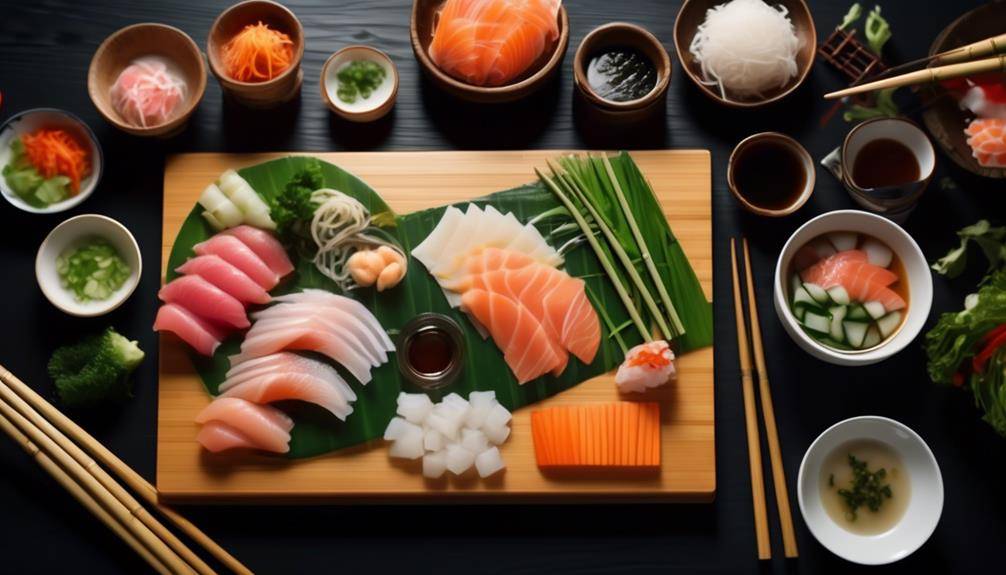
To embark on your journey into the art of sushi-making, embrace the precision and artistry required to create this traditional Japanese delicacy. Sushi, a beloved dish worldwide, is not only about the combination of fresh ingredients but also about the meticulous techniques used in rolling and presenting it.
When it comes to sushi rolling techniques, there are various styles to learn. The most common technique is called maki, which involves rolling sushi using a bamboo mat called a makisu. This technique allows you to create the classic cylindrical shape of sushi rolls. Another technique is called nigiri, where a small mound of sushi rice is shaped by hand and topped with a slice of fresh fish or seafood. Mastering these techniques requires patience and practice, as the size and shape of the sushi roll or nigiri should be consistent for visual appeal and ease of consumption.
Once you have perfected the rolling techniques, it is time to focus on sushi presentation styles. The presentation of sushi is an art form in itself, with attention paid to color, texture, and arrangement. Traditional sushi presentation emphasizes simplicity and elegance, allowing the natural beauty of the ingredients to shine through. Sushi is often served on a wooden or lacquered plate, with garnishes like shiso leaves, pickled ginger, and wasabi carefully placed to enhance the overall aesthetic.
Perfecting the Art of Tempura
Now it is time to delve into the art of perfecting tempura. To master this traditional Japanese dish, you must understand the intricacies of batter preparation techniques and the importance of frying at the proper temperature. Achieving the perfect balance of crispiness and lightness is an art form that requires precision and practice.
Batter Preparation Techniques
For the perfect execution of Tempura, master the art of batter preparation with precision and finesse. Achieving the right batter consistency is crucial in creating light and crispy tempura. To achieve this, follow these steps:
- Use cold water: Adding ice cubes to the water helps keep the batter cold, resulting in a lighter texture.
- Don’t overmix: Mix the batter just until the ingredients are combined. Overmixing can lead to a dense coating.
- Use cake flour: Cake flour has a lower protein content, resulting in a delicate and crispy texture.
- Fry promptly: Dip the ingredients in the batter right before frying to maintain its lightness.
- Control the oil temperature: Keep the oil temperature between 350°F and 375°F for even frying.
Proper Frying Temperature
Achieve culinary excellence in the art of tempura by mastering the precise and traditional technique of maintaining the proper frying temperature. Proper frying techniques are essential to ensure the perfect texture and flavor of your tempura. To achieve this, start by maintaining the oil quality. Use a high smoke point oil like vegetable or canola oil, which will prevent the oil from breaking down at high temperatures.
Heat the oil to around 350-375 degrees Fahrenheit, as this temperature allows the batter to cook quickly while still maintaining its light and crispy texture. Be careful not to overcrowd the frying pan, as this can reduce the oil temperature and result in greasy and heavy tempura. Monitor the temperature throughout the cooking process and adjust the heat accordingly to maintain the proper frying temperature. By mastering these techniques, you will be able to create perfectly fried tempura every time.
Mastering the Art of Ramen
Now, let’s delve into the art of ramen, a beloved Japanese dish that requires mastery of the essentials. To create the perfect ramen broth, you must understand the delicate balance of flavors and the importance of simmering it for hours to extract the rich umami taste. Additionally, perfecting the toppings, such as tender chashu pork and marinated soft-boiled eggs, will elevate your ramen to a culinary masterpiece.
Ramen Broth Essentials
To truly master the art of ramen, you must first understand the essential elements that make up a flavorful and authentic ramen broth. Here are the key components that you need to consider:
- Broth Variations:
- Shoyu: A soy sauce-based broth that provides a rich and savory flavor.
- Tonkotsu: Made from pork bones, this broth is creamy and full-bodied.
- Homemade Toppings:
- Chashu: Tender slices of marinated pork that add a melt-in-your-mouth texture to the ramen.
- Menma: Fermented bamboo shoots that add a unique and slightly tangy flavor.
- Ajitama: Soft-boiled eggs marinated in a soy-based sauce, adding a creamy and savory element to the dish.
Perfecting Ramen Toppings
What are the key techniques for perfecting the toppings in your ramen, allowing you to truly master the art of this traditional Japanese dish? When it comes to creating the perfect bowl of ramen, the choice and arrangement of toppings play a crucial role. To elevate your ramen experience, consider exploring the wide range of ramen noodle variations available. From thin and delicate noodles to thick and chewy ones, each type brings a unique texture and flavor to your bowl.
Additionally, pay attention to the art of ramen bowl presentation. Arrange your toppings in an aesthetically pleasing manner, ensuring that each ingredient is showcased and enhances the overall visual appeal. By mastering the techniques of selecting the right noodles and artfully arranging your toppings, you can achieve ramen perfection.
Creating Flavorful Japanese Sauces and Marinades
Enhance the flavors of your Japanese cuisine with the art of creating exquisite and aromatic sauces and marinades. Japanese cuisine is known for its delicate and balanced flavors, and the right sauce pairing can elevate a dish to new heights. Achieving the perfect flavor balance is essential, and here are some tips to help you master the art of Japanese sauces and marinades:
- Traditional Japanese Sauces:
- *Soy Sauce*: This versatile sauce is a staple in Japanese cooking. Its umami-rich flavor adds depth to dishes like sushi, sashimi, and stir-fries.
- *Ponzu Sauce*: Made from soy sauce, citrus juice, and vinegar, this tangy sauce is perfect for dipping or drizzling over grilled meats, seafood, and vegetables.
- Aromatic Marinades:
- *Teriyaki Marinade*: A classic Japanese marinade made with soy sauce, mirin, sake, and sugar. It adds a sweet and savory flavor to grilled or broiled dishes like teriyaki chicken or beef.
- *Miso Marinade*: Made from fermented soybean paste, this marinade adds a rich and savory flavor to fish, tofu, or even roasted vegetables.
When creating Japanese sauces and marinades, remember to strike the right balance of flavors. The umami taste should be prominent, but not overpowering. Use ingredients like soy sauce, mirin, sake, and miso to add depth and complexity. Don’t forget to experiment with different combinations of ingredients, adjusting the ratios to suit your palate. The key to creating flavorful Japanese sauces and marinades lies in understanding the delicate balance of flavors and using traditional techniques to bring out the best in each dish. So, get creative, and let your taste buds guide you on a delicious journey through the world of Japanese cuisine.
Incorporating Traditional Japanese Cooking Techniques
Now, let us explore the realm of traditional Japanese cooking techniques, where the mastery of culinary artistry truly comes to life. In the world of Japanese cuisine, the use of traditional cooking techniques is of utmost importance. These techniques have been passed down through generations and play a vital role in creating dishes that are not only delicious but also visually appealing.
One aspect that cannot be ignored when discussing traditional Japanese cooking techniques is the use of specific utensils. Traditional Japanese cooking utensils are designed to enhance the flavors of the ingredients and bring out their natural essence. From the delicate sashimi knife used for slicing raw fish to the versatile bamboo steamer that allows for gentle and even cooking, these utensils are an integral part of the Japanese culinary tradition.
The cultural significance of Japanese cuisine is closely tied to its cooking techniques. The emphasis on simplicity and balance in flavors is a reflection of the Japanese aesthetic and Zen philosophy. Techniques like simmering, grilling, and steaming are used to preserve the natural flavors of the ingredients while adding depth and complexity to the dishes. These techniques require precision and patience, as the timing and temperature play a crucial role in achieving the desired results.
Furthermore, traditional Japanese cooking techniques also highlight the importance of presentation. The meticulous attention to detail, from the way ingredients are cut to the arrangement of the final dish, showcases the artistic nature of Japanese cuisine. Each dish is carefully crafted to appeal to both the eyes and the palate.
Incorporating traditional Japanese cooking techniques into your own culinary repertoire can be a transformative experience. It allows you to appreciate the rich cultural heritage behind Japanese cuisine and enables you to create dishes that are both delicious and visually stunning. So, why not embark on this culinary journey and explore the world of traditional Japanese cooking techniques?
Frequently Asked Questions: Essential Steps In Preparing Japanese Cuisine
What Are Some Common Mistakes to Avoid When Preparing Japanese Cuisine?
When preparing Japanese cuisine, avoid common pitfalls like overcooking rice, using the wrong type of soy sauce, or neglecting the importance of umami. Follow these tips to achieve authentic flavors in your dishes.
Are There Any Specific Types of Fish That Are Commonly Used in Japanese Cooking?
When preparing Japanese cuisine, it is important to consider the different ways to cook fish. Fish is commonly used in Japanese cooking due to its health benefits.
How Can I Substitute Traditional Japanese Seasonings if I Can’t Find Them?
If you can’t find traditional Japanese seasonings, fear not! You can substitute them with similar ingredients. For example, use soy sauce instead of tamari or miso paste instead of sake. Get creative and experiment!
What Are Some Traditional Japanese Cooking Techniques That Are Not Commonly Known?
To explore the artistry of traditional Japanese cuisine, try incorporating uncommonly used techniques like fermentation and smoking. Forage for unique flavors and preserve them to create a truly authentic and flavorful experience.
Are There Any Essential Tools or Equipment Needed for Preparing Japanese Cuisine?
To prepare Japanese cuisine, you’ll need essential tools and equipment like a sushi mat, rice cooker, and Japanese cooking utensils. These items are necessary for creating traditional and artistic dishes.

Conclusion
In conclusion, mastering the art of Japanese cuisine requires a deep understanding of the essential steps involved. From selecting fresh ingredients to exploring traditional seasonings and cooking techniques, every aspect contributes to creating precise and flavorful dishes. By honing knife skills, understanding umami, and perfecting the art of sushi-making, one can truly appreciate the beauty and artistry that Japanese cuisine offers. So, embark on this culinary journey with dedication and passion, and let the flavors of Japan transport you to a world of traditional artistry.