The History and Origin of The Great Shepherds Pie
History and Origin of The Great Shepherds Pie; Few dishes embody the warmth and nostalgia of traditional comfort food quite like shepherd’s pie. With its rich, savory filling and golden mashed potato topping, shepherd’s pie has been a staple on tables for centuries. But beyond its hearty flavor, shepherd’s pie carries with it a fascinating story—one rooted in practicality, resourcefulness, and cultural heritage. From its humble beginnings in the kitchens of Ireland and the British Isles to its worldwide recognition today, shepherd’s pie has traveled through time as a dish that represents both history and heart.
In this blog, we’ll explore the history of shepherd’s pie, its origins, cultural significance, and how it has evolved into the dish we know today. Along the way, we’ll uncover why shepherd’s pie remains such an iconic comfort food for families around the globe.
What is Shepherd’s Pie?
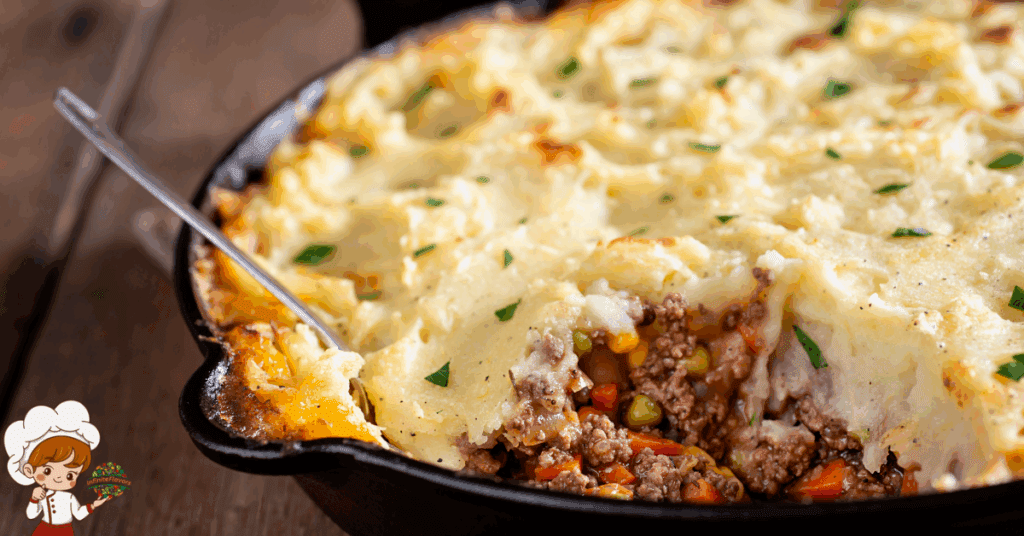
Before diving into history, it’s important to define what shepherd’s pie actually is. Traditionally, shepherd’s pie is a baked casserole consisting of minced lamb cooked with vegetables such as peas, carrots, and onions, layered beneath a topping of creamy mashed potatoes. The dish is then baked until the potatoes are golden and slightly crisp.
In many regions, particularly in the United States, beef is often used instead of lamb. Technically, when beef replaces lamb, the dish is called cottage pie. However, over the centuries, the terms “shepherd’s pie” and “cottage pie” have been used interchangeably, with shepherd’s pie becoming the more common name in popular culture.
The Origins of Shepherd’s Pie in Ireland and Britain
The origin of shepherd’s pie can be traced back to the late 18th and early 19th centuries in the United Kingdom and Ireland. This period was marked by innovation in agriculture, as well as the widespread availability of potatoes, which had been introduced to Europe from the Americas in the 16th century.
By the late 1700s, potatoes had become a staple crop in Ireland and parts of Britain, largely because they were affordable, filling, and grew well in poor soil. Around the same time, there was an increasing emphasis on resourcefulness in cooking. Families often had leftover roasted meat from Sunday dinners, and homemakers were eager to find ways to stretch these ingredients into weekday meals. Shepherd’s pie emerged as the perfect solution: leftover lamb (or beef) could be chopped, mixed with vegetables, and baked beneath a crust of mashed potatoes, turning scraps into a nourishing family meal.
Why It’s Called Shepherd’s Pie
The name “shepherd’s pie” is closely tied to lamb, which was the traditional meat used in the dish. Shepherds, tending to flocks in the rural countryside, relied on lamb and mutton as a primary source of protein. The dish became associated with them, hence the name.
On the other hand, “cottage pie” was the earlier term, dating back to the late 1700s. It was originally used to describe any pie made with meat and topped with potatoes, particularly among the rural working class who lived in modest cottages. Over time, the term shepherd’s pie became more common when referring specifically to lamb-based variations.
Shepherd’s Pie and Irish Cuisine
Shepherd’s pie holds a particularly special place in Irish cuisine. Ireland’s relationship with potatoes is deeply historical, as the potato became the cornerstone of the Irish diet by the 18th century. When paired with lamb or mutton, both readily available in Ireland, the dish was affordable, practical, and filling—qualities that made it essential for working-class families.
Today, shepherd’s pie is often served in Irish pubs worldwide as a nod to this heritage. It has become symbolic of Irish comfort food, much like colcannon or soda bread, and is especially popular during celebrations such as St. Patrick’s Day.
Evolution of Shepherd’s Pie in British Cuisine
In Britain, shepherd’s pie evolved into more than just a way to use leftovers—it became a cherished dish of its own. By the Victorian era, cookbooks began including recipes for shepherd’s pie, cementing its place in domestic cooking traditions. It became especially popular in rural households, where lamb and potatoes were plentiful.
Over time, as industrialization spread, shepherd’s pie made its way into urban households as well. It was inexpensive, hearty, and adaptable, making it a perfect fit for working-class families during the 19th and 20th centuries.
Shepherd’s Pie Around the World
Though shepherd’s pie began in Ireland and Britain, it quickly spread across the globe, adapting to local tastes and ingredients.
- United States: In America, beef was more widely available than lamb, so the dish evolved into versions commonly made with ground beef. Over time, many Americans came to call all variations “shepherd’s pie,” regardless of the meat.
- Australia and New Zealand: Shepherd’s pie remains a staple comfort food, often found in homes and pubs, with lamb being more widely used in keeping with tradition.
- Canada: Canadian households often make shepherd’s pie with beef and sometimes add corn or other local vegetables, creating a slightly sweeter version.
- France: Interestingly, shepherd’s pie is believed to have some inspiration from the French dish hachis Parmentier, which also layers minced meat beneath mashed potatoes.
This adaptability has allowed shepherd’s pie to remain relevant across cultures while retaining its connection to humble origins.
Shepherd’s Pie as Wartime Comfort Food
Shepherd’s pie also gained prominence during the World Wars. During these times, food shortages forced families to make the most of limited resources. Shepherd’s pie was a perfect solution—it could be made with leftover meat, stretched with vegetables, and bulked up with inexpensive potatoes. It was filling, nutritious, and provided a sense of comfort during uncertain times.
This reputation as a frugal yet satisfying dish cemented shepherd’s pie’s place in 20th-century food culture, ensuring it remained a household favorite even after wartime rationing ended.
Modern Variations of Shepherd’s Pie
Today, shepherd’s pie continues to evolve in creative ways. While the classic lamb version remains beloved, there are countless modern variations:
- Vegetarian Shepherd’s Pie: Made with lentils, mushrooms, or plant-based protein, offering the same comfort without meat.
- Sweet Potato Shepherd’s Pie: Replacing traditional mashed potatoes with mashed sweet potatoes for added sweetness and nutrition.
- Gourmet Shepherd’s Pie: Upscale restaurants elevate the dish with high-quality cuts of lamb, truffle oil, or rich gravies.
Despite these innovations, the essence of shepherd’s pie—a savory filling topped with a creamy mashed potato crust—remains unchanged.
Cultural Significance of Shepherd’s Pie Today
Shepherd’s pie has transcended its origins as a thrifty dish to become a cultural icon. It’s served in pubs, home kitchens, and upscale restaurants alike. It represents comfort, family, and tradition—values that resonate across generations. For many, shepherd’s pie is tied to memories of home-cooked meals, family dinners, or festive gatherings, making it as much about emotional nourishment as physical sustenance.
Shepherd’s Pie
Ingredients
- For the Potato Topping:
- 2 pounds russet potatoes peeled and cut into chunks
- 4 tablespoons unsalted butter
- ½ cup whole milk warm
- ½ cup shredded cheddar cheese optional, for richer topping
- Salt and black pepper to taste
- For the Meat Filling:
- 2 tablespoons olive oil or butter
- 1 large onion finely chopped
- 2 medium carrots diced
- 2 cloves garlic minced
- 1 pound ground lamb or substitute ground beef for cottage pie
- 1 cup frozen peas
- 2 tablespoons tomato paste
- 1 cup beef broth
- 1 tablespoon Worcestershire sauce
- 1 teaspoon fresh thyme or ½ teaspoon dried thyme
- 1 teaspoon fresh rosemary optional
- 1 tablespoon all-purpose flour to thicken
- Salt and pepper to taste
Instructions
- Cook the Potatoes:
- Place peeled potato chunks in a large pot of salted water. Bring to a boil and cook until tender, about 15–20 minutes. Drain well, then mash with butter, warm milk, cheese (if using), and season with salt and pepper. Set aside.
- Prepare the Meat Filling:
- In a large skillet or pan, heat olive oil or butter over medium heat. Add onions and carrots, cooking until softened, about 5 minutes. Stir in garlic and cook for another minute.
- Brown the Meat:
- Add ground lamb (or beef) to the pan, breaking it up with a spoon. Cook until browned and no longer pink. Drain excess fat if needed.
- Build Flavor:
- Stir in tomato paste, Worcestershire sauce, thyme, and rosemary. Sprinkle the flour over the mixture and stir well. Slowly pour in the beef broth, stirring constantly until thickened into a rich gravy. Add peas last, stirring them into the mixture. Season with salt and pepper to taste.
- Assemble the Shepherd’s Pie:
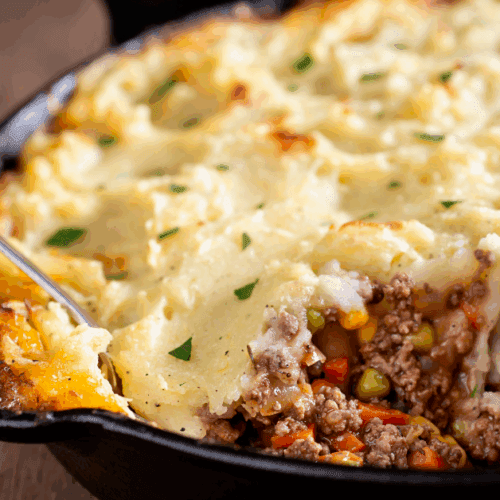
- Preheat oven to 400°F (200°C). Spread the meat mixture evenly into the bottom of a 9×13 baking dish. Spoon the mashed potatoes over the top and spread them evenly, sealing the edges. Use a fork to create ridges on the potatoes (this helps them brown).
- Bake to Perfection:
- Place the dish in the oven and bake for 20–25 minutes, or until the potatoes are golden brown and slightly crisp on top.
- Cool and Serve:
- Let the shepherd’s pie rest for 10 minutes before serving. Enjoy this hearty, comforting dish with a side salad or steamed vegetables.
FAQ: History and Origin of The Great Shepherds Pie
1. What is the difference between shepherd’s pie and cottage pie?
Shepherd’s pie is traditionally made with lamb, while cottage pie uses beef. However, in many countries today, the terms are used interchangeably.
2. When was shepherd’s pie invented?
Shepherd’s pie originated in the late 18th and early 19th centuries, when potatoes became widely available in Ireland and the British Isles.
3. Is shepherd’s pie Irish or British?
Shepherd’s pie has strong roots in both Irish and British cuisine. While it is a beloved Irish comfort food, it also became widely popular across England and Scotland.
4. Why is it called shepherd’s pie?
The dish was named shepherd’s pie because it was traditionally made with lamb, a meat associated with shepherds and sheep farming.
5. How has shepherd’s pie changed over time?
Originally a way to use up leftovers, shepherd’s pie has evolved into a classic comfort food. Today, it includes variations such as vegetarian versions, sweet potato toppings, and gourmet adaptations.
6. Is shepherd’s pie still popular today?
Yes! Shepherd’s pie remains a favorite in households and restaurants worldwide, thanks to its comforting flavors and adaptability.

The Timeless Appeal of Shepherd’s Pie
The history and origin of shepherd’s pie tell a story of resilience, resourcefulness, and comfort. What began as a way to repurpose leftovers has become one of the world’s most beloved comfort foods. From its roots in the cottages of Ireland and Britain to its place on tables around the globe, shepherd’s pie has endured because it speaks to something deeper than flavor—it speaks to the human need for warmth, nourishment, and tradition.
Today, whether served in its traditional lamb-based form or reimagined with modern twists, shepherd’s pie continues to bring people together around the table. It is a dish that bridges past and present, reminding us of the power of food to sustain not just our bodies, but our sense of home and heritage.
If you enjoyed exploring this topic and want to dive even deeper, be sure to check out some of our other articles here on Infinite Flavors. From rich culinary histories to creative twists on classic recipes, there’s always something new to discover. Whether you’re curious about the origins of a dish, looking for fresh inspiration in the kitchen, or simply love learning about food culture, our collection of posts is the perfect next step on your flavor journey.
The History And Origin Of Amazing Broccoli Cheddar Chicken
The Exciting History And Origin Of Beef Tips And Gravy
Origin Of The Best Scalloped Potatoes