Great Influence of Molecular Gastronomy on Food Culture
Influence of Molecular Gastronomy on Food; Have you ever wondered how the art of cooking has evolved over the years, pushing the boundaries of taste and presentation? Well, prepare to be intrigued as we explore the influence of molecular gastronomy on food culture. This culinary movement, born out of a desire to combine science and creativity, has revolutionized the way we think about food. From innovative techniques and avant-garde presentations to a cultural shift in food appreciation, the impact of molecular gastronomy is undeniable. But what does this mean for the future of our dining experiences? Stay with us as we uncover the fascinating trends and challenges that lie ahead.
Origins of Molecular Gastronomy
The origins of Molecular Gastronomy can be traced back to the late 20th century when chefs and scientists began to explore the scientific principles behind cooking and the transformation of ingredients. This marked a significant shift in the culinary world, as it brought together the realms of food and science in a unique and innovative way. The history of Molecular Gastronomy is rooted in the contributions of pioneers who paved the way for this exciting field.
One of the key figures in the history of Molecular Gastronomy is Nicholas Kurti, a physicist who became interested in the science of cooking. In the 1960s, Kurti began conducting experiments and delivering lectures on the physics of food, emphasizing the importance of understanding the underlying scientific processes involved in cooking. His work laid the foundation for the fusion of culinary artistry and scientific inquiry.
Another pioneer of Molecular Gastronomy is Hervé This, a French physical chemist who coined the term “Molecular Gastronomy” in the 1980s. This was instrumental in popularizing the concept and promoting its integration into the culinary world. He focused on the molecular aspects of cooking, exploring the chemical reactions that occur during food preparation.
Together, Kurti and This helped establish Molecular Gastronomy as a legitimate field of study and experimentation. Their contributions sparked a wave of interest among chefs and scientists alike, leading to further exploration and refinement of molecular techniques in the culinary world. Today, Molecular Gastronomy continues to evolve, with chefs and researchers pushing the boundaries of traditional cooking methods to create innovative and visually stunning dishes.
Key Techniques and Innovations
One of the key techniques and innovations in Molecular Gastronomy is the use of spherification to create edible spheres with liquid centers. Spherification is a culinary science technique that involves the transformation of liquids into spheres using a combination of calcium chloride and sodium alginate. This technique has revolutionized the culinary world by allowing chefs to create unique and visually stunning dishes.
The process of spherification begins by creating a sodium alginate bath, which is a solution containing sodium alginate and water. The desired liquid, such as fruit juice or flavored liquid, is then mixed with calcium chloride to create a liquid with a high calcium content. Using a syringe or pipette, drops of the liquid are gently added to the sodium alginate bath. As the drops enter the bath, a reaction occurs between the calcium ions in the liquid and the alginate ions in the bath, causing the liquid to form a thin gel layer.
The resulting spheres have a thin gelatinous membrane that encloses a liquid center, creating a burst of flavor when bitten into. This technique allows chefs to experiment with different flavors and textures, enhancing the overall dining experience. Spherification has also paved the way for creative presentations and playful interpretations of traditional dishes.
Another key technique in Molecular Gastronomy is flavor pairing. By understanding the chemical compounds that contribute to different flavors, chefs can create unexpected and harmonious combinations. This technique involves analyzing the volatile compounds in various ingredients and identifying the similarities and differences in their chemical profiles. By pairing ingredients that share common compounds, chefs can create dishes that are both familiar and surprising to the palate.
Influence on Restaurant Menus
When it comes to the influence of molecular gastronomy on restaurant menus, menu innovation and the incorporation of new culinary techniques are key factors to consider. Chefs are constantly looking for ways to push the boundaries and create unique dining experiences for their guests. With the use of molecular gastronomy techniques such as spherification, foams, and gels, chefs are able to transform traditional dishes into visually stunning and creatively presented masterpieces that leave a lasting impression on diners. These innovations not only elevate the dining experience but also highlight the skill and creativity of the chefs.
Menu Innovation
Menu innovation plays a crucial role in shaping the offerings of modern restaurants, allowing chefs to push the boundaries of traditional cuisine and create unique dining experiences. One way chefs achieve this is through food experimentation, using molecular gastronomy techniques to transform ingredients and present them in innovative ways. This involves the application of scientific principles to food preparation, such as manipulating textures and temperatures.
Additionally, flavor pairing is a key aspect of menu innovation, where chefs explore unconventional combinations to create unexpected taste sensations. By combining ingredients that traditionally wouldn’t be paired together, chefs can create surprising and delightful flavor profiles. Menu innovation, through food experimentation and flavor pairing, not only captivates diners with new and exciting culinary experiences but also encourages the evolution of food culture by challenging traditional culinary norms.
Culinary Techniques
To further explore the impact of culinary techniques on restaurant menus, it is important to analyze the intricate ways in which these techniques influence the creation and presentation of dishes. Culinary techniques have greatly influenced modern interpretations of traditional dishes, allowing chefs to push the boundaries of flavor experimentation. Here are three ways in which these techniques have shaped restaurant menus:
- Sous vide cooking: This precise cooking method involves vacuum-sealing ingredients in plastic bags and cooking them at a low, controlled temperature for an extended period. It allows chefs to achieve consistent results and retain the natural flavors and textures of the ingredients.
- Spherification: This technique, popularized by molecular gastronomy, involves transforming liquids into spheres with a thin, gel-like membrane. It adds a playful and visually striking element to dishes, while also allowing for unique flavor combinations.
- Foams and emulsions: By using specialized equipment, chefs can create airy foams and stable emulsions that add a light and delicate texture to dishes. These techniques allow for the incorporation of intense flavors and aromas in a visually appealing way.
Incorporating these culinary techniques into their repertoire, chefs are able to offer diners exciting and innovative dining experiences with modern interpretations and flavor experimentation.
Impact on Home Cooking
The incorporation of molecular gastronomy principles in home cooking has revolutionized the way individuals approach culinary experimentation. The influence of molecular gastronomy on home cooking trends has led to increased interest in applying scientific techniques and ingredients to everyday recipes. Molecular gastronomy at home has become a popular trend among food enthusiasts, as it allows for the creation of unique and visually stunning dishes.
One of the key impacts of molecular gastronomy on home cooking is the use of innovative techniques such as spherification, gelification, and emulsification. These techniques involve transforming ingredients into different textures and forms, creating a visually appealing and gastronomically exciting experience. For example, spherification allows for the creation of small, encapsulated spheres filled with flavorful liquids, adding a burst of flavor to dishes. Gelification involves the use of gelling agents, such as agar-agar or gelatin, to create gels with various consistencies, enhancing both the taste and presentation of dishes. Emulsification techniques enable the creation of stable emulsions, resulting in creamy textures and smooth sauces.
Furthermore, molecular gastronomy at home has also popularized the use of unconventional ingredients, such as liquid nitrogen and edible powders. Liquid nitrogen is used to create instant freezing effects, resulting in unique ice creams and frozen desserts with a smooth and creamy texture. Edible powders, such as maltodextrin or tapioca maltodextrin, are used to transform fats into powders, allowing for the creation of unique flavor combinations and textural contrasts.
Redefining Food Presentation
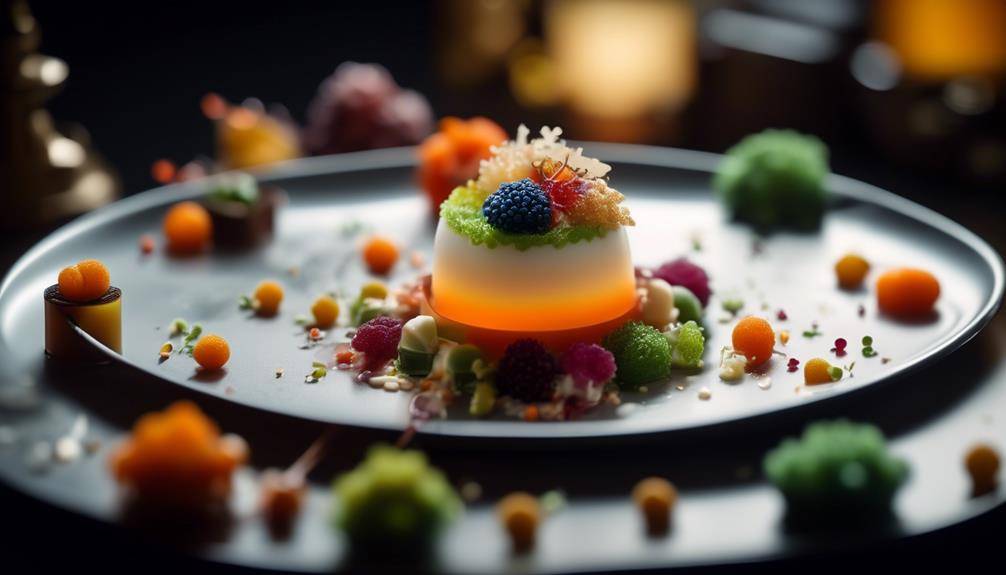
Incorporating principles of molecular gastronomy in food preparation has significantly transformed the way dishes are presented, elevating the visual appeal and artistic expression of culinary creations. Food presentation has gone beyond the traditional plating techniques, now encompassing interactive dining experiences and sensory exploration. Here are three ways in which molecular gastronomy has redefined food presentation:
- Edible Art Installations: Molecular gastronomy has introduced innovative techniques that allow chefs to create stunning edible art installations. These creations are not only visually appealing but also engage multiple senses. For example, chefs can use spherification to create edible spheres that burst with flavor when consumed, providing a surprising and interactive element to the dining experience.
- Playful Texture Manipulation: With molecular gastronomy, chefs can manipulate the texture of ingredients to create unique and playful presentations. Through techniques like foams, gels, and emulsions, chefs can transform ordinary ingredients into visually striking textures. For instance, they can create foams that resemble clouds or gels that mimic gemstones, adding an element of whimsy and surprise to the dish.
- Tableside Experiences: Molecular gastronomy has introduced tableside experiences that allow diners to interact with their food in a whole new way. For example, chefs can use liquid nitrogen to freeze ingredients right at the table, creating a spectacle and enhancing the sensory exploration. Diners can also be involved in the preparation process, such as breaking open a chocolate sphere to reveal a hidden dessert inside.
These innovations in food presentation have not only revolutionized the way dishes look but have also enhanced the overall dining experience. By incorporating principles of molecular gastronomy, chefs can create visually stunning and interactive dishes that engage all the senses, making dining a memorable and multisensory experience.
Cultural Shift in Food Appreciation
With the rise of molecular gastronomy, there has been a significant cultural shift in the way food is appreciated and valued. The introduction of innovative techniques and ingredients has led to a shift in perspective, challenging traditional notions of what is considered delicious and appealing. The evolving tastes of consumers have contributed to this cultural transformation, as individuals seek novel and unique culinary experiences.
Molecular gastronomy has revolutionized the culinary world by combining science and art to create visually stunning and sensorially delightful dishes. This approach has sparked a newfound appreciation for the technical aspects of food preparation, as chefs experiment with molecular techniques such as spherification, foams, and gels. These innovative methods not only enhance the aesthetics of a dish but also transform its texture and taste, captivating the senses in unprecedented ways.
Furthermore, the introduction of unconventional ingredients and flavor pairings has broadened the horizons of food appreciation. Chefs now explore the use of ingredients such as liquid nitrogen, edible flowers, and molecular compounds to create unexpected taste sensations. This departure from traditional flavors has challenged societal norms and encouraged individuals to embrace new and exciting culinary experiences.
As a result of these advancements in molecular gastronomy, individuals have developed a more adventurous palate and an increased willingness to explore unfamiliar flavors. The shift in perspective towards valuing creativity and ingenuity in food preparation has transformed the way we appreciate and enjoy meals. In today’s food culture, the emphasis is not solely on taste but also on the overall experience and presentation of a dish.
Future Trends and Challenges
As we look ahead to future trends and challenges in the field of molecular gastronomy and food culture, it is crucial to consider the evolving demands and expectations of consumers. The combination of technological advancements and changing consumer preferences will shape the future of molecular gastronomy and present both opportunities and challenges for chefs, scientists, and food enthusiasts alike.
Here are three key future challenges and the role of technological advancements in addressing them:
- Sustainability and Environmental Impact:
- With increasing concerns about the environmental impact of food production, there is a growing need to develop sustainable practices in molecular gastronomy.
- Technological advancements, such as precision agriculture and vertical farming, can help reduce the use of resources and minimize waste in food production.
- By embracing these advancements, molecular gastronomy can contribute to a more sustainable food culture and address the challenge of environmental impact.
- Accessibility and Affordability:
- As molecular gastronomy gains popularity, it is important to ensure that it remains accessible and affordable for a wider audience.
- Technological advancements in food processing and production can help streamline the molecular gastronomy techniques and make them more accessible to a larger number of chefs and restaurants.
- This can lead to the democratization of molecular gastronomy, allowing more people to experience the innovative flavors and textures it offers.
- Health and Nutrition:
- The future of molecular gastronomy lies in its ability to enhance the nutritional value of food while maintaining its sensory appeal.
- Technological advancements, such as the development of healthier substitutes for ingredients and the use of innovative cooking techniques, can help address the challenge of creating nutritious yet delicious dishes.
- By leveraging these advancements, molecular gastronomy can contribute to a healthier food culture, catering to the increasing demand for nutritious and flavorful meals.
Frequently Asked Questions: Influence of Molecular Gastronomy on Food
How Does Molecular Gastronomy Affect the Nutritional Value of Food?
Molecular gastronomy impacts the nutritional value of food through innovative food processing techniques. It offers both benefits and drawbacks. The techniques can enhance nutrient retention, but may also lead to nutrient loss or alter the bioavailability of certain nutrients.
What Are Some Common Misconceptions About Molecular Gastronomy?
Some common misconceptions about molecular gastronomy include thinking it is only for fancy restaurants and that it sacrifices taste for presentation. However, it actually offers benefits like enhancing flavors and textures.
Has Molecular Gastronomy Influenced the Popularity of Certain Ingredients or Types of Cuisine?
Molecular gastronomy has indeed influenced the popularity of certain ingredients and types of cuisine. Through innovative techniques and presentations, it has brought attention to unique flavors and transformed traditional dishes into new and exciting culinary experiences.
How Has Molecular Gastronomy Impacted the Dining Experience in Terms of Taste and Texture?
Molecular gastronomy has revolutionized the dining experience through its impact on presentation and the use of scientific techniques. Taste and texture are enhanced by innovative methods, creating a more precise and detailed culinary experience.
Are There Any Ethical Concerns or Criticisms Associated With the Practice of Molecular Gastronomy?
There are ethical concerns and criticisms associated with molecular gastronomy. Some argue that it prioritizes appearance over sustainability and traditional cooking methods. Health implications are also debated due to the use of additives and chemicals.

Conclusion
In conclusion, the influence of molecular gastronomy on food culture has been profound and far-reaching. The origins of this culinary movement, along with key techniques and innovations, have revolutionized restaurant menus and impacted home cooking. Furthermore, molecular gastronomy has redefined food presentation and led to a cultural shift in food appreciation. Looking ahead, future trends and challenges will continue to shape this field, as it continues to push the boundaries of gastronomic creativity and scientific exploration.
If you enjoyed exploring this topic and want to dive even deeper, be sure to check out some of our other articles here on Infinite Flavors. From rich culinary histories to creative twists on classic recipes, there’s always something new to discover. Whether you’re curious about the origins of a dish, looking for fresh inspiration in the kitchen, or simply love learning about food culture, our collection of posts is the perfect next step on your flavor journey.
Amazing Science Behind Molecular Gastronomy Cooking
Exciting Effects Of Molecular Gastronomy On Food Industry
Exciting Molecular Gastronomy Food Presentation Ideas