What Are The Easy Basics Of Cooking With Spices
The Easy Basics Of Cooking With Spices; Spices, like tiny keys to unlocking a world of flavors, hold the power to elevate your culinary creations from ordinary to extraordinary. But where do you begin when it comes to cooking with spices? How do you navigate the vast array of spices available, and how do you know which ones to use and when?
In this discussion, we will explore the basics of cooking with spices – from understanding their flavor profiles to storing them properly – so that you can confidently embark on a culinary adventure that will tantalize your taste buds and leave you craving for more. So, get ready to embark on a journey of spice exploration and discover the secrets to transforming your dishes into culinary masterpieces.
Why Use Spices in Cooking
Spices are essential ingredients in cooking, adding depth, complexity, and flavor to your dishes. But have you ever wondered why using spices in cooking is so important? Well, let’s dive into the science of spice combinations and the benefits of using spices in traditional medicine.
When it comes to the science of spice combinations, it’s all about chemistry. Each spice contains a unique combination of chemical compounds that interact with each other and with the other ingredients in your dish. This interaction creates a symphony of flavors that can elevate even the simplest of meals to new heights. For example, the combination of cumin and coriander in Indian cuisine creates a warm and earthy flavor, while the pairing of cinnamon and nutmeg in a pumpkin pie adds a sweet and aromatic touch.
But spices are not just about taste. They have been used in traditional medicine for centuries due to their powerful health benefits. Turmeric, for instance, contains a compound called curcumin, which has anti-inflammatory properties and is believed to help with arthritis and digestive issues. Cinnamon, on the other hand, has been used to regulate blood sugar levels and improve insulin sensitivity.
Understanding Different Spice Flavor Profiles
To truly appreciate the art of cooking with spices, it is essential to understand the unique flavor profiles that each spice brings to a dish. Different spices have distinct characteristics that can enhance the taste and aroma of your food. Here are some key points to consider when exploring the world of spice flavor profiles:
- Heat and Spice Level: Some spices, like cayenne pepper and chili powder, bring a fiery heat to your dishes. Others, like paprika and black pepper, add a milder spiciness. Understanding the heat level of each spice will help you balance the flavors in your recipes.
- Sweet and Fragrant: Spices like cinnamon, nutmeg, and cardamom are known for their warm, sweet, and aromatic flavors. They can add depth and complexity to both savory and sweet dishes, making them versatile additions to your spice rack.
- Earthy and Savory: Spices such as cumin, coriander, and turmeric have earthy and savory flavor profiles. They can provide a rich and robust taste to your recipes, especially in dishes like curries and stews.
- Herbaceous and Fresh: Herbs like basil, rosemary, and thyme bring a fresh and herbaceous quality to your dishes. They can elevate the taste of vegetables, meats, and sauces, adding a burst of freshness to your culinary creations.
Understanding these different spice flavor profiles allows you to experiment with different spice combinations and create your own spice blends. By mixing and matching spices, you can customize the flavors of your dishes to suit your preferences. So go ahead, explore the world of spices, and let your creativity shine in the kitchen.
Commonly Used Spices and Their Properties
One of the key aspects of mastering the art of cooking with spices is understanding the properties of commonly used spices and how they can enhance the flavors of your dishes. Let’s delve into some of these spices and explore their unique characteristics.
Cumin is a popular spice that adds a warm and earthy flavor to dishes. It pairs well with meats, vegetables, and legumes, and is often used in Mexican and Indian cuisines. If you’re out of cumin, a common substitute is chili powder mixed with ground coriander.
Another versatile spice is cinnamon, known for its sweet and aromatic taste. It can be used in both sweet and savory dishes, such as desserts and curries. If you run out of cinnamon, you can try using nutmeg or allspice as substitutes.
Turmeric, with its vibrant yellow color, is a staple in many curry dishes. It has a slightly bitter taste and is often used for its anti-inflammatory properties. If you don’t have turmeric on hand, you can substitute it with curry powder or ground mustard.
Now, let’s talk about spice storage hacks. To keep your spices fresh and flavorful, store them in airtight containers in a cool, dark place. Avoid storing them above the stove, as the heat and moisture can cause them to lose their potency.
How to Store Spices Properly
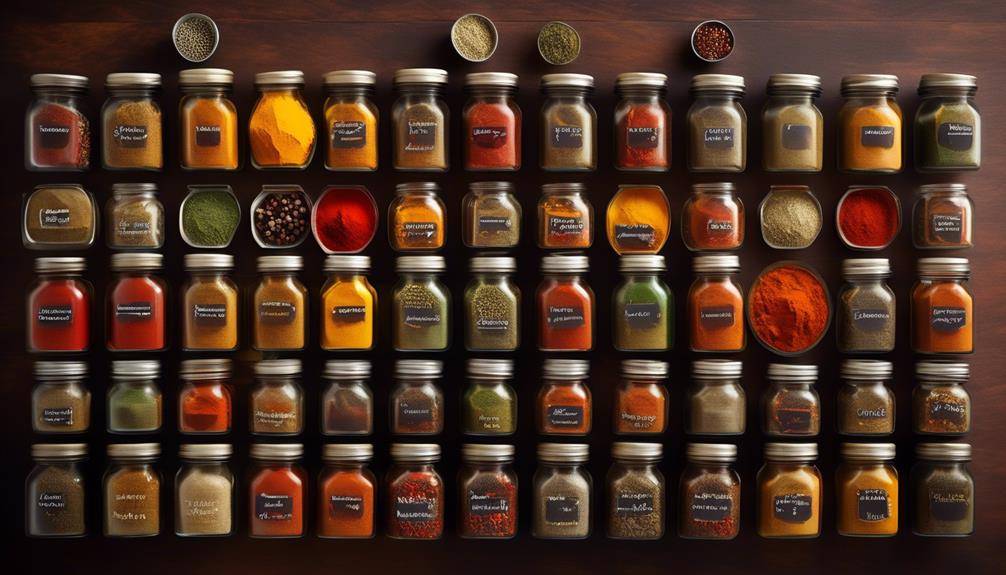
Now that you’ve learned about the different spices and their properties, it’s important to know how to store them properly to maintain their freshness and flavor. Proper spice storage starts with using the right containers, such as airtight glass jars or tins, to keep out moisture and light. Additionally, make sure to label your spices with the date of purchase to keep track of their freshness.
Spice Storage Tips
Proper spice storage is essential to ensure that your spices retain their flavor and potency for as long as possible. Here are some spice storage tips to help you maintain the freshness of your spices:
- Store spices in a cool, dark place: Heat, light, and moisture can degrade the flavor and aroma of spices. Keep them away from the stove or any other source of heat.
- Use airtight containers: Oxygen can also diminish the potency of spices. Store them in airtight containers to prevent air from getting in and keep them fresh for longer.
- Label and date your spices: Spice organization is key to easily find what you need. Label your containers with the spice name and date of purchase to ensure you use the oldest spices first.
- Avoid storing spices near strong odors: Spices can absorb odors from other ingredients, affecting their flavor. Keep them away from strong-smelling foods or chemicals.
Proper Spice Container
To ensure your spices remain fresh and flavorful, selecting the right container is crucial. Proper spice storage is essential for preserving the taste and aroma of your spices. When organizing your spice collection, opt for airtight containers that will keep moisture, light, and air out. Glass jars with tight-fitting lids are an excellent choice as they are transparent, allowing you to easily identify your spices.
Additionally, glass is non-reactive, meaning it won’t absorb flavors or odors from your spices. Avoid storing spices in plastic containers as they can absorb odors and may cause your spices to degrade faster. Remember to label your containers to avoid any mix-ups. By investing in the proper spice container, you can extend the shelf life of your spices and ensure they remain at their peak flavor.
The Art of Experimenting With Spices
Experimenting with spices is a delightful journey that allows you to unlock a world of flavors and elevate your culinary creations to new heights. The art of experimenting with spices is all about exploring different combinations and creating your own unique spice blends. Here are a few tips to help you on your flavorful adventure:
- Mix and Match: Don’t be afraid to mix different spices together to create unique flavor profiles. Try combining warm and earthy spices like cumin and paprika with aromatic spices like cinnamon and cloves for a tantalizing blend.
- Start with the Basics: If you’re new to experimenting with spices, start by familiarizing yourself with the basic spices commonly used in different cuisines. Get to know the flavors of spices like turmeric, coriander, and chili powder, and then gradually branch out to more exotic spices.
- Balance is Key: When experimenting with spice combinations, it’s important to maintain a balance of flavors. Too much of one spice can overpower the dish, while too little can leave it dull. Start with small amounts and adjust to your taste preferences.
- Keep Notes: As you delve into the world of spice experimentation, keep a journal or note app to record your spice combinations and the dishes you used them in. This will help you remember your favorite blends and allow you to recreate them in the future.
Enhancing Flavors With Spice Blends
Unlock a world of tantalizing flavors and take your culinary creations to new heights by exploring the art of enhancing flavors with spice blends. Spice blending techniques allow you to create your own homemade spice blends, adding depth and complexity to your dishes. By combining different spices in just the right proportions, you can elevate the taste of your meals and create unique flavor profiles that will leave your taste buds wanting more.
Creating homemade spice blends is a fun and rewarding experience. It gives you the freedom to tailor the flavors to your liking and experiment with different combinations. Start by selecting a variety of spices that complement each other and align with the flavors you want to enhance. Common spices used in blends include cumin, coriander, paprika, cinnamon, nutmeg, and chili powder.
To achieve a harmonious blend, it’s important to consider the balance of flavors. Some spices, like cumin and paprika, add warmth and earthiness, while others, like cinnamon and nutmeg, bring sweetness and warmth. By combining spices with contrasting flavors, you can create a well-rounded blend that is both complex and balanced.
When blending spices, it’s crucial to use high-quality, fresh ingredients. Whole spices, when ground just before use, offer the best flavor. Invest in a good spice grinder or mortar and pestle to ensure you’re getting the most out of your spices.
Experiment with different ratios and combinations to find your perfect blend. Start with smaller quantities and adjust as needed. Taste as you go and trust your instincts. Remember, the art of spice blending is subjective, and what works for one person may not work for another.
Using Spices in Different Cuisines
Ready to take your taste buds on a global adventure? Spice pairings and regional spice blends are the keys to unlocking the flavors of different cuisines. From the fiery heat of Indian curries to the aromatic subtlety of Moroccan tagines, each cuisine has its own unique spice profile that adds depth and complexity to dishes. So, get ready to explore the world of flavors with spices!
Spice Pairings
Discover the art of combining spices from different cuisines to elevate your culinary creations to new heights. Spice pairings can add depth, complexity, and a burst of flavors to your dishes. By experimenting with spice flavor combinations, you can create unique and exciting taste profiles that will impress your friends and family. Here are some key points to keep in mind when creating spice blends:
- Balance: Aim for a harmonious blend of spices that complement each other rather than overpowering one another.
- Contrast: Pair spices with contrasting flavors to create a well-rounded taste experience.
- Regional Inspiration: Take inspiration from different cuisines around the world to create fusion flavors that excite the palate.
- Experimentation: Don’t be afraid to think outside the box and try unconventional spice combinations to discover new and exciting flavors.
With the right spice pairings, you can transform ordinary dishes into extraordinary culinary masterpieces. So go ahead, explore the world of spices, and let your creativity soar in the kitchen.
Regional Spice Blends
Regional spice blends are a captivating way to infuse diverse flavors from different cuisines into your dishes. Each region has its own unique blend of spices that has been passed down through generations, creating signature flavors that are instantly recognizable. Whether it’s the warm and aromatic garam masala of Indian cuisine or the fiery jerk seasoning of the Caribbean, regional spice blends are essential in enhancing flavors and creating authentic dishes. These blends not only add depth and complexity to your cooking but also transport you to distant lands with every bite. So, explore the world of regional spice blends and embark on a culinary journey that will tantalize your taste buds and awaken your senses.
Pairing Spices With Different Ingredients
To enhance the flavors of your dishes, it is essential to master the art of pairing spices with different ingredients. By combining the right spices with the right ingredients, you can create an explosion of flavors that will delight your taste buds. Here are some spice pairing techniques and creative spice combinations to help you take your cooking to the next level:
- Contrasting flavors: Pairing spices with contrasting flavors can create a harmonious balance in your dish. For example, the warmth of cinnamon can complement the tanginess of lemon in a Moroccan-inspired chicken tagine.
- Complementary flavors: Some spices have flavors that naturally complement each other. For instance, the earthiness of cumin can enhance the smoky flavor of paprika in a spicy chili con carne.
- Regional combinations: Different regions around the world have their own unique spice combinations. Exploring these regional spice blends can add depth and complexity to your cooking. Try combining turmeric, coriander, and garam masala for a flavorful Indian curry.
- Experimentation: Don’t be afraid to get creative and experiment with different spice combinations. You never know what delicious flavors you might discover. Mix together cardamom, ginger, and cloves for a warm and aromatic spice blend that can be used in both sweet and savory dishes.
Techniques for Adding Spices to Dishes
Now that you’ve learned about the art of pairing spices with different ingredients, it’s time to explore the techniques for adding these flavorful gems to your dishes. Spice pairing tips will help you create harmonious flavor profiles, while spice infusion methods will allow you to infuse your dishes with the essence of these aromatic wonders. Get ready to take your cooking to the next level by mastering the art of adding spices to your favorite recipes.
Spice Pairing Tips
Enhance your culinary creations by mastering the art of spice pairing, bringing depth and complexity to your dishes. Spice pairing techniques can elevate the flavors of your meals, creating a harmonious blend of aromas and tastes. Here are some tips to help you create perfectly balanced spice combinations:
- Consider the flavor profiles: Experiment with combining spices that have complementary or contrasting flavors. For example, try pairing the warmth of cinnamon with the earthiness of cumin.
- Start with small amounts: When creating spice blends, it’s best to start with small quantities and adjust as needed. This allows you to control the intensity of flavors and avoid overpowering your dish.
- Consider the cooking method: Different spices react differently to various cooking methods. For instance, delicate spices like saffron are best added towards the end of cooking to preserve their delicate flavors.
- Don’t be afraid to experiment: The beauty of spice pairing is the opportunity to explore new combinations. Trust your taste buds and have fun discovering unique flavor profiles.
Mastering the art of spice pairing will unlock a world of culinary possibilities, allowing you to create dishes that are truly unforgettable.
Spice Infusion Methods
Elevate your culinary creations even further by exploring various techniques for adding spices to your dishes, known as spice infusion methods. Spice infusion recipes are a great way to infuse the flavors of spices into your dishes, creating depth and complexity. One method involves making spice-infused oils, which can be used as a base for cooking or as a finishing touch.
To create these flavorful oils, simply heat oil in a pan and add your desired spices. Let the spices simmer in the oil for a few minutes, allowing the flavors to meld together. Then, strain out the spices and use the infused oil in your cooking. The benefits of spice-infused oils include enhanced flavor, vibrant color, and a touch of aromatic magic to your dishes. So, get creative and start experimenting with spice infusion methods to take your cooking to the next level.
Tips for Balancing Flavors With Spices
To achieve a harmonious blend of flavors, it is essential to master the art of balancing spices in your cooking. Balancing spice quantities is crucial to ensure that no single spice overpowers the dish. Here are some tips to help you achieve the perfect balance of flavors:
- Start with small quantities: When experimenting with new spice combinations, it is best to start with smaller amounts. This allows you to gradually build up the flavors without overwhelming the dish. You can always add more spices later if needed.
- Taste as you go: As you add spices to your dish, taste it at regular intervals to gauge the flavors. This will help you determine if you need to adjust the quantities or add more spices to achieve the desired taste.
- Understand spice profiles: Different spices have distinct flavor profiles. Some are earthy, while others are spicy or sweet. Understanding the characteristics of each spice will help you create a balanced blend of flavors in your dishes.
- Pair complementary spices: Experiment with combining spices that complement each other. For example, cumin and coriander work well together, as do cinnamon and nutmeg. By pairing spices that enhance each other’s flavors, you can create a harmonious blend that elevates your dish.
Health Benefits of Cooking With Spices
Cooking with spices can bring a multitude of health benefits to your dishes. Not only do spices add flavor and depth to your meals, but they also offer medicinal uses that can support your overall well-being. One of the key health benefits of cooking with spices is their ability to aid digestion. Certain spices, such as ginger and turmeric, have been used for centuries to alleviate stomach discomfort and promote healthy digestion.
Ginger, known for its aromatic and spicy flavor, is a popular spice that has long been used for its medicinal properties. It contains compounds that can help soothe an upset stomach, reduce nausea, and relieve indigestion. Adding ginger to your dishes, such as stir-fries, soups, or teas, can provide relief and support healthy digestion.
Turmeric, with its vibrant golden color and warm, earthy flavor, is another spice that offers numerous health benefits. It contains a compound called curcumin, which has anti-inflammatory properties and can aid digestion. Turmeric is commonly used in curries, rice dishes, and smoothies to add flavor and promote digestive health.
Other spices that are known for their medicinal uses and digestive benefits include cinnamon, cumin, and fennel. Cinnamon can help regulate blood sugar levels and improve digestion, while cumin and fennel can help relieve bloating and gas.
Avoiding Common Mistakes When Using Spices
When it comes to cooking with spices, it’s important to be mindful of common mistakes that can hinder the flavor and effectiveness of these aromatic ingredients. To help you avoid these pitfalls and achieve perfectly seasoned dishes, here are some tips for achieving balanced flavors:
- Using too much or too little: One of the most common mistakes when seasoning is adding too much or too little spice. Too much can overpower the dish, while too little may result in a lack of flavor. Remember to start with small amounts and gradually adjust to taste.
- Not considering the freshness: Spices lose their potency over time, so using stale or expired spices can affect the flavor of your dishes. It’s important to check the expiration dates and regularly replace your spices to ensure optimal flavor.
- Not properly storing spices: Improper storage can also lead to flavor loss. Exposure to light, heat, and moisture can cause spices to degrade quickly. To preserve their freshness, store spices in airtight containers in a cool, dark place.
- Not balancing flavors: Achieving balanced flavors is key to a delicious dish. Don’t just focus on one dominant spice; experiment with different combinations to create a harmonious blend of flavors. Pay attention to the taste of your dish and adjust accordingly.
Exploring Unique and Exotic Spices
Embark on a culinary adventure as you delve into the world of unique and exotic spices, where vibrant flavors and enticing aromas await your exploration. Exploring traditional techniques and experimenting with unique flavor combinations can elevate your dishes to a whole new level.
One of the most intriguing aspects of cooking with spices is the opportunity to discover traditional techniques from different cultures. Each region has its own set of spices that are integral to their culinary traditions. From the fiery heat of Mexican chilies to the aromatic blend of Indian masalas, there is a whole world of flavors waiting to be explored. By incorporating these unique spices into your cooking, you can recreate the authentic tastes of various cuisines and add a touch of global influence to your dishes.
In addition to exploring traditional techniques, experimenting with unique flavor combinations can yield surprising and delightful results. Combining spices that you wouldn’t normally think of pairing together can create a harmonious balance of flavors that excite the taste buds. For example, try adding a pinch of cinnamon to your savory dishes like roasted vegetables or braised meats to add a subtle warmth and depth of flavor. Or, sprinkle some cardamom into your chocolate desserts for a hint of floral sweetness.
As you embark on your journey of exploring unique and exotic spices, remember to start small and gradually build up the intensity of flavors. This way, you can better understand the impact each spice has on your dish. So, have fun experimenting, be open to new flavors, and let your taste buds guide you through this delightful culinary adventure.
Frequently Asked Questions: The Easy Basics Of Cooking With Spices
What Are Some Unusual Spices That Can Be Used in Cooking?
Unleash your culinary creativity with unusual spice combinations. Discover the benefits of using exotic spices to elevate your dishes. From cardamom’s floral notes to sumac’s tangy flavor, these unique spices will take your cooking to new heights.
Can Spices Be Used to Mask or Cover up Bad Flavors in a Dish?
Spices can indeed be used to mask or cover up bad flavors in a dish. However, their true power lies in enhancing flavors and creating balanced dishes. They add depth, complexity, and a burst of deliciousness to any recipe.
Are There Any Spices That Should Never Be Used Together?
When it comes to spices, there are some combinations to avoid. Certain flavors can clash and overpower each other, so it’s important to balance spice flavors to create a harmonious taste in your dishes.
How Long Do Spices Typically Last Before They Lose Their Flavor?
Spices typically lose their flavor after a certain period of time. To ensure they stay fresh, store them properly in a cool, dark place. Heat and light can negatively impact their flavor, so keep them away from the stove and sunlight.
Can Spices Be Used in Baking as Well as Cooking?
Spices can definitely be used in baking too! They add depth and flavor to desserts. Get creative and try incorporating spices like cinnamon, nutmeg, or cardamom into your cakes, cookies, and pies. It’s a delicious way to elevate your baked goods!

Conclusion
In conclusion, cooking with spices is an art that enhances the flavors of any dish. By understanding the different spice flavor profiles and their properties, you can create unique and delicious meals. Proper storage of spices ensures their freshness and potency. Don’t be afraid to experiment with spices to discover new and exciting combinations. Balancing flavors is key, and cooking with spices also offers numerous health benefits. So, spice up your cooking and embark on a culinary adventure with the world of spices!
If you enjoyed exploring this topic and want to dive even deeper, be sure to check out some of our other articles here on Infinite Flavors. From rich culinary histories to creative twists on classic recipes, there’s always something new to discover. Whether you’re curious about the origins of a dish, looking for fresh inspiration in the kitchen, or simply love learning about food culture, our collection of posts is the perfect next step on your flavor journey.
Vegetarian Recipes Simplified For Busy College Students
What Makes Vegetarian Meal Prep So Easy
Unleashing Easy Vegetarian Pizza A Guide