Great AI Advancements In Food Production Sector
AI Advancements In Food Production Sector; AI is revolutionizing the food production sector by integrating advanced technologies into agriculture. You’ll find tools like crop monitoring systems and automated irrigation making farming more efficient. With data-driven decision-making, farmers can optimize resource use and enhance yield. Precision farming techniques enable real-time insights into soil health and crop performance, leading to higher productivity. Plus, AI enhances food safety through risk assessment and contamination detection. This blend of innovation promotes sustainable practices while addressing modern agricultural challenges. Stick around to discover even more breakthroughs and trends shaping the future of food production.
We’ve Got Everything You Need to Make Your Masterpiece.
Overview of AI in Agriculture
Artificial intelligence (AI) is transforming agriculture in remarkable ways. You’re witnessing a revolutionary shift, where traditional farming methods are enhanced by cutting-edge technology. One standout area is crop disease detection. With AI-powered tools, you’re able to monitor your crops in real-time, identifying diseases before they become widespread. These systems analyze data from various sources—like satellite images and sensors—allowing you to act quickly and effectively.
Imagine walking through your fields, equipped with a smartphone app that uses AI to highlight potential issues in your crops. This not only saves you time but also minimizes the use of pesticides, promoting a healthier environment. The ability to detect crop diseases early means you can prevent losses and guarantee a bountiful harvest.
Another incredible advancement comes from agricultural robotics. These machines can carry out various tasks, from planting seeds to harvesting crops. You might find yourself using drones to survey your fields or autonomous tractors to optimize planting patterns. The precision and efficiency these robots bring to your farm operations can considerably enhance productivity.
As you embrace AI’s potential, you’re not just improving your farming practices but also contributing to a more sustainable future. With crop disease detection systems and agricultural robotics at your disposal, you’re empowered to make informed decisions that benefit both your yield and the environment. The future of agriculture is here, and it’s driven by AI.
Precision Farming Techniques
Precision farming techniques are changing the game in agriculture, allowing you to manage crops more effectively. By utilizing data-driven crop management and automated irrigation systems, you can optimize resource use and boost yields. This approach not only enhances productivity but also promotes sustainability in food production.
Data-Driven Crop Management
Harnessing data-driven crop management techniques revolutionizes how farmers approach cultivation and resource allocation. By leveraging data analytics, you can gain valuable agronomic insights that directly impact your farm’s productivity. These insights help you make informed decisions about soil health, allowing you to optimize nutrient management and enhance crop sustainability.
With yield optimization at the forefront, technology integration plays an essential role in improving harvest efficiency. You can use precision farming tools to monitor crop performance in real-time, making adjustments that reduce waste and maximize output. This proactive approach not only boosts your yields but also minimizes your environmental impact, contributing to a more sustainable agricultural system.
Moreover, as climate patterns continue to shift, adopting these innovations enables you to adapt to changing conditions effectively. By utilizing data-driven methods, you can assess risks and implement strategies that guarantee resilience in your farming practices. Ultimately, embracing agricultural innovations empowers you to cultivate smarter, ensuring that your farming operations thrive in an ever-evolving landscape while promoting responsible stewardship of the land.
Automated Irrigation Systems
In modern agriculture, automated irrigation systems frequently transform how you manage water resources on your farm. These systems leverage technology to deliver precise amounts of water based on real-time data. By integrating sensors that measure soil moisture, you can guarantee your crops receive exactly what they need, reducing waste and optimizing growth.
One of the standout technologies enhancing automated irrigation is drone technology. Drones can survey your fields, gathering valuable information about crop health and soil conditions. They help you identify areas that require more or less water, enabling you to adjust your irrigation system accordingly. This targeted approach not only conserves water but also promotes healthier crop yields.
Moreover, automated systems can be programmed to operate on schedules or triggered by specific soil moisture levels. This means you can set it and forget it, freeing up your time for other essential tasks. You’ll find that embracing automated irrigation not only streamlines your operations but also supports sustainable farming practices. By adopting these innovations, you’re not just improving efficiency; you’re also contributing to a more sustainable future in agriculture.
We’ve Got Everything You Need to Make Your Masterpiece.
Crop Monitoring Systems
As you explore crop monitoring systems, you’ll see how precision agriculture technologies are transforming farming. These systems utilize real-time data analytics and remote sensing techniques to provide insights that help you make informed decisions. By harnessing these advancements, you can optimize your crop yield and resource use effectively.
Precision Agriculture Technologies
Precision agriculture technologies, particularly crop monitoring systems, are revolutionizing how farmers manage their fields. By leveraging sensor integration, you can gather real-time data about your crops, enabling you to address issues like crop variability effectively. This technology helps you monitor soil health, guaranteeing your crops receive the nutrients they need for peak growth.
With yield mapping, you can visualize the productivity of different field sections, allowing for tailored interventions that enhance overall output. Pest detection systems alert you to potential threats before they escalate, reducing the need for chemical interventions and promoting a healthier environment.
Weather forecasting tools integrated into your farm management system provide insights into upcoming conditions, helping you make informed decisions about planting, irrigation, and harvesting. As you embrace technology adoption, these advanced systems enable you to maximize resource use, minimize waste, and improve sustainability.
Incorporating precision agriculture technologies not only increases efficiency but also enhances your ability to adapt to challenges. This proactive approach to farming guarantees you maintain competitiveness in a rapidly evolving agricultural landscape.
Real-time Data Analytics
Real-time data analytics is transforming crop monitoring systems, allowing you to make smarter decisions on the fly. With real-time monitoring, you can track essential crop metrics such as soil moisture, temperature, and nutrient levels. This immediate access to data helps you respond quickly to changing conditions, ensuring your crops receive the care they need.
By harnessing data visualization tools, you can easily interpret complex datasets. Graphical representations of your crop health and growth patterns make it simpler to identify trends or potential issues. You’ll no longer be sifting through piles of data; instead, you can focus on actionable insights that drive productivity.
Moreover, these systems integrate seamlessly with IoT devices, providing you with an all-encompassing overview of your fields. With alerts and notifications, you’ll stay informed about critical changes, allowing you to adjust your strategies promptly.
Incorporating real-time data analytics into your crop monitoring not only enhances efficiency but also boosts yields. You’ll be empowered to optimize resource use and minimize waste, paving the way for sustainable farming practices. Embrace this technology, and watch your farming operations thrive.
Remote Sensing Techniques
Remote sensing techniques are revolutionizing crop monitoring systems by providing you with aerial views and data that ground-based methods simply can’t match. With the help of satellite imagery, you can gain insights into your fields from above, allowing for a broader perspective on crop health. This technology enables you to identify stressed areas in your crops, assess moisture levels, and monitor growth patterns over time.
Using these advanced techniques, you can make data-driven decisions, optimizing your farming practices for better yields. The integration of AI with remote sensing allows you to analyze this satellite imagery more efficiently, predicting potential issues before they escalate. You’ll be able to spot diseases, pest infestations, and nutrient deficiencies early on, ensuring you can take action quickly.
Furthermore, remote sensing techniques can also help you manage your resources better. By pinpointing areas that require irrigation or fertilization, you can reduce waste and operate more sustainably. In a rapidly evolving agricultural landscape, leveraging these tools not only boosts productivity but also enhances environmental stewardship, making your farming practices more efficient and responsible. Embracing remote sensing is essential for modern agriculture.
AI-Driven Soil Analysis
How can AI transform the way we analyze soil health? With AI-driven tools, you can gain deeper insights into your soil’s condition than ever before. By utilizing advanced techniques like nutrient mapping, you can identify specific areas where nutrient deficiency may be impacting crop yield. These tools don’t just stop at macronutrients; they also perform microbial analysis, revealing how the microorganisms in your soil contribute to its overall fertility.
AI can streamline processes like pH testing, helping you quickly determine how acidic or alkaline your soil is, which is essential for ideal crop rotation strategies. It enables you to assess fertility more accurately, ensuring that you can take appropriate action to enhance soil health. Additionally, AI systems can analyze organic matter levels, which play a key role in moisture retention and overall soil structure.
Using AI for erosion control is another game changer. It helps you understand how different farming practices impact soil stability and guides you in implementing sustainable practices. By integrating these insights into your farming strategy, you can make informed decisions that not only boost productivity but also promote long-term soil health.
We’ve Got Everything You Need to Make Your Masterpiece.
Predictive Analytics in Farming
When you apply predictive analytics in farming, you can greatly enhance your crop yield forecasting. By leveraging data-driven insights, you’ll optimize resource usage, ensuring every input counts. This approach not only boosts productivity but also promotes sustainable practices in your farming operations.
Crop Yield Forecasting
Accurate crop yield forecasting is revolutionizing the farming landscape, enabling farmers to make informed decisions based on predictive analytics. By leveraging technology adoption, you can analyze weather patterns and assess climate impact, which helps in predicting yield variability. This data-driven approach allows you to respond to market trends effectively, ensuring you stay ahead in the competitive agricultural environment.
Furthermore, monitoring soil health becomes more precise with these forecasting tools. You can tailor your pest management strategies, ensuring crops remain healthy and productive. With insights from predictive analytics, implementing crop rotation becomes more effective, enhancing biodiversity and soil nutrients. Genetic engineering also plays a vital role, as you can select crops that are more resilient to changing conditions, ultimately boosting yields.
However, sustainability challenges are ever-present. By utilizing crop yield forecasting, you can navigate these obstacles, optimizing your resources while minimizing environmental impacts. As you embrace these advancements, you not only improve your farm’s productivity but also contribute to a more sustainable future in food production. Embrace this technology, and watch your farming practices transform for the better.
Resource Optimization Techniques
Building on the insights gained from crop yield forecasting, resource optimization techniques can considerably enhance farming efficiency. By implementing predictive analytics, you can improve resource allocation, ensuring that every input—water, fertilizer, and labor—is utilized effectively. This leads to efficiency improvement and significant cost reduction.
Technology integration plays an essential role in this process. Using smart sensors and IoT devices, you can monitor and analyze soil health, weather patterns, and crop conditions in real-time, allowing for timely interventions that contribute to yield enhancement. Additionally, these technologies aid in waste management, minimizing excess inputs and reducing environmental impact.
Labor optimization is another key aspect of resource management. By analyzing workflow and productivity data, you can assign tasks more effectively, ensuring that your workforce operates at peak performance. Energy conservation is also achievable through optimized machinery use and scheduling, further lowering operational costs.
Autonomous Farming Equipment
Autonomous farming equipment is revolutionizing agriculture by enhancing efficiency and productivity on farms. With the introduction of robotic tractors, you can now optimize your tilling and planting processes, allowing for precision that manual labor simply can’t match. These machines utilize AI sensors and farming algorithms to analyze soil conditions and crop health, ensuring you make informed decisions.
Drone deployment is another game-changer in the field. By using drones, you can monitor crop growth and assess field conditions from above, gaining insights that were previously difficult to obtain. This technology not only saves time but also helps you identify issues early, allowing for prompt action.
Automated harvesting is rapidly gaining traction as well. With the help of crop robots, you can streamline the harvesting process, reducing labor costs and minimizing waste. These robots are equipped with advanced machine learning capabilities, enabling them to adapt to various crop types and harvesting conditions.
Agri tech innovations are paving the way for a more sustainable future. You’ll find that integrating these technologies into your farming practices not only boosts productivity but also promotes environmental stewardship. As you embrace these advancements, you’ll notice how they transform your approach to agriculture.
In a world where efficiency is paramount, autonomous farming equipment is not just a luxury—it’s becoming a necessity. By leveraging these technologies, you can elevate your farming operations and stay competitive in an ever-evolving market.
Smart Irrigation Solutions
When it comes to optimizing your water usage, smart irrigation solutions are game changers. These systems enable precision water management, ensuring your crops get exactly what they need without waste. With automated irrigation in place, you can focus on growing healthy produce while technology takes care of the watering.
Precision Water Management
In recent years, precision water management has emerged as a game-changer in agriculture, helping farmers optimize their irrigation practices. By utilizing advanced technologies, you can greatly enhance irrigation efficiency while promoting water conservation. This approach allows you to monitor soil moisture levels in real time, ensuring your crops receive the right amount of water at the right time, which boosts crop resilience against climate fluctuations.
With precision water management, you can effectively manage drought conditions, adapting your irrigation strategies to conserve resources and maintain water quality. It also aids in nutrient delivery, ensuring that your plants get the essential nutrients they need without over-irrigating, which can negatively impact the environment. This targeted approach not only improves crop yield but also contributes to resource sustainability.
Moreover, as you implement these smart solutions, you’ll likely notice a reduction in the environmental impact of your farming practices. By embracing precision water management, you’re not just optimizing your operations; you’re also playing a crucial role in responsible agriculture that addresses the challenges of climate adaptation and supports the future of food production.
We’ve Got Everything You Need to Make Your Masterpiece.
Automated Irrigation Systems
Many farmers are discovering the benefits of automated irrigation systems, which streamline the watering process and enhance efficiency. By utilizing drip irrigation and sensor technology, you can monitor soil moisture levels in real time, ensuring your crops receive just the right amount of water. This not only boosts crop health but also aids in water conservation, an essential aspect of sustainable farming.
With advanced weather forecasting integrated into your irrigation scheduling, you can optimize watering times based on predicted rainfall and temperature changes. This reduces energy consumption and enhances overall irrigation efficiency. Furthermore, system integration with agricultural robotics allows for seamless farm automation, making landscape management easier than ever.
As you adapt to climate changes, automated irrigation systems provide a vital tool for nutrient management and energy efficiency. These systems help you implement precise irrigation practices, ensuring your resources are used wisely while supporting healthy crop growth. Whether you’re managing a small farm or a large agricultural operation, embracing these smart irrigation solutions will greatly improve your productivity and sustainability.
Supply Chain Optimization
Supply chain optimization is revolutionizing how food producers manage their resources and logistics. By leveraging technology integration, you can streamline operations and enhance your overall efficiency. Accurate demand forecasting allows you to predict consumer needs more effectively, ensuring you produce just the right amount of food. This minimizes excess inventory and helps maintain inventory control, reducing waste and costs.
Building strong supplier relationships is essential in this optimization process. By collaborating closely with suppliers, you can negotiate better terms, improve delivery schedules, and enhance quality assurance. This not only strengthens your supply chain but also helps you respond swiftly to market analysis insights, adjusting your strategies based on real-time data.
Logistics management plays a pivotal role in ensuring that your products reach consumers promptly. With effective logistics strategies, you can reduce transportation costs while maintaining the freshness and quality of your food. Additionally, risk assessment allows you to identify potential disruptions in the supply chain, enabling proactive measures to mitigate those risks.
Ultimately, embracing these optimization strategies leads to significant cost reduction while enhancing your ability to meet consumer demands. By focusing on consumer insights, you can tailor your offerings to match market trends, ensuring your products resonate with your target audience. Supply chain optimization isn’t just about efficiency; it’s also about delivering quality products that align with consumer preferences. By implementing these strategies, you’re setting the stage for sustainable growth in the competitive food production sector.
Reducing Food Waste
Reducing food waste is crucial for creating a more sustainable food system. You can play a significant role in this effort by implementing strategies that focus on waste reduction at every level of the supply chain. Start by optimizing your inventory management practices. By accurately forecasting demand, you can minimize surplus and prevent spoilage.
Embrace food recovery initiatives that allow you to redistribute surplus food to those in need. Partnering with local organizations for donation programs not only helps combat hunger but also reduces the amount of food ending up in landfills. Raising consumer awareness about the importance of minimizing waste can inspire your customers to make more sustainable choices, fostering a community committed to reducing food waste together.
Consider innovative packaging solutions that extend the shelf life of products, aiding in spoilage prevention. By utilizing materials that keep food fresh longer, you can further decrease waste. Additionally, support local sourcing to reduce transportation-related spoilage and encourage the consumption of seasonal produce, which typically has a longer shelf life.
Participate in composting initiatives to turn unavoidable kitchen scraps into valuable soil nutrients. You’ll contribute to a circular economy that benefits both your business and the environment. By actively engaging in these practices, you not only reduce food waste but also promote a sustainable food system that benefits everyone involved.
AI in Livestock Management
Artificial intelligence (AI) is revolutionizing livestock management by enhancing efficiency and animal welfare. With AI-driven solutions, you can implement health monitoring systems that track essential signs and behaviors of your animals in real-time. This data empowers you to make informed decisions about health analytics and disease prediction, ensuring early intervention when necessary.
Breeding optimization is another area where AI shines. By analyzing genetic data, you can identify traits that improve livestock performance, leading to significant genetic improvement over generations. This results in healthier animals and increased productivity.
Feed management gets a boost through AI as well. You can use nutrition optimization tools to analyze feed composition and adjust diets based on the specific needs of your livestock. This not only enhances growth rates but also reduces feed waste, making your operation more sustainable.
Behavioral analysis tools help you assess the well-being of your animals. By monitoring their behavior, you can identify signs of stress or discomfort, allowing for timely welfare assessments. Additionally, livestock tracking systems enable you to keep tabs on animal locations and movements, ensuring their safety and optimizing pasture usage.
Incorporating these AI technologies into your livestock management practices gives you a competitive edge. You’ll improve productivity, boost animal health, and enhance overall welfare. Embracing AI in livestock management isn’t just a trend; it’s a necessary step toward a more efficient and ethical food production system.
Enhancing Food Safety
As you streamline livestock management with AI, enhancing food safety becomes a natural extension of those efforts. You can implement advanced food safety protocols that leverage AI for real-time monitoring and analysis. By utilizing contamination detection systems, you’ll minimize risks associated with harmful pathogens, ensuring your products meet the highest quality assurance standards.
AI can help you stay ahead of regulatory compliance by automating safety audits and documentation processes. You’ll easily track compliance with local and international food safety regulations, reducing the likelihood of costly fines and recalls. Moreover, AI-driven traceability systems allow you to monitor your supply chain integrity from farm to fork, providing insights into every step of the process.
Incorporating risk assessment tools enables you to identify potential hazards before they escalate, making proactive adjustments to your practices. You can enhance pathogen monitoring through AI algorithms that analyze environmental data, creating a safer food environment.
Consumer transparency is increasingly important, and AI can help you share essential information about your products with customers. By providing data on safety measures and sourcing practices, you instill confidence in your brand.
Ultimately, as you integrate AI into your food production practices, you’re not just improving efficiency; you’re also laying the groundwork for robust food safety measures. This commitment to safety not only protects your consumers but also enhances your reputation in an industry where trust is paramount.
We’ve Got Everything You Need to Make Your Masterpiece.
Data-Driven Decision Making
In today’s fast-paced food production landscape, leveraging data-driven decision-making is vital for success. By utilizing data integration, you can gather insights from various sources, creating a holistic view of your operations. This is where decision frameworks come into play; they help you systematically evaluate data, guaranteeing your choices are informed and strategic.
Machine learning and predictive modeling are powerful tools that can enhance your agricultural analytics. They allow you to identify trends, forecast yields, and optimize planting schedules based on historical data. By doing so, you improve your operational efficiency and guarantee that your resource allocation is both effective and sustainable.
Risk assessment is another significant aspect of data-driven decision-making. By analyzing performance metrics, you can pinpoint potential issues before they escalate, allowing you to implement scenario planning effectively. This proactive approach helps you mitigate risks and adapt to changing conditions in real time.
Ultimately, embracing data-driven decision-making allows you to streamline your processes and boost productivity. By relying on solid analytics, you can make informed choices that enhance your overall performance. As you navigate the complexities of the food production sector, integrating these methodologies will empower you to achieve your goals more effectively and with greater precision.
Sustainable Farming Practices
Sustainable farming practices are essential for ensuring long-term food security and environmental health. By embracing organic farming methods, you promote healthier ecosystems and safer food sources. Implementing agroecological practices allows you to work in harmony with nature, fostering biodiversity enhancement and protecting essential habitats.
Regenerative agriculture takes this a step further, focusing on rebuilding soil health through techniques like cover cropping and crop rotation. These practices not only replenish nutrients but also improve water retention and reduce erosion. By rotating crops, you break pest cycles and enhance soil fertility, making your farming system resilient.
Integrated pest management is another key strategy. Instead of relying solely on chemical pesticides, you can combine biological control, habitat manipulation, and cultural practices to keep pests at bay. This approach reduces environmental impact while maintaining productivity.
Permaculture design encourages you to create sustainable agricultural systems that mimic natural ecosystems. By integrating different species and utilizing agroforestry systems, you can enhance land productivity and support wildlife. These approaches not only increase your farm’s resilience but also contribute to climate change mitigation.
Incorporating these sustainable practices into your farming operations not only benefits the environment but also improves your long-term profitability. By prioritizing soil health, biodiversity, and resource conservation, you can create a sustainable future for both your farm and the planet. Embrace these methods now, and you’ll contribute to a healthier, more sustainable food system for generations to come.
We’ve Got Everything You Need to Make Your Masterpiece.
Future Trends in AI Agriculture
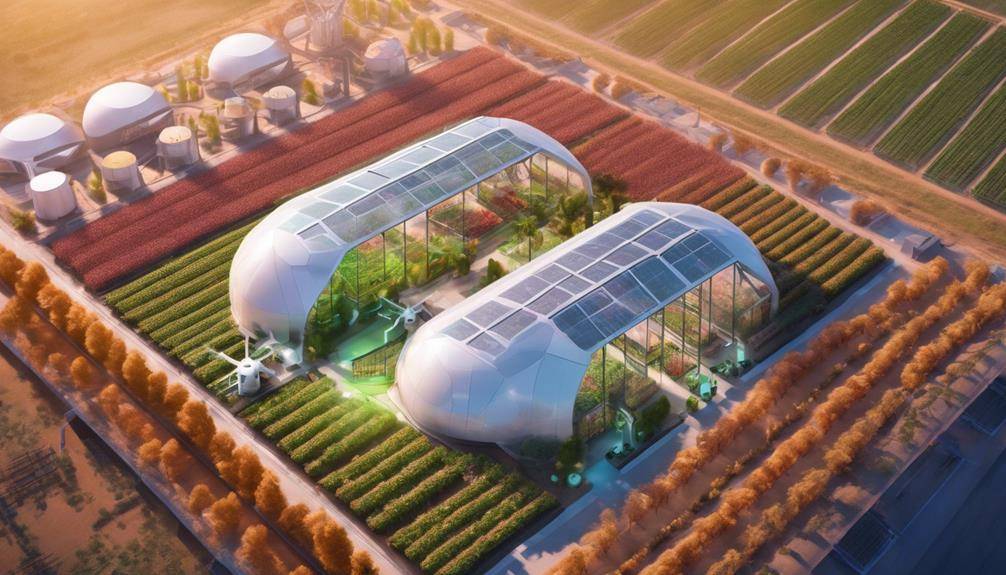
Rapidly evolving technologies are reshaping the landscape of agriculture, and AI is at the forefront of this transformation. You’ll see considerable advancements in vertical farming and urban agriculture, which aim to maximize space and resources in densely populated areas. By utilizing drone technology, farmers can monitor crop health, assess soil conditions, and enhance yields, making real-time decisions based on data analysis.
Machine learning algorithms will play a crucial role in predicting crop performance under various climate conditions, aiding in climate adaptation strategies. Smart greenhouses will become increasingly common, employing AI to regulate temperature, humidity, and light levels, ensuring ideal growing conditions year-round. This innovation will not only enhance productivity but also greatly reduce waste.
Furthermore, genetic engineering techniques, supported by AI, will streamline the development of crop varieties that are more resilient to pests and diseases. Biopesticides will become more effective, promoting sustainable pest management while preserving the ecosystem, contributing to improved food security.
As you engage with these trends, you’ll appreciate how agroecological practices are being integrated with advanced technologies. This synergy will foster more sustainable farming methods, ultimately leading to healthier food systems. By embracing these future trends, you’ll be part of a movement that not only addresses the challenges of food production but also promotes environmental sustainability and resilience in agriculture. The future of AI in agriculture is bright, and it’s an exciting time to be involved in this transformative sector.
We’ve Got Everything You Need to Make Your Masterpiece.
Frequently Asked Questions: AI Advancements In Food Production Sector
How Does AI Impact Traditional Farming Jobs and Employment?
AI’s impact on traditional farming jobs often leads to job displacement, but it also pushes you toward skill development. You’ll need to adapt and learn new technologies to stay relevant and thrive in this evolving landscape.
What Are the Ethical Concerns Surrounding AI in Food Production?
You’ll find ethical concerns in AI, like data privacy issues and algorithm bias. These factors can lead to unequal access to resources and unfair treatment of workers, impacting the trust in technology within food production.
Can Small Farms Benefit From AI Technology?
Yes, small farms can benefit from AI technology. By embracing precision agriculture, you’ll optimize your yields, reduce waste, and make informed decisions, ultimately leading to better resource management and increased profitability for your farm.
What Is the Cost of Implementing AI Solutions in Farming?
Implementing AI solutions in farming involves initial costs, but with proper AI investment analysis and cost benefit evaluation, you’ll often find long-term savings and increased productivity that outweigh those upfront expenses, making it a worthwhile endeavor.
How Does AI Address Climate Change Challenges in Agriculture?
AI tackles climate change in agriculture by enhancing precision agriculture techniques. You’ll see improved resource efficiency and reduced waste, driving sustainable practices that help mitigate environmental impacts while boosting crop resilience and productivity.

Conclusion
Incorporating AI into food production is transforming agriculture, making it more efficient and sustainable. You can leverage precision farming techniques and predictive analytics to enhance crop yields and guarantee food safety. By embracing data-driven decision-making, you’ll not only optimize resources but also contribute to a healthier planet. As you look ahead, staying informed about future trends will position you to take advantage of the innovations that will shape the farming landscape for years to come.