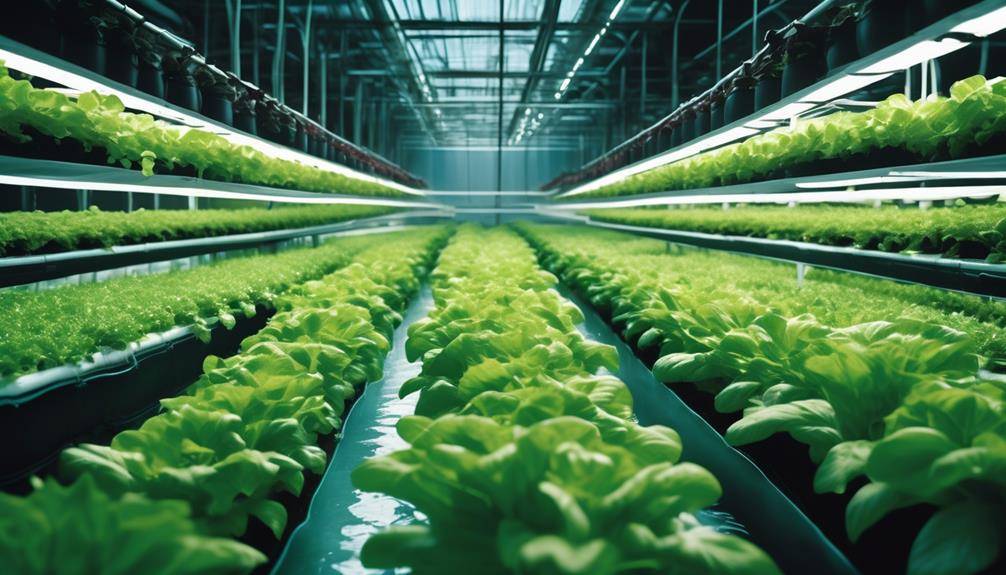
Ai’s Exciting Role In Global Food Security
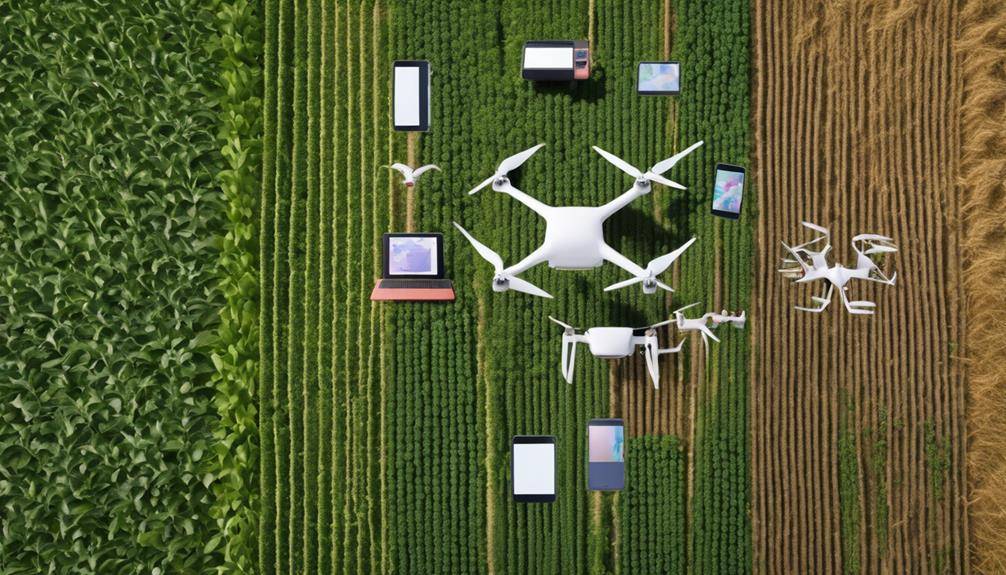
Ai’s Exciting Role In Global Food Security; AI plays an essential role in enhancing global food security by streamlining agricultural practices and optimizing resource management. By utilizing tools like precision agriculture, AI improves crop yields and minimizes waste. It helps predict weather patterns and market trends, allowing farmers to make informed decisions. Smart irrigation techniques and crop disease management enhance sustainability and resilience against climate change. Furthermore, AI supports smallholder farmers, giving them access to critical market information and technological advancements. As you explore more, you’ll uncover how AI’s ongoing innovations can further transform food systems worldwide.
We’ve Got Everything You Need to Make Your Masterpiece.
Understanding Global Food Security
While many people may not realize it, global food security is a complex issue that affects millions of lives. You might think of it as just having enough food, but it’s much deeper. Food distribution systems are often inefficient, leading to waste and shortages. Without proper nutrition accessibility, vulnerable populations struggle to meet their dietary needs, impacting their overall health.
To tackle these challenges, effective policy frameworks are crucial. They guide how resources are allocated and guarantee that agricultural innovation can thrive. By fostering new farming techniques and sustainable practices, we can produce food more efficiently, addressing socio-economic factors that contribute to food insecurity.
International cooperation plays a critical role, too. Nations must work together to share knowledge, resources, and technology integration that can enhance food safety and distribution channels. This collaboration can help mitigate challenges faced by developing countries, where food scarcity is often a daily struggle.
Moreover, consumer awareness is essential. When you understand where your food comes from and the importance of supporting sustainable practices, you contribute to a healthier food system. By making conscious choices, you can help drive demand for ethically sourced products, further improving food security globally.
The Impact of Climate Change
Climate change is reshaping agricultural practices, making it essential for you to understand its effects on crop resilience. By leveraging AI-driven weather predictions, you can better prepare for extreme weather events and adapt your farming strategies. Let’s explore how these technological advancements can help mitigate the challenges posed by changing climate trends.
Climate Trends and Agriculture
Agriculture faces significant challenges due to shifting climate trends, affecting crop yields and food production worldwide. You may notice that changes in temperature and precipitation patterns directly impact soil health and water availability. To tackle these issues, adopting sustainable practices becomes vital. Emphasizing agricultural biodiversity can help maintain genetic diversity among crops, guaranteeing resilience against climate fluctuations.
Implementing agroecological systems can enhance your farm’s adaptability. These systems promote crop rotation, which not only improves soil structure but also aids in pest management by disrupting pest cycles. Effective water management is important too; strategies like rainwater harvesting and efficient irrigation techniques can conserve resources in times of drought.
Incorporating local food systems can strengthen community resilience by reducing reliance on distant supply chains. By focusing on climate adaptation strategies, you can create a more sustainable agricultural future that is prepared for the uncertainties of climate change. Embracing these methods not only supports food security but also fosters a healthier ecosystem. By adapting your farming practices today, you’ll help guarantee a stable food supply for generations to come.
Crop Resilience Strategies
As climate change continues to alter growing conditions, developing crop resilience strategies becomes increasingly significant for farmers. You can start by focusing on soil health, which plays an essential role in maintaining productivity. Implementing sustainable practices, such as crop rotation and cover cropping, enhances soil fertility and helps sustain yields.
Consider integrating genetic diversity into your crops. This can improve pest resistance and boost resilience against extreme weather. Utilizing agroecological methods allows you to create a more balanced ecosystem that supports biodiversity and reduces dependency on chemical inputs.
Community involvement is critical as well. By collaborating with local farmers, you can share knowledge and best practices, fostering a supportive network. Technology adoption, like precision agriculture tools, can optimize your land management, making it more efficient and economically viable.
Lastly, prioritize education initiatives for yourself and your community. Keeping everyone informed about the latest resilience strategies guarantees that you’re all prepared for the challenges ahead. By taking these actions, you can effectively enhance your crop resilience and contribute to global food security in the face of climate change.
AI-Driven Weather Predictions
Weather predictions have always been crucial for farmers, but AI is revolutionizing how you can access and interpret this information. With advanced model integration, you’re able to improve data accuracy and receive localized predictions that are essential for your specific region. This technology enables seasonal forecasting that helps you plan your agricultural interventions more effectively.
AI-driven weather analytics provide real-time updates, allowing you to adapt quickly to changing conditions. By leveraging these insights, you can enhance your climate adaptation strategies and minimize the risks associated with unpredictable weather patterns. Risk assessment becomes more precise, equipping you to make better decisions for your crops.
Moreover, technology adoption isn’t just about individual benefits; it fosters stakeholder collaboration among farmers, researchers, and policymakers. This collective effort guarantees you have access to the best practices and data-driven insights available. Ultimately, AI-driven weather predictions empower you to navigate the challenges posed by climate change, guaranteeing food security in an increasingly unpredictable world. Embracing these innovations will not only enhance your productivity but also contribute to a more resilient agricultural system overall.
AI in Precision Agriculture
Precision agriculture leverages AI technology to enhance crop production and resource efficiency. You can use data analytics to analyze large datasets, including satellite imagery and remote sensing information, to monitor soil health and variability. This enables you to optimize nutrient application through precise nutrient optimization techniques, guaranteeing that your crops receive exactly what they need.
With the help of agricultural drones and weather sensors, you can gather real-time data for yield prediction and pest detection. These tools allow you to identify issues early, minimizing the impact on your harvest. Farm robotics can automate tasks like planting and harvesting, increasing efficiency and reducing labor costs.
Incorporating crop rotation strategies, you can improve soil health while enhancing biodiversity. By utilizing AI-driven models, you can make informed decisions about when and what to plant, optimizing resource management. Genetic engineering also plays a role in developing resilient crop varieties that can withstand pests and climate challenges.
AI facilitates farm automation, enabling you to streamline operations and reduce waste. By monitoring ecosystem services, you can ascertain that your farming practices contribute positively to the environment. Overall, AI in precision agriculture empowers you to make data-driven decisions, leading to better productivity and sustainability in food production. Embracing these technologies not only boosts your yields but also helps secure the global food supply for future generations.
We’ve Got Everything You Need to Make Your Masterpiece.
Enhancing Crop Management
Effective crop management hinges on the ability to make informed decisions that maximize yield and sustainability. By leveraging advancements in sensor technology, you can gather real-time data about soil conditions, moisture levels, and crop health. This data empowers you to make data-driven decisions that directly impact your farming practices.
Imagine having access to sensors placed throughout your fields, continuously monitoring critical factors like temperature and humidity. These sensors provide you with actionable insights, enabling you to respond quickly to changing conditions. For example, if a sensor alerts you to a drop in soil moisture, you can implement irrigation measures before your crops suffer.
Additionally, you can utilize drone technology to survey your fields from above. Drones equipped with multispectral cameras can help you identify areas requiring attention, such as pest infestations or nutrient deficiencies. The information gathered can be processed and analyzed, allowing you to pinpoint problem areas and allocate resources effectively.
Predictive Analytics for Supply Chains
As you explore predictive analytics for supply chains, you’ll discover how demand forecasting techniques can help you anticipate consumer needs. You’ll also learn about inventory optimization strategies that keep your stock levels efficient and cost-effective. Finally, risk management approaches will equip you to handle uncertainties that could disrupt the food supply chain.
Demand Forecasting Techniques
In today’s fast-paced market, accurately predicting food demand is essential for maintaining a resilient supply chain. By leveraging machine learning algorithms, you can analyze vast amounts of data to forecast future consumption patterns effectively. This predictive capability hinges on robust data integration methods, allowing you to combine diverse datasets, such as agricultural market trends and consumer behavior analysis.
Real-time analytics plays a key role in refining your forecasts. By continuously monitoring market fluctuations and adjusting predictions accordingly, you enhance your responsiveness to changing consumer needs. However, technology adoption barriers can hinder progress, making it important to foster stakeholder collaboration across the food supply chain.
Incorporating sustainability metrics into your demand forecasting can also boost your strategy. By evaluating the economic impact of various forecasting methods, you can make informed decisions that align with both profitability and environmental responsibility. Ultimately, a thorough approach to demand forecasting not only mitigates risks but also supports global food security efforts by ensuring that resources are allocated effectively, reducing waste, and aligning production with actual market needs. Embracing these techniques can greatly enhance your food supply chain’s efficiency and resilience.
Inventory Optimization Strategies
Optimizing inventory is essential for enhancing supply chain efficiency and reducing costs. By employing predictive analytics, you can make data-driven decisions that improve resource allocation across your supply chain. With effective inventory forecasting, you can anticipate demand variability, ensuring your stock levels align with customer needs.
Technological integration plays a pivotal role in this process. Utilizing advanced software solutions allows you to streamline stock replenishment, ensuring you have the right products available at the right time. This minimizes excess inventory, leading to significant waste reduction and improved cash flow.
Logistics optimization is another critical aspect. By analyzing distribution management, you can identify the most efficient routes and methods for delivering products. This not only enhances supply chain efficiency but also reduces delivery times and costs.
Ultimately, successful inventory optimization strategies empower you to respond proactively to market changes. By leveraging predictive analytics, you can maintain a competitive edge while ensuring food security on a global scale. Embracing these strategies will help you create a responsive and resilient supply chain, capable of adapting to fluctuating demands and market realities.
Risk Management Approaches
While the complexities of global food supply chains can pose significant risks, leveraging predictive analytics can help you identify and mitigate potential disruptions. By conducting thorough risk assessments, you can pinpoint vulnerabilities within your supply chain and develop effective contingency planning strategies. Technological adoption plays an essential role in this process, as it enables seamless data integration, guaranteeing you have real-time insights into market dynamics.
Encouraging stakeholder collaboration is critical for building robust policy frameworks that support innovation strategies. When all parties work together, you can enhance market resilience and respond swiftly to unexpected challenges. Education initiatives also contribute by equipping your team with the skills needed to implement advanced analytics effectively.
Resource allocation becomes more strategic when informed by predictive insights, allowing you to prioritize high-risk areas and optimize your overall operations. By embracing these risk management approaches, you not only safeguard your supply chain but also contribute to the broader goal of global food security. Emphasizing a proactive stance in risk management will empower you to navigate uncertainties and maintain the sustainability of food systems worldwide.
Reducing Food Waste With AI
AI’s innovative algorithms are transforming how we tackle food waste, offering solutions that can markedly reduce excess and spoilage. By leveraging data analytics, you can gain insights into consumer behavior, helping retailers and producers forecast demand more accurately. This predictive power is fundamental in optimizing the supply chain, minimizing surplus, and ultimately cutting down on food waste.
Technology adoption plays an important role in this effort. Smart packaging, for instance, can monitor freshness and communicate shelf life to consumers. These advancements help you make informed choices, reducing the likelihood of food being discarded due to misunderstandings about its usability. Additionally, AI-driven platforms facilitate food redistribution, connecting surplus food with those in need, thereby enhancing food recovery efforts.
Agricultural innovation also benefits from AI. By analyzing environmental data, farmers can implement practices that decrease waste at the harvest level. This not only guarantees that more food reaches the market but also reduces losses in the field, contributing to a more sustainable food system.
Incorporating these technologies into your operations can lead to significant waste reduction. The integration of AI into both consumer and supply chain processes enhances efficiency and promotes responsible consumption. As you adopt these innovative solutions, you’re not just minimizing waste; you’re also playing a significant role in the global movement towards improved food security. By reducing food waste, you help guarantee that resources are utilized effectively, benefiting both the planet and society as a whole.
We’ve Got Everything You Need to Make Your Masterpiece.
Smart Irrigation Techniques
Efficient resource management is essential, especially as we work to reduce food waste and enhance food security. One way to achieve this is through smart irrigation techniques that optimize water use and improve crop yields. Drip irrigation is a prime example, delivering water directly to the plant roots, which minimizes evaporation and runoff. By using automated monitoring with sensor technology, you can track soil moisture levels in real-time, ensuring your crops receive the right amount of water.
Irrigation scheduling becomes more effective when you combine real-time data with weather variability predictions. This allows you to adjust watering times based on rainfall forecasts or temperature changes, ultimately leading to better water conservation. Furthermore, integrating nutrient management practices with your irrigation system can enhance irrigation efficiency. By applying fertilizers through the irrigation system, you not only nourish your crops but also reduce nutrient loss to the environment.
Implementing crop rotation alongside these smart techniques can further improve soil health and resilience. By alternating crops, you can naturally enhance soil moisture retention and reduce the likelihood of pests, which can lead to reduced water needs. As you embrace these smart irrigation practices, you’ll not only boost your yields but also contribute to a more sustainable agricultural system. By leveraging technology to manage resources wisely, you’re taking significant steps toward enhancing global food security.
Market Trend Forecasting
Anticipating market trends is vital for farmers and producers aiming to stay competitive and meet the demands of a rapidly evolving food landscape. By leveraging AI, you can better understand market fluctuations and consumer behavior, allowing you to make informed agricultural investments. Technology plays a significant role here, as it helps you analyze data that reflects changing preferences and trends.
With AI-driven insights, you can adapt your pricing strategies effectively, guaranteeing your products remain accessible to consumers while maximizing profits. Understanding supply chain dynamics is equally important; AI can forecast how trade policies and regulatory frameworks impact your operations, helping you mitigate risks associated with international cooperation and market volatility.
Moreover, technological innovations enable you to simulate various scenarios, predicting how shifts in consumer behavior might affect food accessibility. As you incorporate these insights into your decision-making, you’ll be better equipped to align your production with market demands.
Ultimately, effective market trend forecasting not only enhances your competitive edge but also contributes to a more resilient food system. By staying ahead of the curve, you can navigate the complexities of the agricultural landscape and guarantee that your practices are sustainable and responsive to market needs. Embracing AI in this capacity is no longer optional; it’s a vital step towards securing your position in a fast-changing world.
Supporting Smallholder Farmers
When you think about supporting smallholder farmers, consider how precision agriculture techniques can boost their yields. With access to market information, they can make smarter decisions about what to grow and when to sell. Plus, crop disease management tools can help them protect their harvests, ensuring a more secure food supply.
Precision Agriculture Techniques
Precision agriculture techniques are transforming the way smallholder farmers manage their crops and resources. By leveraging data-driven insights, you can make informed decisions that enhance productivity and sustainability. Sensor technologies and automated monitoring allow you to track soil health and moisture levels in real-time, ensuring ideal growing conditions for your crops.
Using remote sensing and crop mapping, you can identify areas that require variable rate applications of fertilizers and pesticides. This targeted approach not only boosts yield optimization but also minimizes waste, promoting sustainable practices. Digital platforms provide access to essential information, helping you adopt technology that supports biodiversity enhancement and ecosystem management.
Additionally, precision agriculture empowers you with pest prediction tools that can foresee potential threats to your crops, allowing for timely interventions. Financial tools integrated into these platforms can aid in budgeting and investment decisions, ensuring that you can sustain these practices over the long term. As you embrace these innovative techniques, you’ll find that they not only improve your yields but also contribute to the overall resilience and productivity of your farming operations.
We’ve Got Everything You Need to Make Your Masterpiece.
Access to Market Information
Access to timely market information is essential for smallholder farmers working hard to enhance their livelihoods. When you have access to reliable data, you gain better market access, allowing you to make informed decisions about what to grow and when to sell. Technology adoption plays an important role here; digital platforms can facilitate information dissemination, ensuring you receive real-time updates on market trends and prices.
Integrating this data into your farming practices not only boosts your productivity but also strengthens your economic empowerment. With improved rural connectivity, you can easily connect with buyers, reducing the reliance on middlemen who often take a notable cut of your profits. This direct access to markets can greatly increase your income and sustainability.
Moreover, farmer education programs that leverage technology can further enhance your understanding of the market landscape. By staying informed and educated, you can adapt to changing market conditions and consumer demands. Embracing these tools and resources will empower you to thrive in an increasingly competitive environment, ensuring that your hard work translates into meaningful financial rewards.
Crop Disease Management Tools
Crop disease management tools are game-changers for smallholder farmers looking to protect their yields and livelihoods. By leveraging advanced detection technologies and AI algorithms, you can enhance your crop monitoring capabilities. These tools enable swift pest identification and symptom analysis, allowing you to respond quickly to threats.
With the integration of genomic tools and agricultural biotechnology, you can focus on disease resistance in your crops. Management software equipped with machine learning can help with treatment optimization, ensuring you apply the right solutions at the right time. Remote sensing technologies play a crucial role in pathogen forecasting, providing you with invaluable data for field diagnostics.
Moreover, decision support systems can streamline your approach to crop management, enhancing your ability to make informed choices. Participating in training programs can further boost your skills in using these innovative tools, ensuring you’re well-prepared to tackle challenges.
Ultimately, these crop disease management tools not only protect your harvest but also contribute to global food security. By adopting these technologies, you’re taking a significant step towards sustainable farming and improving your community’s resilience against food shortages.
Future Prospects of AI in Food Security
As global populations continue to rise, the future prospects of AI in food security appear promising and transformative. You’ll see AI innovation driving efficiencies in agriculture, optimizing resource use, and enhancing crop yields. Global collaboration among governments, tech companies, and NGOs will be essential in ensuring that these innovations reach those who need them most.
However, you must also consider the ethical considerations surrounding AI deployment. Issues like data privacy and technology accessibility can’t be overlooked. Ensuring equitable access means that stakeholders, from farmers to policymakers, need to engage actively in these conversations. This stakeholder engagement will help shape the policies that guide AI usage in food systems, addressing potential biases and promoting inclusive practices.
The economic impacts of AI in agriculture can be profound. By adopting sustainable practices, farmers can reduce costs while increasing productivity, ultimately enhancing food security. To achieve this, agricultural education plays a significant role. Educating farmers about AI tools and technologies will empower them to adopt these innovations effectively.
Moreover, the policy implications of integrating AI into food security initiatives will shape future agricultural landscapes. Governments must create frameworks that support innovation while safeguarding ethical standards. By balancing these elements, we can harness AI’s potential to create a more resilient and secure food system.
We’ve Got Everything You Need to Make Your Masterpiece.
Frequently Asked Questions
How Can AI Improve Food Distribution in Developing Countries?
You can leverage AI for supply chain optimization and demand forecasting, ensuring food reaches those in need. By analyzing data, AI helps identify inefficiencies, predict demand shifts, and streamline distribution in developing countries effectively.
What Ethical Concerns Arise With AI in Agriculture?
When considering AI in agriculture, you should think about ethical concerns like data privacy, algorithm bias, job displacement, and equity access. These issues can greatly impact farmers and communities, so addressing them is essential.
Are There Risks of Over-Reliance on AI in Food Systems?
Yes, you’re right to worry about over-reliance on AI. It can lead to data privacy issues, technology bias, job displacement, dependency risks, and decision-making limits, especially during system failures that disrupt food systems and sustainability.
How Does AI Contribute to Improving Nutrition Quality?
AI enhances nutrition quality by conducting detailed nutritional analysis, helping you identify essential nutrients in foods. It also personalizes diets, ensuring you receive tailored meal plans that meet your specific health needs and preferences.
What Role Do Farmers Play in AI Technology Adoption?
Farmers play an essential role in AI adoption by embracing precision agriculture. With proper training, they access data for crop monitoring, enhance technology integration, and optimize yields, ensuring sustainable practices and improved productivity in their fields.

Conclusion: Ai’s Exciting Role In Global Food Security
To sum up, AI’s role in global food security is pivotal for addressing challenges like climate change and resource scarcity. By harnessing precision agriculture, predictive analytics, and smart irrigation, you’re empowered to enhance crop management and optimize supply chains. Supporting smallholder farmers with innovative technologies not only boosts their yields but also strengthens food systems worldwide. As you look ahead, embracing AI can pave the way for a more sustainable and secure food future for everyone.