Great Ways AI In Food Production And Climate Change
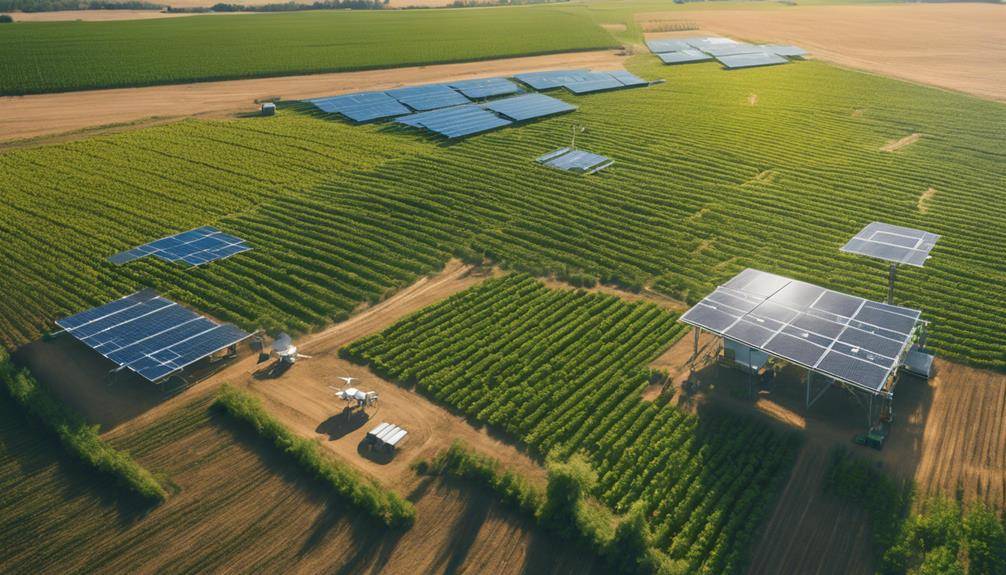
AI In Food Production And Climate Change; Climate change is reshaping the way we grow, produce, and distribute food — and artificial intelligence is becoming one of the most powerful tools to address these challenges. From predicting crop failures to reducing greenhouse gas emissions in food processing, AI helps farmers and food producers make smarter, more sustainable decisions. By analyzing weather patterns, soil conditions, supply chain risks, and energy use, AI supports a more resilient global food system. Whether you’re exploring sustainability, food technology, or the future of agriculture, this guide breaks down how AI is transforming food production in a warming world.
We’ve Got Everything You Need to Make Your Masterpiece.
How AI Supports Sustainable Food Production in a Changing Climate
In this post, you’ll learn how AI helps farmers adapt to climate change through predictive analytics, precision agriculture, and real‑time environmental monitoring. You’ll discover how AI reduces waste, improves crop resilience, optimizes water and energy use, and supports sustainable food processing. You’ll also explore how AI strengthens supply chains, lowers carbon footprints, and prepares the food industry for future climate challenges.
Overview of AI in Agriculture
AI is transforming agriculture in remarkable ways, making farming more efficient and sustainable. You’re witnessing the rise of AI advancements that drive agricultural innovation, reshaping how you approach smart farming. With machine learning algorithms, you can analyze vast amounts of data to predict crop yields, identify pests, and optimize resource use. This digital transformation means you can make informed decisions that enhance productivity while minimizing environmental impact.
Robotic harvesting is one of the most exciting developments. These machines can harvest crops with precision, reducing labor costs and guaranteeing that you reap your produce at the perfect time. Combined with crop biotechnology, you’re able to develop strains that are more resilient to climate change, assuring your farm adapts to shifting weather patterns.
Sustainable practices are at the forefront of these changes. AI helps you implement eco-friendly solutions by optimizing water usage, reducing chemical inputs, and improving soil health. This focus on sustainability doesn’t just help the planet; it can also boost your bottom line by reducing waste and enhancing crop quality.
However, as you embrace these technologies, it’s essential to reflect on AI ethics. Balancing innovation with responsible practices guarantees that the benefits of AI are shared equitably across the agricultural landscape. By prioritizing ethical considerations, you can navigate the complexities of farm management in a way that supports both profitability and the well-being of the environment. Embracing AI in agriculture isn’t just about efficiency; it’s about creating a sustainable future for food production.
The Role of Data Analytics
Data analytics plays a pivotal role in maximizing the benefits of AI in agriculture. By harnessing vast amounts of data generated from various sources, you can gain actionable insights that drive efficiency and sustainability. With machine learning algorithms, you can analyze patterns in crop yields, weather conditions, and soil health, allowing you to make informed decisions that enhance production.
One of the most powerful tools at your disposal is data visualization. It helps you translate complex data sets into understandable visuals, enabling you to spot trends and anomalies quickly. For instance, when you visualize temperature and rainfall data alongside crop performance, you can identify the ideal conditions for growth. This not only improves yields but also minimizes waste and resource consumption.
Additionally, data analytics allows you to monitor real-time conditions on your farm. By integrating IoT devices, you can collect data on soil moisture, nutrient levels, and pest activity. Machine learning models can process this data to predict potential issues before they escalate, allowing you to take proactive measures.
Implementing these strategies can lead to a more resilient agricultural system, better equipped to face the challenges of climate change. By leveraging data analytics, you’re not just enhancing production; you’re also contributing to a more sustainable food system. Embracing this approach means you’re investing in the future of agriculture, ensuring that it can adapt and thrive in an ever-changing environment.
Precision Farming Techniques
Precision farming techniques rely heavily on data-driven decision making, allowing you to make informed choices that enhance productivity. By implementing resource optimization strategies, you can minimize waste and maximize yields. Let’s explore how these approaches can transform your farming practices and combat climate change.
Data-Driven Decision Making
In today’s agricultural landscape, leveraging advanced technologies can transform your farming practices through data-driven decision making. By embracing data integration, you can collect and analyze information from various sources, enhancing your understanding of crop performance and environmental impact. Sensor technology plays a vital role, providing real-time data on soil moisture, temperature, and nutrient levels, which enables precision farming.
With effective crop modeling, you can forecast yields and identify potential issues before they become significant. This proactive approach not only boosts productivity but also supports sustainable practices. To maximize these benefits, farmer training is essential, ensuring you’re equipped to utilize decision support tools effectively.
As you adopt new technologies, consider the economic benefits they bring; increased efficiency often translates to higher profits. To facilitate this change, look for user-friendly interfaces that simplify data interpretation and application. However, it’s important to keep AI ethics in mind, ensuring your practices maintain transparency and fairness. By staying informed and embracing technology adoption, you can make informed choices that elevate your farming practices and contribute positively to the environment.
Resource Optimization Strategies
By harnessing innovative precision farming techniques, you can greatly enhance resource optimization on your farm. These techniques focus on efficient resource allocation, allowing you to maximize input utilization while minimizing waste reduction. For instance, utilizing sensors and data analytics helps you monitor soil conditions, guaranteeing that your irrigation and fertilization methods are tailored to specific crop needs. This not only improves energy efficiency but also reduces your carbon footprint.
Farm automation plays a key role in streamlining operations. By implementing automated systems for harvest scheduling, you can guarantee that crops are collected at their peak, enhancing quality and yield. Additionally, supply chain optimization becomes easier when you can predict demand and adjust production accordingly, maintaining an ecosystem balance.
Moreover, precision farming encourages resource conservation. By applying targeted treatments and reducing excess input, you can protect the environment while still achieving high productivity. Overall, these strategies not only benefit your farm’s bottom line but also contribute positively to climate change mitigation efforts. Embracing these techniques allows you to create a more sustainable agricultural operation, guaranteeing a healthier planet for future generations.
AI and Crop Monitoring
Crop monitoring has transformed with the integration of AI technologies, making it easier for farmers to manage their fields efficiently. By utilizing satellite imagery and sensor technology, you can gain a thorough view of crop growth and health across your farmland. These tools allow for real-time monitoring, enabling you to make informed decisions on when to water or fertilize your crops.
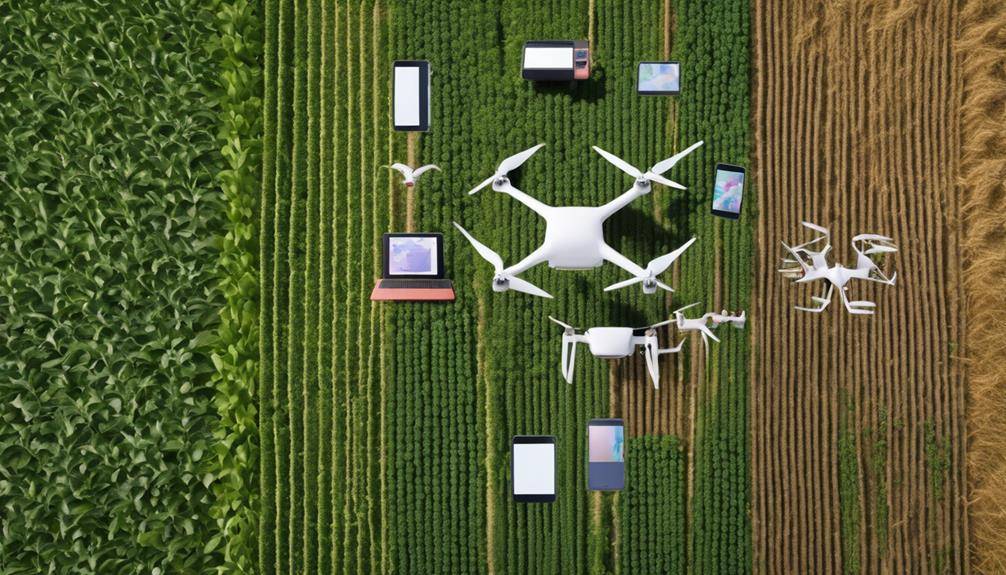
Drone applications enhance this process by offering aerial views that help with field mapping. You can pinpoint areas that need attention, whether it’s due to pest infestations or nutrient deficiencies. Automated irrigation systems can then be adjusted based on precise soil moisture readings, ensuring your crops receive the right amount of water without waste.
As you adapt to climate challenges, AI tools can help you optimize your practices for climate adaptation. By analyzing historical data and current conditions, you can better anticipate how your crops will respond to weather variations. This information plays a significant role in yield forecasting, allowing you to plan your harvests more effectively.
Incorporating these advanced technologies into your farming practices not only boosts productivity but also promotes sustainability. By monitoring your fields closely and responding swiftly to changes, you can maximize crop yields while minimizing environmental impact. Embracing AI for crop monitoring is not just a trend; it’s an essential step towards a more resilient agricultural future.
We’ve Got Everything You Need to Make Your Masterpiece.
Predictive Analytics for Yield Improvement
Predictive analytics can transform your farming practices by leveraging data-driven techniques. By analyzing weather patterns, you can anticipate challenges and optimize your resources for better yields. This approach not only enhances productivity but also contributes to sustainable farming in the face of climate change.
Data-Driven Farming Techniques
As you embrace data-driven farming techniques, you’ll find that predictive analytics can greatly enhance yield improvement. By integrating sensor technologies and IoT integration, you can collect real-time data on soil moisture, temperature, and nutrient levels. This data empowers you to implement smart irrigation systems, guaranteeing crops receive the right amount of water while conserving resources.
Using machine learning algorithms, you can analyze historical data for yield mapping, identifying which areas of your field perform best under specific conditions. Incorporating crop rotation strategies enhances soil health and resilience, further boosting your yields. Agricultural drones can assist you in monitoring crop health from above, providing insights that lead to timely interventions.
Data visualization tools make it easier to interpret complex datasets, allowing you to make informed decisions quickly. Additionally, blockchain transparency guarantees that your practices are traceable, building trust with consumers. By adopting climate smart practices, you’re not only improving yields but also contributing to sustainable agriculture. With these innovative techniques at your disposal, you’re well-equipped to navigate the challenges of modern farming and enhance productivity effectively.
Weather Pattern Analysis
Understanding weather patterns is essential for optimizing your farming strategies and improving yields. By utilizing predictive modeling, you can analyze climate variability and make informed decisions. Seasonal forecasting helps you anticipate changes, allowing for better planning around planting and harvesting schedules.
Extreme weather events can threaten your crops, but with effective impact assessment, you can prepare and mitigate risks. Implementing weather resilience strategies guarantees that your farm can adapt to unforeseen challenges. Agricultural adaptability is key; integrating data from various sources can enhance your understanding of how weather affects crop performance.
Moreover, ecological forecasting provides insights into the long-term effects of climate change on your farming practices. Through data integration, you can track trends and develop strategies that align with climate mitigation efforts. By actively engaging with these tools, you’ll not only safeguard your crops against climate extremes but also improve your overall productivity.
Embracing these technologies equips you with the knowledge needed to thrive in an unpredictable environment, empowering you to make decisions that enhance both your farm’s sustainability and its profitability.
Resource Optimization Strategies
Harnessing the power of predictive analytics can dramatically enhance your resource optimization strategies in food production. By leveraging data-driven insights, you can improve resource allocation, ensuring that every input contributes to yield maximization. This approach facilitates input optimization, allowing you to use fertilizers, water, and energy more efficiently, which not only boosts your output but also promotes sustainability.
Efficiency enhancement is vital, and technology integration plays a key role here. With smart systems in place, you can automate processes, minimizing labor costs and maximizing productivity. Enhanced energy management strategies mean you’re not only cutting costs but also reducing your carbon footprint.
In addition, predictive analytics can streamline your supply chain, leading to waste reduction. By forecasting demand accurately, you can align production schedules with market needs, preventing overproduction and spoilage. This proactive approach leads to substantial cost savings while ensuring that you meet consumer expectations.
Ultimately, adopting these resource optimization strategies will empower you to achieve superior yield improvement, position your operation as a leader in sustainable practices, and contribute positively to combating climate change.
Soil Health Management
Soil health management plays an essential role in sustainable food production and combating climate change. By implementing soil restoration techniques, you can improve soil quality and enhance its ability to sequester carbon. Microbial diversity enhancement is significant; it promotes a balanced ecosystem that supports nutrient cycling strategies, ensuring your crops receive the nourishment they need.
Utilizing regenerative agriculture practices not only improves yields but also restores the natural health of your soil. Erosion control methods, like contour farming, help protect your soil from degradation, while cover cropping benefits keep the soil covered, reducing erosion and enhancing organic matter management. Integrating composting systems into your farming operation adds important nutrients back into the soil, improving its structure and fertility.
Sustainable tillage methods minimize disruption to the soil, preserving its health and structure. Regular soil moisture monitoring allows you to manage irrigation effectively, ensuring that your crops receive the right amount of water without overusing resources.
Pest and Disease Prediction
Effective soil health management not only boosts crop yields but also sets the stage for advanced pest and disease prediction strategies. By leveraging digital agriculture technologies, you can enhance your understanding of pest lifecycles and the factors influencing crop vulnerability. Machine learning algorithms analyze historical data, helping forecast potential disease outbreaks and pest infestations before they escalate.
Utilizing remote sensing tools, you can monitor your fields in real-time, identifying areas that may be at risk. This proactive approach allows you to implement integrated pest management strategies tailored to the specific challenges in your crops, improving pest resistance while minimizing environmental impact. Emphasizing agricultural biodiversity is essential; diverse ecosystems can reduce the prevalence of pests and diseases through natural predation and competition.
Furthermore, combining data on soil health, weather patterns, and pest behavior can refine your disease forecasting. You’ll be better equipped to make informed decisions about when to apply treatments, reducing reliance on chemical pesticides and enhancing sustainability. By integrating these predictive analytics into your farming practices, you not only protect your crops but also contribute to a more resilient agricultural system.
As you embrace these advanced methodologies, you’ll find that fostering a dynamic relationship between effective soil management and pest and disease prediction leads to healthier crops and improved yield. Ultimately, your efforts will play a critical role in combatting the challenges posed by climate change in food production.
Sustainable Water Usage
When it comes to sustainable water usage in agriculture, you’re faced with the challenge of balancing crop needs with resource conservation. Implementing water conservation technologies is essential to achieve this balance. For instance, by utilizing advanced irrigation management systems, you can optimize water distribution, ensuring your crops receive the right amount without waste.
Consider integrating aquifer monitoring solutions into your farming practices. These tools help you track groundwater levels, allowing you to adjust your water usage accordingly and prevent depletion. Additionally, adopting sustainable watershed practices can enhance the natural water cycle, benefiting both your crops and the environment.
Rainwater harvesting methods offer another avenue for sustainable water usage. By capturing and storing rainwater, you can reduce reliance on traditional water sources, providing a natural irrigation option during dry spells. Greywater reuse strategies further bolster this effort, enabling you to recycle water from household activities for irrigation purposes.
Choosing drought-resistant crops is also a smart move. These varieties require less water and can thrive in challenging conditions. Pairing these crops with eco-friendly fertilizers promotes healthy growth without harming the soil or surrounding ecosystems.
We’ve Got Everything You Need to Make Your Masterpiece.
Climate Resilience Strategies
While climate change poses significant challenges to agriculture, adopting climate resilience strategies can help you safeguard your crops and guarantee sustainable production. One effective method is implementing climate adaptation techniques that allow you to adjust your farming practices in response to changing weather patterns. By incorporating agricultural biodiversity initiatives, you can enhance the variety of crops you grow, which can lead to stronger ecosystem resilience measures.
Sustainable farming practices play an essential role in maintaining soil health, and soil conservation practices like cover cropping and crop rotation are vital. These practices not only protect your soil but also contribute to carbon sequestration methods, helping to mitigate climate change. Consider regenerative agriculture models that focus on restoring soil health and increasing biodiversity, ensuring long-term productivity.
Additionally, adopting agroecological approaches can enhance your farm’s resilience by promoting natural processes and reducing reliance on chemical inputs. Climate smart agriculture strategies can optimize resource use, improve crop yields, and reduce greenhouse gas emissions. By integrating greenhouse gas reduction strategies into your operations, you can contribute to a more sustainable agricultural system.
Ultimately, these climate resilience strategies empower you to adapt to the challenges posed by climate change while ensuring that your farming practices remain viable and productive. By taking proactive measures now, you can build a sustainable future for your crops and contribute to global efforts in combating climate change.
Reducing Food Waste With AI
Climate resilience strategies not only address immediate agricultural challenges but also open the door to innovative solutions like AI that tackle food waste. By implementing smart inventory systems, you can considerably enhance food surplus management. These systems utilize real-time data to predict demand and adjust stock levels accordingly, reducing the risk of overproduction.
AI-driven consumer behavior analytics help you understand purchasing patterns, enabling you to create targeted campaigns that minimize excess inventory. When combined with waste reduction technologies, these insights contribute to supply chain optimization, guaranteeing that food reaches consumers efficiently and with minimal waste.
Digital farm solutions play a critical role in monitoring crop health and yield predictions, which allows for better planning and crop surplus redistribution. When farmers can accurately assess their harvests, they can collaborate with food recovery networks to redirect excess food to those in need, rather than letting it go to waste.
Sustainable packaging innovations also aid in reducing food waste. By employing biodegradable materials and smart packaging that extends shelf life, you can guarantee that food stays fresh for longer periods. Additionally, waste tracking tools can help identify and quantify waste sources, providing valuable insights for continuous improvement.
Incorporating these AI technologies not only enhances operational efficiency but also fosters a culture of sustainability in food production. By embracing these strategies, you contribute to a more resilient food system that prioritizes waste reduction and environmental stewardship.
Case Studies of AI Implementation
AI implementation in food production frequently showcases remarkable transformations across various sectors. By examining case studies, you can see how AI applications have led to significant efficiency improvements and agricultural innovations. For instance, one success story involves a large farm that integrated AI-driven systems to monitor crop health through drones and machine learning. This technology not only enhanced yield but also reduced the need for chemical inputs, showcasing the environmental benefits of AI in agriculture.
However, these implementations come with their own set of challenges. Some farms faced scalability issues when trying to adopt advanced AI systems, particularly in regions with limited internet access. Another case study highlights a company that developed predictive analytics for supply chain management. They encountered implementation challenges due to the need for extensive training and technology integration across their workforce.
Despite these hurdles, the market impacts of successful AI applications are undeniable. Farms that embraced AI saw a surge in productivity, which often led to increased profitability. For instance, a vineyard implemented AI to optimize irrigation schedules, resulting in both water conservation and improved grape quality.
These case studies illustrate how diverse AI applications can revolutionize food production. While challenges exist, the success stories demonstrate that with the right approach, technology integration can yield substantial rewards and pave the way for a more sustainable agricultural future.
Challenges of AI Adoption
As you consider adopting AI in food production, you’ll face several challenges that could hinder progress. Data privacy concerns might make you hesitant, while high implementation costs can strain budgets. Additionally, skill gaps in your workforce could slow down the integration of AI technologies.
We’ve Got Everything You Need to Make Your Masterpiece.
Data Privacy Concerns
Maneuvering data privacy concerns is a significant challenge for the adoption of AI in food production. You’ll face various issues surrounding data security and ethical considerations, particularly when it comes to privacy regulations. Without clear user consent, you risk violating data ownership principles, which can lead to trust issues among stakeholders.
Surveillance implications can also arise, as AI systems often collect vast amounts of data. This can create anxiety about how data is used and who has access to it. To build trust, you’ll need to implement transparency measures that clearly communicate data handling practices. Utilizing anonymization techniques can help mitigate privacy risks, ensuring that sensitive information remains confidential while still allowing for meaningful data analysis.
Effective risk management strategies are essential to navigate these complex issues. By prioritizing data security and adhering to privacy regulations, you can foster a safer environment for both producers and consumers. Ultimately, addressing these data privacy concerns will not only facilitate AI adoption but also enhance the overall integrity and sustainability of food production in the face of climate change.
High Implementation Costs
Implementing AI in food production can come with hefty costs, often posing a significant barrier for many organizations. You might face automation barriers that hinder your ability to integrate new technologies effectively. The initial investment risks can be overwhelming, especially when considering the innovation costs involved in developing tailored AI solutions.
Furthermore, you need to assess technology scalability; not all AI systems can expand seamlessly with your operations. Financial sustainability is critical, as ongoing costs may outweigh short-term gains, affecting your economic feasibility. Without clear adoption incentives, it can be tough to justify these expenditures to stakeholders.
Infrastructure challenges also complicate matters. You may need to upgrade existing systems to support new technologies, adding to your budget. Identifying reliable funding sources is essential to offset these costs, but securing financial backing in a competitive market can be challenging.
As market competition intensifies, you must weigh the benefits of AI against these high implementation costs. By understanding these challenges, you can make informed decisions that balance innovation with financial realities, paving the way for successful AI integration in food production.
Skill Gaps in Workforce
Bridging the skill gaps in your workforce is crucial for successfully adopting AI in food production. Without the right skills, even the best AI technologies can fall flat. You’ll need to implement effective training programs to foster workforce development, focusing on skill enhancement for your team. Consider launching educational initiatives that cover AI fundamentals and agricultural applications, ensuring everyone is on the same page.
To facilitate knowledge sharing, you could organize technical workshops where employees can learn directly from experts. Don’t underestimate the value of mentorship opportunities; pairing seasoned professionals with newcomers can accelerate learning and foster a culture of collaboration. Interdisciplinary collaboration is also essential, as it encourages diverse perspectives that can lead to innovative solutions.
When it comes to talent acquisition, seek individuals with a strong technical background in AI and agriculture. Promoting clear career pathways within your organization can also motivate employees to grow their skills. By prioritizing these strategies, you’ll not only fill the current skill gaps but also build a resilient workforce ready to tackle the challenges of AI in food production and contribute to sustainable practices in the face of climate change.
Future Trends in AI and Agriculture
Embracing advancements in artificial intelligence is set to revolutionize agriculture in the coming years. As you explore this future, you’ll witness the rise of automated harvesting, which streamlines the labor-intensive process of gathering crops. This technology not only boosts efficiency but also reduces waste, maximizing yield. Alongside this, robotic pollinators will play an essential role in enhancing crop productivity, guaranteeing that plants receive the necessary pollination without relying solely on natural pollinators.
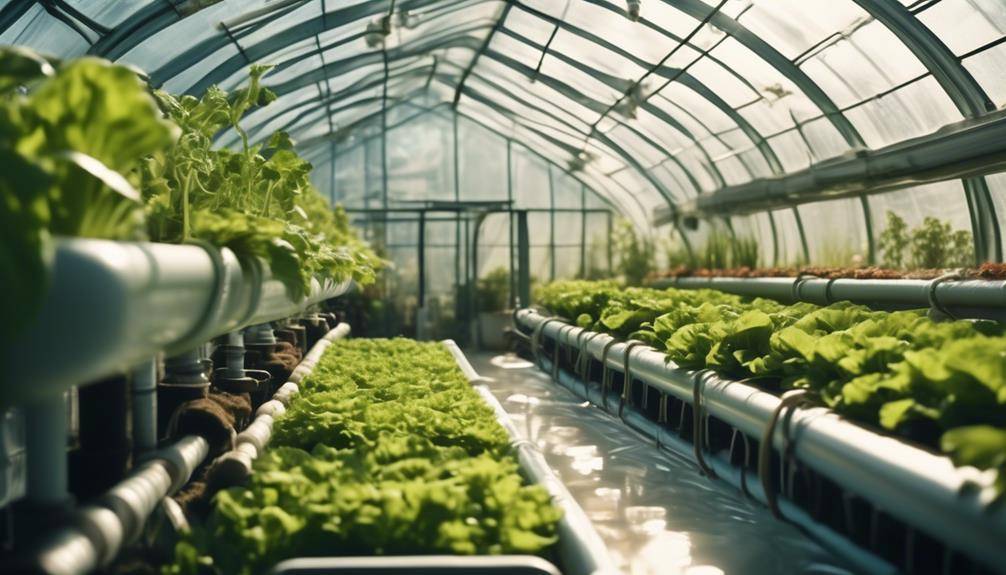
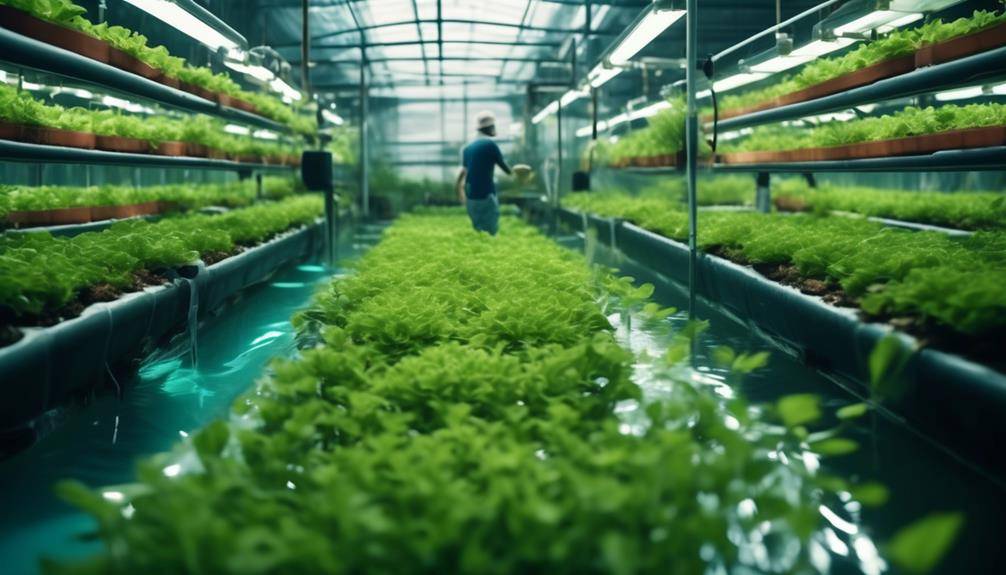
You’ll also see the growth of vertical farming and smart greenhouses, where AI optimizes resource use and creates ideal growing conditions. These innovations will enable you to produce food in urban areas, reducing transportation costs and emissions. With blockchain traceability, you can verify food safety and quality, as consumers increasingly demand transparency in the supply chain.
Agri tech startups are emerging with innovative solutions that leverage machine learning algorithms to predict crop diseases and optimize planting schedules. These advancements contribute to climate smart agriculture, allowing you to adapt practices that mitigate the impacts of climate change. Additionally, biotechnological advancements will enhance crop resilience, enabling farmers to produce food in challenging conditions.
However, as you embrace these technologies, it’s vital to reflect on AI ethics. Balancing progress with ethical implications guarantees that the benefits of AI are shared equitably across the agricultural landscape. The future of AI in agriculture isn’t just about technology; it’s about creating a sustainable, efficient, and responsible food system.
Policy Implications for Sustainable Practices
As you consider the intersection of AI and sustainable practices in agriculture, it’s clear that effective policy can drive meaningful change. To maximize the benefits of AI, you need robust regulatory frameworks that promote innovation while protecting the environment. These frameworks should encourage incentive structures that reward farmers for adopting sustainable technologies, ultimately reducing their environmental impact.
Stakeholder collaboration plays an essential role in this process. By bringing together farmers, tech companies, and policymakers, you can create a more cohesive approach to implementing AI in agriculture. Public awareness is critical, too. Educating consumers about the advantages of sustainable practices will foster demand for eco-friendly products, pushing more farmers to embrace AI-driven solutions.
However, ethical considerations must always be at the forefront. You should guarantee that AI tools are accessible to all farmers, regardless of their economic status, to avoid widening the technology gap. To support this, funding opportunities from both public and private sectors can help small-scale farmers invest in these technologies.
International cooperation is equally important. By sharing research, best practices, and resources across borders, you can enhance the global push towards sustainable agriculture. Education initiatives should also be prioritized, making sure that farmers understand how to leverage AI effectively.
We’ve Got Everything You Need to Make Your Masterpiece.
Frequently Asked Questions: AI In Food Production And Climate Change
How Does AI Impact Labor Requirements in Food Production?
AI impacts labor requirements by enhancing automation efficiency, which often leads to labor displacement. You’ll find that while some jobs become obsolete, new roles emerge, demanding a different skill set to adapt to technological advancements.
Can AI Solutions Be Implemented in Small-Scale Farming?
Yes, you can implement AI solutions in small-scale farming. By utilizing precision agriculture and crop monitoring technologies, you’ll optimize resources, enhance yield, and make informed decisions, ultimately leading to more efficient and sustainable farming practices.
What Are the Costs Associated With Deploying AI in Agriculture?
When deploying AI in agriculture, you’ll face initial investments for technology and training costs. Ongoing operational expenses and technology maintenance are also essential, alongside data management to guarantee effective use and optimization of AI solutions.
How Does Consumer Perception Affect AI Adoption in Food Production?
Consumer perception considerably impacts AI adoption in food production. If you’re skeptical about technology, concerned about ethical implications, or wary of data privacy, it’ll hinder market awareness and innovation adoption, affecting overall acceptance and trust.
Are There Ethical Concerns Regarding AI Use in Agriculture?
Yes, you’ve got ethical concerns with AI in agriculture. Think about data privacy, algorithm bias, and transparency issues. You should also consider how this affects farmer autonomy and technology access, essential for environmental sustainability.

Conclusion
AI is becoming an essential ally in the fight against climate change, offering powerful solutions that make food production more efficient, sustainable, and resilient. From smarter farming practices to reduced emissions and optimized resource use, AI helps protect global food security in an unpredictable climate. As technology continues to advance, its role in shaping a sustainable food future will only grow. Embracing AI today means building a stronger, more climate‑ready food system for tomorrow.