Great Reasons For Using Roasting Pan With Rack
Reasons For Using Roasting Pan With Rack; Using a roasting pan with a rack is a game-changer for your meals. It promotes even heat distribution, leading to uniform cooking. The rack elevates your food, allowing hot air to circulate, which gives you that perfect golden crust on meats. Plus, any excess fat drips away, making your dishes lighter and healthier. Don’t forget to season your food well for maximum flavor. Remember, you can roast veggies alongside your meats to enhance their taste too. If you’re curious about choosing the right pan or some tasty recipes, there’s plenty more to explore!
We’ve Got Everything You Need to Make Your Masterpiece.
Benefits of Using a Roasting Pan
A roasting pan with a rack can transform your cooking experience, making it easier to achieve perfectly cooked meats and vegetables. One of the significant benefits of using this type of pan is its ability to promote even heat distribution. When you elevate your food on the rack, hot air circulates around all sides, ensuring that everything cooks uniformly. This not only enhances the flavor but also helps you avoid dry spots, resulting in juicier and more tender dishes.
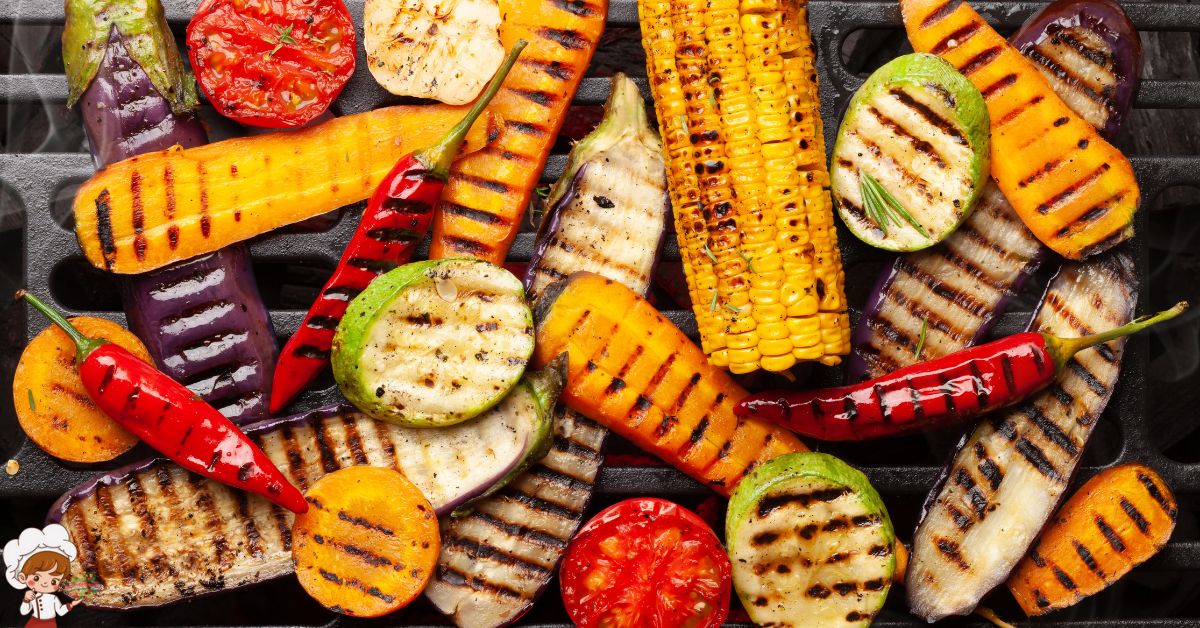
Additionally, using a roasting pan can contribute to your health benefits. When roasting, excess fat drips away from your meats and vegetables, leaving behind a lighter meal that’s still packed with flavor. You’ll find that you can create delicious, healthier versions of your favorite dishes without sacrificing taste. The rack also allows you to roast vegetables alongside your meat, soaking up those flavorful juices while maintaining their crispness.
Moreover, the roasting technique itself brings out the natural sweetness in your ingredients, leading to remarkable flavor enhancement. Whether you’re preparing a succulent roast chicken or a vibrant medley of root vegetables, the caramelization that occurs during roasting creates a depth of flavor you can’t replicate with steaming or boiling.
Choosing the Right Roasting Pan
When you’re selecting the right roasting pan, consider the size and material that best suits your cooking needs. First, think about size considerations. You want a pan that’s large enough to accommodate the main dish without crowding, allowing for even cooking. If you’re roasting a turkey, for example, make sure the pan is spacious enough to hold it comfortably, while still fitting in your oven. For smaller meals, a mid-sized pan might be just right.
Next, pay attention to material types. Roasting pans come in various materials, each with its own benefits. Stainless steel is durable and non-reactive, making it a popular choice. It conducts heat well and is easy to clean. If you prefer something with a non-stick surface, look for a coated roasting pan, which can help prevent sticking and make cleanup a breeze. Cast iron pans are another excellent option, providing superior heat retention and even cooking, though they can be heavier and require a bit more maintenance.
Consider how often you’ll use the pan and what types of meals you typically prepare. If you roast frequently, investing in a high-quality pan could be worthwhile. Remember, the right roasting pan should not only fit your cooking style but also be a durable addition to your kitchen arsenal. By focusing on size and material, you can make certain you choose a roasting pan that meets your needs and enhances your culinary adventures.
Proper Techniques for Roasting
Mastering proper techniques for roasting can elevate your cooking game considerably. To start, it’s essential to preheat your oven to the right roasting temperatures. Generally, a temperature between 325°F to 450°F is ideal, depending on the type of meat you’re roasting. Lower temperatures yield tender, juicy results, while higher temperatures create a beautiful, crispy exterior.
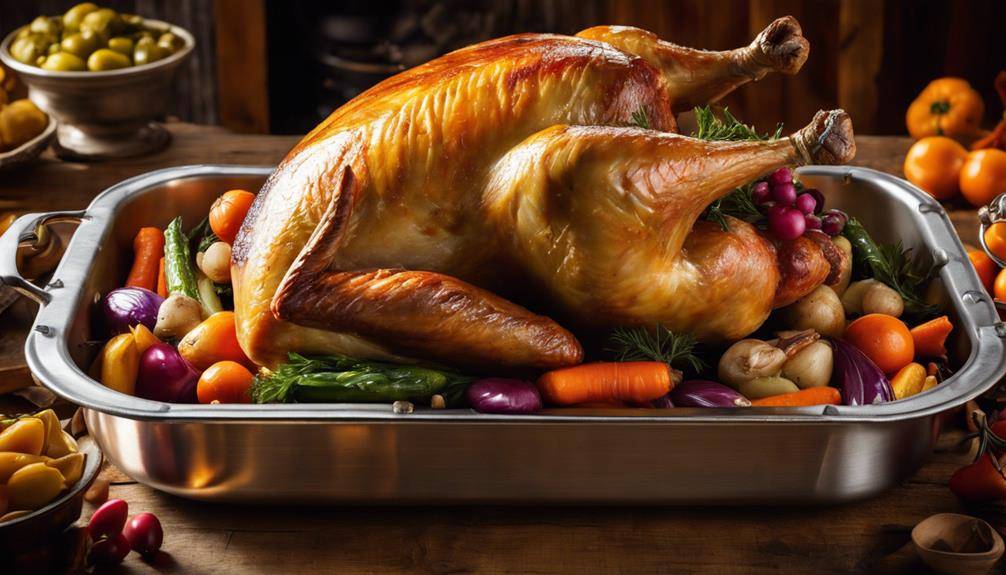
Next, focus on meat placement in your roasting pan. Place the meat on the rack, allowing hot air to circulate evenly around it. This not only promotes even cooking but also helps in achieving that desirable golden-brown crust. If you’re roasting a whole chicken or turkey, position it breast-side up for maximum moisture retention. Remember to tuck the wings under the bird to prevent burning.
Don’t forget to season your meat generously before roasting. A simple rub of oil, salt, and your favorite herbs can make a world of difference in flavor. If you’re using a marinade, let the meat soak for a few hours or overnight for the best results.
During the roasting process, it’s wise to monitor the internal temperature using a meat thermometer. Aim for the recommended doneness levels—165°F for poultry, 145°F for pork, and around 135°F for medium-rare beef. Allowing your meat to rest for at least 15 minutes after roasting is essential, too. This gives the juices time to redistribute, ensuring each slice is mouthwatering and tender. Happy roasting!
We’ve Got Everything You Need to Make Your Masterpiece.
Cleaning and Maintenance Tips
How do you keep your roasting pan and rack in top condition? Proper cleaning and maintenance are essential for prolonging their life and guaranteeing they perform well. Start by allowing the pan and rack to cool completely before you clean them. This prevents warping and damage.
For basic cleaning, warm soapy water usually does the trick. Use a soft sponge or cloth to scrub away food particles, avoiding abrasive cleaning methods that could scratch the surface. If you find stubborn stains or burnt-on residue, consider soaking the pan in warm water for a while. You can also create a paste out of baking soda and water to tackle tough spots—just apply it, let it sit for a bit, and then scrub gently.
A good maintenance tool is a silicone spatula, which can help you scrape off any residue without scratching the surface. After cleaning, dry your roasting pan and rack thoroughly to prevent rust, especially if they’re made of metal. Store them stacked with a clean cloth between them to avoid scratches and maintain their finish.
To keep your roasting pan looking new, you might want to apply a light coat of cooking oil before storing it. This prevents oxidation and keeps it ready for your next culinary adventure. By following these cleaning methods and utilizing the right maintenance tools, you’ll guarantee your roasting pan and rack remain in excellent shape for years to come.
Creative Recipes to Try
With your roasting pan and rack well-maintained and ready for action, it’s time to explore some creative recipes that will make the most of these kitchen tools. One standout dish you can try is herb crusted chicken. Start by seasoning your chicken thighs or breasts with a mix of fresh herbs like rosemary, thyme, and parsley. Add a touch of garlic and lemon zest for extra flavor. Place the chicken on the rack in your roasting pan to allow the heat to circulate evenly, ensuring a beautifully crispy skin. Roast at 425°F until the chicken reaches an internal temperature of 165°F, about 40-50 minutes, depending on the size.
While your chicken roasts, you can whip up some honey glazed carrots. Peel and chop fresh carrots into uniform pieces. In a bowl, mix together honey, olive oil, and a pinch of salt. Toss the carrots in this mixture, ensuring they’re well-coated. When the chicken’s nearly done, add the carrots to the roasting pan, placing them beneath the rack. This way, they’ll soak up all the delicious drippings while caramelizing beautifully in the oven’s heat. Roast everything together for another 20-25 minutes until the carrots are tender and sweet.
These two dishes complement each other perfectly, making for a delightful, wholesome meal. Enjoy the satisfaction of serving a dish that looks as great as it tastes, all thanks to your trusty roasting pan and rack!
We’ve Got Everything You Need to Make Your Masterpiece.
Frequently Asked Questions: Reasons For Using Roasting Pan With Rack
Can I Use a Roasting Pan on the Stovetop?
You shouldn’t use a roasting pan on the stovetop due to stovetop safety concerns. Most roasting pans aren’t designed for direct heat, which can lead to uneven heat distribution and potential warping or damage.
What Materials Are Roasting Pans Typically Made From?
Roasting pans are typically made from materials like stainless steel, which offers durability, and cast iron for excellent heat retention. You might also find options with a nonstick coating or an enamel finish for easier cleanup.
Are Roasting Pans Dishwasher Safe?
Roasting pans vary in dishwasher safety. Always check the manufacturer’s guidelines for roasting pan care. If it’s safe, guarantee you use it properly to maintain its longevity and avoid damage. Your roasting pan safety depends on this!
How Do I Store My Roasting Pan?
To store your roasting pan, find a designated spot in your kitchen. Stack it with similar-sized pans or use a pan organizer. Proper roasting pan storage keeps your kitchen tidy and makes cooking more efficient.
Can I Use a Roasting Pan for Baking?
Yes, you can use a roasting pan for baking. It’s versatile for various baking techniques. Just remember, if you’re exploring roasting alternatives, make certain the pan’s size and shape fit your recipe for best results.

Conclusion
Using a roasting pan with a rack can elevate your cooking game, making it easier to achieve perfectly roasted meats and veggies. With the right pan and techniques, you’ll enjoy delicious results every time. Don’t forget to keep your pan clean and well-maintained for longevity. Try experimenting with new recipes to discover all the tasty possibilities. So, grab your roasting pan and rack, and get ready to impress your family and friends with your culinary skills!
If you enjoyed exploring this topic and want to dive even deeper, be sure to check out some of our other articles here on Infinite Flavors. From rich culinary histories to creative twists on classic recipes, there’s always something new to discover. Whether you’re curious about the origins of a dish, looking for fresh inspiration in the kitchen, or simply love learning about food culture, our collection of posts is the perfect next step on your flavor journey.
A Great Beginners Guide To Curing Vegetables
The Best Temperature For Roasting Whole Chicken