Traditional British Holiday Food: Exploring Festive Cuisine
Traditional British Holiday Food: Exploring Festive Cuisine: When you explore traditional British holiday food, you'll find a blend of festive flavors and time-honored customs. Roast turkey takes center stage at Christmas dinners, paired with hearty sides like Brussels sprouts and roast potatoes. Don't forget the beloved mince pies, which evoke nostalgia, and the iconic Christmas pudding that symbolizes togetherness. Each dish represents centuries of cultural heritage and regional variations, enhancing communal gatherings. This culinary tapestry not only satisfies your taste buds but also strengthens family bonds. If you're curious about specific dishes and their meanings, you'll discover even more delightful insights about this festive cuisine.
Click Here and Turn Every Masterpiece into a Showstopper!
Origins of British Holiday Food
The origins of British holiday food are rooted in centuries of tradition and cultural influences. When you examine the culinary history, you'll find a rich tapestry woven from various historical influences, including Roman, Saxon, and Norman traditions. Each culture brought its own flavors and practices, creating a diverse holiday menu that reflects the nation's evolution.
You might notice that many holiday dishes have deep cultural significance. For instance, the incorporation of spices, once a luxury item, showcases the impact of trade routes and colonialism on British cuisine. Dishes like mincemeat pies and Christmas pudding evolved over time, originally associated with religious rituals, transforming into festive staples that unite families during the holiday season.
As you explore British holiday food, you'll see how it mirrors social customs and celebrations. Traditional meals often center around communal gatherings, emphasizing the importance of togetherness and sharing. You'll find that the foods you enjoy today are not just about flavor; they represent a connection to the past and a celebration of cultural heritage.
The blending of various influences has shaped what you recognize as British holiday cuisine, making it a unique culinary experience. Whether it's a roast dinner or festive treats, each dish carries a story, reminding you of the historical influences that have molded these cherished traditions. Understanding this background adds depth to your holiday meals, enriching your appreciation for the food and the memories it creates.
Iconic Dishes of Christmas
When you think of Christmas in Britain, roast turkey instantly comes to mind as a centerpiece of the festive feast. Alongside it, the delightful sweetness of mince pies and the rich heritage of Christmas pudding add to the holiday spirit. Let's explore how these iconic dishes have become essential to your Christmas celebrations.
Roast Turkey Tradition
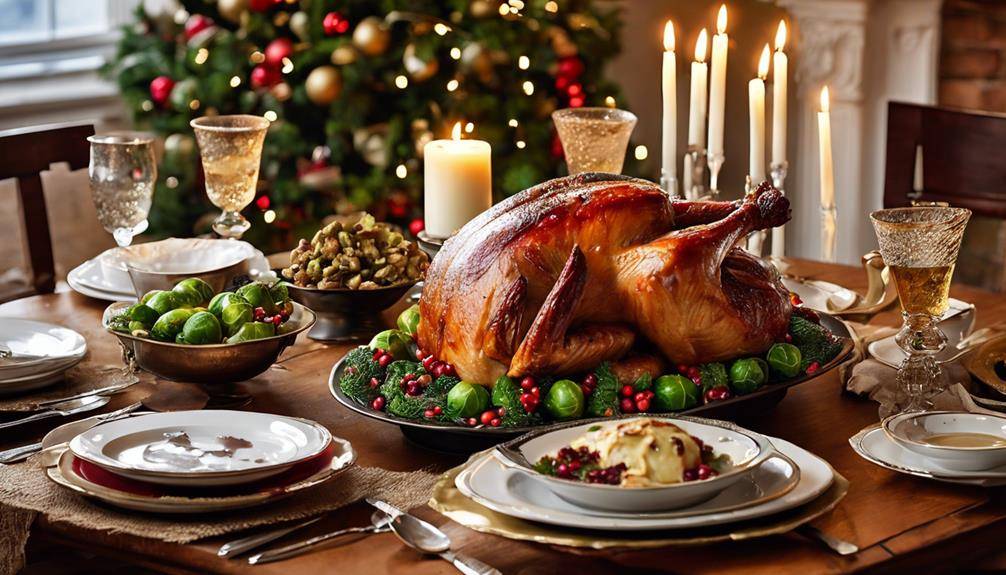
Roast turkey has become an essential centerpiece for Christmas dinners across the UK, symbolizing both tradition and festivity. As you gather with family and friends during this festive season, the aroma of a perfectly roasted turkey fills the air, creating a warm and inviting atmosphere.
You might find that turkey preparation is an art form, requiring attention to detail and a bit of creativity. Many choose to brine the turkey beforehand to enhance its juiciness, while others might opt for a herb-infused butter to slather under the skin. Don't forget about the stuffing! Whether you prefer a classic sage and onion or something more adventurous, it's a crucial component that complements the turkey beautifully.
As you carve the turkey, the golden-brown skin and tender meat are sure to impress your guests. Serve it alongside traditional accompaniments like roasted potatoes, Brussels sprouts, and cranberry sauce for a complete festive experience. The joy of sharing this meal creates lasting memories, making roast turkey a cherished element of your Christmas celebration. So, embrace the tradition, and enjoy every bite as you celebrate the season!
Mince Pies Delight
After savoring the festive roast turkey, it's hard to resist the allure of mince pies, a true hallmark of the Christmas season in the UK. These delightful pastries, filled with a rich combination of dried fruits, spices, and sometimes a splash of brandy, have a fascinating mince pie history that dates back to the 13th century. Originally, they were much larger and included meat, reflecting the diverse culinary traditions of the time.
Today, festive baking of mince pies brings families and friends together, as they gather in kitchens, rolling out pastry and sharing stories. The scent of freshly baked pies wafting through the house is a sure sign that Christmas is near. You might find yourself experimenting with various recipes, adding your twist to the classic blend of flavors.
Each bite of a warm mince pie, dusted with icing sugar, evokes memories of holiday cheer and celebration. Whether you enjoy them with a dollop of cream or a scoop of vanilla ice cream, these treats remain a beloved symbol of the season. So, as you embrace the festivities, don't forget to leave a few out for Santa—they're sure to bring a smile to his face!
Christmas Pudding Heritage
As the festive season approaches, one dish that stands out among traditional British holiday foods is Christmas pudding. This rich, hearty dessert has deep roots in British heritage, symbolizing a time of togetherness and celebration. You might be surprised to learn that the origins of Christmas pudding date back to the medieval period, where it was initially a savory dish.
Today, you'll find that the pudding rituals surrounding Christmas pudding are just as important as the dessert itself. Families often gather to make the pudding weeks in advance, stirring the mixture together while making wishes. This tradition not only strengthens family bonds but also adds a touch of magic to the festive season.
When it's time to serve, the pudding is typically steamed and flambéed, creating a dramatic presentation that captivates everyone's attention. Its rich flavors, filled with fruits and spices, reflect the abundance and warmth of the holidays.
With its heritage significance, Christmas pudding is more than just a dessert—it's a cherished symbol of British Christmas traditions that you can enjoy and pass down through generations. So, this year, embrace the spirit of the season and indulge in this iconic dish.
The Roast Dinner Tradition
While many enjoy a hearty meal any day of the week, nothing quite matches the warmth and comfort of a traditional British roast dinner, especially on a Sunday. This meal has become a cornerstone of British culture, bringing families together around the table to share not just food but also stories and laughter. A typical roast dinner features succulent roasted meat—be it beef, chicken, lamb, or pork—paired with crispy roast potatoes, seasonal vegetables, and a rich gravy that ties it all together.
The roast dinner isn't just a meal; it's a celebration of festive traditions that have been passed down through generations. You might find Yorkshire puddings gracing the plate, especially when enjoying a beef roast, or perhaps a hearty stuffing that complements the poultry. Each region in the UK has its own variations, adding personal touches that reflect local ingredients and tastes.
As you sit down to enjoy this delightful feast, you'll appreciate how it transcends mere sustenance. It's an opportunity to slow down, savor each bite, and engage with loved ones. Whether it's a special occasion or just a gathering on a Sunday, the roast dinner fosters a sense of belonging and warmth. Embracing this tradition not only fills your belly but also nourishes your spirit, reminding you of the simple joys in life. So, next time you gather around the table, remember the significance of the roast dinner—it's more than just food; it's a cherished ritual.
Mince Pies and Their Significance
The festive season in Britain isn't complete without the warm aroma of mince pies wafting through the air. These delightful treats hold a special place in your heart and kitchen during the holidays. With their rich, spiced filling and flaky pastry, mince pies are a staple of British festive traditions, offering a taste of history in every bite.
Mince pie history dates back to the 13th century, when they were filled with meat, fruits, and spices. Initially enjoyed as a savory dish, they evolved over time, especially during the Tudor period, when sweet versions began to emerge. By the Victorian era, mince pies had transformed into the sweet delicacy we cherish today, often associated with Christmas celebrations.
During the holiday season, you might find yourself baking or sharing mince pies with family and friends. This act of giving reflects the spirit of the season, where sharing food fosters connection and joy. You could also partake in the tradition of making a wish as you take a bite, believing it brings good luck for the coming year.
Mince pies aren't just a tasty treat; they embody the warmth and nostalgia of festive gatherings. Whether you enjoy them on their own or with a scoop of cream, these pies remind you of cherished memories and the importance of togetherness. So, as you indulge in these delicious offerings, you're not just enjoying a dessert; you're celebrating a centuries-old tradition that continues to bring people together.
Christmas Pudding: A Timeless Classic
Christmas pudding stands as a beloved centerpiece of British holiday feasts, steeped in rich tradition and festive spirit. This dessert, often made with a mix of dried fruits, such as raisins and currants, reflects the essence of the season. You might be surprised to learn that the steaming method used to prepare it enhances its moistness and allows the flavors to meld beautifully.
As you explore the world of Christmas pudding, you'll discover a myriad of festive spices like cinnamon, nutmeg, and cloves that add warmth and depth to the dish. Families often follow historical recipes passed down through generations, ensuring that each pudding carries a unique family touch. Flavor variations abound, with some opting for chocolate, nuts, or even a splash of brandy for an extra kick.
Serving traditions play a significant role in the Christmas pudding experience. It's commonly presented with a flourish, often lit with brandy to create a dramatic effect. Decorative toppings, such as sprigs of holly or a drizzle of cream, elevate the presentation and make it a feast for the eyes as well as the palate.
During family gatherings, the culinary rituals surrounding pudding-making can be joyful and communal, with each member taking turns stirring the mixture while making wishes. Whether you enjoy it with cream, custard, or ice cream, the serving suggestions are as varied as the memories created around the table.
Click Here and Turn Every Masterpiece into a Showstopper!
Mulled Wine: A Festive Beverage
As you savor the rich flavors of Christmas pudding, another holiday staple often graces British tables: mulled wine. This aromatic beverage captures the essence of the festive season, bringing warmth and cheer to chilly winter nights. With its deep red hue and inviting fragrance, mulled wine is more than just a drink; it's a cozy experience that invites you to slow down and enjoy the moment.
To create this delightful concoction, you'll typically start with a good-quality red wine, which forms the base. As you heat it gently, you'll add a mix of warming spices like cinnamon, cloves, and star anise. The spices infuse the wine with their robust flavors, creating a comforting blend that embodies the spirit of the holidays. You might also toss in some citrus—slices of orange or lemon—to brighten the drink and enhance its festive flavors.
Sweetening the pot with sugar or honey is common, allowing you to tailor the sweetness to your liking. As the concoction simmers, the aromas waft through the air, making it hard to resist pouring yourself a steaming cup.
When you finally take that first sip, the warmth spreads through you, wrapping you in a cozy embrace. Whether you're gathered around the fireplace with family or enjoying a holiday gathering with friends, mulled wine is the perfect companion, embodying the joy and togetherness of the season. So, go ahead, pour yourself a glass, and let the festivities begin!
Seasonal Sides and Accompaniments
When it comes to your holiday feast, the sides and accompaniments can make all the difference. Classic British vegetables, hearty stuffing variations, and rich sauces and gravies add flavor and texture to your meal. Let's explore these essential elements that elevate your festive dining experience.
Classic British Vegetables
Classic British vegetables play an essential role in holiday meals, enhancing both flavor and tradition. As you gather with loved ones, you'll find that seasonal vegetables like Brussels sprouts, parsnips, and carrots take center stage. These veggies not only bring vibrant colors to your plate but also offer rich tastes that complement your festive dishes.
Incorporating these seasonal vegetables into your holiday spread reflects a deep-rooted British tradition of embracing what's fresh and available. You might find that roasting parsnips caramelizes their natural sweetness, while sautéing Brussels sprouts brings out a delightful crunch. Don't forget about the classic mashed potatoes, which provide comfort and familiarity.
Moreover, vegetable preservation has been a key practice in British kitchens for generations. Whether you're pickling, freezing, or storing root vegetables, these methods guarantee you can enjoy seasonal flavors long after the holidays. So, as you prepare your holiday feast, consider how these classic British vegetables can elevate your meal, making it not just delicious but also a heartfelt tribute to cherished traditions. Embrace the bounty of the season, and let these vegetables shine alongside your main dishes!
Hearty Stuffing Variations
While you might think of stuffing as a simple side, there's a world of hearty variations that can transform your holiday table. You can start with different bread types, like sourdough or brioche, to create a unique base. Mixing in nut inclusions, such as walnuts or chestnuts, adds a lovely crunch and depth. Don't forget about fruit additions like dried cranberries or apples; they introduce a sweet contrast to savory flavors.
Experiment with herb variations, using fresh thyme or sage for that classic taste, or even regional spices to give your stuffing a cultural twist. Texture contrasts are essential too; consider adding sautéed vegetables for moisture or crispy bacon for richness. If you're catering to vegetarians, opt for vegetable broth and plenty of seasonal veggies.
Depending on your preferences, you can use various cooking methods—baking it separately for a crispy top or cooking it inside the bird for a juicy result. Each choice affects the flavor profiles and overall experience. So, embrace the creativity of hearty stuffing variations, and elevate your festive meal with these delicious accompaniments.
Traditional Sauces and Gravies
No holiday feast feels complete without a rich, flavorful sauce or gravy to accompany the meal. Traditional British cuisine boasts a variety of sauce varieties that enhance the dining experience. Think about classic gravy recipes made from pan drippings, which not only add depth but also celebrate the historical significance of the holiday roast.
You can explore different flavor profiles by incorporating herbs like rosemary or thyme, or even a splash of red wine for that extra kick. Pairing suggestions are essential; for instance, a robust onion gravy complements sausages beautifully, while a tangy cranberry sauce elevates turkey dishes.
Culinary techniques matter too—whether you're whisking a silky béchamel or a chunky chutney, the method can dramatically affect the outcome. Regional specialties also come into play; in the North, you might find a rich meat-based gravy, while in the South, fruit-based sauces might take center stage.
Regional Variations in Holiday Cuisine
The richness of British holiday cuisine reveals itself through the diverse regional variations that each area contributes. You'll find that these regional specialties often highlight local ingredients, showcasing the unique seasonal flavors available in different parts of the country. For instance, in Scotland, you might enjoy haggis served with neeps and tatties, a festive variation that reflects the area's culinary traditions.
Down in Cornwall, you could experience a traditional Cornish pasty that's been passed down through family recipes, celebrating holiday customs that have stood the test of time. Each region's cooking techniques also bring a distinctive touch to holiday feasts, whether it's a rich game pie from the North or a succulent roast from the South.
Cultural influences play a significant role in shaping these culinary traditions. In Wales, you might encounter a lovely lamb dish infused with herbs that have been used for generations, while in Northern Ireland, you could savor a hearty stew during community feasts.
Every bite tells a story of the area's history and its people. As you explore these festive variations, you'll discover how family recipes have been adapted over time, creating a tapestry of flavors that defines British holiday cuisine. So, whether you're enjoying a Yorkshire pudding or a plate of Welsh cakes, remember that each dish is a celebration of regional pride and local heritage, bringing people together during the holidays.
Desserts That Delight
Indulging in traditional British holiday desserts is a delightful experience that captures the essence of festive cheer. One of the most iconic treats you'll find during this season is the chocolate yule log. This rich dessert, made from chocolate sponge cake rolled with a luscious chocolate filling, is often decorated to resemble a log, complete with meringue mushrooms and a dusting of icing sugar to mimic snow. It's a perfect centerpiece for your holiday table and a joy to slice into.
Another festive favorite is the assortment of festive tarts. These delightful pastries come in various flavors, with mincemeat tarts leading the charge. Filled with a spiced mixture of dried fruits, nuts, and zesty citrus, they deliver a burst of flavor in every bite. You might also come across tarts filled with sweet custard or fresh fruits, each offering a unique taste experience that complements the season.
Don't forget about the traditional trifle, layered with sponge cake, custard, and fruit, all topped with whipped cream. It's a crowd-pleaser that never fails to impress.
As you explore these desserts, you'll find that each bite not only satisfies your sweet tooth but also evokes cherished memories of holiday gatherings. So, gather your loved ones, share these delights, and create new traditions around the dessert table that you'll look forward to year after year.
The Role of Food in Celebrations
Food plays a crucial role in celebrations, acting as a bridge that connects people and creates lasting memories. Whether it's a grand festive gathering or an intimate family dinner, the dishes you share carry deep food symbolism. They often reflect cultural significance, showcasing the culinary traditions that have been passed down through generations.
During holiday rituals, you might find yourself gathering around a table filled with celebratory feasts, each dish telling a story of your gastronomy heritage. Seasonal ingredients play a critical role, too, emphasizing the importance of freshness and locality in your meals. The flavors of the season evoke nostalgia, reminding you of times spent with loved ones.
Family recipes can transform a simple meal into a cherished event, as each bite brings back memories of laughter and togetherness. When you partake in communal meals, you strengthen bonds, celebrating not just the food but also the relationships that enrich your life.
These culinary experiences during festive gatherings create a sense of belonging and continuity within families and communities. By sharing food, you honor traditions, embrace the present, and build memories for the future. Ultimately, the role of food in celebrations goes beyond mere sustenance; it cements connections and enriches your life, reminding you of the joy that comes from sharing a meal with those you care about.
Click Here and Turn Every Masterpiece into a Showstopper!
Frequently Asked Questions: Traditional British Holiday Food: Exploring Festive Cuisine
What Are Common Vegetarian Alternatives for Traditional Holiday Dishes?
When you're looking for vegetarian alternatives for holiday dishes, consider delicious vegetarian roasts and festive sides like roasted vegetables, hearty stuffing, and creamy mashed potatoes. These options can make your celebration just as special!
How Do British Holiday Food Traditions Vary by Family?
British holiday food traditions vary by family, often reflecting cherished family recipes and regional variations. You'll discover unique flavors and dishes that bring everyone together, creating memorable experiences that celebrate each family's culinary heritage.
What Is the Significance of the Christmas Cracker in Meals?
The Christmas cracker's significance lies in its role during festive meal traditions. You pull it with loved ones, revealing fun surprises, jokes, and paper crowns, creating laughter and memorable moments that enhance your holiday celebration.
Are There Any Modern Twists on Traditional British Holiday Recipes?
You'll find plenty of modern adaptations for holiday recipes, using creative ingredients like quinoa instead of traditional stuffing or plant-based options for turkey. These twists make festive meals more inclusive and exciting for everyone.
How Do British Holiday Food Customs Influence Other Cultures?
British holiday food customs influence other cultures through cultural exchange, inspiring festive adaptation in recipes worldwide. You'll often find unique twists on traditional dishes, merging flavors and traditions that create delicious new experiences during celebrations.

Conclusion
To sum up, traditional British holiday food is a celebration of history, flavor, and togetherness. From the iconic roast dinner to the rich, sweet treats like mince pies and Christmas pudding, each dish tells a story of festive joy. As you gather with loved ones, remember how these culinary delights bring people together, bridging generations and regions. So, embrace the flavors of the season and enjoy the warmth that comes from sharing these time-honored dishes.