Exciting Tips To Mastering Argentinian Pastries: A Step-By-Step Guide
Tips To Mastering Argentinian Pastries; You’re about to set off on a delicious journey into Argentinian pastries, where rich flavors and diverse textures await. To master them, you’ll need essential ingredients like all-purpose flour, unsalted butter, and dulce de leche. Equip yourself with tools like a rolling pin and quality baking sheets for effective results. Focus on techniques such as kneading dough for the perfect texture and resting it to enhance flavor. Don’t forget about classic recipes like empanadas and alfajores. With practice and some handy tips, you’ll create delightful pastries that impress. Keep going, and you’ll discover even more secrets to elevate your baking skills!
Click Here and Turn Every Masterpiece into a Showstopper!
Understanding Argentinian Pastries
Argentinian pastries are often celebrated for their rich flavors and diverse textures, making them a key part of the country’s culinary identity. When you immerse yourself in the world of Argentinian pastries, you’ll quickly discover their cultural significance. They reflect a blend of indigenous traditions, Spanish influences, and Italian flair, creating a unique pastry landscape that tells a story of migration and adaptation.
The pastry history in Argentina dates back to the colonial period when European settlers introduced their culinary practices. Over the years, these influences merged with local ingredients and techniques, resulting in an array of beloved treats. You’ll encounter classics like alfajores, which are two cookies filled with dulce de leche and often coated in chocolate or powdered sugar. These bite-sized delights symbolize celebration and are often shared during holidays and family gatherings.
As you explore further, you’ll find empanadas, which come in countless variations, each reflecting regional flavors. These savory pastries serve as a staple in everyday meals and special occasions alike. The preparation and enjoyment of Argentinian pastries are steeped in tradition, making them not just food, but a way to connect with the past and with loved ones.
Essential Ingredients Overview
To create delicious Argentinian pastries, you need to know the essential ingredients that bring them to life. Each region adds its own twist, so understanding these variations can elevate your baking. Let’s explore the common ingredients and how they differ across Argentina.
Common Pastry Ingredients
When it comes to crafting delicious pastries, understanding the essential ingredients is key to success. Each component plays a vital role in achieving the perfect pastry textures you desire. Flour is your foundation; it provides structure and stability. Opt for all-purpose flour for versatility, but don’t hesitate to experiment with cake flour for a lighter texture or whole wheat for a nuttier flavor.
Butter adds richness and contributes to flakiness. Always use unsalted butter to control the salt content in your pastries. Sugar sweetens and helps with browning, while eggs provide moisture and binding. They also enrich the dough, making it tender.
Don’t forget about liquids like milk or water, which hydrate your dough and activate gluten. If you need to make ingredient substitutions, consider alternatives like coconut oil instead of butter or almond milk for a dairy-free option. These swaps can still yield delightful pastries without compromising on taste.
Regional Variations Explained
Across Argentina, regional variations in pastries reflect the diverse cultural influences and local ingredients that shape their unique flavors and textures. In the Pampas, you’ll find Pampean pastries, known for their rich, buttery crusts and fillings like dulce de leche. These traditional recipes often carry cultural significance, connecting generations through shared culinary heritage.
Traveling to the Andean regions, you’ll discover pastries infused with Andean influences, incorporating ingredients like quinoa and local fruits. These variations highlight the region’s agricultural bounty and offer a unique twist on classic recipes.
On the coast, coastal specialties take center stage, featuring fresh seafood and tropical flavors. Urban adaptations emerge in cities like Buenos Aires, where you can enjoy modern twists on traditional pastries, blending international influences with local flair.
Festive variations abound during national holidays, showcasing the importance of pastries in celebrations. Whether it’s a simple alfajor or a decadent torta, each bite tells a story of Argentina’s rich cultural tapestry. By exploring these regional differences, you’ll appreciate how each pastry reflects its origins while inviting you to create your own delicious variations.
Tools and Equipment Needed
Creating delicious Argentinian pastries requires the right tools and equipment to bring your culinary vision to life. Start with essential pastry tools that make all the difference. A solid kitchen setup includes measuring devices like cups and digital scales for accuracy in your recipes. You can’t underestimate the significance of precise measurements when it comes to baking.
For rolling techniques, a sturdy rolling pin is imperative. It helps you achieve that perfect thickness for your dough, whether you’re making empanadas or facturas. Dough cutters are also important; they enable you to create uniform shapes and sizes, ensuring even cooking. Don’t forget a good set of pastry brushes for applying egg washes or glazes, giving your pastries that beautiful golden finish.
When it comes to equipment types, an oven with adjustable settings is essential. You’ll want to master the right oven temperature for each pastry type, as even slight variations can affect the final product. Workspace organization is key, too. Keep your tools within reach and your ingredients prepped, so you can work efficiently without interruptions.
Lastly, invest in quality baking sheets and parchment paper for easy clean-up and better cooking results. With these baking essentials at your disposal, you’ll be well on your way to crafting perfect Argentinian pastries that impress family and friends alike. Remember, having the right tools is half the battle when it comes to mastering the art of pastry-making!
Mastering the Dough Technique
To create perfect Argentinian pastries, you need to master the dough technique. Start by understanding the essential ingredients that give your dough the right texture, and then focus on kneading and resting methods to develop its flavor. With these skills, you’ll be on your way to baking delicious treats that impress everyone.
Click Here and Turn Every Masterpiece into a Showstopper!
Essential Dough Ingredients
Mastering the dough technique is essential for crafting authentic Argentinian pastries, and understanding key ingredients sets the foundation for success. The type of flour you choose plays a significant role. For most pastries, all-purpose flour works well, but using a combination of cake flour can create a lighter texture. If you’re aiming for a more traditional touch, look for Argentinean wheat flour, known for its unique properties.
Next, let’s talk about fats. Butter is a classic choice, but if you’re looking for alternatives, consider using margarine or even vegetable shortening. These butter alternatives can yield a crumbly dough, perfect for pastries like empanadas or alfajores. Keep in mind that each fat will impart a different flavor and texture, so don’t hesitate to experiment until you find what you love.
Lastly, don’t forget about salt and sugar. A pinch of salt enhances the overall flavor, while sugar can add just the right amount of sweetness, especially in dessert pastries. With these key ingredients, you’re on your way to creating delicious Argentinian pastries that will impress everyone!
Kneading and Resting Techniques
Once you’ve gathered your ingredients and prepared your dough, the next step involves kneading and resting, both vital for achieving the right texture. Start kneading your dough on a lightly floured surface, pushing it away with the heel of your hand, then folding it back over itself. This process promotes gluten development, which gives your pastries that perfect chewy bite.
Knead the dough for about 8 to 10 minutes. You’ll know it’s ready when it becomes smooth and elastic. Remember to keep an eye on the dough hydration; if it feels too sticky, sprinkle a bit more flour, but don’t overdo it, as too much flour can make your pastries dense.
Once kneading is complete, it’s time to let the dough rest. Form it into a ball and cover it with a damp cloth or plastic wrap. Resting allows the gluten to relax, making it easier to roll out later. Let it sit for at least 30 minutes. This step is essential—don’t skip it! Your patience here will pay off with beautifully flaky and tender Argentinian pastries.
Classic Empanada Recipes
Empanadas are a staple of Argentinian cuisine, beloved for their delicious fillings and flaky crusts. To master classic empanada recipes, you’ll want to start with the dough, which should be light and tender. Once you’ve prepared your dough, it’s time to explore a variety of empanada fillings that will tantalize your taste buds.
One popular filling is the traditional beef mixture. Simply sauté minced onions and ground beef together, adding spices like cumin and paprika for flavor. Another favorite is the chicken filling, which you can create by shredding cooked chicken and mixing it with diced peppers and onions. If you prefer a vegetarian option, consider spinach and ricotta; sauté spinach until wilted, then combine it with creamy ricotta and a sprinkle of nutmeg.
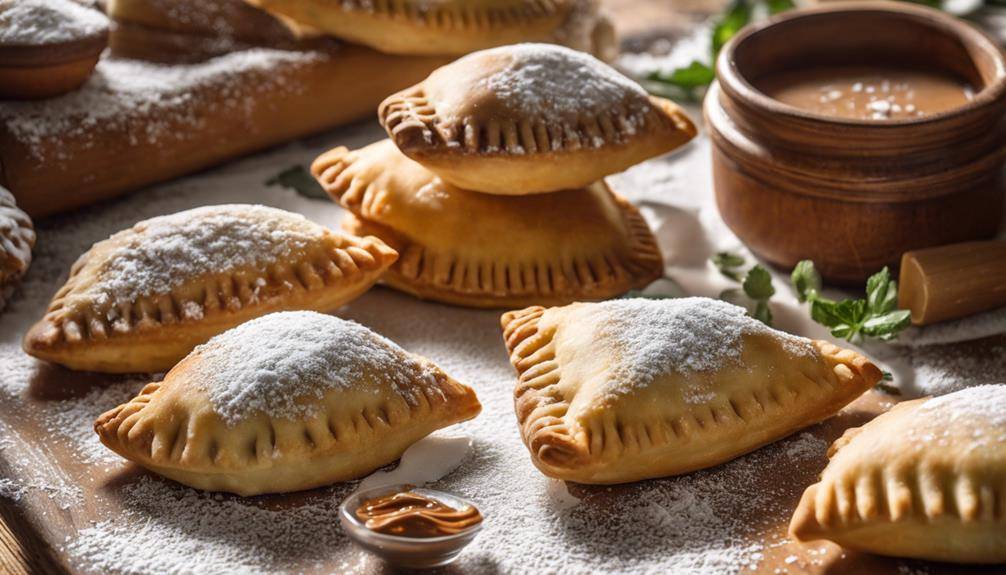
As for empanada shapes, you have a couple of options. The most common is the half-moon shape, which is achieved by folding your dough over the filling and crimping the edges. Alternatively, you can try the circular shape, using a larger piece of dough and folding it into a pocket, sealing the edges with a fork for added texture.
Once your empanadas are shaped, brush them with an egg wash for a golden finish, then bake or fry them to perfection. Serve them warm, and you’ll savor the true flavors of Argentina. Enjoying these classic empanadas is a delightful way to bring a piece of Argentinian culture into your kitchen!
Click Here and Turn Every Masterpiece into a Showstopper!
Savory Pastry Variations
While exploring the world of Argentinian pastries, you’ll find that savory variations of empanadas offer a delightful twist on traditional fillings. These delicious pastries can be filled with a variety of ingredients, elevating the classic empanada experience. Instead of just the usual ground beef, consider experimenting with chicken, spinach and cheese, or even a mix of mushrooms and herbs. Each filling brings its own unique flavor and texture, making your savory pastry creations truly special.
When it comes to pastry shapes, you’ve got options. The classic half-moon shape is widely recognized, but don’t shy away from trying other forms like circles or triangles. Each shape adds a different visual appeal and can showcase your creativity. You can also play around with the dough, incorporating spices or herbs to enhance the overall taste.
Don’t forget about the cooking methods! Baking gives a flaky and golden crust, while frying results in a crispy exterior. Whichever method you choose, the key is to guarantee the filling stays moist and flavorful. Remember to seal the edges well, so the delicious filling doesn’t escape during cooking.
Once you master these savory variations, you’ll find that you can impress your family and friends with your Argentinian pastry skills. So roll up your sleeves, get creative with your fillings, and enjoy the process of making these delightful treats!
Sweet Alfajor Creations
When it comes to sweet alfajores, knowing the essential ingredients is key to achieving that perfect balance of flavor and texture. You’ll want to master the assembly techniques to create those delightful layers that make alfajores so irresistible. Let’s explore what you need and how to put it all together for a truly authentic treat.
Essential Ingredients Overview
Creating the perfect sweet alfajor hinges on a few essential ingredients that bring harmony and depth to this beloved Argentinian treat. First, you’ll need high-quality flour, which forms the base of the pastry, lending it a tender texture. Sugar plays a significant role, sweetening your alfajores while balancing flavors within the filling.
Dulce de leche is the star ingredient, rich and creamy, it embodies the cultural significance of this dessert in Argentinian pastry history. You can’t overlook the flavoring agents, like vanilla or citrus zest, which elevate the taste and aroma. For a bit of crunch, consider adding finely chopped nuts or coconut into the mix.
Eggs are important for binding your ingredients, contributing to that light, melt-in-your-mouth quality you crave. Finally, a touch of baking powder will provide the necessary lift, ensuring your alfajores aren’t too dense.
Assembly Techniques Explained
To successfully assemble your sweet alfajores, you’ll often want to start by preparing your workspace. Clear the counter and gather all your ingredients: cookies, dulce de leche, and chocolate for coating. Having everything at hand makes the process smoother and more enjoyable.
Next, focus on your filling techniques. Take one cookie and spread a generous amount of dulce de leche on its flat side. Don’t be shy—this creamy treat is the star of your alfajores! Place another cookie on top, pressing gently to create a sandwich.
Now, let’s engage in pastry folding. If you’re opting for a chocolate coating, melt your chocolate until it’s smooth. Dip each assembled alfajor into the chocolate, ensuring it’s fully covered. Allow any excess to drip off before placing it on a cooling rack.
For an extra touch, you can roll the edges in shredded coconut or crushed nuts. This not only adds flavor but also enhances the visual appeal. Once everything’s set, let your alfajores cool completely before serving. With these assembly techniques, you’ll create delightful sweet alfajores that are sure to impress!
Exploring Other Popular Pastries
Argentinian pastries are just the tip of the iceberg when it comes to the world of delightful baked goods. While you may already be familiar with the beloved medialunas, there are many other pastries that deserve your attention. For instance, the facturas varieties, which include items like vigilantes and tortitas, offer a wonderful assortment of flavors and textures, each with its own unique history.
As you explore these pastries, you’ll discover why dulce de leche is a staple in many Argentinian treats. This rich caramel-like sauce often complements various pastries, elevating their sweetness and indulgence. You might want to try making your own dulce de leche at home to enhance your baking experience.
The pastry history of Argentina is deeply intertwined with European influences, particularly from Italy and France. This blend has resulted in diverse options like the croissant-like medialunas and their variations, such as the sweeter, glazed type. Each bite tells a story, reflecting cultural fusions and traditions.
However, don’t fall for common baking myths. Many people believe that making pastries requires complex techniques, but with practice, you’ll find it’s all about understanding your ingredients and methods. So, whether you’re diving into the world of facturas or experimenting with different medialunas types, you’re bound to uncover delicious surprises. Embrace the journey, and you’ll be rewarded with a variety of scrumptious pastries that extend far beyond Argentina’s borders.
Baking Techniques for Perfection
Mastering the art of baking pastries requires a keen understanding of techniques that can elevate your creations to perfection. One of the most essential skills is dough lamination, especially for puff pastry. This technique involves folding layers of butter into the dough, creating that coveted flaky texture. Remember to keep the dough cold while working to guarantee the butter remains solid, which is critical for achieving those beautiful layers.
Filling techniques play an important role, too. Whether you’re using dulce de leche or savory options, make sure your fillings complement the pastry’s texture contrast. For instance, a creamy filling inside a crunchy crust enhances the overall experience.
Pastry glazing is another significant aspect, adding both shine and flavor. A simple egg wash can create a golden finish, while a syrup glaze can introduce sweetness. Don’t overlook the importance of baking temperatures; knowing when to increase or decrease the heat can make or break your pastry.
Explore different crust types, from flaky to tender, to find what works best for your fillings. Incorporate decorative elements like lattice tops or simple sugar dusting to elevate the visual appeal. Finally, appreciate the cultural significance of each pastry you create. Understanding the history behind your recipes can deepen your connection to the art of baking. By mastering these techniques, you’ll not only create delicious pastries but also honor their rich traditions.
Tips for Flavor Enhancements
Enhancing flavors in your pastries can take your baking to the next level, and a few simple tips can make a big difference. Start by exploring flavor pairings that complement each other. For example, try combining chocolate with orange zest or dulce de leche with sea salt for a delightful contrast.
Next, consider spice variations. Adding a pinch of cinnamon or cardamom can elevate your pastry’s profile, giving it a warm, aromatic quality. Don’t overlook filling enhancements, either; incorporate fresh fruits or nuts into your fillings to create depth and texture contrasts.
When it comes to sweeteners options, experiment with honey or agave syrup instead of traditional sugar for a unique twist on sweetness. Seasonal ingredients can also play a significant role; use fresh berries in the summer or pumpkin in the fall to make your pastries feel timely and vibrant.
Aroma boosters are essential too. Infuse your dough with vanilla or almond extract to create an inviting scent that draws people in. Also, consider the cultural influences of Argentinian baking by incorporating traditional flavors like mate or guava, which can provide a delicious nod to heritage.
Ultimately, don’t shy away from experimenting. Each of these tips can work together to create a pastry that’s not just tasty, but unforgettable. By mixing and matching these enhancements, you’ll discover your own signature flavor combinations. Happy baking!
Serving and Presentation Ideas
When it comes to serving and presentation, the details can make your pastries truly shine. To elevate your Argentinian pastries, think about your plating styles. For instance, using a simple white plate can create a striking contrast against the vibrant colors of your pastries. You can also explore tiered cake stands for items like alfajores or facturas, giving a touch of elegance and making it easy for guests to serve themselves.
Don’t underestimate the power of garnish ideas. A sprinkle of powdered sugar or a drizzle of chocolate sauce can transform the simplest pastry into a showstopper. Fresh herbs, like mint or basil, can add an unexpected twist and freshness to your dessert. For a pop of color, consider edible flowers; they not only look beautiful but also enhance the overall flavor experience.
Create an inviting atmosphere by arranging your pastries in a way that encourages interaction. Group them in clusters, or display them in an inviting manner that guides your guests’ eyes. You might also include small tags that describe each pastry, giving diners a bit of insight into the flavors they’re about to enjoy.
Click Here and Turn Every Masterpiece into a Showstopper!
Storing Pastries for Freshness
Properly storing your Argentinian pastries is vital for keeping their delightful flavors and textures intact. To maximize their shelf life, you’ll want to focus on temperature control and humidity management. For short-term storage, keep your pastries in a cool, dry place, ideally in a well-sealed container to prevent moisture exposure. If you’re planning to keep them longer, consider using freezing methods.
When freezing, choose appropriate packaging options. Use airtight freezer bags or containers, and make certain you portion sizes for easy thawing later. Label the packaging with the date, so you know when they need to be consumed. It’s best to freeze the pastries while they’re still fresh, as this helps with flavor retention.
Defrosting tips are important, too. Instead of leaving them at room temperature, place your pastries in the refrigerator overnight. This gradual defrosting helps maintain their texture and prevents sogginess. If you’re in a hurry, you can use a microwave on a low setting, but be careful not to overheat them.
For best results, be mindful of your container selection. Use containers that are sturdy enough to prevent crushing but also allow some air circulation. Always check for any signs of freezer burn, which can affect the taste. By employing these effective storing techniques, you’ll make sure your Argentinian pastries stay delicious and ready to enjoy whenever you crave them.
Troubleshooting Common Issues
Even with the best storage methods, you might encounter some common issues with your Argentinian pastries. One frequent problem is a change in pastry texture, which can happen if they become stale or lose moisture. If your pastries feel dry or tough, try reheating them in the oven at a low temperature for a few minutes. This can help restore some moisture and improve the overall texture.
Another issue could be dough elasticity. If your dough didn’t rise or feels too tough during preparation, it likely needs more kneading. Proper kneading develops gluten, which enhances dough elasticity and gives your pastries that delightful, flaky quality. If you find your dough too dry, consider adding a bit more liquid, but be cautious not to overdo it.
If you’re dealing with pastries that have puffed up too much or have burst open while baking, check your oven temperature. An oven that’s too hot can cause rapid expansion, leading to uneven baking. Try lowering the temperature slightly next time, and verify you’re using the correct baking time.
Lastly, if your fillings leak out, it might be due to improperly sealed edges. Make sure to crimp or seal your pastries well before baking. A little egg wash can help secure the edges during baking too. By addressing these issues, you’ll be well on your way to perfecting your Argentinian pastries!
Click Here and Turn Every Masterpiece into a Showstopper!
Frequently Asked Questions: Tips To Mastering Argentinian Pastries
Can I Use Gluten-Free Flour for Argentinian Pastries?
You can definitely use gluten-free flour for Argentinian pastries. Just be mindful of the pastry texture; gluten-free substitutions may require additional binding agents or adjustments to achieve the desired consistency. Experiment to find what works best!
How Long Do Argentinian Pastries Typically Last?
Argentinian pastries typically last about three to five days at room temperature, depending on the filling. For longer pastry storage, consider refrigerating or freezing them to extend their shelf life and maintain freshness.
Are There Vegan Alternatives for Traditional Pastry Recipes?
Yes, there’re plenty of vegan substitutes for traditional pastry recipes. You can use ingredient alternatives like coconut oil for butter, almond milk for dairy, and flaxseed for eggs to create delicious vegan pastries without sacrificing flavor.
What Is the Best Way to Reheat Pastries?
To reheat pastries effectively, use the oven for even warmth and to retain pastry textures. Set it at 350°F, placing them on a baking sheet for about 10 minutes. You’ll enjoy fresh-tasting pastries again!
Can I Freeze Uncooked Pastries for Later Use?
Yes, you can freeze uncooked pastries for later use. Use proper freezing techniques by wrapping them tightly in plastic wrap, then placing them in an airtight container for ideal uncooked storage and freshness when you’re ready to bake.

Conclusion
Now that you’ve explored the world of Argentinian pastries, it’s time to put your skills to the test! Remember to embrace the dough technique and experiment with classic recipes like empanadas. Don’t shy away from adding your own flavor twists. With a little practice, you’ll impress friends and family with your delicious creations. So, gather your ingredients, roll up your sleeves, and enjoy the process of mastering these delightful treats! Happy baking!