Why Is Great Swedish Fika A Beloved Tradition
Why Is Great Swedish Fika A Beloved Tradition; Swedish fika is beloved because it turns simple coffee breaks into crucial moments of connection and mindfulness. You gather with friends or colleagues to share coffee and pastries, taking a rejuvenating pause from daily life. This tradition fosters meaningful conversations and nurtures relationships, enhancing your sense of community. Fika promotes well-being by reducing stress and improving focus, making it essential for work-life balance. The brewing process and delightful treats add charm to these gatherings. Embracing fika allows you to savor life’s pleasures in a cozy atmosphere. Keep exploring, and you’ll discover even more about this cherished Swedish tradition!
Bake with Style—Click Here For Our Collection and Start Creating
The Origins of Fika
Originating in Sweden, the tradition of fika—literally meaning “to have coffee“—has deep roots that date back to the 18th century. This practice emerged as a way for people to take a break from their daily routines, fostering connections over a cup of coffee and a sweet treat. The fika history is intertwined with Swedish customs, reflecting the nation’s appreciation for both socializing and quality coffee.
In the early days, coffee was a luxury item, often reserved for special occasions. As coffee culture grew, so did the tradition of fika. It evolved into a cherished ritual that encourages relaxation and conversation, allowing people to pause and reconnect amidst a busy day. You’ll find that every coffee break is not just about the beverage itself but about the experience of gathering with friends, family, or colleagues.
As you explore this delightful tradition, you’ll discover that fika can happen at any time of the day. Whether it’s a morning pick-me-up or an afternoon escape, the essence remains the same: a moment to enjoy life’s simple pleasures. Over time, fika has become a cornerstone of Swedish culture, celebrated in homes, offices, and cafes alike. Engaging in this practice means embracing a richer, more connected way of life, where the act of sharing coffee transforms into a meaningful social experience. So, the next time you brew a cup, remember the history and customs that make fika a beloved tradition.
Fika as a Social Ritual
When you take part in fika, you’re not just enjoying coffee and pastries; you’re also connecting with your community. These mindful moments help you step away from daily stress, allowing for meaningful conversations and connections. Fika holds cultural significance in Sweden, creating a space where relationships flourish and traditions are honored.
Community Connection
Fika isn’t just about coffee and pastries; it’s a cherished ritual that strengthens community bonds in Sweden. When you sit down for a fika, you’re participating in more than a simple break; you’re engaging in a tradition that invites connection. Whether you’re at work or with friends, these community gatherings foster a sense of belonging and togetherness.
During fika, you share experiences that go beyond the food and drinks. It’s a moment to slow down and connect with others, allowing you to discuss everything from daily life to deeper topics. As conversations flow over shared treats, you create lasting memories that enhance your relationships.
In a fast-paced world, taking the time for fika can feel like a refreshing change. You’re not just enjoying a snack; you’re partaking in a social ritual that brings people together. Each cup of coffee and every pastry shared is a stepping stone in building stronger connections. So, when you participate in fika, remember that you’re not just savoring delicious flavors; you’re also nurturing your community and celebrating the bonds that unite you.
Mindful Moments
Taking a moment for fika means embracing a social ritual that encourages mindfulness in your daily life. By gathering with friends, family, or colleagues, you create an opportunity for intentional pauses that allow you to step back from the hustle and bustle. This simple act of sharing coffee and pastries fosters a sense of connection and promotes mindful appreciation for the moment.
During fika, you focus on the present, savoring each sip and bite while engaging in genuine conversation. It’s a break from the chaos, where you can reflect, recharge, and connect on a deeper level. You’re not just consuming food and drink; you’re nurturing relationships and practicing mindfulness.
This ritual encourages you to appreciate the little things—like a perfectly brewed cup of coffee or a delicious homemade cake. As you partake in these moments, you become more aware of your surroundings and the people around you. Fika becomes more than just a coffee break; it transforms into a cherished practice that cultivates gratitude and fosters mindfulness in your everyday life. So, the next time you take a fika, relish those intentional pauses and enjoy the art of being present.
Bake with Style—Click Here For Our Collection and Start Creating
Cultural Significance
Cultural significance surrounds fika, as it serves not just as a coffee break but as an essential social ritual that strengthens relationships within Swedish society. When you participate in fika, you’re engaging in a tradition that goes beyond sipping coffee and enjoying pastries; you’re embracing a vital aspect of cultural identity. This simple act fosters social cohesion, allowing people to connect and share experiences in a relaxed setting.
During your fika, you’ll notice how conversations flow effortlessly, bridging gaps between colleagues, friends, and family. It’s a moment where hierarchy fades, and everyone feels equal, reinforcing the bonds that hold communities together. Through this ritual, you not only enjoy delicious treats but also cultivate a sense of belonging and togetherness.
Embracing fika means embracing a unique way of life that values relationships and human connection. It reminds you that taking a break isn’t just about recharging but also about nurturing the ties that enrich your life. So, next time you take a moment for fika, recognize its deeper purpose in shaping social fabric and preserving cultural identity within Sweden.
Promoting Work-Life Balance
Embracing the Swedish fika tradition can considerably enhance your work-life balance. Taking a break to enjoy coffee and pastries with colleagues not only provides a much-needed respite from work stress but also fosters a sense of social connection. These moments of relaxation can lead to a productivity boost, allowing you to return to your tasks with renewed energy and focus.
Incorporating fika into your daily routine can positively impact your mental health. By stepping away from your desk, you create a boundary between work and personal time, which is essential for effective time management. This intentional pause helps you recharge, reducing the risk of burnout and improving overall employee satisfaction.
Moreover, fostering a workplace culture that embraces fika encourages creativity enhancement. Engaging in casual conversations with coworkers can spark new ideas and perspectives, ultimately benefiting your projects and teamwork. When employees feel valued and connected, they’re more likely to contribute positively to the workplace environment.
Health Benefits of Fika
Incorporating fika into your routine not only enhances your work-life balance but also offers considerable health benefits. When you take a break for fika, you give yourself the chance to recharge mentally and physically. This simple act of stepping away from work can reduce stress and enhance your overall mental wellness. Studies show that regular breaks can improve focus and productivity, leading to better performance in your daily tasks.
Fika encourages social interaction, which is another key element for your mental health. Engaging in conversations with friends or colleagues during your fika allows you to build connections and foster relationships. This social support can considerably impact your mood, helping you feel more grounded and satisfied in your life.
Moreover, taking time for fika can help combat burnout. By creating a routine that includes these breaks, you’re actively prioritizing your well-being. The act of slowing down and enjoying a moment with a coffee and a pastry gives you a chance to reflect and reset, leading to improved emotional resilience.
In essence, embracing fika isn’t just about enjoying coffee and treats; it’s an investment in your fika health. By making this tradition a part of your life, you’re not only nurturing your body but also your mind. So, next time you feel overwhelmed, remember that a quick fika could be just what you need to revitalize your spirit and enhance your well-being.
The Role of Coffee
When you think about fika, coffee plays a central role in this cherished tradition. It’s not just about the drink itself; the brewing methods and rituals surrounding it add depth to the experience. Understanding its cultural significance can enrich your appreciation of this beloved Swedish custom.
Coffee’s Cultural Significance
Coffee plays a pivotal role in the Swedish fika tradition, acting as more than just a beverage; it’s a cultural cornerstone. When you engage in fika, you’re not just enjoying a cup of coffee; you’re partaking in a ritual that fosters connection and community. This shared experience encourages coffee appreciation, allowing you to savor each sip while chatting with friends, family, or colleagues.
In Sweden, coffee is often consumed throughout the day, but during fika, it takes center stage. You might find yourself exploring different blends and roasts, deepening your understanding of this beloved drink. The conversations that flow over coffee serve as a bridge for cultural exchange, bringing people together from diverse backgrounds. It’s a time to share stories, laughter, and even moments of silence, creating a sense of belonging.
Brewing Methods and Rituals
As you embrace the fika tradition, the way coffee is brewed becomes an integral part of the experience. The right brewing techniques not only enhance the flavor but also elevate the entire fika ritual. Whether you prefer a classic drip coffee maker, a French press, or a pour-over setup, each method has its unique charm that contributes to the moment.
Investing in quality coffee equipment is vital. A good grinder guarantees you get the freshest grounds, while a well-maintained brewer can make all the difference in taste. You might find joy in experimenting with different brewing techniques, like using a Moka pot for a rich, espresso-like coffee or a cold brew for a revitalizing twist.
Whatever method you choose, remember that the process is just as important as the coffee itself. Take your time, savor each step, and enjoy the aroma that fills the air. The act of brewing becomes a part of your fika, inviting friends and family to gather around, share stories, and create lasting memories. In this way, coffee transcends mere beverage status, becoming a central element of connection and tradition during your fika moments.
Traditional Swedish Pastries
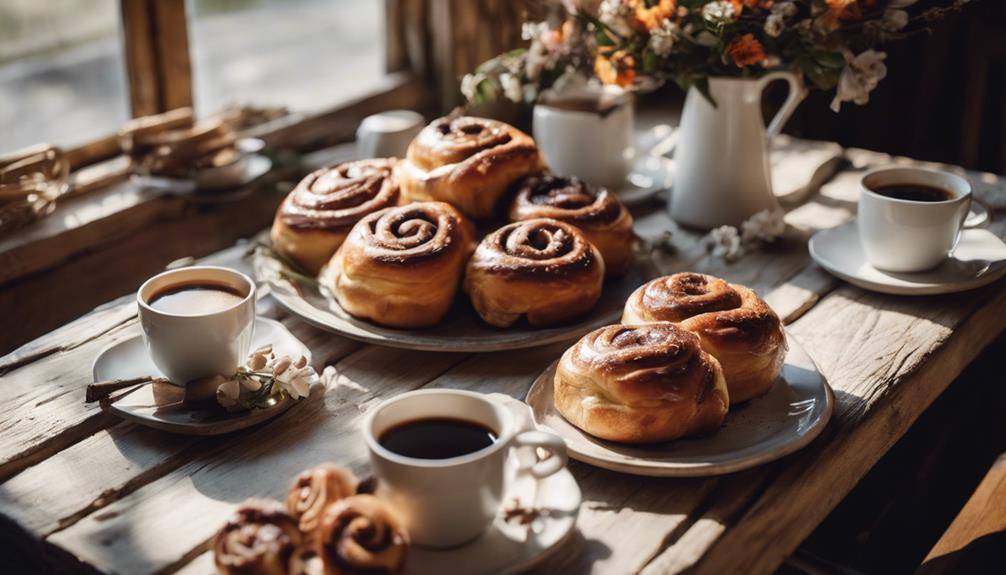
Traditional Swedish pastries are a delightful highlight of the fika experience, offering a sweet complement to your coffee. When you think of Swedish desserts, several mouthwatering treats come to mind, each with its unique flavor and texture. One of the most beloved traditional pastries is the kanelbullar, or cinnamon bun. These soft, sweet rolls are filled with cinnamon and sugar, creating a warm, inviting aroma that fills the air during fika.
Another classic option is the prinsesstårta, a beautiful layered cake adorned with a green marzipan covering. This pastry is often filled with cream, raspberry jam, and sponge cake, making it a perfect choice for special occasions or simply a treat during your coffee break. Don’t forget about the cardamom bun, or kardemummabulle, which adds a delightful spice to your fika experience.
Swedish pastries also include the chocolate-filled boller, which are perfect for satisfying your sweet tooth. You might also come across småkakor, or small cookies, that offer a variety of flavors, from buttery to nutty. These traditional pastries not only taste incredible but also represent a long-standing cultural heritage of enjoying life’s simple pleasures.
Whether you’re sharing these treats with friends or savoring them alone, traditional Swedish pastries enhance your fika ritual. So, grab a cup of coffee, pick your favorite pastry, and immerse yourself in the warmth and joy of this cherished tradition.
Bake with Style—Click Here For Our Collection and Start Creating
Fika in Modern Life
Embracing the essence of connection and mindfulness, fika has seamlessly woven itself into the fabric of modern life. In today’s fast-paced world, you might find it challenging to carve out time for yourself and your relationships. That’s where fika comes in. As you gather with friends, family, or colleagues for these informal coffee breaks, you create a space for relaxation and meaningful conversations.
Fika gatherings can happen anywhere – in your kitchen, at a local café, or even during a meeting at work. They’re not just about the coffee and pastries; they’re about slowing down and appreciating the moment. You’ll notice that when you incorporate fika traditions into your routine, you cultivate a sense of community and well-being that’s often missing in daily life.
Modern technology also plays a role in enhancing these gatherings. With social media, you can share your fika moments with others, inspiring them to join in the tradition. As you post pictures of beautifully arranged pastries or cozy settings, you encourage friends to create their own fika rituals.
Even in workplaces, companies recognize the value of fika. Organizing regular fika breaks can boost morale, enhance teamwork, and foster a positive atmosphere. By embracing these gatherings, you’re not just sipping coffee; you’re nurturing relationships and enhancing your mental well-being. So, whether it’s a quick catch-up or a leisurely afternoon, let fika become your go-to for connection in modern life.
Cultural Significance of Fika
Fika holds a profound cultural significance in Sweden, serving as more than just a coffee break. It’s a cherished ritual that fosters connections, allowing you to pause and savor moments with friends, family, or colleagues. When you partake in fika, you engage in a tradition that emphasizes the importance of relationships and community. This isn’t just about grabbing a quick cup of coffee; it’s about creating a space for conversation and reflection.
Understanding fika etiquette is essential to fully appreciate this tradition. You’ll notice that it’s not just the act of drinking coffee but also what you do while enjoying it. Conversations flow freely, often accompanied by delicious pastries or baked goods. You’re encouraged to put away your phone and focus on the people around you. This intentional disconnect from technology allows for deeper connections, reinforcing the value of face-to-face interactions.
Seasonal fika adds another layer to this cultural practice. As the seasons change, so do the flavors and treats associated with fika. In the winter, you might enjoy gingerbread cookies, while spring brings fresh strawberry tarts. These seasonal variations keep the tradition fresh and exciting, allowing you to celebrate the changing year with loved ones.
Ultimately, fika represents more than just coffee; it’s a lifestyle that prioritizes well-being, connection, and joy in everyday moments. So, the next time you take a break for fika, remember that you’re participating in a rich cultural heritage that many Swedes hold dear.
Fika Beyond Sweden
The warmth and spirit of fika have started to spread beyond Sweden, enchanting people around the globe. As you embrace this cozy tradition, you’ll find that global fika takes on various forms, each reflecting the unique culture of its new home. In coffee shops from New York to Tokyo, you might discover the essence of fika through inviting spaces designed for relaxation and connection.
In many countries, international adaptations of fika focus on the communal aspect, encouraging friends and colleagues to gather over coffee and sweet treats. You’ll notice that while the Swedish cinnamon bun remains a favorite, local pastries often make an appearance, showcasing regional flavors. In Italy, for instance, you might find fikas accompanied by rich espresso and pastries like cannoli, while in Brazil, you could enjoy coffee paired with brigadeiros, delightful chocolate truffles.
These adaptations not only honor the original spirit of fika but also allow you to personalize your experience. Perhaps you’ll invite your friends to share stories over a steaming cup of tea and homemade cookies, creating your own version of fika. As you explore these global interpretations, you’ll see how this simple act of gathering can foster connection, comfort, and joy, regardless of where you are.
Fika and Mindfulness
Taking a break for fika can be a powerful way to practice mindfulness in your daily routine. When you pause to enjoy a cup of coffee or tea with a sweet treat, you create an opportunity for intentional reflection. Instead of rushing through your snack, you focus on the flavors and textures, engaging in mindful eating. This simple act can ground you, allowing you to reconnect with the present moment.
During your fika, set aside distractions such as your phone or computer. This intentional pause helps you savor your drink and food. Notice how the warmth of your cup feels in your hands and how the aroma of coffee or pastries envelops you. By being fully present, you cultivate a deeper appreciation for the experience, turning a mundane break into a moment of joy.
Incorporating fika into your day encourages a shift from a fast-paced lifestyle to one that values presence and connection. You can share this experience with friends or colleagues, fostering relationships and community. Engaging in conversation during fika allows you to be mindful of not just what you eat, but also the connections you nurture.
Ultimately, embracing fika as a regular practice can help you manage stress and enhance your overall well-being. By taking these mindful breaks, you give yourself the space to recharge, reflect, and enjoy life’s simple pleasures. So, next time you take a fika break, remember to fully engage in the experience—it’s a small yet impactful way to practice mindfulness daily.
How to Enjoy Fika
Imagine sitting down with a warm cup of coffee and a delicious cinnamon bun—this is the essence of enjoying fika. To truly embrace this cherished Swedish tradition, start by selecting your favorite fika recipes. Whether you prefer classic Kanelbullar (cinnamon buns) or a slice of rich chocolate cake, the choice is yours. The key is to prepare something that brings you joy and pairs well with your coffee.
Once you have your treats ready, find a cozy spot to settle in. Fika isn’t just about the food; it’s about taking a break, savoring each bite, and enjoying the moment. Invite a friend or colleague to join you, as sharing this experience enhances the connection and warmth that fika embodies.
When it comes to fika etiquette, remember that it’s all about relaxation and conversation. Put your phone away, engage in meaningful dialogue, and truly savor your coffee and snacks. It’s not a rushed affair; it’s a time to unwind. If you’re in a group, take turns sharing your favorite fika recipes or stories related to the treats you’re enjoying.
Lastly, don’t forget to appreciate the little things. The aroma of freshly brewed coffee, the texture of baked goods, and the laughter shared with friends—all these elements combine to create a memorable fika experience. So, take a moment, breathe, and enjoy the rich tradition of fika in your life.
Bake with Style—Click Here For Our Collection and Start Creating
Frequently Asked Questions: Why Is Great Swedish Fika A Beloved Tradition
What Time of Day Is Fika Typically Enjoyed in Sweden?
In Sweden, you typically enjoy fika during mid-morning or mid-afternoon. These moments serve as morning rituals or an afternoon pause, allowing you to savor coffee and pastries while connecting with friends or colleagues.
Can Fika Be Celebrated Outside of a Coffee Setting?
Absolutely, you can celebrate fika outside a coffee setting! Fika variations, like picnics or casual gatherings, still embody its cultural significance, fostering connection and relaxation, no matter where you enjoy your moments of pause.
Are There Specific Rules for Hosting a Fika Gathering?
When hosting a fika gathering, you’ll want to follow fika etiquette. Serve a variety of fika treats, like pastries or sandwiches, and encourage conversation. Remember, it’s all about enjoying time with friends over good food.
How Does Fika Differ From Regular Coffee Breaks?
Fika isn’t just a coffee break; it’s a moment to deepen social connections. While coffee culture emphasizes quick sips, fika invites you to savor both your drink and the company, creating lasting bonds.
Is Fika a Formal or Informal Tradition in Sweden?
Fika’s an informal tradition in Sweden, where you enjoy coffee and pastries with friends or colleagues. Embracing fika etiquette highlights its significance, fostering connections and allowing you to unwind amidst a busy day.

Conclusion
To sum up, embracing the tradition of fika can enrich your daily life in countless ways. It’s more than just a coffee break; it’s a chance to connect with others, promote balance, and savor the moment. Whether you enjoy it at work or home, remember to take a step back and appreciate the simple joys. So grab a cup of coffee, a sweet treat, and enjoy the warmth of this cherished tradition, no matter where you are!