Exploring Authentic Chinese Cuisine: A Comprehensive Guide
Exploring Authentic Chinese Cuisine; Embark on an epicurean escapade as you embrace the alluring allure of authentic Chinese cuisine. As you navigate through the vast array of regional flavors and culinary traditions, you’ll uncover a world of gastronomic wonders waiting to tantalize your taste buds. From the sizzling streets of Beijing to the hidden gems tucked away in Shanghai’s bustling alleyways, this comprehensive guide will unveil the secrets of Chinese flavors, teach you the art of cooking techniques, and guide you through the nuances of dining etiquette. Get ready to discover the true essence of Chinese cuisine and embark on a culinary journey like no other.
Regional Cuisines: A Taste of China’s Diversity
Experience the incredible diversity of Chinese cuisine through a tantalizing journey across its regional flavors. Chinese cuisine is known for its bold flavors, unique ingredients, and rich culinary traditions. While many people are familiar with popular dishes like General Tso’s chicken or sweet and sour pork, there is so much more to explore. Delve into the lesser-known regional Chinese cuisines to truly appreciate the depth and breadth of this ancient culinary art.
China is a vast country with a multitude of regional cuisines, each with its own distinct flavors and cooking techniques. From the fiery spices of Sichuan cuisine to the delicate flavors of Cantonese cuisine, there is something to satisfy every palate. One of the lesser-known regional cuisines is Hakka cuisine, which originated from the Hakka people in southern China. Known for its bold flavors and hearty dishes, Hakka cuisine is a must-try for those seeking a unique culinary experience.
In recent years, there has been an emergence of fusion dishes inspired by Chinese regional cuisines. These dishes combine traditional Chinese flavors with ingredients and cooking techniques from other cuisines around the world. For example, you may find a fusion dish that combines the flavors of Sichuan cuisine with Mexican spices, creating a tantalizing blend of heat and tanginess.
Exploring the regional cuisines of China is a journey that will take you from the bustling streets of Beijing to the serene tea gardens of Hangzhou. Each region has its own specialties and culinary traditions that reflect the local culture and history. So, venture out of your comfort zone and experience the incredible diversity of Chinese cuisine through its lesser-known regional cuisines and fusion dishes. You won’t be disappointed.
Must-Try Dishes: From Peking Duck to Xiaolongbao
When it comes to must-try dishes in Chinese cuisine, there are a plethora of popular delicacies and traditional regional specialties that should not be missed. From the famous Peking Duck with its crispy skin and succulent meat to the flavorful and steaming baskets of Xiaolongbao, each dish offers a unique and authentic taste of China. Whether you’re a fan of rich flavors or delicate textures, these dishes are sure to satisfy your cravings and give you a true taste of Chinese cuisine.
Popular Chinese Delicacies
From the succulent Peking Duck to the delectable Xiaolongbao, explore the must-try dishes that showcase the essence of authentic Chinese cuisine. Chinese street food offers a diverse range of flavors and textures that will tantalize your taste buds. Sink your teeth into the crispy and flavorful Jianbing, a savory pancake filled with eggs, scallions, and various toppings.
Another popular street food is the spicy and numbing Sichuan-style Hot Pot, where you can cook a variety of meats, vegetables, and tofu in a simmering broth. For those with a sweet tooth, don’t miss out on famous Chinese desserts such as the delicate and creamy Egg Tart or the refreshing Mango Pudding. These desserts are the perfect way to end your culinary journey through Chinese delicacies.
Traditional Regional Specialties
As you continue your exploration of authentic Chinese cuisine, prepare yourself to savor the unforgettable flavors of traditional regional specialties, from the iconic Peking Duck to the delicate Xiaolongbao. These regional specialties are not only delicious but also carry significant cultural significance.
- Sichuan Hot Pot: Imagine sitting around a steaming pot, filled with aromatic broth and a tantalizing array of ingredients like thinly sliced meat, fresh vegetables, and noodles. The numbing spiciness of Sichuan peppercorns and the fiery heat of chili peppers will awaken your taste buds and leave you craving for more.
- Cantonese Dim Sum: Picture yourself in a bustling teahouse, surrounded by bamboo steamers filled with bite-sized delights. From fluffy BBQ pork buns to translucent shrimp dumplings, each dim sum dish is a work of art, skillfully crafted to perfection.
- Shanghai Braised Pork Belly: Close your eyes and imagine sinking your teeth into succulent, melt-in-your-mouth pork belly, slow-cooked in a fragrant blend of soy sauce, ginger, and spices. This dish is a true embodiment of Shanghai’s rich culinary heritage.
These traditional regional specialties not only offer a feast for your taste buds but also provide a window into the diverse and vibrant culinary landscape of China.
Exploring Street Food: A Culinary Adventure
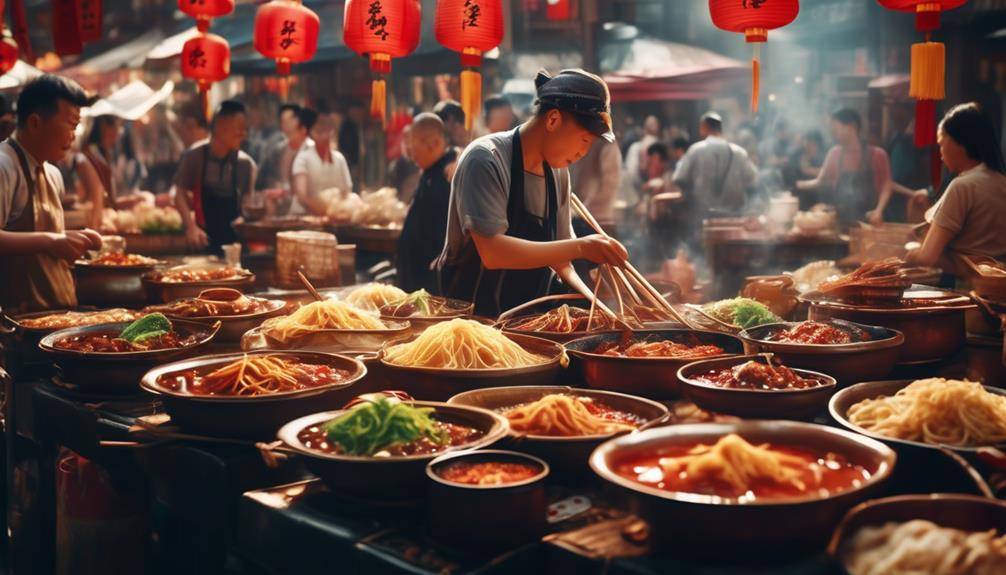
Curious about the vibrant world of Chinese street food? Embark on a culinary adventure and discover the tantalizing flavors that await you. In China, street food is more than just a quick bite to eat – it’s a feast for the senses. From sizzling skewers to steaming bowls of noodles, the streets come alive with the aromas and tastes of authentic Chinese cuisine.
One of the best ways to experience Chinese street food is by visiting the numerous food festivals that take place throughout the year. These festivals are a melting pot of flavors, bringing together vendors from all corners of the country. From the bustling streets of Beijing to the narrow alleys of Chengdu, you’ll find a diverse array of dishes to sample and enjoy. Whether you’re craving spicy Sichuan cuisine or savory Cantonese dim sum, there’s something to satisfy every palate.
No discussion of Chinese street food would be complete without mentioning the iconic street vendors that line the streets. These vendors are masters of their craft, serving up delectable dishes that have been perfected over generations. From the famous jianbing, a savory pancake filled with eggs and vegetables, to the beloved baozi, a steamed bun stuffed with meat or vegetables, every bite is a taste of tradition.
Essential Ingredients: Unveiling the Secrets of Chinese Flavors
Get ready to uncover the secrets behind the distinct flavors of authentic Chinese cuisine. From the key flavors that define Chinese dishes to the traditional spices that add depth and complexity, understanding these essential ingredients is the first step towards creating truly authentic Chinese dishes. Prepare to embark on a flavorful journey that will elevate your culinary skills and transport your taste buds to the heart of China.
Key Flavors in Chinese Cuisine
To truly understand the essence of Chinese cuisine, one must delve into the intricate blend of flavors that make it truly unique. Chinese flavor profiles are known for their bold and complex combinations that tantalize the taste buds. Here are three key flavors that play a significant role in Chinese cooking:
- Sweet and Sour: This classic flavor profile is a harmonious balance of tangy vinegar and sweet sugar. It adds a delightful contrast to dishes like Sweet and Sour Pork, creating a burst of flavors that dance on your palate.
- Spicy and Numbing: Sichuan cuisine is famous for its use of popular Chinese spices like Sichuan peppercorns and dried chili peppers. The combination of heat and numbing sensation creates a thrilling culinary experience that leaves you craving for more.
- Umami: Chinese cuisine often incorporates ingredients like soy sauce, fermented black beans, and oyster sauce to add depth and richness to dishes. These umami flavors make the food savory and satisfying.
Traditional Chinese Spices
Continuing our exploration of the key flavors in Chinese cuisine, we now turn our attention to the essential ingredients that bring those flavors to life in traditional Chinese spices. Chinese spice blends are a crucial part of authentic Chinese cooking, adding complexity and depth to dishes. These blends often consist of a combination of several spices, including star anise, cloves, cinnamon, Sichuan peppercorns, and fennel seeds. Each spice brings its unique flavor profile, creating a harmonious blend that is the hallmark of Chinese cuisine.
Apart from enhancing taste, these spices also have medicinal properties. For example, star anise is known for its antibacterial and anti-inflammatory properties, while Sichuan peppercorns have been used in traditional Chinese medicine to alleviate pain and improve digestion. In traditional Chinese cooking, these spices not only add flavor but also contribute to the overall health and well-being of the diners.
Cooking Techniques: Mastering the Art of Chinese Cuisine
Master the art of Chinese cuisine by mastering a variety of cooking techniques that will elevate your dishes to an authentic level of flavor and presentation. Chinese cooking techniques are known for their ability to create vibrant and delicious dishes that are both visually appealing and packed with flavor. By understanding and applying these techniques, you can take your Chinese culinary skills to new heights. Here are three essential techniques to master:
- Stir-frying: This technique involves quickly cooking ingredients in a hot wok or skillet with a small amount of oil. The high heat and constant tossing create a flavorful char and caramelization while retaining the natural textures and colors of the ingredients. Stir-frying is ideal for vegetables, meat, and seafood, as it allows them to retain their crunchiness and juiciness.
- Steaming: Steaming is a gentle and healthy cooking technique that preserves the natural flavors and nutrients of the ingredients. It involves placing the food in a steamer basket or on a plate, above boiling water. The steam cooks the food evenly and delicately, resulting in moist and tender dishes. Steaming is commonly used for seafood, dumplings, and vegetables.
- Braising: Braising is a slow-cooking technique that involves simmering ingredients in a flavorful liquid until they become tender and infused with rich flavors. It is perfect for tougher cuts of meat and allows the flavors to meld together beautifully. The combination of low heat and long cooking time ensures that the meat becomes melt-in-your-mouth tender while the sauce develops a depth of flavor.
Dining Etiquette: Navigating Chinese Table Manners
When dining in China, it is important to navigate Chinese table manners with grace and respect. Chinese table manners hold significant cultural significance and learning the dos and don’ts will ensure that you have a pleasant dining experience.
Chopstick etiquette is essential in Chinese dining. Remember to never stick your chopsticks upright in a bowl of rice, as it resembles incense sticks used during funerals. Instead, lay them on a chopstick rest or the edge of your bowl. Also, never spear food with your chopsticks, as it is considered impolite. Instead, use them to pick up food in a gentle, smooth manner.
Sharing dishes is a common practice in Chinese dining. It symbolizes unity and harmony. When sharing dishes, use the serving chopsticks provided to transfer food onto your plate. It is considered impolite to use your own chopsticks directly from the communal dish.
Navigating Chinese dining customs also involves understanding seating arrangements. The guest of honor is usually seated facing the entrance, while the host sits opposite them. It is polite to wait for the host to begin eating before you start.
Toasting etiquette is important in Chinese culture. When someone proposes a toast, it is customary to raise your glass slightly lower than theirs as a sign of respect. It is also polite to take small sips rather than emptying your glass in one go.
Tea ceremonies are an integral part of Chinese dining. The host will usually pour tea for the guests as a gesture of hospitality. When someone pours tea for you, it is polite to tap the table with your fingers as a sign of gratitude.
Hidden Gems: Uncovering Authentic Chinese Restaurants
As you navigate Chinese dining etiquette with grace and respect, you’ll soon discover the hidden gems of authentic Chinese restaurants that offer a truly immersive culinary experience. Uncovering these hidden gems is like embarking on a treasure hunt, exploring local favorites that are cherished by the locals and offer a glimpse into the richness of Chinese cuisine. Here are three items that will transport you to a world of flavors and traditions:
- Hole-in-the-wall eateries: Tucked away in narrow alleyways and bustling street corners, these unassuming restaurants may not catch your eye at first glance. However, their humble exterior hides a culinary wonderland where chefs masterfully prepare traditional dishes passed down through generations. Step inside and let your senses be overwhelmed by the aroma of sizzling woks and the vibrant colors of fresh ingredients. Here, you’ll find dishes that are not often seen in mainstream Chinese restaurants, offering a truly authentic experience.
- Family-run establishments: These hidden gems are often run by families who take great pride in their culinary heritage. The recipes they use have been handed down from their ancestors, ensuring that the flavors remain true to tradition. As you enter these cozy establishments, you’ll be greeted with warm smiles and a sense of familiarity. The menu may be limited, but each dish is crafted with love and care, using only the freshest ingredients. From hand-pulled noodles to intricate dumplings, every bite tells a story of tradition and passion.
- Regional specialties: China is a vast country with diverse regional cuisines that vary greatly in flavors and cooking techniques. Exploring local favorites means delving into the rich tapestry of regional specialties. From the fiery spices of Sichuan cuisine to the delicate flavors of Cantonese dim sum, each region offers its own unique culinary delights. These hidden gems allow you to experience the authentic flavors of a particular region, taking your taste buds on a journey across the vast landscape of Chinese cuisine.
Uncovering these hidden gems of authentic Chinese restaurants is like discovering a well-kept secret. By stepping off the beaten path and exploring local favorites, you’ll not only satisfy your hunger but also gain a deeper appreciation for the diverse and vibrant culinary traditions of China.
Frequently Asked Questions: Exploring Authentic Chinese Cuisine
What Are Some Vegetarian Options in Chinese Cuisine?
If you’re looking for vegetarian options in Chinese cuisine, you’ll find a variety of delicious choices. Vegetarian dumplings and tofu dishes are popular and flavorful options that showcase the diversity of Chinese cooking.
Can You Provide Recommendations for Chinese Desserts?
You’ll love the Chinese dessert recommendations! From traditional favorites like tangyuan and mooncakes to modern delights like mango pudding and bubble tea, there’s something for everyone’s sweet tooth.
Are There Any Popular Chinese Dishes That Are Commonly Misunderstood or Misrepresented in Western Countries?
Popular Chinese dishes, such as General Tso’s Chicken and Chop Suey, are often misunderstood or misrepresented in western countries. These misconceptions overlook the cultural significance and diversity of authentic Chinese cuisine.
How Can I Recreate the Flavors of Authentic Chinese Cuisine at Home?
To recreate the flavors of authentic Chinese cuisine at home, you’ll need to explore the world of Chinese recipes. From stir-fries to dumplings, these dishes offer a taste of the rich and diverse flavors that make Chinese cuisine so beloved.
Are There Any Regional Chinese Cuisines That Are Not Well-Known but Worth Exploring?
Underrated regional Chinese cuisines are hidden gems in Chinese cuisine. From the spicy flavors of Sichuan to the delicate tastes of Jiangsu, there is a world of culinary treasures waiting to be explored.

Conclusion
In conclusion, exploring authentic Chinese cuisine is a delightful journey that allows you to experience the diverse regional flavors, indulge in must-try dishes like Peking Duck and Xiaolongbao, and embark on a culinary adventure through street food. Unveiling the secrets of Chinese flavors and mastering the art of cooking techniques adds depth to your culinary skills. Navigating Chinese table manners and uncovering hidden gems of authentic Chinese restaurants enhances the overall dining experience. So, dive into the world of Chinese cuisine and immerse yourself in its rich and vibrant flavors.
If you enjoyed exploring this topic and want to dive even deeper, be sure to check out some of our other articles here on Infinite Flavors. From rich culinary histories to creative twists on classic recipes, there’s always something new to discover. Whether you’re curious about the origins of a dish, looking for fresh inspiration in the kitchen, or simply love learning about food culture, our collection of posts is the perfect next step on your flavor journey.
Amazing Pro Tips For Optimal Spice Storage In Cooking
Why Is Timing Crucial For Amazing Perfectly Cooked Scallops
13 Easy Tips For Cooking And Cleaning Fresh Squid