AI For Easy Effective Food Harvest And Storage
AI For Easy Effective Food Harvest; Artificial intelligence is transforming the way we grow, harvest, and store food — making modern agriculture faster, smarter, and more efficient than ever. From predicting crop yields to reducing waste in storage facilities, AI is helping farmers make data‑driven decisions that protect resources and increase productivity. Whether you’re a grower, a food‑industry professional, or simply curious about the future of sustainable food systems, this guide breaks down how AI is reshaping every stage of the food supply chain.
We’ve Got Everything You Need to Make Your Masterpiece.
What You’ll Learn About AI in Food Harvest & Storage
In this post, you’ll discover how artificial intelligence is revolutionizing the way food is harvested, stored, and preserved. You’ll learn how AI tools improve crop monitoring, reduce spoilage, optimize storage conditions, and support long‑term sustainability across the global food system.
The Role of AI in Agriculture
In recent years, AI has transformed agriculture, enhancing efficiency and productivity for farmers worldwide. By integrating AI into your farm management practices, you can adopt sustainable practices that improve soil health and promote crop diversity. This technology helps you analyze data related to soil conditions and weather patterns, enabling you to make informed decisions that optimize yield.
With AI, you can streamline resource allocation, ensuring that water, fertilizers, and other inputs are used efficiently. This not only boosts your farm’s productivity but also minimizes waste, supporting sustainable agriculture. Additionally, AI tools can enhance your community engagement efforts by connecting you with local farmers and markets, improving your overall market access.
Farmer education is essential, and AI plays a significant role in providing you with the latest information and best practices. By embracing technology adoption, you can stay ahead in the ever-evolving agricultural landscape. AI-powered platforms offer training and resources that empower you to implement innovative techniques that enhance your farming operations.
Yield optimization becomes a reality when you leverage AI to monitor crop health and predict potential issues before they escalate. This proactive approach allows you to maintain a healthy crop yield while contributing to environmental sustainability. As you navigate the complexities of modern farming, remember that AI is a powerful ally, helping you achieve your goals while fostering a resilient agricultural future.
Predictive Analytics for Crop Harvesting
When you apply predictive analytics to crop harvesting, you’re making data-driven decisions that can greatly enhance your yields. By analyzing weather patterns and their impact on your crops, you can better anticipate the ideal harvest times. This approach not only boosts efficiency but also helps minimize losses due to unforeseen weather changes.
Data-Driven Decision Making
Data-driven decision making is transforming crop harvesting through the use of predictive analytics, which harnesses vast amounts of agricultural data to forecast ideal harvest times. By employing data analytics, you can create robust decision frameworks that provide actionable agricultural insights. This means you can optimize yield and improve performance metrics, ensuring you’re making the best choices for your crops.
Understanding market trends is essential for effective resource allocation. With predictive analytics, you can assess risks more accurately, allowing you to respond to potential challenges before they arise. This proactive approach enhances farmer engagement, as you become more involved in the decisions impacting your harvests.
Moreover, technology adoption is vital for integrating these data-driven strategies. By utilizing advanced tools, you can streamline operations and improve efficiency, ultimately driving higher yields. Embracing data-driven decision making not only helps you make informed choices but also positions you to adapt to changing agricultural landscapes.
Weather Pattern Forecasting
Weather pattern forecasting plays an essential role in optimizing crop harvesting by providing timely insights into climatic conditions. By utilizing advanced forecasting models, you can enhance your understanding of seasonal variations and their climate impact on your crops. This knowledge helps in evaluating risks associated with weather anomalies and extreme weather events, allowing you to make informed decisions.
To achieve agricultural resilience, it’s imperative to embrace technology integration and guarantee data accuracy in your forecasts. With predictive reliability, you can adapt your farming practices to local climates, improving crop adaptability. Keeping track of historical trends further strengthens your ability to anticipate changes and plan accordingly.
Community engagement and farmer education are significant for disseminating this information effectively. By collaborating with local organizations and adhering to government policies, you can foster a supportive environment for implementing these strategies. In doing so, you not only protect your harvest but also contribute to the overall stability of food systems. Ultimately, accurate weather pattern forecasting empowers you to navigate uncertainties and optimize your crop yields, securing a sustainable future for agriculture.
Smart Irrigation Systems
Smart irrigation systems can revolutionize how you manage water in your fields, maximizing efficiency and conserving resources. By leveraging cutting-edge technologies, you can implement precise watering techniques that not only boost crop yields but also minimize waste. Let’s explore the benefits of these systems and the innovative solutions available to you.
Benefits of Smart Irrigation
Efficient management of water resources is essential for maximizing crop yields, and smart irrigation systems offer a transformative solution. By utilizing technologies like drip irrigation and moisture sensors, you can greatly enhance irrigation efficiency. These systems allow you to monitor soil moisture levels in real time, ensuring that your crops receive just the right amount of water.
With smart controllers and automated scheduling, you’re able to optimize your irrigation practices, reducing water waste and improving water quality. This precision irrigation approach not only conserves resources but also promotes sustainable practices that benefit the environment. You’ll find that by implementing these technologies, your crop yield can increase, leading to better overall productivity.
Moreover, smart irrigation systems help you adapt to changing weather patterns and climate conditions. By precisely managing water delivery, you can maintain healthy soil moisture levels, which is vital for crop growth. To conclude, embracing smart irrigation systems means you’re investing in a more efficient, sustainable, and productive agricultural future. You’ll not only save water but also enhance your farm’s resilience, ensuring that you’re well-equipped to meet the demands of modern agriculture.
We’ve Got Everything You Need to Make Your Masterpiece.
Technologies in Irrigation Systems
Modern agriculture leverages a variety of innovative technologies in irrigation systems to enhance crop management. One of the most effective methods is drip irrigation, which delivers water directly to the plant’s root zone. This precision helps to optimize water usage, ensuring that your crops receive just the right amount of moisture without waste. By using a network of tubing, emitters, and valves, you can efficiently control the flow of water, reducing evaporation and runoff.
Integrating soil moisture sensors into your irrigation system takes it a step further. These sensors provide real-time data on the moisture levels in your soil, allowing you to adjust your watering schedule based on actual needs rather than assumptions. This data-driven approach helps you avoid overwatering, which can lead to root diseases and nutrient leaching.
Together, drip irrigation and soil moisture monitoring create a smart irrigation system that maximizes efficiency and promotes healthy crop growth. By adopting these technologies, you’ll not only enhance your agricultural productivity but also contribute to sustainable farming practices. Embracing these innovations positions you at the forefront of modern agriculture, ensuring your crops thrive while conserving precious water resources.
Water Conservation Techniques
In the quest for sustainable agriculture, adopting water conservation techniques is essential for maximizing irrigation practices. Smart irrigation systems, equipped with advanced sensors and AI, monitor soil moisture levels in real time. This means you can water your crops precisely when they need it, reducing waste and ensuring healthier plants.
One effective method to complement your irrigation strategy is rainwater harvesting. By capturing and storing rainwater, you can supplement your irrigation needs during dry spells. This not only conserves precious water resources but also lowers your water bills.
Integrating soil moisture sensors into your irrigation system allows you to determine the best times for watering. When the sensors detect sufficient moisture in the soil, the system can delay watering, saving water while promoting strong root growth.
Additionally, consider using drip irrigation, which delivers water directly to the plant’s root zone. This targeted approach minimizes evaporation and runoff, making your irrigation even more efficient. By embracing these water conservation techniques, you’ll not only enhance your agricultural practices but also contribute to a more sustainable future.
AI-Driven Pest Management
Pest management has always posed a challenge for farmers, but AI-driven solutions are transforming the landscape. With the help of advanced AI algorithms, you can enhance pest detection and response strategies considerably. Through remote sensing and pest mapping technologies, you can identify pest hotspots in your fields, allowing you to take proactive measures.
Machine learning plays an essential role in pest forecasting by analyzing historical data and current conditions to predict pest outbreaks. This capability helps you allocate resources effectively, reducing the reliance on chemical pesticides and fostering crop resilience. By understanding the pest lifecycle through AI insights, you can implement integrated pest management strategies that include biological control methods, creating a more sustainable approach to farming.
Moreover, AI-driven systems can monitor your crops in real-time, alerting you to potential threats before they escalate into larger problems. This timely intervention not only safeguards your yields but also optimizes your efforts, ensuring that you use the right methods at the right time.
Incorporating these innovative pest management tactics allows you to maintain a healthy ecosystem while maximizing productivity. By embracing AI technology, you’re not just reacting to pest issues; you’re anticipating them, enabling smarter, more informed decisions that lead to better outcomes for your crops and your bottom line. With these advancements, you’re equipped to face the challenges of modern agriculture head-on, ensuring a thriving and sustainable farming operation.
Automated Harvesting Techniques
As you explore automated harvesting techniques, you’ll see how robotics in agriculture is revolutionizing the way we gather crops. Precision harvesting technologies are enhancing efficiency, ensuring that you get the maximum yield with minimal waste. Plus, drones are providing valuable insights for crop monitoring, helping you make informed decisions throughout the harvesting process.
Robotics in Agriculture
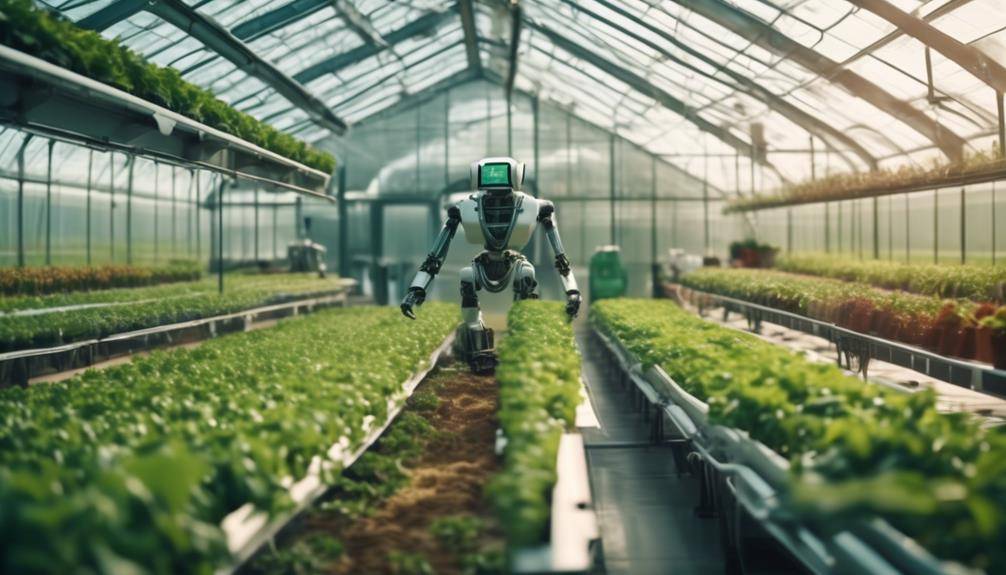
Robotics has revolutionized agriculture, particularly in the field of automated harvesting techniques. You’ll find that robotic harvesters are increasingly taking the reins, using AI-assisted planting methods to maximize efficiency. These machines can identify ripe crops, ensuring that you get the best yield with minimal waste.
Autonomous tractors and robotic weeders are also changing the game. With precision farming practices, you can reduce the amount of herbicides needed, promoting a healthier environment. Farm drones enhance crop surveillance, allowing for real-time monitoring of plant health and growth patterns. This tech gives you the insight needed to make informed decisions about your crops.
In smart greenhouses, robotics plays a vital role in optimizing growth conditions. These innovations not only enhance productivity but also streamline livestock monitoring, ensuring that your animals are healthy and well-cared for. With the rise of agri tech innovations, you’re equipped to tackle the challenges of modern farming head-on. Embracing these robotic solutions helps you stay ahead in the agricultural landscape, allowing for a more sustainable and efficient approach to food production.
Precision Harvesting Technologies
Precision harvesting technologies are transforming the way you approach crop collection, making it more efficient and sustainable. With robotic precision, you can now execute automated sorting and adaptive harvesting, ensuring your crops are picked at the ideal time. By utilizing yield mapping, you gain insights into which areas of your field yield the best results, allowing for targeted efforts that maximize productivity.
Sensor integration plays an essential role in monitoring crop health, enabling intelligent harvesting systems to make real-time decisions based on current conditions. These advanced technologies use machine learning applications to adapt to varying crop types and environmental factors, ensuring that your harvesting methods remain effective.
Additionally, the rise of autonomous vehicles is revolutionizing the harvesting process. These vehicles can navigate fields independently, performing tasks like crop collection and transport without constant human intervention. This leads to efficiency enhancement, reducing labor costs and time spent in the field. By embracing precision harvesting technologies, you’re not just improving your operations; you’re contributing to a more sustainable agricultural future that meets the demands of a growing population.
Drones for Crop Monitoring
Drones are revolutionizing crop monitoring by providing real-time data and insights directly above your fields. With advanced drone technology, you can conduct aerial surveillance that greatly enhances your understanding of crop health. These unmanned aerial vehicles utilize remote sensing capabilities to capture high-resolution images, which can be processed through image analysis to identify issues like disease or nutrient deficiencies.
By employing flight automation, drones can cover large areas efficiently, allowing for extensive data collection with minimal human intervention. This capability supports precision agriculture, enabling you to make informed decisions based on accurate field mapping and environmental monitoring. You’ll gain valuable insights into soil moisture levels, pest infestations, and overall crop health.
Integrating drones into your farming practices not only saves time but also reduces costs associated with traditional monitoring methods. You’ll be able to optimize your resources and enhance productivity by using the data collected to implement targeted interventions. In the rapidly evolving landscape of agricultural technology, drones stand out as a game-changer, giving you the tools needed to elevate your crop management strategies effectively.
Data-Driven Soil Management
Effective soil management is essential for maximizing crop yields and sustaining agricultural practices. By utilizing data-driven techniques, you can enhance soil health and guarantee long-term productivity. Start with soil testing to assess pH balance, nutrient levels, and microbial activity. This information is critical for implementing effective nutrient management strategies tailored to your specific fields.
Incorporating crop rotation and conservation tillage can greatly improve organic matter levels, reducing soil erosion and enhancing biodiversity. These sustainable practices not only promote soil fertility but also aid in carbon sequestration, contributing to climate change mitigation. Field mapping allows you to analyze land use and identify areas that require special attention, optimizing your overall management efforts.
Monitoring soil moisture is essential for effective irrigation practices. By leveraging precision agriculture techniques, you can ensure your crops receive the right amount of water at the right time, reducing waste and promoting healthy growth. Additionally, erosion control measures can safeguard your fields from degradation, preserving valuable habitats and enhancing overall ecosystem health.
Adopting agroecological approaches further promotes biodiversity enhancement and resilience in your farming system. By integrating these strategies into your soil management plan, you create a robust framework for sustained agricultural productivity. Remember, the key is continuous assessment and adaptation based on data insights, guaranteeing that your practices evolve with changing conditions and scientific advancements. With each step, you’ll be investing in the future of your land and the crops you grow.
Supply Chain Optimization
When it comes to optimizing your supply chain, integrating predictive analytics can greatly enhance your decision-making process. By implementing inventory management solutions and real-time monitoring systems, you can guarantee that your food products are always fresh and available. This not only boosts efficiency but also helps reduce waste in your operations.
We’ve Got Everything You Need to Make Your Masterpiece.
Predictive Analytics Integration
Predictive analytics integration is increasingly transforming supply chain optimization in the food industry. By harnessing the power of machine learning, you can analyze vast amounts of data to forecast demand trends, enhance logistics, and improve overall efficiency. This proactive approach helps you anticipate potential issues before they arise, ensuring that your products are delivered fresh and on time.
Data visualization plays an essential role in this process. By presenting complex data in an easily digestible format, you can quickly identify patterns and make informed decisions. Visual tools allow you to see real-time insights, enabling quick adjustments to your supply chain strategies. For instance, if a spike in demand is forecasted, you can allocate resources accordingly, minimizing waste and ensuring ideal inventory levels.
Moreover, integrating predictive analytics into your operations fosters collaboration among stakeholders. Everyone from growers to distributors can access the same insights, aligning their efforts and enhancing communication. As you embrace this technology, you’ll find that not only does it streamline your supply chain, but it also empowers you to make smarter, data-driven decisions that ultimately benefit your bottom line.
Inventory Management Solutions
In the domain of supply chain optimization, leveraging advanced inventory management solutions can greatly enhance your operational efficiency. By implementing effective inventory tracking systems, you can guarantee accurate data integration, which streamlines resource allocation and order management. This approach allows you to improve demand forecasting, so you can anticipate market needs and adjust your inventory accordingly.
Product categorization aids in storage optimization, guaranteeing that you maximize your space while minimizing waste. With better shelf life management, you increase inventory turnover and reduce spoilage, contributing to overall cost efficiency. Plus, adopting technology for process automation simplifies asset management and enhances performance metrics.
Real-Time Monitoring Systems
Real-time monitoring systems play an essential role in supply chain enhancement by providing immediate insights into inventory levels and storage conditions. By utilizing sensor networks and remote sensing technologies, you can track environmental factors like temperature and humidity, ensuring ideal storage conditions for your produce. These systems leverage data integration and cloud computing to centralize information, making it accessible anytime, anywhere.
With advanced data visualization tools, you can easily analyze trends and monitor your supply chain’s performance. Machine learning algorithms enhance your monitoring capabilities by enabling anomaly detection, alerting you to issues before they escalate. This proactive approach can save you time and resources.
Incorporating agricultural robotics and IoT applications into your monitoring systems further boosts efficiency. These technologies automate data collection and provide real-time feedback, allowing you to make faster decisions. Plus, with system scalability, you can expand your monitoring capabilities as your operations grow.
Reducing Food Waste With AI
Reducing food waste is a significant challenge that AI is tackling head-on. With advanced algorithms and data analytics, AI helps enhance food recovery efforts by connecting surplus food with those in need. You can leverage AI-driven platforms to facilitate food donation, ensuring that excess produce reaches shelters, food banks, and community gardens instead of ending up in landfills.
AI also plays an important role in composting initiatives. By analyzing waste tracking data, it identifies which food items are most commonly discarded, allowing you to implement targeted composting strategies that improve soil health and sustainability. Additionally, AI can promote surplus redistribution by connecting local farmers directly to consumers, supporting the farm-to-table movement.
Consumer education is another area where AI shines. It offers personalized insights on seasonal eating, guiding you to make better purchasing decisions that align with what’s fresh and available. You’ll find that understanding ideal food preservation techniques helps minimize waste at home, as AI can suggest the best storage methods for different types of produce.
In essence, AI provides the tools you need to adopt a more sustainable lifestyle. By embracing these technologies, you can actively contribute to reducing food waste, benefiting your community and the environment. The path to reducing waste isn’t just about individual actions; it’s about leveraging technology to create a collective impact.
We’ve Got Everything You Need to Make Your Masterpiece.
Temperature Monitoring in Storage
When it comes to food storage, maintaining the right temperature is fundamental for preserving freshness and preventing spoilage. Temperature fluctuation effects can lead to significant losses, making it essential to monitor conditions consistently. By harnessing sensor technology advancements, you can guarantee that storage areas remain within ideal temperature ranges. These sensors provide real-time data, allowing you to make informed decisions.
Implementing humidity control strategies alongside temperature monitoring can further enhance food preservation. High humidity can promote spoilage, so integrating these controls into your storage system is critical. Utilize data integration methods to consolidate information from various sensors. This way, you can analyze trends and adjust conditions proactively.
Storage facility enhancement should be a priority. By designing your facility with energy efficiency solutions in mind, you can minimize energy costs while maintaining perfect storage conditions. Regular climate impact assessments will also help you understand how external factors affect your storage environment.
Don’t forget equipment maintenance protocols! Confirming that your cooling units and monitoring systems are functioning correctly will prevent unexpected breakdowns. Regular checks and timely repairs can save you from costly losses and keep your operation running smoothly.
Quality Control Through AI
Maintaining ideal temperature and humidity levels is just the beginning of guaranteeing food quality. To truly elevate your quality control processes, you need to harness AI algorithms that streamline quality assessment and enhance your operational efficiency. By integrating machine learning, these algorithms learn from historical data, improving their predictive accuracy over time.
With inspection automation, you can reduce human error and speed up the quality evaluation process. Visual recognition technology plays an essential role here, enabling real-time analysis of food products. Through image processing, AI can identify defects, discoloration, or any irregularities that signal a decline in quality. This forms the backbone of effective anomaly detection.
Moreover, data validation is significant for maintaining high standards. By constantly monitoring data from various sources, you guarantee that the insights generated are both accurate and actionable. Sensor integration adds another layer of sophistication, allowing you to gather real-time information about your products’ conditions throughout storage.
Compliance monitoring becomes seamless with AI’s capabilities, as you can easily track and document adherence to safety standards. This not only boosts your operational transparency but also builds trust with consumers who are increasingly concerned about food quality.
Incorporating these AI-driven solutions into your quality control strategy not only optimizes your processes but also guarantees that you’re consistently delivering the highest quality food products to your customers. Embrace the power of AI, and watch your quality control measures transform.
Blockchain and AI Integration
The synergy of blockchain and AI is revolutionizing food harvest and storage by enhancing traceability and transparency throughout the supply chain. By integrating blockchain transparency with AI capabilities, you can guarantee secure transactions and maintain data integrity, which is vital for building trust among all stakeholders.
With traceability solutions powered by blockchain, you can track food products from farm to table, providing real-time insights into their journey. This level of supply chain visibility not only helps you identify inefficiencies but also fosters stronger farmer partnerships, assuring they receive fair compensation for their efforts. Decentralized networks eliminate the risks associated with single points of failure, making your food supply chain more resilient.
Moreover, smart contracts facilitate automated agreements between parties, streamlining processes within agricultural marketplaces. These contracts execute automatically when predefined conditions are met, reducing the need for intermediaries and decreasing transaction costs. Coupled with IoT integration, you can gather data from various sensors and devices, enabling you to optimize harvesting and storage practices.
The combination of AI and blockchain enhances decision-making capabilities, allowing you to respond quickly to market changes and consumer demands. By leveraging these technologies, you can create a more efficient and transparent food supply chain, ultimately benefiting producers and consumers alike. As you explore the potential of blockchain and AI integration, you’ll discover new opportunities for innovation and growth in the food industry.
Case Studies in AI Implementation
As the integration of blockchain and AI reshapes the food supply chain, real-world applications of AI are becoming increasingly evident. Numerous case studies showcase how AI applications boost efficiency in food harvest and storage. For instance, precision farming tools use AI to analyze soil data, enabling farmers to optimize crop yields. This success story highlights the potential of agricultural innovations, showcasing how technology adoption can lead to significant productivity increases.
However, implementing AI isn’t without its challenges. Many farmers face hurdles such as limited access to technology and the need for farmer training. Adequate training programs are essential to guarantee that farmers can effectively utilize these advanced tools. In some cases, collaboration networks between tech companies and agricultural organizations have emerged to facilitate this training, ensuring that farmers feel supported during the shift.
Investment strategies also play a role in AI implementation. By securing funding for AI-driven solutions, farmers can overcome the initial costs associated with technology adoption. Yet, concerns about data privacy remain a significant barrier. As farmers collect and share data through AI applications, they must navigate privacy regulations to protect their information.
Through careful case study analysis, stakeholders can identify best practices and strategies that lead to successful AI integration. These insights not only help in overcoming implementation challenges but also pave the way for a more sustainable and efficient food supply chain in the future.
We’ve Got Everything You Need to Make Your Masterpiece.
Future Trends in Agricultural AI
Emerging technologies are set to revolutionize agricultural AI, offering innovative solutions that enhance efficiency and sustainability in food production. You’ll see a greater emphasis on sustainable practices, enabling farmers to optimize resources while reducing environmental impact. As AI tools become more accessible, expect increased technology adoption across diverse farming operations.
Crop diversity will play a significant role in future agricultural trends. By leveraging AI to analyze and predict the best combinations of crops, you can enhance yields and improve soil health. Additionally, farmer education will be essential; as new technologies emerge, training programs will guarantee that everyone—from smallholder farmers to large agribusinesses—can utilize these advancements effectively.
Regulatory frameworks will evolve alongside these innovations, guaranteeing that they align with safety and environmental standards while promoting community engagement. This engagement will foster collaboration among farmers, researchers, and technology providers, creating a supportive ecosystem for sharing best practices and resources.
Market access will improve as AI-driven platforms connect farmers directly with consumers, minimizing intermediaries and enhancing profit margins. The economic impact of these trends will be significant, leading to resilient agricultural systems that can adapt to changing climates and market demands.
Lastly, as you embrace innovation funding initiatives, you’ll witness the emergence of startups focused on agricultural AI, driving further advancements. With a keen focus on data security, these technologies will guarantee that your sensitive information remains protected while revealing the full potential of agricultural AI.
Challenges of AI in Agriculture
Steering through the challenges of AI in agriculture involves addressing several essential issues that could hinder its successful implementation. One major concern is data privacy. Farmers need assurance that their data won’t be misused or shared without consent. Alongside this, implementation costs can be a significant barrier; the initial investment in AI technology can be intimidating for many agricultural operations.
Farmer training is another important factor. Without proper training, even the most advanced AI systems can fall short. If farmers aren’t equipped to utilize these technologies effectively, the potential benefits diminish. This leads to challenges in technology adoption, as resistance to change may arise. Overcoming this resistance is essential for fully harnessing AI’s capabilities in farming.
Infrastructure limitations also play a role. Many rural areas lack the necessary internet connectivity or technological resources to support advanced AI systems, making it difficult to implement these solutions effectively. Additionally, ensuring data accuracy is essential; inaccurate data can lead to poor decision-making and undermine the entire system.
Regulatory hurdles can complicate matters too. Maneuvering the legal landscape surrounding AI in agriculture can be challenging, delaying implementation and creating uncertainties. Finally, system integration is key. If AI solutions can’t seamlessly integrate with existing agricultural practices, their effectiveness can be compromised.
Ethical Considerations in AI Use
When incorporating AI into agriculture, it’s crucial to contemplate the ethical implications that come along with its use. First and foremost, data privacy is a critical concern. You need to guarantee that the data collected from farmers and their practices is handled responsibly, maintaining confidentiality and securing consent. Algorithm bias can skew results, leading to unfair advantages for certain groups, which might compromise farmer autonomy and equitable access to technology.
Next, you should prioritize ethical sourcing of materials and tools used in AI systems. This means choosing suppliers who adhere to transparency standards, fostering trust within the agricultural community. Engaging with stakeholders throughout the process fosters a sense of ownership and accountability, guaranteeing that the technology meets their needs and reflects their values.
You must also consider the community impact of AI applications. Sustainable practices should be at the forefront, promoting environmental sustainability while addressing challenges like food waste and resource depletion. Additionally, regulatory compliance is paramount. Adhering to local and international regulations helps avoid legal pitfalls and guarantees that your practices are socially responsible.
Lastly, aim for equitable access to AI technology. It’s crucial that all farmers, regardless of their size or resources, have the opportunity to leverage these advancements. By focusing on these ethical considerations, you can not only enhance agricultural practices but also contribute positively to the larger community and environment.
We’ve Got Everything You Need to Make Your Masterpiece.
Frequently Asked Questions: AI For Easy Effective Food Harvest
How Does AI Impact Farm Labor Employment Rates?
AI impacts farm labor employment rates by causing job displacement for some workers while optimizing labor processes for others. You’ll see a shift towards skilled positions, demanding adaptability and new skills to thrive in the evolving landscape.
What Are the Costs Associated With Implementing AI in Agriculture?
When you implement AI in agriculture, consider initial investment, maintenance costs, software licensing, training expenses, and data management. While these costs can be high, the potential return on investment often justifies the expense.
Can AI Be Used for Organic Farming Practices?
Yes, you can use AI in organic farming practices. It enhances precision agriculture through data analytics, improves crop monitoring and pest management, boosts soil health, and optimizes yield while ensuring resource efficiency for sustainable farming.
How Does Weather Influence AI Predictions in Agriculture?
Weather patterns greatly impact your AI predictions in agriculture. By incorporating real-time data into predictive modeling, you can better anticipate crop performance and optimize your farming strategies, ensuring you make informed decisions based on changing conditions.
What Skills Are Needed to Work With Agricultural AI Technologies?
To work with agricultural AI technologies, you’ll need skills in data analysis, machine learning, and software development. Familiarity with precision agriculture, sensor technology, crop monitoring, yield forecasting, and automation skills is essential for success.

Conclusion
AI is no longer a futuristic concept — it’s an essential tool driving the next generation of food production and storage. By improving accuracy, reducing waste, and supporting sustainable practices, AI empowers farmers and food‑industry leaders to meet growing global demands with confidence. As technology continues to evolve, its role in agriculture will only expand, creating smarter, more resilient food systems for the future.