Exploring Authentic Pasta Making Methods From Italy
Authentic Pasta Making Methods From Italy: Exploring authentic pasta-making methods from Italy opens up a delightful adventure for you. Start with high-quality ingredients like durum wheat flour and fresh eggs to create the perfect dough. Master traditional mixing and kneading techniques to achieve that smoothness that enhances your pasta's texture. Don't skip resting the dough; it's essential for tenderness. Then, roll and shape it into your favorite varieties, whether it's silky tagliatelle or hearty orecchiette. Pair your creation with local sauces for a true Italian experience. With these techniques in hand, you're just scratching the surface of pasta-making mastery. More insights are waiting for you!
The History of Pasta
Click Here and Turn Every Masterpiece into a Showstopper!
Exploring the history of pasta reveals a fascinating journey that stretches back thousands of years. You might be surprised to learn that pasta origins are often debated, with some tracing its beginnings to ancient Etruscans and others pointing to the Chinese. Archaeological discoveries suggest that early forms of pasta were made from durum wheat, a staple in many Mediterranean diets.
As you dive deeper into its past, you'll notice how pasta evolved into a symbol of cultural significance in Italy. It became a part of daily life by the Middle Ages, intertwining with regional traditions. Different shapes and preparations emerged, reflecting local ingredients and customs. For instance, you might find that Northern Italy favors stuffed pastas like ravioli, while Southern Italy excels in dried varieties such as spaghetti.
Pasta's journey through history also highlights the impact of trade and migration. The introduction of tomatoes in the 16th century revolutionized pasta dishes, transforming simple ingredients into complex flavors. You can see how it became an essential part of Italian culture, celebrated in festivals and family gatherings.
Today, pasta isn't just food; it represents community, love, and heritage. Understanding its history enriches your appreciation for each bite you take. So, next time you enjoy a plate of pasta, remember the countless generations that have shaped this beloved dish, making it a true culinary treasure.
Essential Ingredients for Pasta
To truly appreciate pasta, it's important to know what goes into making it. The essential pasta ingredients are simple yet powerful. At its core, you'll typically need flour and water. However, the type of flour you choose can greatly impact the final dish. In Italy, durum wheat flour is preferred, as it provides a firm texture and rich flavor. Quality matters—always opt for high-quality flour to elevate your homemade pasta.
Adding eggs to your pasta dough introduces a richness that enhances flavor profiles, especially in regional variations like tagliatelle or fettuccine. Egg-based pastas tend to be silkier and work beautifully with creamy sauces. Conversely, in southern Italy, you might find semolina flour pasta, which is made primarily with water. This variation offers a distinct texture, perfect for holding onto robust sauces.
Salt is often overlooked but plays an essential role in balancing flavors and enhancing the overall taste of your pasta. Don't forget to take into account the water quality, too; filtered or mineral water can make a difference in your dough's consistency.
Ultimately, the magic of pasta lies in its simplicity and the quality of its ingredients. By understanding the essential components and how they vary by region, you'll not only create delicious pasta but also connect with Italian culinary traditions. So next time you're in the kitchen, remember that the right pasta ingredients can transform your dish into something truly authentic.
Types of Pasta Dough
When it comes to pasta dough, you'll find a variety of types, each contributing its unique character to the final dish. Two of the most popular types are egg dough and whole wheat dough. Understanding these options can elevate your pasta-making game.
Egg dough is a classic choice, particularly for fresh pasta like tagliatelle and ravioli. It's made by combining flour with eggs, which gives the dough a rich flavor and a silky texture. The addition of eggs also enhances the dough's elasticity, making it easier to roll out and shape. When you're in the mood for something luxurious, egg dough is your go-to option.
On the other hand, whole wheat dough offers a heartier alternative. Made with whole wheat flour, this type of dough retains more nutrients and fiber compared to traditional white flour. You'll notice a nuttier flavor and a slightly denser texture, which can add a rustic touch to your dishes. Whole wheat pasta pairs wonderfully with robust sauces and hearty vegetables, making it a favorite for those looking for a healthier option.
Whether you opt for the richness of egg dough or the robust nature of whole wheat, each type brings its own charm to your pasta. Experimenting with these doughs can help you discover your personal favorites and create authentic dishes that celebrate the art of pasta making. So, roll up your sleeves and get ready to explore the delicious world of pasta dough!
Traditional Mixing Techniques
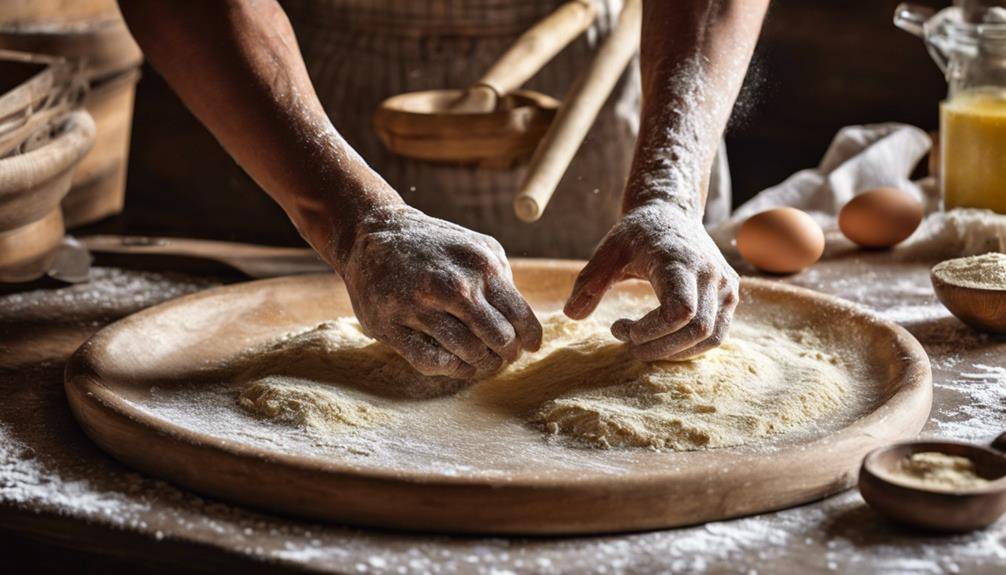
Using traditional mixing techniques is vital for achieving the perfect pasta dough. When you start, you'll want to gather high-quality flour and fresh eggs. The classic method involves creating a well in the center of the flour mound, where you'll crack the eggs. Using a fork, begin to mix the flour into the eggs gently. This technique allows you to control the incorporation of the flour, ensuring a smooth mixture without overworking the dough.
Once the ingredients are combined, it's time to shift to kneading methods. Dust your work surface with flour and turn the dough out. You'll want to use your palms to push down and away from you, folding the dough back over itself. This technique helps develop the gluten, giving your pasta the desired elasticity. Remember to keep your surface lightly floured to prevent sticking, but avoid adding too much flour, as it can dry out the dough.
Kneading should last about 8-10 minutes, and you'll know it's ready when the dough feels smooth and elastic. You can also test it by pressing a finger into the dough; it should spring back. If you notice any cracks, continue kneading until it regains its texture. Mastering these traditional mixing techniques and kneading methods is essential for creating authentic pasta that cooks evenly and holds sauces beautifully. By embracing these time-honored practices, you'll create a pasta base that's truly Italian at heart.
The Importance of Resting
Resting the pasta dough is an essential step that shouldn't be overlooked. When you mix your ingredients, the gluten in the flour begins to develop, creating a network that gives pasta its structure. However, if you don't let the dough rest, this network remains tight and unyielding, which can lead to tough pasta. The resting duration is important; ideally, you should let your dough rest for at least 30 minutes to an hour.
During this resting period, the dough hydration levels adjust, allowing water to permeate the flour more evenly. This hydration process softens the gluten and relaxes the dough, making it easier to roll out later. You'll notice that after resting, the dough feels more pliable and less springy, which is precisely what you want for smooth, even sheets of pasta.
If you're short on time, even a brief rest of 15 minutes can help, but don't skimp on the duration if you can avoid it. Remember, the quality of your pasta hinges not just on the ingredients and technique but also on this essential resting phase.
Rolling and Shaping Pasta
Rolling and shaping pasta is where your culinary skills truly shine. Mastering pasta rolling techniques is essential for achieving the perfect thickness and texture. Begin by dividing your rested dough into manageable portions. Dust your work surface with flour, and start rolling with a traditional rolling pin or a pasta machine. If you're using a machine, gradually adjust the settings to thin the dough down to your desired consistency, usually around one millimeter thick.
Once your dough is rolled out, it's time to shape it. This is where your creativity comes into play. You can use various shaping tools—like a sharp knife or pasta cutter—to create ribbons, squares, or circles, depending on your intended dish. Remember to keep your surfaces lightly floured to prevent sticking.
For more intricate shapes, consider investing in specialized shaping tools such as ravioli stamps or gnocchi boards. These tools can help you create consistent shapes and add flair to your pasta. Don't forget to press firmly enough to seal edges, ensuring that your pasta holds its shape during cooking.
As you roll and shape, pay attention to the dough's elasticity. If it starts to resist, give it a few more minutes of resting time. With practice, you'll develop a rhythm and finesse that transforms your pasta-making experience. Enjoy the satisfaction of creating beautiful pasta from scratch, where each piece reflects your hard work and passion for authentic Italian cuisine.
Popular Pasta Shapes Explained
When it comes to pasta, the shape can greatly influence the dish's overall experience. Each of the many pasta shapes has its own unique characteristics, making it essential to choose the right one for your sauce and ingredients. For instance, long, thin shapes like spaghetti are perfect for light sauces, while broader noodles like fettuccine can hold heavier, creamier sauces better.
You've probably noticed that some pasta shapes are more than just culinary choices; they carry cultural significance. Take orecchiette, for example. This small, ear-shaped pasta hails from the Puglia region of Italy, where it's traditionally paired with local ingredients like broccoli rabe and anchovies. Similarly, farfalle, or "bow-tie" pasta, originated in the Lombardy region and often graces festive dishes.
In addition to cultural roots, certain pasta shapes are designed to enhance texture and flavor. Shells (conchiglie) are perfect for capturing chunky sauces, while the ridges of rigatoni help to cling onto every bite. You'll find that understanding these pasta shapes not only elevates your cooking but also deepens your appreciation for Italian culinary traditions.
The Role of Flour Types
Choosing the right pasta shape is just the beginning; the type of flour you use can greatly impact the texture and flavor of your homemade pasta. When you think about flour, consider its origins, as different regions produce varieties that affect your pasta's final outcome. For instance, Italian "00" flour is finely milled and has a lower protein content than all-purpose flour, making it ideal for delicate pasta like tagliatelle. On the other hand, semolina flour, derived from durum wheat, boasts a higher gluten content, which gives your pasta a firmer bite and is perfect for shapes like bucatini.
Understanding gluten content is essential when selecting flour for your pasta. Gluten provides elasticity, allowing the dough to stretch without breaking. If you want a chewier texture, opt for flours with higher gluten levels, such as bread flour or semolina. Conversely, if you're after a softer, more tender pasta, lower gluten options like "00" flour or even whole wheat can be the way to go.
Experimenting with various flour types can lead to exciting new flavors and textures that elevate your pasta dishes. Don't be afraid to mix flours, either; combining different types can create a unique blend that suits your taste. So, as you start on your pasta-making adventure, remember that the flour you choose is just as important as the shape you select. Happy cooking!
Click Here and Turn Every Masterpiece into a Showstopper!
Handcrafted Vs. Machine-Made
Handcrafted pasta shines with a personal touch that machine-made versions often lack. When you roll up your sleeves and create pasta by hand, you're not just preparing a meal; you're engaging in a time-honored tradition. The handmade benefits are numerous. Each piece of pasta reflects your unique technique and attention to detail, resulting in textures and flavors that can't be replicated by machines. You can control the thickness, shape, and overall quality, ensuring that every bite tells a story of your culinary journey.
On the other hand, machine-made pasta offers remarkable efficiency. For busy kitchens or large gatherings, using a pasta machine saves time and labor, allowing you to produce pasta in bulk without sacrificing too much quality. Machines can consistently produce uniform shapes, which appeals to those who appreciate aesthetics in their dishes. However, while convenience is a significant advantage, it often comes at the cost of the soul and authenticity found in handmade pasta.
Ultimately, the choice between handcrafted and machine-made pasta comes down to your priorities. If you value tradition, creativity, and a personal connection to your food, you'll likely lean towards making it by hand. But if time is of the essence or you're feeding a crowd, machine efficiency might be the way to go. Whichever method you choose, remember that the heart of pasta-making lies in the love you put into it.
Cooking Pasta to Perfection
Whether you're making pasta by hand or using a machine, knowing how to cook it properly is key to achieving that perfect al dente texture. Start with a large pot of water—about 4 to 6 quarts for every pound of pasta. Add a generous amount of salt once the water reaches a rolling boil; this enhances the flavor of your pasta.
When you add the pasta, stir it gently to prevent sticking, and keep an eye on the clock. Follow the cooking time suggested on the package, but remember, fresh pasta cooks faster than dried. To perfect your pasta cooking techniques, taste it a minute or two before the timer goes off. You want it to be firm to the bite but not hard.
Once it reaches that ideal doneness, reserve a cup of pasta water before draining it. This starchy water can help adjust the consistency of your sauce later. Avoid rinsing your pasta after draining; this washes away the starch that helps sauces cling.
When combining your pasta with sauce, consider adding a splash of the reserved water to achieve that perfect pasta texture. Toss everything together over low heat for a minute to marry the flavors. By mastering these pasta cooking techniques, you'll create a dish that's not just good but truly exceptional, showcasing the authentic flavors of Italy right in your kitchen. Enjoy your culinary adventure!
Regional Variations in Pasta
Across Italy, pasta isn't just a dish; it's a cultural emblem that varies from region to region. Each area boasts unique regional specialties that reflect its history, ingredients, and traditions. In the north, for instance, you'll find rich, creamy pastas like the famous Pesto alla Genovese from Liguria, made with fresh basil and pine nuts. This dish thrives on the abundance of fresh herbs available in the coastal region.
As you move south, the pasta takes on a different character. In Sicily, you might encounter Pasta alla Norma, which features eggplant, tomatoes, and ricotta salata. This regional specialty highlights the island's agricultural bounty and showcases how local produce can transform a simple dish into something extraordinary.
When it comes to sauce pairings, the variations continue. In Emilia-Romagna, the traditional tagliatelle al ragù, often referred to as Bolognese, is a hearty dish that pairs perfectly with the region's wide, flat pasta. This rich meat sauce complements the pasta's texture, creating a satisfying meal.
On the other hand, in Naples, you'll find spaghetti alle vongole, where the pasta is paired with fresh clams and a light sauce, embodying the coastal flavors of the region. Each region's pasta reflects its local ingredients and culinary traditions, making your exploration of Italian pasta an adventure filled with diverse flavors and techniques. So, the next time you enjoy pasta, consider the rich tapestry of regional variations that enrich this beloved dish.
Sauces That Complement Pasta
The harmony between pasta and sauce is a culinary dance that elevates a simple meal into a celebration of flavors. To truly enhance your pasta experience, you'll want to explore various sauce pairings that reflect different regional sauces from Italy. Each region boasts its own unique flavor profiles, often highlighting local and seasonal ingredients.
For instance, a classic marinara sauce, rich with tomato variations, embodies the essence of southern Italy. You can easily whip up homemade sauces using ripe tomatoes, garlic, and fresh basil. On the other hand, if you're in the mood for something creamier, try a luscious Alfredo sauce made with butter, cream, and Parmesan, which perfectly coats fettuccine for a comforting dish.
Don't forget about sauce textures! A chunky puttanesca, featuring olives and capers, brings a delightful contrast to smooth pasta shapes. Meanwhile, herb infusions, like a basil pesto, offer a vibrant and fresh alternative, pairing beautifully with both long and short pasta varieties.
As you explore traditional recipes, remember to take into account how each sauce interacts with the pasta you choose. The right sauce can transform your dish, highlighting the pasta's nuances and elevating your meal. Whether you prefer a light, oil-based sauce or a hearty ragu, embracing these diverse sauces will help you celebrate the artistry of Italian cuisine in your own kitchen.
Tools for Authentic Pasta Making
Creating authentic pasta isn't just about the ingredients; it also involves having the right tools at your disposal. The quality of your pasta tools can greatly affect the end result. To start, you'll want a sturdy work surface, preferably a wooden or marble board, that provides stability and helps prevent sticking.
A good rolling pin is essential for achieving the right thickness in your dough. Opt for a traditional wooden one, as it offers better control. If you're making specific pasta shapes, invest in a pasta machine. This authentic equipment allows you to roll out dough evenly and can help you create various pasta types, from tagliatelle to lasagna sheets.
Don't forget about cutting tools. A sharp knife or a pastry cutter will make it easier to achieve clean edges. If you plan to make filled pasta like ravioli, a ravioli stamp or cutter will be invaluable. These tools not only save time but also guarantee uniformity in your pasta shapes.
Lastly, consider a pasta drying rack. This simple piece of equipment allows your freshly made pasta to dry properly, preventing clumping and guaranteeing it cooks evenly. With these essential pasta tools, you'll be well on your way to creating authentic Italian dishes right in your kitchen. Investing in quality equipment makes all the difference, so choose wisely and enjoy the process of making pasta from scratch!
Tips for Pasta Preservation
Pasta's delicate nature makes proper preservation essential for maintaining its flavor and texture. If you want to keep your homemade pasta fresh, you've got a few effective methods to choose from. Freezing pasta is one of the best options. Start by laying your pasta in a single layer on a baking sheet. Once it's frozen solid, you can transfer it to a freezer-safe bag or container. This prevents it from sticking together and keeps it safe for up to three months.
If you prefer a longer shelf life, drying pasta is an excellent choice. You can use a pasta drying rack or simply hang it over a clean surface. Once dried completely, store it in an airtight container in a cool, dark place. Remember, properly dried pasta can last for up to a year, allowing you to enjoy your creations later on.
Storing pasta in vacuum-sealed bags is another great method for preserving flavors and extending shelf life. Vacuum sealing removes air, reducing the risk of freezer burn or spoilage, which is vital for pasta safety.
No matter how you choose to preserve your pasta, always check for any signs of spoilage before using. Keeping an eye on texture and smell can help you determine if your pasta is still good to enjoy. With these tips, you can savor your authentic pasta creations anytime!
Click Here and Turn Every Masterpiece into a Showstopper!
Frequently Asked Questions: Authentic Pasta Making Methods From Italy
What Are Common Mistakes in Homemade Pasta Making?
When making homemade pasta, you might overwork the dough or use cold ingredients. These mistakes can lead to tough pasta instead of the tender, flavorful result you're aiming for. Pay attention to your technique!
How Can I Tell if My Pasta Dough Is Ready?
To tell if your pasta dough's ready, check its consistency. It should be smooth and slightly tacky. Use proper kneading techniques, folding and pressing until it feels elastic and holds its shape without crumbling.
Can I Use Gluten-Free Flour for Pasta?
Yes, you can use gluten-free flour for pasta! Just remember, the pasta texture might differ from traditional options. Experiment with various gluten-free flours to find the best combination that suits your taste and preferences.
What Tools Are Essential for Beginners in Pasta Making?
To start pasta making, you'll need essential tools like pasta machines, rolling pins, dough scrapers, flour sifters, mixing bowls, and cutting tools. These will help you create delicious pasta with ease and precision.
How Do I Store Fresh Pasta Before Cooking?
To store fresh pasta, you can use refrigeration techniques by placing it in an airtight container or wrap it tightly. Alternatively, freezing methods involve laying it flat on a baking sheet before transferring it to a freezer bag.

Conclusion
In exploring authentic pasta-making methods from Italy, you've uncovered the rich history, essential ingredients, and regional variations that make each dish unique. By mastering traditional techniques and understanding the importance of resting your dough, you're well on your way to creating delicious homemade pasta. Remember to pair your creations with the right sauces and invest in the right tools. With these tips, you can preserve the art of pasta-making and savor the true flavors of Italy in your kitchen.