Cooking Classes For Stir-Frying Techniques
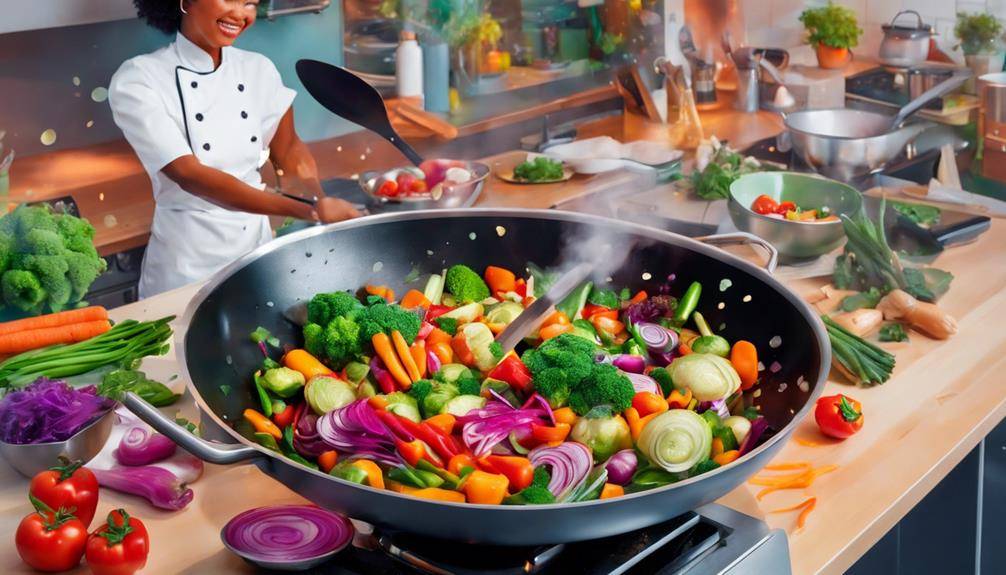
Cooking Classes For Stir-Frying Techniques: If you're looking to master stir-frying, cooking classes can be a fantastic resource. These classes teach you essential techniques, from selecting the right wok to chopping ingredients uniformly for even cooking. You'll explore using fresh vegetables and proteins while learning the importance of high heat and timing. Many instructors share valuable flavor balancing methods, enhancing your dishes with unique sauces and aromatics. Whether you prefer hands-on training or watching demonstrations, there's a class to suit your style. Get ready to elevate your skills and create vibrant, delicious meals. You'll discover even more tips to boost your stir-frying game.
Click Here and Turn Every Masterpiece into a Showstopper!
Importance of Stir-Frying
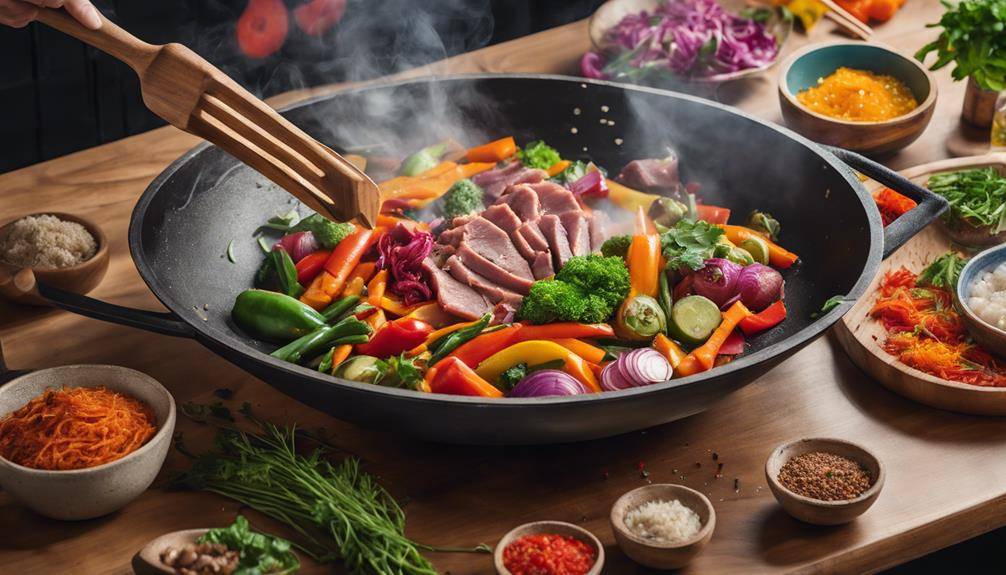
Stir-frying is essential in the culinary world because it not only preserves the vibrant colors and flavors of ingredients but also promotes healthier cooking. This technique, deeply rooted in Asian cultures, showcases the cultural significance of food as a communal experience. When you stir-fry, you embrace a cooking method that reflects centuries of tradition, bringing people together over a sizzling wok filled with fresh vegetables and proteins.
One of the primary health benefits of stir-frying is its ability to reduce the cooking time, which helps retain essential nutrients in the ingredients. The quick cooking process guarantees that vitamins and minerals don't break down, allowing you to enjoy meals that are not only delicious but also nutritionally rich. Plus, using minimal oil compared to other cooking methods means you're cutting down on unnecessary fats, making your meals lighter and healthier.
Additionally, stir-frying encourages the use of fresh, seasonal ingredients, promoting a balanced diet that's high in vegetables and lean proteins. By incorporating a variety of colors and textures into your dishes, you're not only elevating the flavors but also creating visually appealing meals that can entice anyone to eat healthier.
Essential Tools for Stir-Frying
To achieve the best results when stir-frying, having the right tools at your disposal is vital. Your primary tool is the wok. When it comes to wok selection, choose one that's made from carbon steel for excellent heat conduction and responsiveness. A flat-bottomed wok is ideal for gas stoves, while a round-bottomed version works better on electric burners. Make certain it has a sturdy handle for easy maneuvering.
Next, consider a good spatula or wok shovel. A wooden or silicone spatula is perfect, as it won't scratch the surface of your wok and can withstand high heat. This tool allows you to stir and toss ingredients effectively, guaranteeing even cooking and flavor distribution.
Heat management is essential in stir-frying, so invest in a reliable heat source. A powerful gas burner is ideal, providing the high heat necessary for quick cooking. If you're using an electric stove, look for a flat-bottomed wok that maximizes contact with the heating element.
Additionally, having a splatter screen can be a lifesaver. It keeps your cooking area clean while allowing steam to escape, which is important for achieving that perfect stir-fry texture. Finally, don't forget about prep tools like a sharp knife and cutting board. They'll help you chop your ingredients into uniform sizes, allowing for quicker and more even cooking.
With these vital tools, you're well on your way to mastering stir-frying techniques!
Key Ingredients to Use
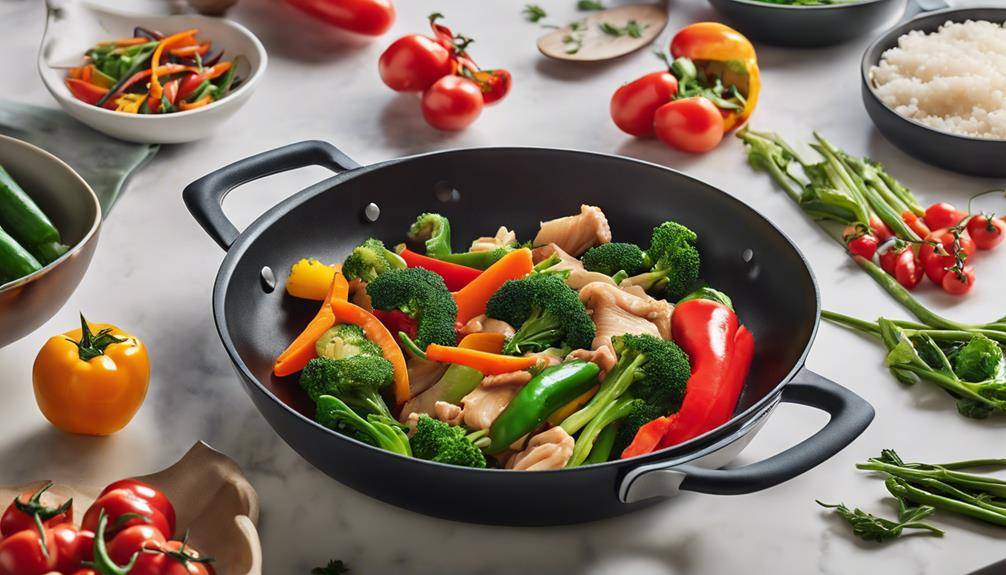
A variety of ingredients can elevate your stir-frying game to new heights. When you think about your vegetable selection, aim for a colorful mix. Fresh vegetables not only add flavor but also introduce different textures to your dish. Bell peppers, broccoli, snap peas, and carrots are excellent choices. They cook quickly and maintain their crunch, providing a delightful contrast to the tender proteins you'll use.
Speaking of proteins, your protein choices play a significant role in the overall taste and satisfaction of your stir-fry. Chicken, beef, shrimp, and tofu are popular options that absorb flavors well. If you're using meat, cut it into thin strips to guarantee even cooking. Marinating your protein in soy sauce, garlic, or ginger for at least 15 minutes can enhance the flavor even further.
Don't forget about aromatics! Ingredients like garlic, ginger, and scallions can transform a simple stir-fry into a dish bursting with flavor. A tablespoon or two of these additions can make a world of difference, infusing your stir-fry with a delightful aroma that entices your senses.
Basic Stir-Frying Techniques
To master stir-frying, you'll need the right equipment and to prepare your ingredients properly. Start by gathering essential tools like a wok and a spatula, then focus on chopping your veggies and proteins into uniform pieces for even cooking. With these basics in place, you're ready to create delicious stir-fried dishes.
Essential Equipment Needed
When you plunge into stir-frying, having the right equipment makes all the difference. Your wok selection is essential; a well-seasoned carbon steel wok is often recommended for its heat retention and responsiveness. Choose one with a flat bottom if you're using an electric stove, while a round-bottomed wok works best on gas burners.
Next, consider the heat control. You'll want a burner that can reach high temperatures quickly, so a powerful gas stove is ideal. A wok ring can help stabilize the wok over a gas flame if needed.
Don't forget about utensils. A long-handled spatula allows you to stir and toss ingredients without burning your hands. Use a ladle made of wood or silicone to avoid scratching your wok.
Key Ingredient Preparation
Proper ingredient preparation is essential for successful stir-frying, as it guarantees everything cooks evenly and quickly. Start by focusing on ingredient sourcing. Fresh, high-quality vegetables, proteins, and aromatics make a significant difference in your dish. Visit local markets or specialty stores to find the best ingredients.
Next, chop your ingredients uniformly to make certain even cooking. Slice proteins into bite-sized pieces and cut vegetables into similar sizes, keeping in mind their cooking times. For instance, harder vegetables like carrots should be thinner than bell peppers.
Don't forget about flavor balancing. Marinate your proteins ahead of time to infuse them with taste. Use a mix of soy sauce, garlic, and ginger for a classic stir-fry flavor.
Prepare your aromatics, like garlic and onions, by finely chopping them so they release their flavors quickly when added to the hot wok. Finally, have all your ingredients ready and within reach before you start cooking. This makes for a smooth, efficient cooking process and allows you to focus on achieving that perfect stir-fry. With these steps, you're well on your way to mastering key ingredient preparation for stir-frying!
Click Here and Turn Every Masterpiece into a Showstopper!
Advanced Stir-Frying Methods
Mastering advanced stir-frying methods elevates your culinary skills and results in dishes that burst with flavor and texture. To achieve this, you need to focus on flavor balancing and ingredient pairing. Begin by selecting a variety of fresh ingredients that complement each other. Think about colors, textures, and tastes; pairing crunchy vegetables with tender proteins enhances the dish's appeal.
Next, consider the timing of your ingredients. Start with aromatics like garlic and ginger, letting their flavors infuse the oil before adding heartier vegetables. This guarantees that every component reaches its peak flavor without overcooking. You can also use the "stir-fry in stages" technique, cooking different ingredients separately before combining them. This method helps maintain distinct flavors while achieving a harmonious balance.
Sauce preparation is another crucial aspect of advanced stir-frying. Craft a sauce that highlights your dish's theme, using soy sauce, oyster sauce, or even homemade blends. Don't forget to adjust the seasoning as you go. Tasting throughout the cooking process allows you to fine-tune flavor balancing and guarantees that no single element overwhelms the others.
Lastly, don't shy away from experimenting with different oils and cooking methods. Toasting sesame oil can add depth, while using high-heat oils helps achieve that perfect sear. By mastering these advanced techniques, you'll create vibrant stir-fry dishes that tantalize the taste buds and showcase your culinary prowess.
Popular Stir-Fry Dishes
Building on advanced stir-frying techniques, popular stir-fry dishes showcase the versatility and creativity of this cooking method. You can whip up a multitude of vibrant meals by experimenting with various vegetable combinations and protein pairings. Whether you're in the mood for a classic or something with a twist, there's always a stir-fry to satisfy your cravings.
One of the most beloved stir-fry dishes is the classic Chicken and Broccoli. This dish combines tender chicken with crisp broccoli, garlic, and a savory sauce. If you're looking for something with a bit of spice, try a Beef and Bell Pepper stir-fry. The juicy beef pairs beautifully with colorful bell peppers, giving you a meal that's both satisfying and visually appealing.
For a vegetarian option, consider a Tofu and Mixed Vegetable stir-fry. You can toss together your favorite veggies—like snap peas, carrots, and bell peppers—with marinated tofu for a protein-packed dish. Don't forget to drizzle some soy sauce and sesame oil for an extra flavor punch!
Another popular choice is Shrimp and Snow Peas. The sweetness of the shrimp complements the crunch of the snow peas perfectly. You can also experiment with different sauces, like teriyaki or oyster sauce, depending on your taste preferences.
Choosing the Right Cooking Class
When selecting the right cooking class for stir-frying, consider what skills you want to develop and the types of dishes you're enthusiastic to create. Think about whether you're looking to enhance your knife skills, learn about flavor profiles, or master the art of high-heat cooking. Identifying your goals will help you narrow down your options.
Next, pay attention to the class formats available. Some classes might offer hands-on experience, where you'll actively participate in cooking, while others may provide a demonstration format, allowing you to observe and take notes. If you prefer practical experience, hands-on classes will be more beneficial. Conversely, if you're short on time, a demonstration might suit you better.
It's also essential to evaluate instructor qualifications. Look for classes led by experienced chefs who have a background in Asian cuisine or specific expertise in stir-frying techniques. You can often find reviews or testimonials from past students, which can help you gauge the instructor's teaching style and effectiveness. A knowledgeable instructor will not only teach you the basics but also share tips and tricks that can elevate your cooking.
Tips for Practicing at Home
To effectively practice stir-frying at home, start by gathering the right tools and ingredients. You'll need a good-quality wok, a spatula, and a heat source that can reach high temperatures. Invest in a heavy-bottomed pan if you don't have a wok. For ingredients, fresh vegetables, proteins like chicken or tofu, and your favorite sauces are vital. Always have soy sauce, oyster sauce, or sesame oil on hand for flavor enhancement.
Next, focus on your chopping skills. Cut your ingredients into uniform pieces to guarantee even cooking. Practice prepping your veggies and proteins in advance; this makes the cooking process smoother and faster. Remember, stir-frying is all about speed!
When you're ready to cook, heat your wok or pan until it's hot, then add oil and wait for it to shimmer. This high heat is essential for achieving that delicious sear. As you stir-fry, keep your ingredients moving, and don't overcrowd the pan. If you do, you'll end up steaming your food instead of stir-frying it.
Don't forget to experiment with flavors during your home practice. Try different combinations of sauces, spices, and aromatics like garlic or ginger to discover what you love best. Each session is an opportunity to refine your technique and enhance the flavors of your dishes. With consistent practice, you'll soon be able to whip up restaurant-quality stir-fries right from your kitchen!
Click Here and Turn Every Masterpiece into a Showstopper!
Frequently Asked Questions: Cooking Classes For Stir-Frying Techniques
What Is the History Behind Stir-Frying as a Cooking Technique?
Stir-frying's history reflects diverse cultural influences, originating in ancient China. As you explore, you'll discover how ingredient origins, including local vegetables and proteins, shaped this quick, high-heat cooking technique that emphasizes flavor and freshness.
Are There Any Dietary Restrictions to Consider When Stir-Frying?
When stir-frying, you should consider dietary restrictions like vegan alternatives, gluten-free options, and low-carb variations. Make sure to choose protein choices that suit your needs while keeping your dish delicious and satisfying.
How Can I Adjust Stir-Fry Recipes for Different Serving Sizes?
To adjust stir-fry recipes for different serving sizes, scale ingredient quantities proportionately. Don't forget to modify cooking times, as larger portions might need extra time. Experiment with ingredient substitutions to maintain flavor and texture balance.
What Are Common Mistakes to Avoid When Stir-Frying?
When stir-frying, avoid common mistakes like improper heat management and neglecting ingredient preparation. You should always guarantee your pan's hot enough and your ingredients are cut uniformly to achieve that perfect texture and flavor.
How Do I Store Leftover Stir-Fry Properly?
To store leftover stir-fry properly, cool it quickly, then transfer it to an airtight container. For reheating, use a microwave or stovetop, ensuring it's heated thoroughly to maintain taste and texture. Enjoy your meal!

Conclusion
Now that you know the ins and outs of stir-frying, it's time to put your skills to the test! Whether you're taking a class or experimenting at home, remember the importance of using the right tools and fresh ingredients. Keep practicing those techniques, and don't be afraid to get creative with your dishes. With a little patience and passion, you'll soon be whipping up delicious stir-fries that impress your family and friends! Happy cooking!