Easy Korean Kimchi Recipe
Easy Korean Kimchi Recipe: You can easily create delicious homemade Korean kimchi with fresh ingredients and simple steps. Start by rinsing and slicing napa cabbage, then sprinkle with salt and let it sit for about two hours. For the kimchi paste, mix gochugaru, minced garlic, and grated ginger. After rinsing the cabbage, combine it with the paste and pack it tightly into a clean jar. Let it ferment at room temperature for 1 to 5 days to develop those rich flavors. Once done, you'll have a tangy side dish that elevates any meal. Stick around, and you'll discover some tasty serving ideas!
Click Here and Turn Every Masterpiece into a Showstopper!
What Is Kimchi?
Kimchi is a traditional Korean dish that brings together fermented vegetables, typically napa cabbage and radishes, seasoned with a mix of spices like chili pepper, garlic, and ginger. This iconic dish not only showcases the rich tapestry of Korean culture but also highlights the importance of food preservation techniques that have been passed down through generations. You'll find that its flavor profiles can range from spicy and tangy to mild and sweet, depending on the ingredients used and the fermentation process.
As you explore kimchi, you'll discover regional variations that reflect local seasonal ingredients and culinary traditions. For instance, in coastal areas, you might encounter seafood kimchi, which incorporates anchovies or oysters, adding a unique twist to the classic recipe. These variations exemplify how culinary techniques adapt to the environment and available resources, making each version special.
Incorporating kimchi into your meals also connects you to the health traditions of Korea. Rich in probiotics due to the fermentation process, it promotes gut health and boosts your immune system. It's often served as a side dish, but you can pair it with rice, noodles, or even use it in soups and stews for added depth of flavor. By embracing kimchi, you're not just enjoying a dish; you're participating in a cultural experience that celebrates the art of fermentation science and the joy of sharing food.
Essential Ingredients
To make delicious kimchi, you'll need a few key vegetables, essential seasoning components, and the right fermentation supplies. Each ingredient plays a crucial role in creating that unique flavor and texture you love. Let's break down what you'll need to get started on your kimchi journey.
Key Vegetables Needed
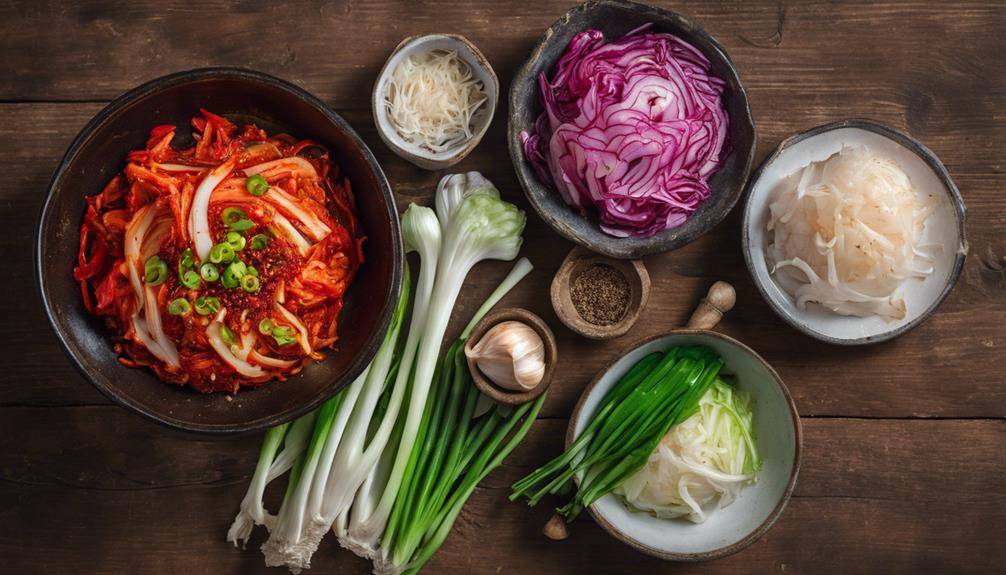
When making authentic Korean kimchi, you'll want to gather essential vegetables that enhance its flavor and texture. The star of the show is napa cabbage. This leafy green is vital for kimchi, as it absorbs the flavors beautifully and provides that satisfying crunch. Aim for fresh, crisp napa cabbage to guarantee your kimchi has the best texture.
Next, you'll want to take into account radish varieties. Korean radish, known as mu, is a popular choice. It adds a subtle sweetness and crunch that complements the cabbage perfectly. You can also experiment with other radish types, like daikon, to add different flavors and textures.
Don't forget to include scallions in your mix. They bring a mild onion flavor that rounds out the dish beautifully.
Essential Seasoning Components
The flavor profile of your kimchi largely depends on the seasoning components you choose. To achieve that perfect spicy flavor, you'll want to include gochugaru, a Korean red pepper flake. This ingredient not only adds heat but also brings a rich color to your kimchi. Adjust the amount based on your heat preference; a little can go a long way!
Next, don't forget about garlic and ginger. These two ingredients provide a depth of flavor you won't want to skip. Freshly minced garlic gives a pungent kick, while ginger adds warmth and complexity. For a touch of umami, incorporate fish sauce or soy sauce—both enhance the seasoning balance of your kimchi.
Fermentation Supplies Required
Gathering the right fermentation supplies is crucial for crafting delicious kimchi. First, you'll need fermentation containers. Glass jars work great, as they're non-reactive and easy to clean. If you're making a large batch, consider using a food-grade plastic container or a ceramic crock. Verify your chosen container fits the amount of kimchi you plan to make, allowing enough space for expansion during fermentation.
Next, you'll want to stock up on salt, as it's a key ingredient for drawing out moisture from the vegetables and kickstarting the fermentation process. You'll also need a variety of seasonings, which you've already covered in the previous section.
Keep in mind that the fermentation duration will vary depending on the temperature and your taste preference. Generally, kimchi ferments well at room temperature for one to five days. Once it reaches your desired tanginess, transfer it to the refrigerator to slow down the fermentation process.
Lastly, don't forget about a clean utensil for mixing, and perhaps a weight to keep your vegetables submerged in the brine. With these supplies, you're well on your way to making fantastic kimchi!
Preparation Steps
Start by rinsing the napa cabbage under cold water to remove any dirt. Once cleaned, slice the cabbage lengthwise into quarters and remove the core. Chop it into bite-sized pieces and place them in a large bowl. Sprinkle about half a cup of sea salt over the cabbage, tossing it to guarantee even distribution. Let it sit for about two hours, turning it occasionally, until the cabbage wilts and releases water.
While the cabbage is soaking, prepare your kimchi paste. In a separate bowl, mix together Korean red pepper flakes (gochugaru), minced garlic, grated ginger, and a bit of sugar. If you want a spicy variation, feel free to add more gochugaru according to your taste. For those looking for vegan alternatives, consider using a plant-based fish sauce or skip it altogether, as the garlic and ginger provide plenty of flavor.
After the cabbage has soaked, rinse it thoroughly under cold water to wash away excess salt. Drain the cabbage well, then combine it with the kimchi paste. Add in chopped green onions and any other vegetables you like, such as grated carrots or radishes, to enhance the flavor and texture. Be sure to mix everything well, using your hands (wearing gloves if you prefer) to coat the cabbage evenly with the paste.
Once everything's well mixed, pack the kimchi tightly into a clean jar, leaving some space at the top for expansion during fermentation. Your preparation steps are complete!
Fermentation Process
The fermentation process is essential for developing the signature flavors of your kimchi. You'll need to take into account the fermentation time and ideal temperature conditions to achieve the best results. Keep an eye out for signs of proper fermentation to know when your kimchi is ready to enjoy.
Importance of Fermentation Time
Fermentation time plays an essential role in developing the distinctive flavors and textures of kimchi. When you allow your kimchi to ferment, you're giving beneficial bacteria the chance to thrive, creating those rich fermentation flavors that make this dish so beloved. The fermentation duration can vary based on your taste preferences and specific recipe, but generally, a longer fermentation time results in a tangier, more robust flavor profile.
For most recipes, you'll want to start with a short initial fermentation at room temperature, usually around 1 to 5 days, depending on how sour you like your kimchi. After that, transfer it to the fridge to slow down the fermentation process. This cold storage can help maintain a balanced flavor while allowing the kimchi to continue developing its unique characteristics over time.
Keep in mind, the longer you let it sit, the more pronounced those fermentation flavors become. However, if you prefer a milder taste, check it after a few days in the fridge. Ultimately, fermentation time is your opportunity to craft the perfect batch of kimchi tailored to your palate. Enjoy experimenting!
Ideal Temperature Conditions
Temperature considerably influences the fermentation process of kimchi. To achieve the best results, you need to create the right fermentation temperature. Ideally, you want to keep your kimchi at a temperature between 60°F (15°C) and 75°F (24°C). Within this range, beneficial bacteria thrive, leading to a flavorful and tangy end product.
If your kitchen is too warm, fermentation can speed up, resulting in overly sour kimchi. On the other hand, if it's too cold, the fermentation process may stall, and your kimchi won't develop that desired taste. The most favorable environment for fermentation is a consistent, cool area, away from direct sunlight. A basement or a cool pantry works wonders.
Once you've mixed your ingredients and packed your kimchi into jars, you can experiment with different temperatures. If you prefer a milder flavor, try fermenting at the lower end of the spectrum. For a stronger taste, you might opt for the higher end. Remember to check your kimchi regularly, looking for changes in texture and aroma, as these can signal when it's ready for refrigeration. Control the temperature, and you'll be on your way to delicious homemade kimchi!
Signs of Proper Fermentation
As you observe your kimchi during the fermentation process, several signs indicate it's developing properly. One of the first things to look for is fermentation bubbles. These bubbles form as the beneficial bacteria consume the sugars in your vegetables, producing carbon dioxide. If you see bubbles rising to the surface, it's a good sign that fermentation is underway.
Another important indicator is the sour aroma that begins to fill your kitchen. As the fermentation progresses, you'll notice a tangy smell that becomes more pronounced over time. This sourness is a result of lactic acid production, which is essential for achieving that signature kimchi flavor.
You should also pay attention to the color and texture of your kimchi. The vibrant colors of the vegetables will deepen, and you'll find that the cabbage becomes softer yet still retains some crunch.
Remember to taste your kimchi periodically. If it's developing that pleasant sourness and a well-balanced flavor, you're on the right track. Keep an eye on these signs, and soon you'll have delicious, properly fermented kimchi ready to enjoy!
Click Here and Turn Every Masterpiece into a Showstopper!
Storage Tips
Proper storage is key to enjoying your homemade kimchi at its best. After fermentation, you'll want to transfer your kimchi to a clean, airtight container. Glass jars work great since they don't retain odors and are easy to clean. Make certain to pack the kimchi tightly into the container to minimize air exposure, which can cause it to spoil faster. If you're using a plastic container, verify it's food-safe and BPA-free.
For ideal kimchi storage, place your container in the refrigerator. The cool temperature slows down further fermentation, allowing you to enjoy your kimchi for weeks or even months. Remember that the flavor will continue to develop over time, so taste it periodically to find the perfect moment that suits your palate.
When it comes to refrigerator organization, consider designating a specific shelf for your kimchi. This not only keeps it easily accessible but also prevents cross-contamination with other foods. You might also want to use a shallow tray beneath the container to catch any potential leaks, keeping your fridge clean and tidy.
If you have a large batch, consider portioning out smaller amounts into separate containers. This way, you can enjoy fresh kimchi while keeping the rest stored for later. Always remember to check for any signs of spoilage, like off smells or unusual textures, before diving in. With these tips, you'll verify that your kimchi remains delicious and safe to eat for as long as possible!
Serving Suggestions
Once you've got your kimchi stored properly, it's time to think about how to serve it. Kimchi isn't just a condiment; it's a delicious and versatile addition to your meals. One of the simplest ways to enjoy kimchi is to serve it as a side dish. Its tangy, spicy flavor complements a variety of main courses, enhancing your overall dining experience.
For classic meal pairings, consider serving kimchi alongside grilled meats, such as Korean barbecue. The rich flavors of the meat balance perfectly with the acidity of the kimchi. You can also add it to rice dishes, like fried rice or bibimbap, where it adds a delightful crunch and depth of flavor. Don't forget about soups! A spoonful of kimchi can elevate simple dishes like ramen or tofu soup, providing an extra kick that warms you up.
If you're feeling adventurous, try mixing kimchi into your scrambled eggs or omelets for a spicy breakfast twist. You might also enjoy kimchi in tacos or sandwiches, where its crunch can add an exciting texture.
Lastly, consider a kimchi salad, combining it with fresh greens, sesame oil, and a sprinkle of sesame seeds. This can serve as a revitalizing side dish that pairs well with grilled or roasted vegetables. With these serving suggestions, you can explore the versatility of kimchi and make every meal a little more exciting!
Health Benefits
Kimchi isn't just a flavorful addition to your meals; it also offers a range of health benefits that make it a smart choice for your diet. This traditional Korean dish is packed with nutritional value, thanks to its primary ingredients, including cabbage, radishes, and various spices. These vegetables are high in essential vitamins and minerals, providing you with a nutrient-rich boost that supports your overall health.
One of the standout features of kimchi is its probiotic benefits. When fermented, the beneficial bacteria thrive, contributing to a healthy gut microbiome. Eating kimchi regularly can enhance your digestion, promote gut health, and even strengthen your immune system. Probiotics found in kimchi may help reduce inflammation and improve your body's ability to absorb nutrients, making it easier for you to maintain a balanced diet.
Additionally, kimchi is low in calories, which can aid in weight management while still keeping you satiated. The fiber content from the vegetables helps you feel full longer, reducing the urge to snack on less nutritious options. With its rich flavor and health benefits, incorporating kimchi into your meals can also encourage you to consume more vegetables.
In short, adding kimchi to your diet not only enhances your dishes but also supports your health in multiple ways. So, go ahead and enjoy this delicious, fermented food—your body will thank you!
Click Here and Turn Every Masterpiece into a Showstopper!
Frequently Asked Questions: Easy Korean Kimchi Recipe
Can I Use Other Vegetables for Kimchi Besides Napa Cabbage?
Absolutely, you can use alternative vegetables like radishes, cucumbers, or carrots for kimchi! Just remember to adjust your fermentation techniques slightly to suit the texture and flavor of the vegetables you choose. Enjoy experimenting!
How Long Does Homemade Kimchi Last in the Fridge?
Homemade kimchi typically lasts 3 to 6 months in the fridge. To maximize freshness, store it in an airtight container and monitor the fermentation process; flavors deepen over time, enhancing your kimchi experience.
Is Kimchi Gluten-Free?
Yes, kimchi's typically gluten-free since it's made from vegetables and seasonings. The fermentation process enhances its health benefits, promoting gut health and boosting immunity. Just check the ingredients to be sure they're gluten-free.
Can I Make Kimchi Without Fish Sauce?
Yes, you can make kimchi without fish sauce! Use vegan alternatives like soy sauce or miso for depth. Flavor substitutes such as seaweed or mushroom powder can enhance the umami taste without compromising the dish's integrity.
What Are Some Common Variations of Kimchi?
You'll find plenty of kimchi variations. Spicy variations often include gochugaru, while regional differences showcase unique ingredients, like napa cabbage in Seoul or radishes in Jeolla. Each version offers a distinct taste and cultural flair.
Click Here and Turn Every Masterpiece into a Showstopper!
Conclusion
To sum up, making your own kimchi is a rewarding experience that's easier than you might think. With just a few essential ingredients and simple steps, you can enjoy this delicious, fermented dish at home. Don't forget to experiment with flavors and adjust the spices to your liking! Once it's fermented, you'll have a tasty, healthy side dish that enhances any meal. So roll up your sleeves and give it a try—you won't regret it!