Great Microwaving Techniques For Soup
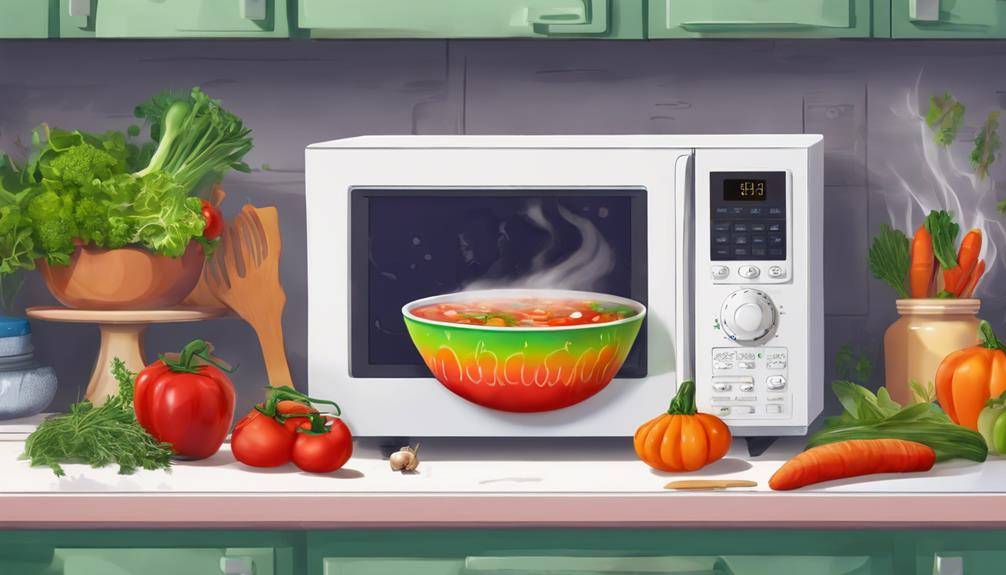
Great Microwaving Techniques For Soup; To microwave soup effectively, start by using a microwave-safe container, like glass or ceramic. Cover it with a vented lid to prevent splatters and guarantee even heating. Heat at medium power for 1-2 minutes, stirring frequently to eliminate hot spots. Always check the temperature, aiming for at least 165°F, and return it to the microwave if it needs more warming. Enhance your soup’s flavor by adding fresh ingredients or seasonings after microwaving. These simple techniques can transform your microwaving experience, making it quick and delicious. Stick around to uncover even more helpful tips and tricks!
Click Here and Turn Every Masterpiece into a Showstopper!
Choosing the Right Container
When it comes to microwaving soup, have you considered the container you’re using? The right container can make a significant difference in both microwave safety and the quality of your soup. First, you need to pay attention to the container materials. Not all materials are created equal when it comes to microwave use.
Glass and ceramic containers are typically safe for microwaving soup, as they can withstand high temperatures without leaching harmful chemicals. Just make sure they’re labeled microwave-safe. On the other hand, some plastic containers may warp or release toxins when heated. If you choose plastic, look for containers specifically marked as microwave-safe to guarantee you’re not compromising your health.
Don’t forget about metal! While it might be tempting to use that shiny bowl, metal containers can cause sparks and damage your microwave. Avoid them altogether.
Another important factor is the container’s shape. Opt for wide, shallow containers to allow for even heating. Tall, narrow containers can heat unevenly, leaving parts of your soup hot while others remain cold, which can lead to food safety issues later on.
Lastly, always cover your soup with a microwave-safe lid or vented cover to prevent splatters. Consider these tips when choosing your container, and you’ll enjoy a delicious, safely microwaved soup every time.
Preparing Your Soup
After selecting the right container, it’s time to prepare your soup for microwaving. First, think about the soup type you want to enjoy. Whether you’re going for a classic tomato bisque or a hearty chicken noodle, each variety has its unique ingredient combinations that can affect the final taste and texture.
Start by gathering all your ingredients. If you’re using fresh vegetables, chop them into bite-sized pieces to guarantee even cooking. For canned soups, give the contents a good stir to mix in any separated ingredients. This step is vital, especially with thicker soups that might settle during storage.
Next, if you’re adding any proteins like shredded chicken or beans, make certain they’re pre-cooked or ready to heat through quickly. This way, you won’t have to worry about uneven heating. If you like a bit of spice, consider tossing in some herbs or spices at this stage; they can elevate the flavor profile of any soup type.
Once everything’s prepared, pour the soup into your selected container. Leave some space at the top to allow for expansion as it heats. If you’re adding toppings like cheese or croutons, save those for after microwaving to maintain their texture.
With your soup prepped and ready, you’ll be all set for a satisfying meal in no time!
Microwave Settings Explained
Understanding microwave settings is essential for heating your soup evenly and effectively. You’ll want to pay attention to power levels, adjust cooking times as needed, and choose the right container for the best results. Let’s break down these key factors to guarantee your soup turns out just right every time.
Power Levels Importance
Microwave power levels play an essential role in heating soup evenly and effectively. By adjusting the power level, you gain better temperature control, ensuring that your soup doesn’t boil over or develop hot spots. High power settings can rapidly heat your soup, but they can also lead to uneven cooking, which isn’t ideal when you want a consistent temperature throughout.
Using a lower power level allows for more gradual heating, enhancing microwave efficiency. This method reduces the risk of scorching or overcooking certain ingredients, especially in soups with delicate components like cream or vegetables. Lower power settings can also help retain the flavors and textures of your soup, providing a better overall taste experience.
When you microwave soup, consider starting at a medium power level. This way, you can monitor the soup as it heats, making adjustments as needed. Remember, it’s easier to increase the power than to fix an overcooked soup. By mastering these power levels, you’ll enjoy perfectly heated soup every time, ensuring a delicious meal that’s both satisfying and comforting.
Cooking Time Adjustments
Adjusting cooking times is just as important as selecting the right power level when heating soup in the microwave. You’ll want to take into account the soup thickness and ingredient compatibility to guarantee even heating. Thicker soups, like cream-based or chunky varieties, often require more time to heat compared to thinner broths. Start by microwaving your soup for a shorter duration, around one to two minutes, then stir and check the temperature. This helps prevent hot spots that can result from uneven heating.
If you’re working with ingredients that absorb heat differently, like vegetables or proteins, you may need to adjust your cooking times further. For example, if your soup contains ingredients that heat quickly, such as pre-cooked chicken or soft vegetables, you might find that they heat through faster than the broth itself. In this case, heating your soup in shorter intervals and stirring frequently guarantees that all components reach a safe temperature without overcooking.
Ultimately, don’t hesitate to experiment a bit with cooking times to find what works best for your specific soup recipe. Adjust as needed, and you’ll enjoy a perfectly heated bowl every time!
Click Here and Turn Every Masterpiece into a Showstopper!
Container Selection Tips
Choosing the right container for microwaving soup can make a significant difference in how evenly your meal heats. Start by considering the material types. Glass and ceramic containers are excellent choices since they distribute heat evenly and won’t leach harmful chemicals. Avoid using metal, as it can cause sparks and damage your microwave.
Next, think about container sizes. A larger container allows for better steam circulation, which is essential for even heating. If you’re reheating a small portion, a smaller bowl will work just fine, but make sure it’s not too cramped; soup needs space to bubble and expand.
Also, look for microwave-safe labels on your containers, as some plastics can warp or melt. If you’re using plastic, opt for BPA-free options that can handle high heat without releasing toxins.
Lastly, remember to leave a little room at the top of your container to prevent spills. By selecting the right material types and container sizes, you’ll enjoy perfectly heated soup without the hassle of uneven temperatures or unwanted surprises.
Stirring for Even Heating
When heating soup in the microwave, stirring is key to achieving that perfect, warm consistency. Many people overlook this essential step, but effective stirring techniques can greatly enhance heat distribution throughout your soup. As microwaves cook food unevenly, you might end up with a hot center and cold edges if you skip this step.
Start by microwaving your soup for a short period, around 1 to 2 minutes, depending on the volume. Once that time’s up, take it out and give it a good stir. Use a spoon to reach the bottom and edges of the bowl, ensuring you mix everything thoroughly. This helps to break up any hot spots and promotes even heating throughout the soup. Don’t forget to stir gently; you want to incorporate the ingredients without splashing.
After stirring, return the bowl to the microwave and heat it for additional 30-second intervals, stirring again after each interval. This method not only improves heat distribution, but it also gives you the chance to check the soup’s temperature. If it’s not hot enough yet, repeat the process until you reach your desired warmth.
Covering Your Bowl
To further enhance the heating process, covering your bowl while microwaving soup is a smart move. When you cover the bowl, you trap steam, which helps heat the soup more evenly and quickly. But not all lid types are created equal, so it’s important to choose the right one. For instance, a microwave-safe plate can serve as a makeshift lid if you don’t have a proper cover.
If you’re using a traditional lid, make sure it has a steam release feature. This prevents pressure from building up, which can lead to messy spills or, worse, a lid that pops off unexpectedly. Some lids come with vents specifically designed for this purpose, allowing steam to escape while keeping the soup contained.
You might also consider using microwave-safe plastic wrap as a cover. Just be sure to leave a small gap for steam release to avoid any catastrophic explosions in your microwave. If you opt for this method, verify the wrap isn’t touching the soup to prevent any melting or unwanted chemical leaching.
Checking Temperature Properly
Checking the temperature of your soup is essential to confirm it’s heated thoroughly and safe to eat. Microwaves can heat unevenly, so you need to be diligent about checking the temperature accuracy. Start by removing your bowl from the microwave and using a food thermometer. Aim for at least 165°F (74°C) to confirm any harmful bacteria are eliminated and your soup is safe to consume.
When using a thermometer, insert it into the thickest part of the soup, avoiding the sides of the bowl. The sides can be hotter than the center, leading to misleading readings. If you don’t have a thermometer, you can still check by stirring the soup and tasting a small spoonful. Make sure it feels hot throughout, and not just warm in some spots.
As a safety measure, allow your soup to sit for a minute after microwaving. This resting time helps distribute the heat more evenly, reducing the chances of hot or cold spots. If you find the temperature is too low, return it to the microwave in short intervals, checking frequently until it reaches the desired temperature.
Adding Fresh Ingredients
After ensuring your soup is heated to a safe temperature, you might want to enhance its flavor and texture by adding fresh ingredients. Fresh herbs like basil, cilantro, or parsley can elevate your soup, providing a burst of flavor that dried herbs just can’t match. Simply chop them up and sprinkle them in right before serving for maximum freshness.
Consider including vegetable additions such as diced tomatoes, spinach, or bell peppers. These not only improve the nutritional value but also offer texture variety and color enhancement, making your soup visually appealing. If you’re looking for a protein boost, toss in some shredded chicken, tofu, or beans. These additions will make your soup heartier and more satisfying.
Don’t forget to make seasoning adjustments based on your fresh ingredients. You might find that a squeeze of lemon or lime juice can help with acidity balance, brightening up the overall taste profile. A dash of salt or pepper may also be necessary to tie everything together.
As you mix in these fresh components, pay attention to the texture variety they bring. Crunchy vegetables can contrast beautifully with a smooth broth, creating a delightful eating experience. By thoughtfully adding fresh ingredients, you’re not only enhancing the flavor but also creating a more nutritious and vibrant dish that’s sure to impress. Enjoy your personalized, upgraded soup!
Flavor Enhancements
When it comes to elevating the taste of your microwaved soup, consider incorporating various flavor enhancements that can transform a simple bowl into a gourmet experience. One of the easiest ways to do this is by adding herb infusions. Fresh herbs like basil, cilantro, or thyme can bring a burst of flavor. You can either toss them directly into your soup before microwaving or steep them in hot broth for a few minutes. This method allows their essential oils to infuse the liquid, enriching the overall taste.
Another fantastic way to enhance flavor is through custom spice blends. You don’t have to settle for basic seasoning—experiment with blends like garam masala, herbes de Provence, or even a dash of Cajun seasoning. Just sprinkle a little into your soup and stir well before microwaving. This not only adds depth but also introduces a hint of warmth or zest that can take your soup to the next level.
Don’t forget about umami boosters, too. A splash of soy sauce, a spoonful of miso paste, or even a sprinkle of nutritional yeast can enhance savory notes, making your soup more satisfying.
Lastly, consider finishing your soup with a drizzle of high-quality olive oil or a squeeze of fresh lemon juice after microwaving. These final touches can brighten flavors and add a delightful richness, ensuring that your microwaved soup is not just a quick meal, but a delicious one you’ll look forward to enjoying.
Click Here and Turn Every Masterpiece into a Showstopper!
Safe Storage Tips
To enjoy your flavorful microwaved soup at its best, proper storage is key. After you’ve savored your soup, let it cool down to room temperature before moving it to the refrigerator or freezer. This prevents condensation and maintains the soup’s integrity. For soup refrigeration, store your soup in an airtight container. Make certain to leave a little space at the top, as liquids expand when they freeze. Properly refrigerated soup can last for about 3 to 4 days, so be sure to label your containers with the date to keep track.
If you want to enjoy your soup later, soup freezing is the way to go. Use freezer-safe containers or heavy-duty freezer bags to prevent freezer burn. Again, leave some space at the top, and try to remove as much air as possible from the bags before sealing. Frozen soup can last for up to 3 months, but it’s best consumed sooner for maximum flavor and texture.
When you’re ready to reheat, always thaw frozen soup in the refrigerator overnight, or you can use the defrost setting on your microwave. Avoid refreezing thawed soup, as it can compromise its quality. By following these safe storage tips, you’ll guarantee your microwaved soup remains delicious, whether you’re enjoying it right away or saving it for later.
Click Here and Turn Every Masterpiece into a Showstopper!
Frequently Asked Questions: Great Microwaving Techniques For Soup
Can I Microwave Frozen Soup Directly Without Thawing First?
Yes, you can microwave frozen soup directly without thawing first. Just use the appropriate microwave settings, starting with lower power to avoid uneven heating, and stir occasionally for best results. Enjoy your meal!
What Types of Soup Are Best for Microwaving?
When microwaving, go for broth-based soups, pureed soups, or cream soups, as they heat evenly. Chunky soups can work too, but be sure to stir well for consistent warmth throughout. Enjoy your quick meal!
How Do I Avoid Soup Splatters in the Microwave?
To avoid soup splatters in the microwave, use microwave lids that fit securely. Additionally, store your soup in containers designed for microwave use, ensuring they’re not too full to prevent overflow during heating.
Is It Safe to Microwave Soup in Plastic Containers?
Yes, it’s safe to microwave soup in certain plastic containers, as long as they’re labeled microwave-safe. Avoid using containers not designed for heat, as they can release harmful chemicals, compromising plastic safety.
How Can I Reheat Soup Multiple Times Without Losing Flavor?
To reheat soup multiple times without losing flavor, use low heat, stir frequently, and cover it. For flavor preservation, add fresh herbs or spices after reheating. These reheating tips will keep your soup delicious longer.

Conclusion
Microwaving soup can be quick and easy if you follow the right techniques. By choosing the right container and prepping your soup properly, you’ll guarantee even heating and great flavor. Don’t forget to stir and cover your bowl for the best results. Always check the temperature before digging in, and feel free to add fresh ingredients for a boost. With safe storage tips in mind, you can enjoy your delicious soup anytime you want!