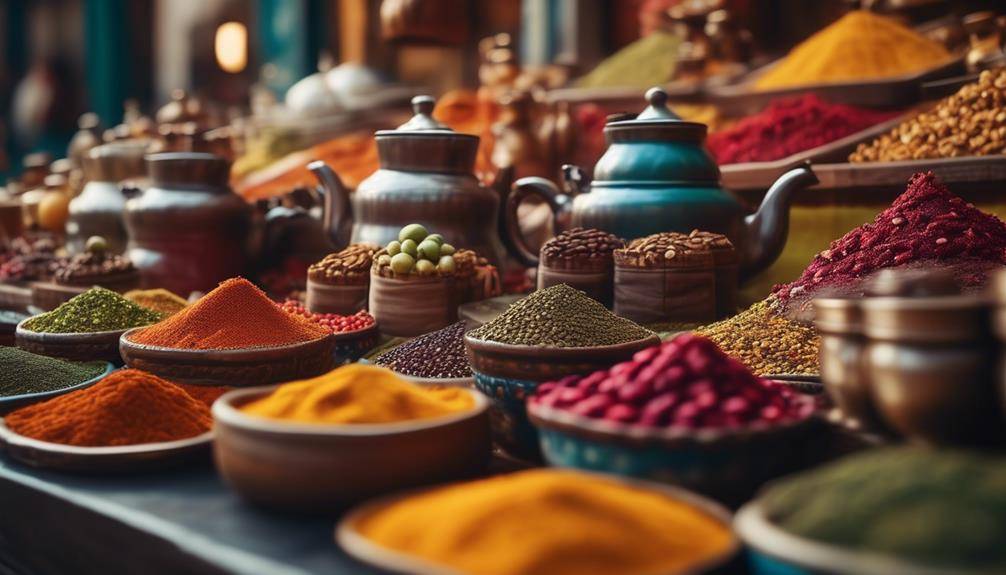
What Are Some Great Techniques For Blending Cooking Spices
Great Techniques For Blending Cooking Spices; Spice blending is like conducting a symphony of flavors in your kitchen. Just as a skilled conductor combines different instruments to create beautiful harmonies, blending cooking spices requires a delicate balance of various flavors and aromas. But how can you achieve that perfect blend that tantalizes your taste buds? In this discussion, you will uncover some techniques that will elevate your spice game to new heights. From selecting the right spices to incorporating sweet and savory notes, get ready to embark on a flavorful journey that will leave you craving for more.
Understanding the Basics of Spice Blending
Understanding the Basics of Spice Blending will empower you to create bold and flavorful dishes that elevate your culinary skills. Experimenting with unique spice combinations is a key aspect of mastering the art of spice blending. By combining different spices, you can create complex flavors that enhance your dishes and make them truly memorable.
When it comes to spice blending, freshness is of utmost importance. Spices lose their potency over time, so it’s crucial to use fresh spices for maximum flavor. Buying whole spices and grinding them yourself is a great way to ensure freshness. This allows you to release the essential oils and flavors right before using them in your dishes.
To begin experimenting with spice combinations, start by understanding the flavor profiles of different spices. Some spices, like cumin and coriander, have earthy and warm flavors, while others, like cinnamon and nutmeg, have sweet and aromatic notes. By understanding these flavor profiles, you can create harmonious blends that complement each other.
It’s also important to consider the intensity of spices when blending them. Some spices, such as chili powder or black pepper, are bold and can easily overpower other flavors. Balancing these intense spices with milder ones, like turmeric or paprika, can help create a well-rounded blend.
As you gain confidence in your spice blending skills, don’t be afraid to think outside the box and try unconventional combinations. Adding a pinch of cardamom to a savory dish or experimenting with a hint of lavender in a dessert can bring unexpected depth and complexity to your creations.
Selecting the Right Spices for Your Blend
To create a well-balanced and flavorful spice blend, it is essential to carefully select the right spices. When it comes to experimenting with unique combinations and spicing up traditional dishes, the selection of spices plays a crucial role in achieving the desired outcome. The key is to understand the flavors and characteristics of each spice and how they complement or contrast with one another.
Begin by considering the flavor profile you want to achieve. Are you looking for something bold and fiery, or perhaps a more subtle and aromatic blend? Understanding your desired outcome will help guide you in selecting the appropriate spices.
Next, think about the dishes you plan to use the spice blend in. Different cuisines have their own traditional spices, so it’s important to consider the flavor profiles of those dishes. For example, if you’re making a Mexican dish, you may want to include spices like cumin, chili powder, and oregano. On the other hand, if you’re preparing an Indian dish, you might opt for spices like turmeric, coriander, and garam masala.
Don’t be afraid to experiment with different combinations of spices. Mixing contrasting flavors can create a unique and exciting taste experience. However, it’s important to keep in mind that certain spices may overpower others, so it’s wise to start with small amounts and adjust as needed.
Lastly, always use fresh, high-quality spices. Stale or low-quality spices can greatly impact the flavor of your blend. So, be sure to check the expiration dates and store them in a cool, dark place to preserve their freshness.
Experimenting With Different Flavor Profiles
Now that you have selected the right spices for your blend, it’s time to experiment with different flavor profiles. Spice pairing combinations can take your dishes to the next level, allowing you to create unique and memorable flavors. By enhancing the taste with spices, you can elevate your cooking and impress your guests with delicious and exciting dishes.
Spice Pairing Combinations
Experimenting with different flavor profiles through spice pairing combinations can elevate your cooking to new levels of taste and complexity. By carefully selecting and combining spices, you can create unique flavor profiles that will leave your taste buds begging for more. Here are four spice pairing techniques to help you in your culinary adventures:
- Complementary Pairings: Combine spices that have similar flavor profiles to enhance and intensify each other’s taste. For example, pairing cumin with coriander or cinnamon with nutmeg can create a harmonious blend.
- Contrasting Pairings: Mix spices that have contrasting flavors to add depth and complexity to your dishes. Try combining spicy cayenne pepper with sweet cinnamon or tangy lemon zest with earthy thyme.
- Regional Pairings: Use spices commonly found in specific cuisines to create authentic and flavorful dishes. For instance, combining garam masala, turmeric, and cardamom can give your dishes a distinctive Indian flair.
- Experimental Pairings: Don’t be afraid to think outside the box and try unconventional spice combinations. Mix unexpected flavors like smoked paprika with cocoa powder or lavender with black pepper for a surprising twist.
Enhancing Taste With Spices
Elevate your culinary creations by exploring the world of spice pairing combinations, and take your taste buds on a journey of enhanced flavors and delightful complexity. Enhancing the taste of your dishes with spices is an art that requires a deep understanding of spice infusion techniques and the ability to create unique flavor combinations.
Experimenting with different flavor profiles allows you to create dishes that tantalize the senses and leave a lasting impression on your guests. To achieve this, consider blending spices with complementary flavors, such as pairing cinnamon with nutmeg for warm and comforting dishes or combining cumin with coriander for a vibrant and aromatic twist. By incorporating a variety of spices into your cooking, you can unlock a whole new world of flavors and elevate your dishes to new heights.
Balancing the Intensity of Spices
To achieve a harmonious blend of spices, it is crucial to carefully balance their intensity. Balancing spice levels ensures that no single spice overwhelms the dish, allowing all the flavors to work together in perfect harmony. Here are four techniques to help you adjust the flavor balance and create a well-balanced spice blend:
- Start with small amounts: When adding spices to a dish, it’s best to start with a small quantity and gradually build up the intensity. This allows you to taste the impact of each spice and make adjustments as needed.
- Combine contrasting flavors: Pairing spices with contrasting flavors can help balance their intensity. For example, if a spice is too strong, you can try adding a complementary spice with a milder flavor to counteract the intensity.
- Use a neutral base: Incorporating a neutral base ingredient, such as rice or potatoes, can help absorb excess spice intensity. This allows the flavors to meld together more smoothly and prevents any one spice from overpowering the dish.
- Experiment with different cooking techniques: Different cooking techniques can affect the intensity of spices. For example, to mellow the heat of a spice, you can roast or sauté it before adding it to the dish. Alternatively, you can temper the intensity of a spice by adding it at the end of cooking or using it as a garnish.
Incorporating Aromatics for Depth of Flavor
Incorporate aromatics to enhance the depth of flavor in your spice blend. Aromatics, such as herbs and spices, add complexity and richness to your dishes. By incorporating herbs for freshness and layering flavors with spices, you can create a harmonious blend that will elevate your cooking to new heights.
When it comes to incorporating herbs, choose fresh ones whenever possible. Fresh herbs like basil, cilantro, and parsley have a vibrant flavor that can brighten up any dish. Chop them finely and mix them into your spice blend to infuse it with their aromatic goodness. The freshness of the herbs will add a burst of flavor that will take your dishes to the next level.
Layering flavors with spices is another technique to create depth in your spice blend. Start with a base spice, such as cumin or paprika, and build upon it with complementary spices like coriander, cinnamon, or nutmeg. Each spice brings its own unique flavor profile, and when combined, they create a symphony of taste that tantalizes the palate.
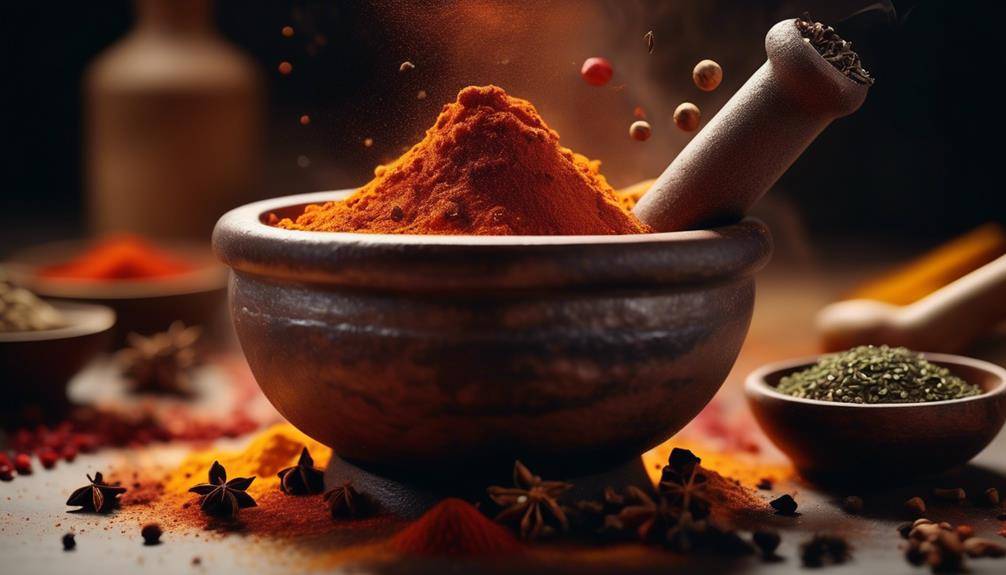
To ensure that the aromatics are well-incorporated into your spice blend, use a mortar and pestle or a spice grinder to grind them together. This will release the essential oils and intensify their flavors. Once blended, store your spice blend in an airtight container to keep it fresh and potent.
Incorporating aromatics is an essential technique for enhancing the depth of flavor in your spice blend. By incorporating herbs for freshness and layering flavors with spices, you can create a blend that will elevate your dishes and impress your guests. So, don’t be afraid to experiment and let your taste buds guide you in creating the perfect spice blend.
Toasting and Grinding Whole Spices
Build upon the depth of flavor in your spice blend by taking the next step: toasting and grinding whole spices. This technique enhances the intensity and complexity of your dishes, elevating them to new levels of deliciousness. Here are some benefits of roasting spices and grinding them yourself:
- Enhanced Aroma: Toasting whole spices releases their essential oils, intensifying their aroma. This adds a fragrant and enticing quality to your dishes, enticing the senses and making your meals more appetizing.
- Deepened Flavor: Roasting spices brings out their natural flavors, deepening their taste profile. The heat helps to break down the spices and develop a rich, complex flavor that cannot be achieved with pre-ground spices. Grinding them right before use ensures maximum freshness and flavor.
- Versatility: When you toast and grind your own spices, you have the flexibility to customize the texture to suit your cooking needs. You can create a fine powder for smooth sauces or a coarser blend for added texture in dishes like curries or rubs.
- Longer Shelf Life: Whole spices have a longer shelf life compared to pre-ground spices. By grinding them yourself, you can ensure that your spices are at their freshest, preserving their potency and flavor for longer periods.
Toasting and grinding whole spices is a simple yet impactful technique that can elevate your cooking to new heights. By incorporating this step into your spice blending process, you will unlock a world of flavors and enhance the overall taste of your dishes. So, why settle for store-bought, pre-ground spices when you can enjoy the benefits of toasting and grinding your own? Your taste buds will thank you.
Mixing Spices in the Right Proportions
Achieving the perfect balance of flavors in your spice blend requires careful mixing of the spices in the right proportions. Experimenting with unique spice combinations is a key part of creating memorable and delicious dishes. However, finding the right spice blend for specific dishes can be a challenge. Here are some tips to help you mix spices in the right proportions and create flavorful blends that enhance your cooking.
Firstly, start with a basic understanding of each spice’s flavor profile. Some spices, like cumin and paprika, have a strong and distinctive taste, while others, like oregano and thyme, have a more subtle flavor. By understanding the intensity of each spice, you can determine the appropriate proportions for your blend.
When experimenting with spice blends, start with small quantities. This way, you can adjust the proportions as you go, ensuring that you achieve the desired balance of flavors. Remember, it’s easier to add more spices than to remove them if you’ve added too much.
Consider the flavor profile of the dish you’re preparing. If you’re making a Mexican-inspired dish, you might want to focus on cumin, chili powder, and oregano. For an Indian curry, you might combine turmeric, cumin, coriander, and garam masala. Understanding the cuisine and the traditional spice combinations can guide you in creating the perfect blend.
Lastly, taste your spice blend as you go. This allows you to adjust the proportions and make any necessary tweaks. Remember, everyone’s taste buds are different, so trust your own palate and adjust the spices according to your personal preference.
Creating Custom Spice Blends for Specific Cuisines
To create authentic and flavorful dishes from different cuisines, it’s important to develop custom spice blends that capture the essence of each culinary tradition. By creating signature blends and incorporating regional flavors, you can elevate your cooking to new heights. Here are four techniques to help you create custom spice blends for specific cuisines:
- Research the cuisine: Start by immersing yourself in the cuisine you want to explore. Learn about the traditional spices and flavor profiles that are commonly used. This will give you a foundation to build upon when creating your own blend.
- Experiment with ratios: Once you have a basic understanding of the spices used in the cuisine, start experimenting with different ratios. Adjusting the proportions of each spice can completely transform the flavor of a dish. Be bold and don’t be afraid to play around with the ratios until you find the perfect balance.
- Incorporate regional flavors: To truly capture the essence of a specific cuisine, it’s important to incorporate regional flavors. This could mean using spices that are native to a particular region or adding ingredients that are commonly used in that cuisine. By doing so, you’ll be able to create a blend that is unique and authentic.
- Taste and adjust: The key to creating a successful spice blend is to taste as you go. Don’t be afraid to make adjustments along the way. If the blend is too spicy, add a milder spice to balance it out. If it lacks depth, experiment with adding more aromatic spices. Trust your taste buds and make adjustments until you achieve the desired flavor.
Pairing Spices With Different Ingredients
When it comes to pairing spices with different ingredients, there are a few key tips to keep in mind. First, consider the flavor profiles of both the spice and the ingredient to ensure they complement each other. Second, experiment with ingredient-specific spices to enhance the natural flavors of your dish. By understanding the principles of spice pairing and exploring ingredient-specific spices, you can elevate your culinary creations to new heights.
Spice Pairing Tips
Pairing spices with different ingredients creates a harmonious blend of flavors that elevates your culinary creations to new heights. However, it’s important to avoid common spice blending errors to ensure the best results. Here are some spice pairing tips to help you achieve the perfect balance of flavors:
- Complementing flavors: Pair spices that have complementary flavors with your ingredients. For example, cinnamon and nutmeg go well with sweet dishes, while cumin and coriander enhance savory flavors.
- Balancing heat: When using spicy spices like chili powder or cayenne pepper, balance the heat by adding ingredients that provide a cooling effect, such as yogurt or lime juice.
- Experimenting with contrasts: Don’t be afraid to pair contrasting flavors. For instance, the brightness of citrus zest can enhance the richness of spices like cloves or ginger.
- Starting small: It’s easy to overdo it with spices. Start with a small amount and gradually add more until you achieve the desired flavor profile. Remember, you can always add more, but you can’t take it away.
Ingredient-Specific Spices
As you venture into discussing the pairing of spices with different ingredients, it’s crucial to understand the specific spices that complement each ingredient, creating a tantalizing fusion of flavors. Ingredient-specific spice combinations are key in elevating the taste of your dishes to new heights. For example, when cooking with chicken, try combining thyme, rosemary, and garlic powder for a herbaceous and savory flavor.
If you’re preparing a seafood dish, consider using a combination of paprika, cayenne pepper, and lemon zest to add a hint of heat and brightness. For beef, a mixture of black pepper, cumin, and coriander can bring out its rich and hearty taste. Experimenting with unique spice pairings allows you to create exciting and unforgettable culinary experiences. So go ahead, explore the world of spices and let your taste buds be amazed.
Using Heat to Enhance Spice Blends
To enhance the flavor of your spice blends, incorporate heat into the cooking process. By using heat, you can unlock the full potential of your spices and create a depth of flavor that will take your dishes to the next level. Here are four techniques to help you use heat effectively in your spice blends:
- Toasting Techniques: Toasting your spices can bring out their natural aromas and intensify their flavors. Simply heat a dry pan over medium heat and add your whole spices. Toast them for a few minutes, stirring occasionally, until they become fragrant and slightly darker in color. Be careful not to burn them, as this can result in a bitter taste.
- Infused Oils: Infusing oils with spices is another great way to incorporate heat into your spice blends. Heat your oil in a pan and add your desired spices, such as cumin, coriander, or cardamom. Allow the spices to infuse the oil over low heat for 10-15 minutes, stirring occasionally. This will add a rich and complex flavor to your dishes.
- Sautéing: Sautéing your spice blends in oil or butter can help release their flavors and create a delicious base for your dishes. Heat your oil or butter in a pan and add your spices. Cook them over medium heat, stirring constantly, until they become fragrant and slightly browned. This will help distribute the flavors evenly throughout your dish.
- Grilling or Roasting: Grilling or roasting your spice blends can add a smoky and charred flavor to your dishes. Rub your spice blend onto your meat or vegetables and cook them over high heat. This will create a delicious crust and infuse your dish with the bold flavors of the spices.
Incorporating heat into your spice blends is a simple yet effective way to elevate the flavor of your dishes. Whether you choose to toast, infuse, sauté, or grill, these techniques will help you create spice blends that are bold, aromatic, and full of depth. Experiment with different combinations of spices and cooking methods to find your perfect blend. Happy cooking!
Incorporating Sweet and Savory Notes in Your Blends
To create well-balanced spice blends, it is crucial to effectively balance the flavors of sweet and savory notes. By pairing contrasting spices, such as cinnamon and cumin or cardamom and black pepper, you can create harmonious combinations that enhance the taste profiles of your dishes. Experimenting with these flavor combinations will elevate your cooking to new levels of deliciousness.
Balancing Flavors Effectively
Achieving a harmonious blend of sweet and savory notes in your cooking spices requires a delicate balance and a keen understanding of flavor profiles. To effectively balance flavors, follow these techniques:
- Experiment with flavor ratios: Start with a base of savory spices like cumin, paprika, or garlic powder, and gradually add sweet spices like cinnamon, nutmeg, or cardamom. Taste as you go to find the perfect balance.
- Utilize spice infusion techniques: Infusing sweet and savory notes into your spices can enhance their flavor. Try toasting whole spices before grinding them to release their aroma and depth. You can also infuse oils or vinegars with spices to create unique blends.
- Pair complementary ingredients: Combine sweet spices with ingredients like brown sugar, honey, or maple syrup for added sweetness. Balancing these with savory elements like salt, black pepper, or chili flakes will create a well-rounded flavor profile.
- Embrace contrast: Don’t be afraid to juxtapose sweet and savory flavors. For example, a sprinkle of cinnamon on a savory dish like roasted chicken or grilled vegetables can add an unexpected twist.
Pairing Contrasting Spices
Incorporate a bold combination of sweet and savory notes in your spice blends to create a tantalizing flavor experience. Experimenting with unique combinations allows you to create bold flavor profiles that will elevate your dishes to new heights. By pairing contrasting spices, you can create a harmonious blend that balances both the sweetness and the savory elements, resulting in a truly memorable culinary experience.
For instance, try combining cinnamon and cumin for a Middle Eastern-inspired blend that adds warmth and depth to your dishes. Or, mix cardamom and garlic powder for a fusion of sweet and savory flavors that will take your taste buds on a delightful journey.
Don’t be afraid to think outside the box and play with different spice combinations. The key is to strike the perfect balance between the sweet and savory notes, allowing each spice to shine while complementing one another. So go ahead, get creative, and create spice blends that will leave a lasting impression on anyone who tastes your dishes.
Enhancing Taste Profiles
Transform your spice blends into culinary masterpieces by infusing them with a harmonious combination of sweet and savory notes. By incorporating these spice infusion techniques, you can create unique flavor combinations that will elevate your dishes to new heights. Here are four ways to enhance the taste profiles of your blends:
- Add a touch of sweetness: Incorporate spices like cinnamon, nutmeg, or cardamom to bring a warm and sweet flavor to your blends.
- Experiment with umami: Enhance the savory notes of your spice blends by adding ingredients like dried mushrooms, seaweed, or soy sauce.
- Balance with acidity: Incorporate tangy elements such as lemon zest, vinegar, or tamarind to add brightness and complexity to your blends.
- Explore the world of herbs: Experiment with fresh or dried herbs like basil, thyme, or rosemary to infuse your blends with aromatic and earthy flavors.
Storing and Preserving Spice Blends
To properly store and preserve your spice blends, follow these expert tips and techniques. Storing spice blends correctly is essential for extending their shelf life and ensuring their flavor remains intact. Here are some key guidelines to help you keep your spice blends fresh and flavorful for longer.
Firstly, always store your spice blends in airtight containers. Exposure to air can cause spices to lose their potency and flavor over time. Use glass jars with tight-fitting lids or resealable bags to create a barrier against moisture and air. This will help maintain the quality of your spice blends for an extended period.
Next, keep your spice blends away from heat and light. Heat and light can accelerate the breakdown of spices, leading to a loss of flavor and aroma. Store your spice blends in a cool, dark place such as a pantry or cupboard. Avoid placing them near the stove or any other heat source, as the fluctuating temperatures can degrade the spices.
It’s also important to label your spice blends with the date of creation. This will help you keep track of their freshness and ensure you use them before they lose their flavor. Additionally, consider making smaller batches of spice blends to prevent them from sitting unused for too long.
Lastly, avoid using wet or dirty utensils when handling your spice blends. Moisture and contaminants can introduce mold and bacteria, reducing the shelf life of your blends. Instead, use dry spoons or scoops to measure out the desired amount of spices.
Adjusting Spice Blends to Personal Preferences
When it comes to adjusting spice blends to your personal preferences, the possibilities for flavor customization are endless. You have the power to create a blend that perfectly suits your taste buds by experimenting with different ratios of spices. Whether you prefer a bold and intense flavor or a more subtle and balanced taste, understanding how to balance spice intensity is key in achieving your desired result.
Flavor Customization Options
You can easily adjust spice blends to suit your personal taste preferences. Experimenting with different combinations of spices can lead to the creation of unique blends that perfectly complement your favorite dishes. Here are four flavor customization options to help you create your own signature spice blends:
- Increase or decrease the amount of each spice: Adjust the ratios of spices in your blend to achieve a more pronounced or subtle flavor profile.
- Add or remove spices: Customize your blend by adding new spices or removing ones that you don’t enjoy. This will give your dishes a unique twist.
- Mix different spice blends: Combine multiple pre-made spice blends to create a completely new flavor experience.
- Incorporate herbs or other ingredients: Enhance your spice blend by adding dried herbs, citrus zest, or even nuts and seeds. This will add complexity and depth to your dishes.
Balancing Spice Intensity
Achieving the perfect balance of spice intensity in your blends is crucial for creating dishes that cater to your personal taste preferences. Balancing spice levels allows you to adjust the flavor intensity to suit your palate. When it comes to blending cooking spices, finding the right combination can make or break a recipe.
Some spices can overpower the dish, while others may not provide enough flavor. To achieve the desired balance, start by adding small amounts of spices and gradually increase based on taste. Remember, it’s easier to add more spices than to remove them. Pay attention to the flavors and adjust accordingly. By experimenting and adjusting the spice levels, you can create spice blends that perfectly complement your dishes.
Tips and Tricks for Perfecting Your Spice Blending Technique
To perfect your spice blending technique, consider incorporating these expert tips and tricks:
- Experiment with unusual spice combinations: Don’t be afraid to think outside the box and mix spices that you wouldn’t normally pair together. This can lead to unique and exciting flavor profiles that will elevate your dishes to new heights. Try combining cinnamon and cumin for a warm and earthy blend, or cardamom and turmeric for a vibrant and aromatic fusion.
- Create fusion spice blends: Take inspiration from different cuisines around the world and create your own fusion spice blends. Combine spices from different cultures to add depth and complexity to your dishes. For example, mix garam masala with smoked paprika and chili powder for a delicious Indian-Mexican fusion blend that will add a kick to any dish.
- Start with small quantities: When experimenting with spice blends, it’s best to start with small quantities and gradually adjust the flavors to your liking. This way, you can avoid overpowering your dish with too much spice. Remember, it’s easier to add more spice than to take it away.
- Use a mortar and pestle: For the best flavor and texture, consider grinding your spices using a mortar and pestle instead of using pre-ground spices. This allows you to release the full potential of the spices and create a more aromatic and flavorful blend.
Frequently Asked Questions: Great Techniques For Blending Cooking Spices
How Do I Know Which Spices to Blend Together?
You can determine which spices to blend together by considering spice pairing techniques for enhancing different cuisines. Experiment with different combinations and ratios to create unique and balanced spice blends that elevate your dishes.
Can I Use Pre-Ground Spices or Should I Use Whole Spices?
You can use pre-ground spices, but using whole spices gives you more control over the flavor. Ground spices are convenient, but they may lose their potency quicker. Experiment with both to find what works best for you.
How Do I Adjust the Intensity of My Spice Blend?
To adjust the intensity of your spice blend and balance flavors, start by adding small amounts of spices and tasting as you go. If it’s too mild, add more; if it’s too strong, dilute with other ingredients. Trust your palate!
What Are Some Common Flavor Profiles to Experiment With?
Experimenting with flavor profiles can enhance desserts and savory vegetarian dishes. Try combining spices like cinnamon and nutmeg for a warm and sweet dessert blend, or pair cumin and paprika for a savory kick in your veggie dishes.
How Long Can I Store My Spice Blend and How Should I Preserve It?
To preserve your homemade spice blend and ensure its freshness and flavor, store it in an airtight container in a cool, dark place. Properly stored, spice blends can last up to six months.

Conclusion
In conclusion, mastering the art of spice blending requires understanding the basics, selecting the right spices, experimenting with flavor profiles, balancing intensities, incorporating aromatics, and adding sweet and savory notes. Storing and preserving your blends properly is crucial, as is adjusting them to suit your personal preferences. With these techniques and a little practice, you can perfect your spice blending technique and elevate your cooking to new levels of flavor and expertise.
If you enjoyed exploring this topic and want to dive even deeper, be sure to check out some of our other articles here on Infinite Flavors. From rich culinary histories to creative twists on classic recipes, there’s always something new to discover. Whether you’re curious about the origins of a dish, looking for fresh inspiration in the kitchen, or simply love learning about food culture, our collection of posts is the perfect next step on your flavor journey.
Great Fresh Vs Dried Spices A Culinary Exploration
What Great Spices Are Perfect For Seafood Dishes
Discovering Italian Cuisine Great Ways To Spice It Up