A Step-By-Step Guide To Traditional German Christmas Cuisine
A Step-By-Step Guide To Traditional German Christmas Cuisine: To embrace traditional German Christmas cuisine, start by selecting hearty roasts like duck or pork, seasoned with festive spices. Don't forget the classic sides! Prepare flavorful sauerkraut and warm potato dishes, which balance the rich meats. For dessert, bake Lebkuchen and stollen, iconic sweets that enhance your festive spread. Enhance the experience with mulled wine (Glühwein) or spiced cider. As you lay out each dish, focus on beautiful presentation to impress your guests. This culinary journey reflects regional specialties and holiday traditions. There's plenty more to discover about making your feast truly magical!
Click Here and Turn Every Masterpiece into a Showstopper!
Overview of German Christmas Cuisine
German Christmas cuisine is a delightful tapestry of flavors and traditions that brings families together during the festive season. You'll find that each region of Germany boasts its own unique culinary specialties, reflecting local ingredients and customs. From the hearty roasts of Bavaria to the sweet stollen of Saxony, you can experience a variety of dishes that celebrate the festive spirit.
One standout feature is the use of festive spices that evoke warmth and nostalgia. Cinnamon, nutmeg, and cloves are commonly used in Christmas baking, infusing your home with inviting aromas. You might enjoy gingerbread cookies, known as Lebkuchen, which are often intricately decorated and enjoyed throughout the holiday season. These treats symbolize good luck and are a cherished part of many families' traditions.
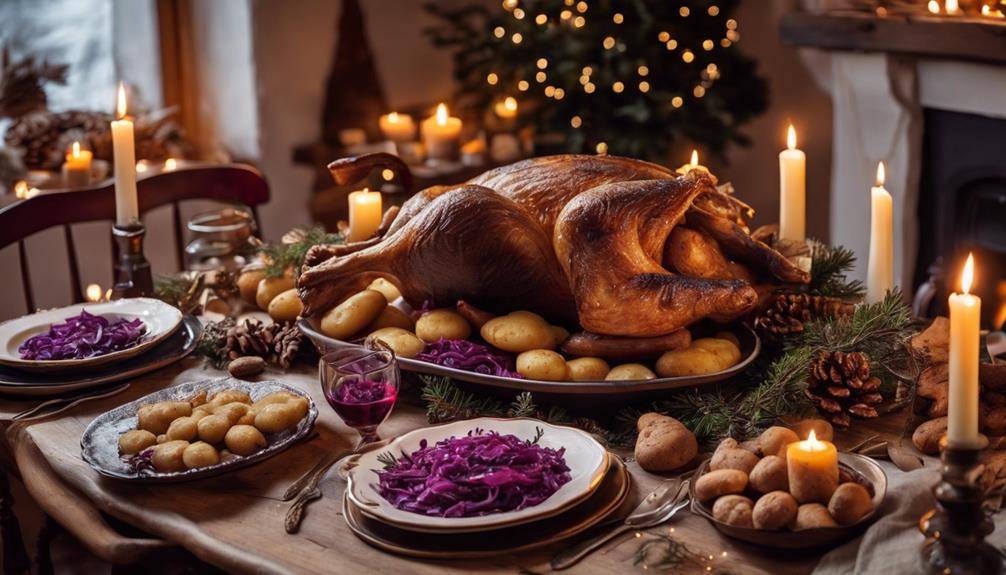
As you explore regional variations, you'll discover that some areas favor duck or goose as the centerpiece of their Christmas feast, while others opt for tender roast pork. Accompaniments like red cabbage and potato dumplings round out these meals, creating a comforting and satisfying experience.
In addition to savory dishes, sweets play a crucial role in German Christmas cuisine. Marzipan, often shaped into festive figures, and traditional fruitcake are favorites that grace many tables. Overall, German Christmas cuisine not only fills your plate but also warms your heart, with each dish telling a story of cultural heritage and familial love.
Traditional German Christmas Markets
When you visit traditional German Christmas markets, you're in for a treat with iconic market delicacies that warm your heart and fill your belly. The festive atmosphere wraps around you, making every moment feel magical and inviting. Plus, you can find unique crafts and gifts that capture the spirit of the season, perfect for holiday giving.
Iconic Market Delicacies
The aroma of roasted chestnuts wafts through the air as you stroll through a bustling Christmas market, where iconic delicacies await. You can't resist the allure of spiced nuts, their warm, nutty fragrance inviting you to indulge. As you sip on a steaming cup of mulled wine, with its blend of spices and rich flavor, you feel the festive spirit envelop you.
Don't miss out on the festive pastries that line the stalls, each one more tempting than the last. You might find beautifully decorated gingerbread cookies, perfect for sharing or savoring on your own. Candied fruits add a touch of sweetness that balances out the savory options, while traditional stollen, dusted with powdered sugar, offers a delightful taste of the season.
As you wander further, the sight of golden-brown festive pretzels catches your eye. Their chewy texture is perfect for snacking as you explore. With each bite, you're transported deeper into the heart of German Christmas traditions. This culinary journey is just as essential as the decorations, making your market experience unforgettable.
Festive Atmosphere Experience
Amidst twinkling lights and the joyful sounds of carolers, the festive atmosphere of a traditional Christmas market draws you in. As you stroll through the market, you're surrounded by vibrant holiday decorations that transform the square into a winter wonderland. The scent of roasted chestnuts and spiced mulled wine fills the air, inviting you to indulge in seasonal treats.
You can't help but tap your feet to the festive music that plays throughout the market, creating a cheerful backdrop to your exploration. Each stall you visit showcases an array of delicious foods, from bratwurst to stollen, while local artisans display their crafts, enhancing the overall charm of the experience.
The flickering glow of lanterns and the laughter of families create a warm, inviting vibe that beckons you to linger a little longer. You might even find a cozy spot to sip your glühwein, soaking in the lively ambiance and connecting with the spirit of the season. Engaging with locals and fellow visitors alike, you create lasting memories that make this festive atmosphere truly unforgettable.
Unique Crafts and Gifts
Stalls brimming with unique crafts and gifts invite you to explore the creativity of local artisans at traditional German Christmas markets. As you wander through the enchanting displays, you'll find an array of handmade ornaments that capture the spirit of the season. Each piece tells a story, from intricately carved wooden decorations to delicate glass baubles, showcasing the skill and passion of the creators.
Don't miss the chance to pick up some traditional gifts that reflect Germany's rich cultural heritage. You might find beautifully crafted nutcrackers, charming smokers, or colorful wooden toys, perfect for sharing with loved ones. These items not only make great mementos but also add a touch of authenticity to your holiday celebrations.
As you browse, take your time to chat with the artisans. They're enthusiastic to share their techniques and the inspiration behind their work, making your shopping experience even more meaningful. Whether you're searching for the perfect ornament to hang on your tree or a unique gift that embodies the warmth of the season, traditional German Christmas markets offer a treasure trove of options that will delight you and your family.
Classic Roasted Meats
Classic roasted meats are a staple of German Christmas feasts, bringing warmth and heartiness to holiday gatherings. Among the most beloved options is roasted duck, known for its rich flavor and crispy skin. When preparing your roasted duck, you'll want to start by seasoning it generously with traditional festive seasoning. This usually includes a blend of salt, pepper, and aromatic herbs like thyme and rosemary, which enhance the natural flavors of the meat.
Before roasting, it's crucial to pat the duck dry to achieve that perfect crispy texture. You can also score the skin to help render the fat, which adds to the flavor and moisture. Place the duck in a preheated oven, usually around 350°F (175°C), and roast it until the skin is golden brown and the meat is tender. Basting the duck periodically with its own juices helps to keep it moist and delicious.
Another classic meat you might consider is a succulent roast pork. Prepare it similarly by using festive seasoning, ensuring you include garlic and caraway seeds for that authentic German touch. The key is to let the pork roast until it's fork-tender, allowing the flavors to meld beautifully.
As you serve these classic roasted meats, they'll surely become the highlight of your holiday table, creating memories that you and your loved ones will cherish for years to come. So, roll up your sleeves and get ready to impress your guests with these traditional delights!
Flavorful Sauerkraut Varieties
Sauerkraut is an essential component of German Christmas cuisine, adding a tangy contrast to the rich flavors of roasted meats. Its history dates back hundreds of years, with origins linked to ancient China and later adopted by Germanic tribes. Over time, sauerkraut evolved into a staple that reflects the unique tastes of various regions in Germany.
You'll find several flavorful sauerkraut varieties throughout the country, each offering its own twist. For instance, Bavarian sauerkraut is known for its sweetness, often enhanced with apples and spices, which makes it a perfect match for sausages or pork. In contrast, the Swabian variety typically includes caraway seeds, lending it a distinctive earthy flavor that complements hearty dishes.
If you venture north, you might encounter Hamburg-style sauerkraut, which often incorporates a bit of vinegar and is less sweet than its southern counterparts. This variety pairs wonderfully with fish or lighter meats. Meanwhile, the Alsatian version, influenced by French cuisine, sometimes includes white wine and juniper berries, creating a complex taste experience.
No matter which regional variety you choose, sauerkraut not only elevates your holiday meal but also connects you to Germany's rich culinary history. So, as you prepare your festive feast, don't forget to include this vibrant dish—it's a delicious way to celebrate the season!
Hearty Potato Dishes
When you think of hearty potato dishes in German cuisine, classic potato salad and savory potato dumplings come to mind. These comforting meals not only warm you up during the chilly Christmas season, but they also bring a delightful richness to your holiday table. Let's explore how these dishes can elevate your festive feast.
Classic Potato Salad
Potato salad is a beloved staple in German Christmas cuisine, often making an appearance at festive gatherings. You'll find that the dish varies by region, with each area boasting its unique take on potato preparation. The classic version typically uses waxy potatoes, which hold their shape well after boiling.
To prepare your potato salad, start by boiling the potatoes until tender. Once cooked, let them cool slightly, then peel and slice them while still warm. This step helps the potatoes absorb the dressing better. For the dressing, mix together a combination of vinegar, oil, mustard, and seasonings. Some variations include adding diced onions, pickles, or even crispy bacon for extra flavor.
As you assemble your salad, gently toss the warm potatoes with the dressing to guarantee each piece is coated. You might also consider letting it sit for a while to allow the flavors to meld. Whether you prefer a creamy version or a tangy one, the beauty of potato salad lies in its versatility. So, get ready to impress your guests with this hearty, delicious dish that embodies the spirit of German Christmas celebrations!
Savory Potato Dumplings
During the festive season, savory potato dumplings, known as "Kartoffelknödel," take center stage on many German tables. These hearty dumplings are a beloved staple, celebrated for their versatility and rich flavor. You'll find various potato variations, including those made with raw and cooked potatoes, which create different textures and tastes.
The dumpling history in Germany dates back centuries, with regional recipes showcasing unique ingredients and preparation methods. In Bavaria, for example, you'll often encounter dumplings filled with bread or bacon, adding even more depth to the dish.
Making Kartoffelknödel is a delightful experience. You'll start by boiling your potatoes until tender, then mashing them to a smooth consistency. Combine the potatoes with flour, eggs, and seasonings to form a dough. Once you shape the dumplings, boil them until they float—this signals their readiness.
Serve these dumplings alongside roasted meats, rich gravies, or sauerkraut for an authentic German feast. Embrace the tradition and warmth they bring, and enjoy a comforting taste of Germany during the holidays!
Essential Side Dishes
In many German households, essential side dishes play an important role in making Christmas meals memorable. You'll find an array of flavors and textures that perfectly complement the main courses, enhancing the festive experience. One of the most beloved side dishes is sauerkraut, which comes in various sauerkraut variations. You can try it with apples for a touch of sweetness or add sausages for a heartier flavor. Each variation brings its unique twist to the holiday table.
When it comes to potato recipes, you're in for a treat. Potatoes are a staple in German cuisine, and during Christmas, they shine in several forms. You might consider serving creamy mashed potatoes, which pair wonderfully with rich gravies. If you prefer a twist, try potato salad, especially the warm versions that include bacon or pickles, delivering a delightful contrast to your meal.
Another fantastic option is rösti, a crispy potato dish that'll have everyone reaching for seconds. These potato recipes not only satisfy but also bring warmth to your holiday gathering.
Don't forget about red cabbage, often served alongside your main dish as a perfect balance of sweet and tangy flavors. It's visually appealing and adds a beautiful pop of color to your plate.
Iconic German Bread
When you think of German Christmas cuisine, iconic breads come to mind. You'll discover a variety of traditional types, each with unique baking techniques that reflect the rich cultural heritage. Let's explore how these breads play a central role in festive celebrations.
Types of German Bread
Germany's rich culinary tradition boasts an impressive variety of iconic breads, each with its own unique flavor and texture. Among these, rye varieties like pumpernickel and Schwarzbrot stand out. These dense, hearty loaves are often enjoyed during the colder months, providing warmth and sustenance. The distinct flavor of rye gives these breads a robust character, making them perfect for pairing with rich cheeses or cured meats.
Bread symbolism plays a significant role in German culture. For example, a freshly baked loaf is often seen as a symbol of prosperity and community. You might notice that during festive gatherings, bread takes center stage, representing togetherness and sharing.
Another notable bread is the pretzel, which is not just a snack but also a symbol of good luck and happiness. Whether you're enjoying a slice of rye bread or a warm pretzel, you're partaking in a tradition that goes beyond mere sustenance. Exploring these various types of German bread enriches your understanding of the country's culinary heritage, and you'll find that each loaf carries a story worth savoring.
Baking Techniques and Traditions
Baking iconic German bread involves a blend of time-honored techniques and local traditions that have been passed down through generations. You'll start with the right kneading techniques to develop the dough's structure, guaranteeing it rises beautifully. Once you've mixed your ingredients, let the dough rest, allowing gluten to strengthen.
As you shape your festive pastries, consider using traditional molds to create unique designs that reflect the holiday spirit. Don't forget to incorporate spice blends that evoke classic holiday flavors, like cinnamon and nutmeg, enhancing your bread's aroma.
When it comes to baking temperatures, aim for consistency; a properly preheated oven guarantees even baking, giving your bread that perfect crust. After baking, you can add icing finishes or cookie decorations for a festive touch—perfect for your holiday table.
Proper cookie storage is essential for maintaining freshness, so keep your creations in airtight containers. Remember, the key to great German bread lies in patience and practice, so don't rush the process. Enjoy each step and savor the delightful flavors of your hard work this holiday season!
Click Here and Turn Every Masterpiece into a Showstopper!
Sweet Treats and Desserts
During the festive season, sweet treats and desserts take center stage in German Christmas celebrations. You'll find an incredible array of delicious options that embody the spirit of the holidays. One must-try is the stollen, which comes in various stollen varieties, each filled with dried fruits, nuts, and a dusting of powdered sugar.
Lebkuchen, or gingerbread, is another favorite, available in an assortment of lebkuchen flavors, from honey to chocolate. These spiced cookies often come in beautiful shapes and can be decorated with icing or left plain. You might also want to indulge in a gingerbread house, a fun project that combines creativity with sweetness, often adorned with marzipan decorations.
As you explore the dessert table, don't miss out on holiday pastries that showcase rich flavors and textures. Nutcracker sweets, inspired by the beloved ballet, can bring a whimsical touch to your spread. You'll also want to sample festive cookies, each with its own unique twist, like cinnamon stars or nutty crescents.
Seasonal Beverages
As the holiday season unfolds, a variety of seasonal beverages warm hearts and bring people together. One of the most cherished drinks is Glühwein, or mulled wine. You can try your hand at different Glühwein recipes, combining red wine with spices like cinnamon, cloves, and star anise. Warm it on the stove, and you've got a perfect drink for festive gatherings.
If you're looking for something a bit different, festive punches can be a delightful addition. Mix fruit juices with sparkling water and spices for a revitalizing, non-alcoholic alternative that everyone can enjoy. For those chilly nights, cozy hot chocolate topped with whipped cream is a must-have. You can even add a splash of peppermint schnapps for a grown-up twist!
Don't forget about mulled cider, a great way to showcase seasonal apples. Heat it with spices, and you've got a comforting drink that's perfect for sipping by the fire. For tea lovers, spiced tea is an excellent choice; brew your favorite tea with added cinnamon and ginger for a warming effect.
Lastly, consider traditional mead, especially if you're interested in regional variations. Some areas in Germany have their own unique recipes, making this drink an exciting option to explore. Whether you're hosting a gathering or simply enjoying a quiet evening at home, these seasonal beverages will surely enhance your festive spirit. Cheers to a merry holiday season!
Preparing for the Feast
Planning a Christmas feast can feel like a delightful challenge, especially when you aim to honor traditional German cuisine. Start by diving into menu planning; think about the classic dishes you want to serve. Consider favorites like roast goose, red cabbage, and potato dumplings. Don't forget about desserts, like Stollen or Lebkuchen, which are vital for a festive touch.
Once you've settled on the menu, it's time to focus on ingredient sourcing. Fresh, high-quality ingredients are essential for authentic flavors. Check your local grocery stores, farmer's markets, or specialty shops for items like spices, meats, and seasonal vegetables. If you're having trouble finding specific ingredients, explore online options or reach out to local German markets—they often carry traditional products you'll need.
Make a detailed shopping list based on your menu. This will help you stay organized and guarantee you don't forget any vital items. If possible, try to shop early to avoid the holiday rush and secure the best ingredients. Also, consider the storage of perishable items; plan to buy them closer to the feast day to maintain their freshness.
Cooking Tips and Techniques
When it comes to cooking traditional German Christmas dishes, mastering a few essential techniques can elevate your feast. Start with herb selection; using fresh herbs like thyme, rosemary, and sage can greatly enhance the flavor of your dishes. These herbs are often used in roasts and stuffing, so be generous with your quantities. If fresh isn't available, dried herbs can work in a pinch, but adjust the amounts since dried herbs are more concentrated.
Next, focus on marinating techniques, which are critical for tenderizing meats and infusing flavors. For dishes like beef rouladen or pork knuckle, marinating overnight is ideal. Use a mix of acidic ingredients like vinegar or wine, combined with your chosen herbs and spices, to create a flavorful marinade. Always make certain the meat is fully submerged, and don't forget to turn it occasionally for even absorption.
When it's time to cook, remember that slow cooking is key for achieving tender meats and developing rich flavors. For traditional German dishes, braising and roasting are popular methods. Make sure your oven is preheated, and consider using a meat thermometer to check for doneness without overcooking.
Lastly, pay attention to seasoning throughout the cooking process. Taste as you go, and adjust your herbs and spices accordingly. With these tips in your culinary arsenal, you're well on your way to serving up a memorable German Christmas feast. Happy cooking!
Plating and Presentation
A beautifully plated dish can transform your traditional German Christmas meal into a feast for the eyes as well as the palate. You want to create an inviting atmosphere that makes your guests enthusiastic to dig in. Start by considering your plating techniques. Use a clean, large plate to give your dish room to breathe, allowing each element to shine.
Begin with the main component, like a succulent roast or a hearty stew. Slice it neatly and arrange the pieces in a way that showcases their juiciness. Next, add sides like red cabbage or potato dumplings. Stack them or place them in a small bowl for a bit of height and dimension.
Don't forget about the sauce! Drizzle it artistically around the main dish or spoon it over the meat for that added touch of elegance. Now, it's time for the festive garnishes. Fresh herbs like parsley or thyme can provide a pop of color and a hint of freshness. You might also consider using seasonal ingredients, like cranberries or pomegranate seeds, to enhance the holiday spirit.
Inspiring German Christmas Traditions
As you gather with family and friends during the festive season, embracing inspiring German Christmas traditions can create a warm and joyful atmosphere. One of the most cherished practices is the Advent traditions, which often involve lighting a candle each Sunday leading up to Christmas. This simple yet powerful act sets the tone for reflection and anticipation.
You might enjoy visiting local Weihnachtsmärkte, where festive decorations and the scent of holiday recipes fill the air. These Christmas markets showcase artisanal crafts, delicious treats like Lebkuchen, and warming Glühwein, making for memorable outings with loved ones.
During family gatherings, you can share stories and laughter while singing Christmas carols, a beloved way to celebrate the season together. Don't forget the candlelight services, where the soft glow creates an enchanting atmosphere, inviting everyone to pause and reflect on the meaning of Christmas.
Gift giving customs also play a significant role in German festivities. You can exchange thoughtfully chosen presents on Christmas Eve, emphasizing the spirit of sharing and love. As you unwrap gifts, the joy in the room is palpable, reminding everyone of the warmth of togetherness.
Incorporating these traditions into your holiday celebrations not only honors the rich German heritage but also strengthens bonds with your family and friends. By weaving Advent traditions, festive decorations, and communal activities into your festivities, you'll create lasting memories that resonate for years to come.
Click Here and Turn Every Masterpiece into a Showstopper!
Frequently Asked Questions: A Step-By-Step Guide To Traditional German Christmas Cuisine
What Are Common Allergens in Traditional German Christmas Foods?
When enjoying traditional German Christmas foods, you should be aware of common allergens like gluten, nuts, and dairy. Embracing allergen awareness guarantees you can savor the festive flavors without risking your health. Stay informed!
Are There Vegetarian Options in German Christmas Cuisine?
Yes, there are vegetarian options in German Christmas cuisine. You can enjoy delicious vegetarian sausages and festive salads, adding vibrant flavors and textures to your holiday meals while celebrating the season with satisfying plant-based dishes.
How Do I Store Leftover German Christmas Dishes?
To store leftover festive recipes, let them cool before sealing in airtight containers. Keep them in the fridge for up to four days or freeze for longer storage. Remember to label and date your containers!
Can I Substitute Ingredients for Specific Dietary Restrictions?
Absolutely, you can make ingredient swaps to accommodate dietary alternatives. Whether you need gluten-free flour or dairy-free cream, just find suitable substitutes that fit your needs, and enjoy your holiday dishes without worry!
What Are the Origins of Popular German Christmas Recipes?
You'll find that popular German Christmas recipes stem from regional variations and festive traditions. Each area adds its unique touch, reflecting local ingredients and customs, creating a rich tapestry of flavors celebrated during the holiday season.

Conclusion
As you plunge into the delightful world of traditional German Christmas cuisine, you'll find joy in every dish you prepare. Embrace the rich flavors of roasted meats, savory sauerkraut, and hearty potatoes while enjoying the festive atmosphere of Christmas markets. With a bit of preparation and care, you'll create a memorable feast that celebrates not just the food, but the cherished traditions of the season. So gather your loved ones and savor this culinary journey together!