Amazing Molecular Gastronomy Techniques for Cocktails
Molecular Gastronomy Techniques for Cocktails; Unlock the tantalizing potential of your cocktails with the intriguing world of molecular gastronomy techniques. By employing innovative methods such as foams, gels, spheres, smokes, sous vide infusions, carbonation techniques, dehydrated garnishes, molecular spherification, and specialized tools and equipment, you can elevate your mixology skills to new heights. Discover the secret behind creating visually stunning and flavor-packed libations that will leave your guests in awe. But how exactly do these techniques work? And what kind of unique experiences can they offer? Prepare to embark on a journey where science and artistry converge, as we explore the fascinating realm of molecular gastronomy in the world of cocktails.
Foams
Have you ever wondered how to create fluffy and flavorful foam in your cocktails? Well, you’re in luck! With the help of molecular gastronomy techniques, you can elevate your mixology skills and create stunning foams that not only add a visual appeal to your drinks but also enhance their taste. When it comes to foam stability, there are a few key factors to consider.
One of the most important aspects of foam stability is the use of stabilizers. These can be ingredients such as egg whites, gelatin, or even soy lecithin. Stabilizers help to create a strong network of proteins that trap air bubbles and give the foam its structure. By using the right stabilizer in your cocktail, you can ensure that your foam lasts longer and doesn’t deflate quickly.
But foam stability is not the only thing to consider. When it comes to creating foams in cocktails, you also have the opportunity to experiment with a wide range of flavors. By incorporating ingredients like fruit juices, herbs, or even spices into your foam mixture, you can infuse your cocktails with unique and exciting flavors.
Imagine sipping on a gin and tonic with a zesty lime foam on top, or a whiskey sour with a velvety smooth vanilla foam. The possibilities are endless! By experimenting with different flavors, you can create a foam that not only adds a beautiful texture to your drink but also complements and enhances its overall taste.
Gels
To create innovative and textured cocktails, molecular gastronomy techniques can be employed to produce tantalizing gels that enhance both visual appeal and taste. Gels are a versatile tool in mixology, allowing for the creation of unique textures and flavors that can elevate any cocktail to new heights. By using ingredients such as agar-agar or gelatin, mixologists can create gels that have a smooth and jelly-like consistency, adding a touch of elegance to their drinks.
When it comes to angel inspired cocktail recipes, gels can play a crucial role in capturing the ethereal and delicate essence associated with these celestial beings. The history and symbolism of angels in mixology dates back centuries, with their image often representing purity, innocence, and divine inspiration. Incorporating gels into angel themed cocktails can further enhance these sentiments, creating drinks that are not only visually stunning but also carry a deeper meaning.
Imagine a cocktail with a translucent gel layer on top, reminiscent of a heavenly cloud, floating atop a base of sparkling champagne. As you take your first sip, the gel gently dissolves on your tongue, releasing a burst of flavors that perfectly complement the drink. Whether it’s a fruity gel in a tropical cocktail or a floral-infused gel in a gin-based drink, the possibilities are endless for creating unique and memorable experiences.
Gels also offer mixologists the opportunity to experiment with different flavors and textures. By infusing the gel with ingredients such as herbs, spices, or even edible flowers, you can add complexity and depth to your cocktails. The gel can act as a vehicle for delivering concentrated flavors, allowing each sip to be a symphony of taste.
Spheres
Spheres, also known as liquid-filled orbs, add a delightful burst of flavor and surprise to cocktails, captivating both the eyes and taste buds of those lucky enough to indulge. These mesmerizing creations are made possible through molecular spherification techniques, which use the process of gelification to transform liquids into small, jelly-like spheres.
Creating spheres for cocktails involves a fascinating combination of science and artistry. One popular method is known as reverse spherification, where a flavored liquid is mixed with sodium alginate and then dropped into a bath of calcium chloride. The reaction that occurs between these two ingredients forms a thin gel membrane around the liquid, creating a unique sphere with a liquid center. The result is a visually stunning garnish that bursts with flavor when bitten into, adding a delightful surprise to your cocktail experience.
The possibilities for creative sphere garnishes are endless. Imagine a gin and tonic with tiny spheres of lime or cucumber floating on the surface, releasing their essence as they burst in your mouth. Or perhaps a fruity martini with small spheres of strawberry or passion fruit, adding a burst of sweetness with every sip. These creative garnishes not only enhance the taste of your drink but also create a visually stunning presentation that is sure to impress your guests.
Incorporating spheres into your cocktails allows you to experiment with different flavors and textures, taking your mixology skills to new heights. Whether you’re a professional bartender or a home enthusiast, molecular spherification techniques offer an exciting way to elevate your cocktail game. So why not add a touch of molecular magic to your next happy hour and surprise your guests with these delightful liquid-filled orbs? Cheers to innovation and the endless possibilities of molecular mixology!
Smokes
Ever wondered how to infuse your cocktails with an enticing smoky flavor that will leave your taste buds craving more? Look no further! Molecular gastronomy techniques offer innovative ways to incorporate smoky flavors into your cocktails, taking your cocktail presentation to the next level.
One popular method to achieve this is by using a smoking gun. This device allows you to infuse your cocktails with a delicate smoky essence by adding smoke to a closed container. Simply place your cocktail in a glass or shaker, cover it tightly with plastic wrap, and insert the smoking gun’s hose. With a push of a button, the smoke will fill the container, enveloping your cocktail in a tantalizing haze. This technique not only imparts a smoky flavor but also creates a captivating visual experience for your guests.
Another technique to explore is using wood chips or herbs to create a smoky atmosphere. By placing a small amount of wood chips or herbs, such as rosemary or thyme, in a glass or jar, you can add a smoky aroma to your cocktail. Light the chips or herbs with a torch, cover the glass or jar with a lid, and let the smoke infuse your drink. Once you remove the lid, the smoky fragrance will waft out, enhancing the overall drinking experience.
Sous Vide Infusions
Ready to elevate your cocktail game? Let’s talk about Sous Vide Infusions. With this technique, you can create flavorful liquid infusions that are packed with aroma and taste. The key lies in the precise temperature control, allowing you to extract the maximum flavor from your chosen ingredients. Get ready to impress your guests with unique and delicious cocktails.
Flavorful Liquid Infusions
Enhance the flavor of your cocktails with the innovative technique of sous vide infusions. By combining flavorful herb combinations and infusion techniques, you can create unique and tantalizing flavors that will elevate your cocktail experience to new heights. Sous vide infusions involve sealing herbs, spices, fruits, or any other desired ingredients in a vacuum-sealed bag and immersing them in a water bath at a controlled temperature for a specific period of time.
This allows the flavors to be extracted slowly and evenly, resulting in a more intense and concentrated infusion. Whether you’re infusing vodka with a bouquet of fresh herbs or adding a burst of citrus to your favorite gin, sous vide infusions provide a precise and efficient method for achieving outstanding flavor profiles in your cocktails. So go ahead, experiment with different combinations and elevate your mixology game with flavorful liquid infusions.
Precise Temperature Control
To achieve precise temperature control in sous vide infusions, carefully monitor and adjust the water bath to ensure optimal extraction of flavors. Maintaining the correct temperature is crucial for infusing ingredients and extracting their essences effectively. Here are three techniques you can employ to master precise temperature control in your sous vide infusions:
- Use a reliable immersion circulator: This device circulates and heats the water bath to maintain a constant temperature, ensuring consistent infusion results.
- Calibrate your equipment: Regularly check the accuracy of your immersion circulator and thermometer to ensure they are providing accurate temperature readings.
- Monitor and adjust: Keep a close eye on the temperature throughout the infusion process, making necessary adjustments to maintain the desired temperature range.
Liquid Nitrogen Cocktails
For an awe-inspiring and unforgettable cocktail experience, indulge in the mesmerizing world of liquid nitrogen cocktails. These avant-garde concoctions combine the art of mixology with the science of molecular gastronomy, resulting in an experience that is as visually stunning as it is delicious.
Liquid nitrogen, with its extremely low temperature of -321°F (-196°C), is used to freeze ingredients and create a dramatic effect. However, it is important to handle liquid nitrogen with caution. Safety protocols should always be followed to prevent any potential hazards. Protective gloves and goggles are a must when working with this volatile substance, as it can cause severe frostbite upon contact with skin.
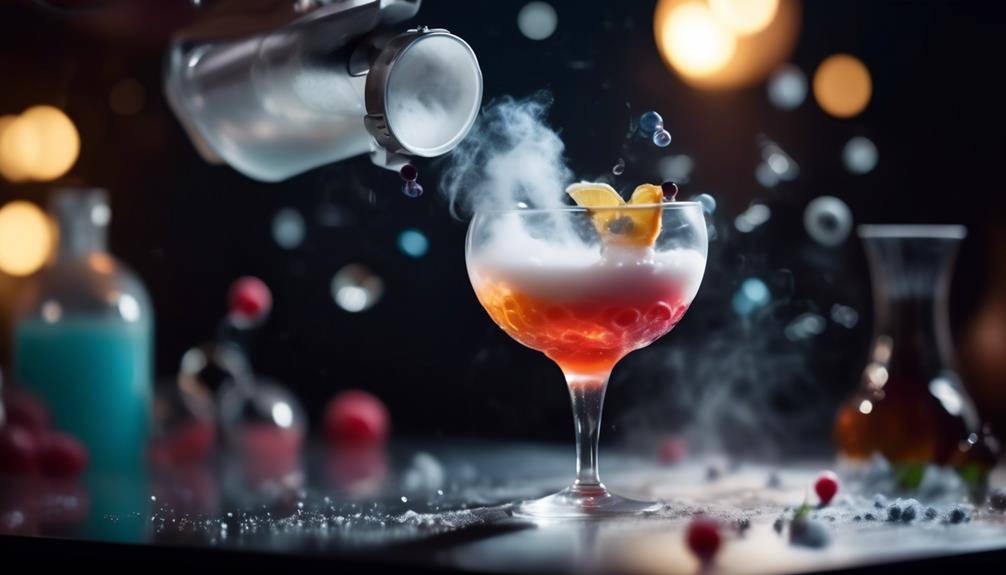
But the risks are well worth it when you witness the creative cocktail presentations that liquid nitrogen can bring to your glass. As the liquid nitrogen evaporates, it creates a cloud of vapor that envelops the drink, adding a mesmerizing touch to the overall experience. The vapor cascades and billows over the edges of the glass, creating an otherworldly effect that captivates both the eyes and the taste buds.
Not only does liquid nitrogen enhance the visual appeal of cocktails, but it also has a practical purpose. By rapidly freezing ingredients, it can create unique textures and flavors. The extreme coldness of the liquid nitrogen allows for the formation of ice crystals, resulting in a smooth and velvety texture in drinks like sorbets and slushies. It can also be used to create frozen garnishes or to infuse flavors into spirits, pushing the boundaries of traditional mixology.
Emulsifications
Get ready to elevate your cocktail game with the art of emulsifications. This technique allows you to create unique and visually stunning drinks by combining oil and water in ways you never thought possible. From creating a perfectly balanced oil-water emulsion to achieving foam stabilization, these techniques will take your cocktails to a whole new level of sophistication and flavor.
Oil-Water Emulsion
Master the art of molecular mixology by harnessing the power of oil-water emulsion, a technique that creates captivating cocktails with a mesmerizing fusion of flavors. With this innovative approach, you can elevate your cocktail game and impress your guests with unique and visually stunning creations. Here’s how to achieve the perfect oil-water emulsion:
- Choose the right oil: Opt for a neutral-flavored oil like sunflower or grapeseed oil that won’t overpower the flavors of your cocktail.
- Use a blender or a whisk: To create the emulsion, blend the oil with water or another liquid ingredient using a blender or vigorously whisk them together.
- Experiment with flavors: Once you’ve mastered the technique, get creative and infuse the oil with herbs, spices, or fruits to add an extra layer of complexity to your cocktails.
Foam Stabilization
To achieve the perfect foam stabilization in your cocktails, embrace the art of emulsifications and unleash a world of innovative and captivating flavors. Foam stability techniques are essential for creating luscious, long-lasting foam that enhances the texture and taste of your cocktail. One effective technique is using hydrocolloids like xanthan gum or gelatin, which act as stabilizers to prevent the collapse of the foam. These ingredients create a network of molecules that trap air bubbles and maintain their structure.
Another method is incorporating lecithin, a natural emulsifier found in egg yolks, which helps to stabilize the foam by forming a protective film around the air bubbles. Additionally, foam consistency control is crucial in achieving the desired texture. By adjusting the ratio of ingredients, such as adding more or less liquid, you can control the density and thickness of the foam. Experiment with different emulsifications and foam stability techniques to elevate your cocktail game and create visually stunning and delectable drinks.
Carbonation Techniques
Carbonation techniques add an effervescent touch of excitement and complexity to your cocktails, elevating the sensory experience to new heights. By incorporating these innovative methods into your mixology repertoire, you can create carbonated cocktails that burst with flavor and intrigue. Here are three carbonation techniques to enhance your cocktail game:
- Sparkling Water Carbonation: This technique involves carbonating water using a home carbonation system or a soda siphon. By infusing your cocktail base with sparkling water, you can add a refreshing fizz and enhance the overall mouthfeel of the drink. Experiment with different levels of carbonation to find the perfect balance for your cocktail.
- Dry Ice Carbonation: For a more dramatic carbonation effect, consider using dry ice. By adding small pieces of dry ice to your cocktail, you can create a captivating fog and intense carbonation. Be sure to handle dry ice with caution and allow it to fully dissolve before serving. The result is a visually stunning cocktail with an enchanting effervescence.
- Molecular Spherification: Molecular spherification is a technique that allows you to create carbonated spheres that burst with flavor when consumed. By encapsulating a carbonated liquid, such as a cocktail or flavored syrup, in a thin gelatinous membrane, you can create a unique and interactive drinking experience. These carbonated spheres can be added to cocktails as a garnish or consumed on their own for a burst of carbonation.
Dehydrated Garnishes
Get ready to elevate your cocktail game with dehydrated garnishes. Picture stunningly vibrant fruit slices, delicate edible flower petals, and zesty citrus zest powder. These dehydrated garnishes not only add visual appeal to your drink, but they also bring intense flavors and unique textures. So, grab your dehydrator and get ready to impress your guests with these innovative and delicious cocktail garnishes.
Dehydrated Fruit Slices
Enhance your cocktail presentation with a touch of elegance and flavor by incorporating dehydrated fruit slices as captivating garnishes. These dried fruit techniques and fruit infusion methods will take your cocktails to the next level:
- Dehydrated Citrus Slices: Slice your favorite citrus fruits, such as oranges or lemons, and dehydrate them until they become crispy and translucent. These vibrant slices add a burst of citrus flavor and a visually stunning element to your drink.
- Dehydrated Berry Garnish: Dehydrate fresh berries like strawberries or raspberries to intensify their natural sweetness. These fruity garnishes not only look beautiful but also infuse your cocktail with a delightful berry essence.
- Dehydrated Tropical Fruit: Experiment with exotic fruits like pineapple or mango. Dehydrate them to create unique and visually striking garnishes that transport your taste buds to a tropical paradise.
Edible Flower Petals
To elevate your cocktail presentation with a touch of elegance and a burst of floral flavor, incorporate dehydrated edible flower petals as captivating garnishes. Edible flower arrangements add a whimsical and artistic touch to your cocktails, making them visually appealing and enticing. These delicate petals not only enhance the aesthetic appeal but also infuse your spirits with their distinct floral essence.
When using edible flower petals as garnishes, it is important to choose varieties that are safe for consumption and have not been treated with chemicals. Once you have selected your flowers, carefully dehydrate the petals to preserve their vibrant colors and delicate textures. You can then sprinkle them on top of your cocktails or use them to decorate the rim of your glass for an added touch of sophistication.
For a more immersive floral experience, consider infusing your spirits with flower petals. Simply add the petals to a bottle of vodka or gin and let them steep for a few days. The resulting flower petal infused spirits will have a subtle yet distinctive floral aroma and taste, elevating your cocktails to new heights.
Incorporating dehydrated edible flower petals as garnishes in your cocktails is a creative and innovative way to add a burst of floral flavor and elevate your presentation. So why not experiment with different flower varieties and create stunning cocktails that not only taste great but also look like works of art? Cheers to floral-infused libations!
Citrus Zest Powder
Continue your journey of molecular mixology by exploring the vibrant world of Citrus Zest Powder, a dehydrated garnish that adds a burst of citrusy flavor and a captivating touch to your cocktails. Citrus zest extraction and preservation are essential steps in creating this unique ingredient. Here’s how you can make your own Citrus Zest Powder at home:
- Extracting the zest: Start by carefully removing the colorful outer layer of citrus fruits such as lemons, oranges, or limes. Use a microplane or zester to grate the zest, being careful not to include the bitter white pith.
- Drying the zest: Spread the grated zest on a baking sheet and place it in a low-temperature oven or food dehydrator. Allow it to dry completely until it becomes brittle.
- Grinding into powder: Once the zest is dry, use a spice grinder or mortar and pestle to grind it into a fine powder. Store it in an airtight container to preserve its vibrant flavor.
Now, you have a versatile and intensely flavored Citrus Zest Powder to elevate your cocktails and amaze your guests. Enjoy experimenting with different citrus fruits to create unique flavor combinations. Cheers!
Molecular Spherification
For a captivating twist on your cocktails, delve into the world of molecular gastronomy with the mesmerizing technique of molecular spherification. This innovative method allows you to transform liquids into delicate spheres that burst with flavor when consumed. The applications of molecular spherification in cocktails are endless, from creating caviar-like pearls to adding a burst of flavor to your favorite libations.
To achieve molecular spherification, you will need two key ingredients: sodium alginate and calcium chloride. Sodium alginate is used to create the liquid mixture that will form the spheres, while calcium chloride is used to set the spheres and give them their characteristic texture. By combining these two ingredients in precise amounts, you can create beautiful and delicious spheres that will elevate your cocktail experience.
However, like any molecular gastronomy technique, molecular spherification can have its challenges. Troubleshooting techniques can help you overcome common issues such as spheres breaking apart or not forming properly. To prevent spheres from breaking, make sure to gently stir the liquid mixture while adding it to the calcium chloride bath. Additionally, it is important to use the correct ratios of sodium alginate and calcium chloride to ensure proper setting of the spheres.
Molecular spherification opens up a world of possibilities for creative cocktail presentations. Imagine impressing your guests with a gin and tonic topped with tiny gin spheres or a margarita with tequila caviar. The technique allows you to experiment with different flavors and textures, turning your cocktail into a truly memorable experience.
Molecular Mixology Tools and Equipment
Equip yourself with the essential tools and equipment of molecular mixology to unlock a world of innovative cocktail creations. With the right gear at your fingertips, you can take your mixology skills to new heights and create drinks that are not only delicious but also visually stunning. Here are three must-have items that will elevate your molecular mixology techniques and help you achieve truly innovative cocktail presentations:
- Molecular Mixology Kit: This comprehensive kit includes everything you need to get started on your molecular mixology journey. It typically includes tools like pipettes, syringes, and measuring spoons, as well as ingredients like agar agar and sodium alginate. With these ingredients and tools, you can experiment with techniques like spherification, foam creation, and gelification to add unique textures and flavors to your cocktails.
- Whipping Siphon: A whipping siphon, also known as a cream whipper, is an essential tool for creating foams and infusions. It allows you to carbonate liquids, create airy foams, and infuse flavors into spirits. By using this tool, you can add a touch of molecular magic to your cocktails, creating impressive presentations that will wow your guests.
- Smoking Gun: The smoking gun is a tool that allows you to add a smoky aroma to your cocktails. By using wood chips or herbs, you can infuse your drinks with a rich, smoky flavor that enhances the overall drinking experience. This tool is perfect for creating show-stopping cocktails that not only taste amazing but also captivate the senses.
Frequently Asked Questions: Molecular Gastronomy Techniques for Cocktails
Can These Molecular Gastronomy Techniques Be Used to Create Non-Alcoholic Cocktails or Mocktails?
Yes, you can use these molecular gastronomy techniques to create non-alcoholic cocktails or mocktails. They offer a world of possibilities for non-alcoholic alternatives and allow for creative presentation techniques that will impress your guests.
Are There Any Safety Precautions or Guidelines to Follow When Using Liquid Nitrogen in Cocktails?
When handling liquid nitrogen in cocktails, it’s crucial to follow safety precautions and guidelines. Always wear protective gloves and eye goggles, and never touch the liquid nitrogen directly. Proper ventilation and storage are also essential to ensure a safe environment.
Can These Techniques Be Easily Replicated at Home, or Are They Better Suited for Professional Bartenders?
You’ll be pleased to know that these techniques can be easily replicated at home. While they may seem better suited for professional bartenders, with a little practice, you can become a molecular mixologist in no time!
What Are Some Common Challenges or Mistakes to Avoid When Using Molecular Gastronomy Techniques in Cocktails?
When using molecular gastronomy techniques in cocktails, common pitfalls to avoid include improper measurements, not following instructions precisely, and using expired ingredients. To troubleshoot, double-check your measurements, read the instructions carefully, and use fresh ingredients.
Are There Any Specific Ingredients or Flavors That Work Particularly Well With These Techniques, or Can They Be Used With Any Type of Cocktail?
You can use specific cocktail ingredients and create unique flavor combinations with these techniques. The possibilities are endless, and you can experiment with any type of cocktail to elevate its taste and presentation.

Conclusion
Innovative molecular gastronomy techniques have revolutionized the world of cocktails, bringing creativity and precision to the art of mixology. From foams and gels to spheres and smokes, these techniques offer endless possibilities for crafting visually stunning and uniquely flavorful drinks. With the help of molecular mixology tools and equipment, bartenders can now create delectable concoctions that push the boundaries of traditional cocktail making. Explore the world of molecular mixology and elevate your cocktail game to new heights. Cheers to innovation!
If you enjoyed exploring this topic and want to dive even deeper, be sure to check out some of our other articles here on Infinite Flavors. From rich culinary histories to creative twists on classic recipes, there’s always something new to discover. Whether you’re curious about the origins of a dish, looking for fresh inspiration in the kitchen, or simply love learning about food culture, our collection of posts is the perfect next step on your flavor journey.
Exciting Molecular Gastronomy In Sustainable Cooking
The Great Impact Of Molecular Gastronomy On Nutrition
Exciting Future Of Molecular Gastronomy Trends