Roasting Whole Fish In Oven That Taste Amazing
Roasting Whole Fish In Oven That Taste; Roasting whole fish in the oven is a simple way to enhance flavors while creating an impressive dish. Start by choosing fresh fish with clear eyes and shiny skin, like salmon or sea bass. Clean and gut the fish, then pat it dry. Score the skin and season it inside and out with salt, pepper, and your favorite herbs. Preheat your oven to 400°F (200°C) and roast the fish for 20-30 minutes until it flakes easily. Consider adding vegetables for extra flavor. You’ll discover tips on perfecting this dish and making it a memorable meal.
Choosing the Right Fish
When it comes to choosing the right fish for roasting, freshness is key. You want to select fish that not only tastes great but also holds up well during the cooking process. Look for popular fish varieties like salmon, sea bass, or snapper. These options not only deliver rich flavors but also have firm textures that roast beautifully.
When you’re shopping, pay attention to the eyes and skin. Fresh fish should have clear, bright eyes and shiny, vibrant skin. If you can, buy from local markets or fisheries that practice sustainability. Supporting these places guarantees you’re getting fish caught responsibly and helps protect fish populations for the future.
Consider opting for wild-caught fish over farmed varieties when possible. Wild-caught fish typically have a more robust flavor and are often raised in more natural environments, which contributes to their overall quality. You’ll also want to check for certifications or labels that indicate adherence to sustainability practices, such as the Marine Stewardship Council (MSC) label.
Don’t shy away from asking your fishmonger for recommendations! They can guide you towards the freshest options and may even share tips on which fish varieties are currently in season. This not only enhances your roasting experience but also supports sustainable fishing practices. So, take a moment to choose wisely; your taste buds—and the planet—will thank you.
Preparing the Fish
Before you start roasting, it’s essential to prepare the fish properly to guarantee the best flavor and texture. Begin by making sure your fish is fresh; it’s key to a delicious outcome. Look for clear eyes, shiny skin, and a mild ocean scent. Once you’ve chosen your fish, it’s time to clean it.
Use effective cleaning techniques to remove any scales. Hold the fish firmly by the tail and run the back of a knife against the grain of the scales, starting from the tail and moving towards the head. Be certain to do this over a sink or a board to catch the scales. Once you’ve removed the scales, rinse the fish under cold water to wash away any lingering debris.
Next, you’ll want to gut the fish if it hasn’t been done already. Use a sharp knife to make an incision along the belly, from the tail to the head. Carefully remove the insides, being cautious not to puncture any organs. Rinse the cavity thoroughly under cold water to make sure all remnants are gone.
Seasoning Techniques
To bring out the best in your roasted fish, mastering seasoning techniques is essential. Start by considering herb blends that complement the natural flavors of the fish. Fresh herbs like dill, parsley, or thyme can elevate your dish considerably. You might also want to explore different spice combinations. A mix of paprika, cumin, and coriander can add a warm, earthy depth to your fish.
Citrus infusions are another fantastic way to brighten the flavor profile. Squeeze some lemon or orange juice over the fish, or stuff the cavity with citrus slices. This not only enhances the taste but also imparts a lovely aroma while roasting. Don’t overlook marinade options, either. A simple marinade made from olive oil, garlic, and vinegar can infuse your fish with flavor.
When seasoning, think about the regional variations that inspire different cuisines. For instance, a Mediterranean approach might include olives and capers, while a Thai-inspired fish could feature lemongrass and ginger. Experimenting with these regional influences can broaden your culinary horizons and help you discover new favorite combinations.
Ultimately, the key to perfect seasoning lies in balancing flavors. Take the time to taste and adjust your mixtures, ensuring they complement rather than overpower the fish. With the right seasoning techniques, you can create a roasted fish dish that’s not only delicious but also a true reflection of your personal taste.
Oven Roasting Steps
Preparing to roast a whole fish in the oven is straightforward, provided you follow a few key steps. First, preheat your oven to 400°F (200°C). This temperature allows for even cooking while guaranteeing a crispy skin. Next, choose your whole fish; options like snapper or trout work well. After cleaning and drying the fish, you’ll want to season it inside and out with salt, pepper, and your favorite herbs, such as dill or parsley. Don’t forget to add slices of lemon or garlic for an extra layer of flavor.
Once seasoned, you can prepare your baking dish. Line it with parchment paper or foil for easy cleanup. If you prefer, you can also add some vegetables like asparagus or potatoes to the dish. These not only enhance the meal but also absorb the delicious flavors from the fish during baking. Place the fish on the prepared dish, and drizzle it with olive oil to help with browning and flavor.
Now, it’s time to roast! Place the dish in the oven and let it cook for about 20-30 minutes, depending on the size of the fish. You’ll know it’s done when the flesh flakes easily with a fork. Utilize a meat thermometer if you’re unsure; the internal temperature should reach 145°F (63°C). Following these cooking methods guarantees your fish will be moist and flavorful, perfectly showcasing the chosen flavor pairings. Enjoy the process!
Serving Suggestions
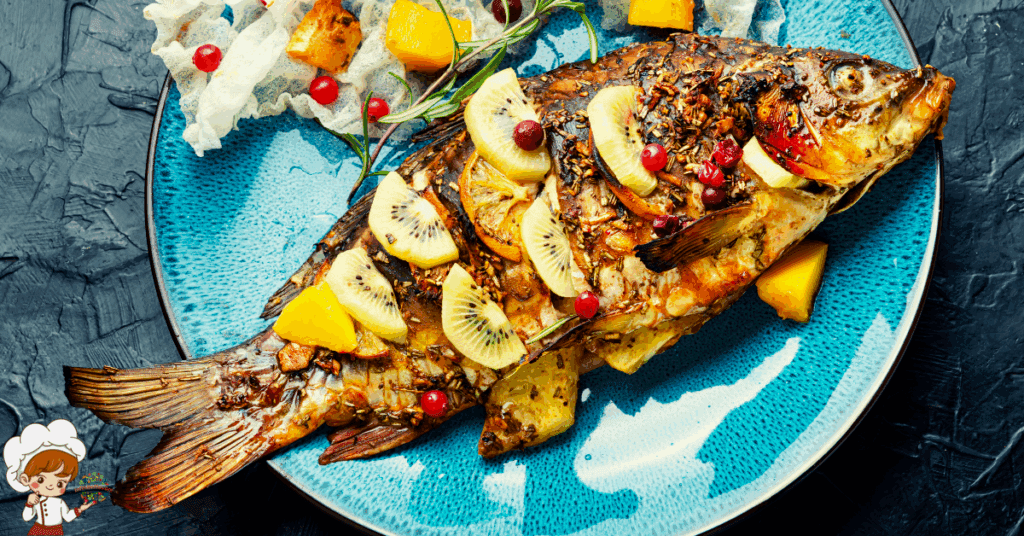
When it comes to serving your roasted whole fish, presentation is key. Start by placing the fish on a large, elegant platter. Arrange fresh herbs, lemon wedges, or seasonal vegetables around it for a pop of color. You can even sprinkle some sea salt for that finishing touch. This simple yet effective presentation will draw your guests’ eyes right to the dish.
Now, let’s talk sauce pairings. A drizzle of a citrus-based sauce, like a lemon-butter or a tangy chimichurri, elevates the flavors beautifully. If you prefer something richer, a garlic and herb sauce can add depth. Make sure to serve the sauce on the side, allowing everyone to customize their experience.
For side dishes, consider light and invigorating options. A crisp salad with mixed greens, cherry tomatoes, and a vinaigrette complements the fish perfectly. Roasted seasonal vegetables or a simple rice pilaf also work well, adding heartiness without overwhelming the main dish.
Don’t forget about wine recommendations! A chilled white wine, like a Sauvignon Blanc or a light Pinot Grigio, pairs wonderfully with roasted fish. If you’re feeling adventurous, a light-bodied red, such as a Pinot Noir, can also enhance the meal.
With these presentation ideas, sauce pairings, side dishes, and wine recommendations, your roasted whole fish will not only taste amazing but look stunning on the table.
Tips for Perfect Results
How can you guarantee your roasted whole fish turns out flawlessly every time? Start by choosing the right cooking methods. Roasting is one of the best techniques for whole fish, as it allows for even cooking and enhances the natural flavors. Preheat your oven to 400°F (200°C) for ideal results.
Next, verify your fish is fresh. Look for clear eyes and bright red gills. When you’ve selected your fish, don’t forget to season it generously. Salt is a must, but you can also use herbs and spices that complement your fish type. Think about flavor pairings; lemon, garlic, and fresh herbs like parsley or dill work beautifully with most fish.
Another key tip is to stuff the cavity of the fish with aromatics. This not only infuses flavor but also helps keep the fish moist during cooking. Consider adding sliced citrus, such as lemons or limes, along with herbs to enhance the taste.
When it comes to cooking, use a roasting pan or baking sheet lined with parchment paper to prevent sticking. Check for doneness by inserting a fork into the thickest part of the fish; it should flake easily and be opaque. If you want a crispy skin, broil the fish for the last few minutes of cooking.
Frequently Asked Questions: Roasting Whole Fish In Oven That Taste
Can I Roast Frozen Fish Instead of Fresh?
You can definitely roast frozen fish instead of fresh. Just adjust your cooking techniques, allowing extra time for even cooking. Thawing first can help, but it’s not necessary for a delicious meal. Enjoy your cooking!
What Type of Oven Is Best for Roasting Fish?
When roasting fish, convection ovens are best due to even heat distribution. Aim for cooking temperatures around 375°F to 425°F. This guarantees your fish cooks evenly and retains moisture for a delicious result.
How Do I Know When the Fish Is Fully Cooked?
You’ll know the fish is fully cooked when it reaches an internal cooking temperature of 145°F. Check for fish flakiness; it should easily separate with a fork, indicating it’s done and ready to enjoy.
Can I Use Herbs From My Garden for Seasoning?
Absolutely, you can use fresh herbs from your garden for seasoning! Herb combinations like basil and thyme enhance flavor while providing health benefits, making your dishes more aromatic and delicious. Enjoy the freshness in every bite!
What Side Dishes Pair Well With Roasted Fish?
When you’re thinking about side dishes, Mediterranean salad and garlic mashed potatoes are perfect companions. The fresh flavors of the salad balance the fish, while the creamy mashed potatoes add a comforting touch to your meal.

Conclusion
Roasting a whole fish in the oven is a simple yet impressive way to elevate your dining experience. By choosing the right fish and mastering the preparation and seasoning techniques, you’ll create a flavorful dish that’s sure to impress. Remember to follow the roasting steps carefully and don’t forget those serving suggestions to enhance your meal. With these tips, you’ll achieve perfect results every time, making your next dinner a standout occasion. Enjoy your delicious creation!
If you enjoyed exploring this topic and want to dive even deeper, be sure to check out some of our other articles here on Infinite Flavors. From rich culinary histories to creative twists on classic recipes, there’s always something new to discover. Whether you’re curious about the origins of a dish, looking for fresh inspiration in the kitchen, or simply love learning about food culture, our collection of posts is the perfect next step on your flavor journey.
Great Reasons For Using Roasting Pan With Rack
Great Seasoning Ideas For Roasting Vegetables