Simple Guide To Understanding Korean Cuisine
Simple Guide To Understanding Korean Cuisine; Are you tired of ordering the same old takeout and craving something new and exciting for your taste buds? Look no further than Korean cuisine. Bursting with bold flavors, unique ingredients, and centuries-old traditions, Korean food offers a delightful culinary adventure waiting to be explored. From the history and techniques behind Korean cooking to the regional variations and tips for pairing it with the perfect beverage, this simple guide will unlock the secrets of Korean cuisine and leave you craving for more. So, get ready to embark on a journey of flavors and discover the wonders of Korean gastronomy.
A Brief History of Korean Cuisine
Korean cuisine has a rich and fascinating history that dates back thousands of years, making it one of the oldest and most diverse culinary traditions in the world. The development of Korean cuisine can be attributed to a variety of factors, including agricultural and cultural influences.
Agricultural influences have played a significant role in shaping the cuisine of Korea. The country’s geographical location and climate have allowed for the cultivation of a wide range of ingredients, which have become the foundation of Korean dishes. Rice, for example, has been a staple in Korean cuisine for centuries and is often served with various side dishes. Other agricultural products such as vegetables, fruits, and seafood are also commonly used in Korean cooking.
Cultural influences have also contributed to the evolution of Korean cuisine. Throughout its history, Korea has been influenced by neighboring countries such as China and Japan, as well as by trade routes and international relations. These cultural exchanges have brought new flavors, cooking techniques, and ingredients to Korea, resulting in the fusion of different culinary traditions. For instance, the introduction of chili peppers from the New World in the 16th century revolutionized Korean cuisine, leading to the creation of iconic dishes such as kimchi.
The Five Basic Flavors in Korean Cooking
Get ready to explore the rich flavor profiles that make Korean cuisine so unique. From savory and spicy to sweet and tangy, Korean dishes are known for their complexity and balance of tastes. Traditional Korean seasonings like soy sauce, gochujang, and sesame oil play a crucial role in creating these distinct flavors. Discover how Korean chefs artfully balance the five basic flavors to create delicious and satisfying dishes.
Flavor Profiles in Korean Cuisine
When exploring the rich flavor profiles of Korean cuisine, one cannot help but be captivated by the harmonious interplay of the five basic flavors that define this culinary tradition. These flavor profiles, influenced by centuries of cultural influences, create a truly unique and unforgettable dining experience.
- Salty: The use of soy sauce and fermented bean paste adds a savory and salty taste to Korean dishes, enhancing the overall flavor combinations.
- Sweet: Korean cuisine incorporates natural sweeteners like honey and fruits to balance out the flavors and add a touch of sweetness.
- Spicy: The liberal use of chili peppers and gochujang, a spicy red pepper paste, gives Korean dishes a fiery kick that will awaken your taste buds.
- Sour: Tangy ingredients like vinegar and fermented vegetables, such as kimchi, provide a refreshing and acidic element to Korean dishes.
These five basic flavors come together in perfect harmony, creating a tapestry of tastes that is both satisfying and delightful, making Korean cuisine a true culinary masterpiece.
Traditional Korean Seasonings
As we continue our exploration of Korean cuisine, let us now delve into the realm of traditional Korean seasonings, where the five basic flavors that define this culinary tradition come to life in a symphony of taste sensations. Traditional Korean marinades play a crucial role in adding depth and complexity to dishes. One such marinade is ganjang, a fermented soy sauce that brings a rich umami flavor to meats and vegetables.
Gochujang, a unique Korean spice, is a chili paste that adds a spicy kick along with a touch of sweetness. Doenjang, another fermented soybean paste, provides a savory and earthy taste. Sesame oil, with its nutty aroma, is a popular ingredient used for seasoning and adds a distinct flavor to Korean cuisine. Finally, garlic and ginger are essential seasonings that enhance the overall taste profile. These traditional Korean seasonings infuse dishes with a harmonious blend of flavors, making Korean cuisine truly one-of-a-kind.
Balancing Taste in Korean Dishes
To create harmonious and flavorful Korean dishes, a delicate balancing act is performed, incorporating the five basic flavors that are inherent in Korean cooking. Balancing flavors is an essential aspect of Korean cuisine, ensuring that no single taste overwhelms the palate. Traditional cooking techniques are employed to achieve this balance, allowing the ingredients to shine while complementing each other. Here are four key elements in achieving this harmony:
- Salty: Saltiness enhances the natural flavors of ingredients and adds depth to the dish.
- Sweet: Adding a touch of sweetness brings balance and rounds out the overall taste.
- Sour: Sourness adds brightness and tang, cutting through richness and adding complexity.
- Spicy: Korean cuisine is known for its fiery kick, which adds heat and excitement to the flavors.
Essential Ingredients in Korean Cuisine
Korean cuisine showcases a rich tapestry of flavors, textures, and aromas, thanks to its essential ingredients that form the foundation of each dish. These ingredients are carefully selected to create a harmonious balance of taste and are used in popular cooking techniques that have been passed down through generations.
One of the essential ingredients in Korean cuisine is gochujang, a fermented chili paste that adds a deep, complex flavor to many dishes. It is made from red chili peppers, glutinous rice, fermented soybeans, and salt. Gochujang is used in marinades, sauces, and stews, giving them a robust and spicy kick.
Another key ingredient is doenjang, a fermented soybean paste. It is similar to miso but with a stronger, more pungent flavor. Doenjang is used as a base for soups and stews, providing a rich umami taste. It is often combined with other ingredients such as vegetables, tofu, and meat to create hearty and flavorful dishes.
Sesame oil is another essential ingredient in Korean cuisine. It is made from toasted sesame seeds and adds a nutty aroma and flavor to dishes. Sesame oil is used to season stir-fried vegetables, noodles, and rice, enhancing their taste and giving them a glossy finish.
Soy sauce, made from fermented soybeans, is a staple ingredient in Korean cooking. It adds a savory and salty flavor to dishes and is used as a seasoning or marinade for meat and vegetables. Soy sauce is also used in dipping sauces and condiments.
These essential ingredients, along with popular cooking techniques like grilling, stir-frying, and braising, contribute to the unique and delicious flavors found in Korean cuisine. They are the building blocks that create the diverse range of dishes that make Korean food so beloved around the world.
Traditional Korean Cooking Techniques
Get ready to explore the fascinating world of traditional Korean cooking techniques. From the art of fermentation, which is the key flavor builder in many Korean dishes, to the tantalizing charred and smoky flavors achieved through grilling, and the delicate and healthy results of steaming, Korean cuisine offers a diverse range of cooking methods that are sure to delight your taste buds. So, let’s dive into the intricacies of these techniques and discover the secrets behind the rich and flavorful dishes of Korea.
Fermentation: Key Flavor Builder
Fermentation, a traditional Korean cooking technique, plays a crucial role in building the distinct flavors that define Korean cuisine. By harnessing the power of beneficial bacteria, fermentation techniques transform ordinary ingredients into extraordinary dishes. Here are four reasons why fermentation is so important in Korean cuisine:
- Enhanced Flavor: Through fermentation, ingredients develop complex and rich flavors, adding depth and uniqueness to Korean dishes.
- Health Benefits: Fermented foods are known for their probiotic properties, promoting a healthy gut and boosting the immune system.
- Preservation: Fermentation acts as a natural preservative, allowing Koreans to enjoy seasonal ingredients throughout the year.
- Cultural Heritage: Fermentation techniques have been passed down through generations, preserving the culinary traditions and cultural identity of Korea.
Grilling: Charred and Smoky
After exploring the key role of fermentation in building the distinct flavors of Korean cuisine, it is now time to delve into another traditional cooking technique that brings a charred and smoky element to dishes – grilling. Grilling is a popular method in Korean cuisine that adds depth and complexity to a wide range of ingredients. Korean grilling techniques involve cooking meat, seafood, vegetables, and even tofu over an open flame or on a hot grill. The heat creates a delicious charred exterior while maintaining the juiciness and tenderness of the food.
To enhance the flavors further, marinade recipes are often used before grilling. These marinades typically consist of soy sauce, garlic, ginger, sesame oil, and other aromatic ingredients that infuse the food with a rich and savory taste. Whether it’s samgyeopsal (grilled pork belly), bulgogi (marinated beef), or gogigui (Korean barbecue), grilling is a fundamental cooking technique that brings a smoky and delicious touch to Korean cuisine.
Steaming: Healthy and Delicate
Steaming, a traditional Korean cooking technique, is known for its health benefits and delicate flavors. Here are four reasons why you should embrace steaming in your culinary endeavors:
- Retains Nutritional Value: Steaming preserves the natural vitamins and minerals in food, ensuring that your meals are packed with nutrition.
- Low in Calories and Fat: Steamed dishes require little to no oil, making them a healthier alternative to fried or sautéed options.
- Enhances Natural Flavors: Steaming allows the ingredients to shine, bringing out their inherent tastes and aromas without overpowering them.
- Versatile Steaming Techniques: In Korean cuisine, there are different types of steaming techniques, such as jjim, which involves slow-cooking ingredients in a flavorful broth, and jeon, where ingredients are lightly coated in a batter and steamed to perfection.
Popular Korean Side Dishes
Korean cuisine offers a wide array of popular side dishes that complement the main course with their vibrant flavors and unique textures. These side dishes, known as “banchan,” are an essential part of any Korean meal. They are served in small portions and are meant to be shared among the diners. Korean side dish recipes vary greatly, but there are a few that are commonly found on the table.
One of the most popular Korean side dishes is kimchi. Made from fermented vegetables, usually cabbage or radishes, kimchi is a spicy and tangy dish that is packed with flavor. It is not only delicious but also has several health benefits. The fermentation process of kimchi increases its probiotic content, which promotes a healthy digestive system. It is also a good source of vitamins A and C, as well as antioxidants.
Another popular side dish is japchae, which is a stir-fried noodle dish made with sweet potato noodles, vegetables, and meat. Japchae is a versatile dish that can be served hot or cold and is loved for its chewy noodles and savory taste. It is a great source of carbohydrates, fiber, and protein, making it a satisfying and nutritious side dish.
Other common side dishes include namul, which are seasoned and sautéed vegetables, and jeon, which are savory pancakes made with various ingredients such as seafood, vegetables, or meat. These side dishes add a variety of flavors and textures to the meal, making every bite a delightful experience.
Exploring Korean Street Food
As you navigate the bustling streets of Korea, your senses are immediately captivated by the tantalizing aromas and vibrant colors of the diverse array of street food on offer. Korean street food is renowned for its popularity and unique flavors, making it a must-try experience for any food lover. Here are four popular snacks you should definitely sample:
- Tteokbokki: This spicy rice cake dish is a staple of Korean street food culture. The chewy rice cakes are smothered in a fiery red chili sauce, creating a harmonious balance of flavors that will leave your taste buds tingling.
- Hotteok: A beloved winter treat, hotteok is a sweet pancake filled with a gooey mixture of brown sugar, cinnamon, and crushed nuts. As you take a bite, the warm syrup oozes out, creating a comforting and indulgent experience.
- Odeng: These fish cake skewers are a popular snack during the colder months. The fish cakes are boiled in a flavorful broth and served on skewers, making them a warm and satisfying option. The rich umami flavor of the fish cake pairs perfectly with the savory broth.
- Bungeoppang: Shaped like a fish, bungeoppang is a crispy pastry filled with sweet red bean paste. The combination of the golden, crunchy exterior and the smooth, sweet filling creates a delightful contrast of textures and flavors.
Korean street food offers a sensory journey like no other, with its vibrant colors, intoxicating aromas, and unique flavors. Whether you’re exploring the bustling markets or strolling through the lively streets, be sure to indulge in these popular snacks to truly immerse yourself in the culinary delights of Korea.
Famous Korean Soups and Stews
Get ready to explore the delicious world of famous Korean soups and stews. From hearty and comforting dishes to light and refreshing options, Korean cuisine offers a wide variety of soups and stews that will tantalize your taste buds. Dive into popular Korean soups like Samgyetang, Galbitang, and Doenjang jjigae, and discover the traditional stews like Kimchi jjigae and Sundubu jjigae. Don’t forget to explore the regional specialty soups like Jeongol and Gomtang that showcase the unique flavors of different regions in Korea.
Popular Korean Soups
When exploring the rich tapestry of Korean cuisine, one cannot overlook the allure of its famous soups and stews. These comforting dishes vary in flavors and ingredients across different regions, showcasing the diverse culinary traditions of Korea. Here are four popular Korean soups that will undoubtedly tantalize your taste buds:
- Samgyetang: A nourishing chicken soup made with a whole young chicken stuffed with glutinous rice, ginseng, and other medicinal herbs. It is cherished for its health benefits and is often consumed during the hot summer months.
- Kimchi-jjigae: A spicy and tangy stew made with the iconic Korean side dish, kimchi. This hearty soup is filled with pork, tofu, and vegetables, delivering a fiery kick that warms the soul.
- Doenjang-jjigae: A savory and rich soybean paste stew made with fermented soybean paste, vegetables, and often, tofu. Its complex umami flavors make it a staple in Korean homes.
- Galbitang: A clear beef short rib soup simmered for hours, resulting in tender meat and a flavorful broth. It is typically enjoyed with rice and various side dishes.
These regional variations and cooking techniques contribute to the incredible diversity of Korean soups. Each spoonful offers a unique taste of Korea’s culinary heritage.
Traditional Stews
Now, let’s delve into the realm of traditional stews, where the flavors and aromas of famous Korean soups and stews continue to captivate food enthusiasts worldwide. Korean stew recipes often feature a rich and hearty combination of ingredients that create a harmonious blend of flavors. One popular traditional stew is the Doenjang Jjigae, made with fermented soybean paste, tofu, and various vegetables.
Another well-known stew is the Kimchi Jjigae, which combines the pungent and tangy flavors of kimchi with pork and tofu. Traditional stews often incorporate ingredients like gochujang (red chili paste), doenjang (soybean paste), meat or seafood, vegetables, and various seasonings. These stews are not only delicious but also a great way to warm up during the colder months.
Regional Specialty Soups
Regional specialty soups in Korean cuisine showcase the diverse flavors and culinary traditions of different regions throughout the country. These soups are made using traditional soup ingredients that are unique to each region, resulting in a wide variety of flavors and textures. Here are four regional soup varieties that are famous in Korea:
- Seolleongtang: A milky-white soup made from ox bones and brisket, simmered for hours until the meat becomes tender and the broth rich and flavorful.
- Samgyetang: A nourishing soup made with a whole chicken stuffed with glutinous rice, ginseng, garlic, and jujube. It is believed to boost stamina and promote good health.
- Chueotang: A hearty soup made with freshwater mudfish, vegetables, and spices. It has a delicate and savory taste that is perfect for cold winters.
- Maeuntang: A spicy fish soup made with various types of fish, vegetables, and red pepper paste. It is known for its fiery flavor and is often enjoyed with rice.
These regional specialty soups are not only delicious but also offer a glimpse into the culinary diversity of Korea.
The Art of Making Kimchi
To truly understand the art of making kimchi, one must delve into the intricate process that transforms humble vegetables into a vibrant and flavorful Korean staple. Kimchi is more than just a side dish; it is a cultural icon that has been passed down through generations. At its core, kimchi is made by fermenting vegetables with a unique combination of spices, creating a complex mixture of flavors that is both tangy and spicy.
The science behind fermentation is what gives kimchi its distinct taste and health benefits. During the fermentation process, the naturally occurring bacteria on the vegetables break down the sugars and produce lactic acid. This creates an acidic environment that not only preserves the vegetables but also enhances their flavor. The lactic acid bacteria, commonly known as probiotics, are beneficial to gut health and digestion. They also contribute to the immune-boosting properties of kimchi.
Speaking of health benefits, kimchi is a nutritional powerhouse. Packed with vitamins A, B, and C, as well as minerals like calcium and iron, it is a low-calorie food that is rich in fiber. Kimchi also contains antioxidants that help fight inflammation and reduce the risk of chronic diseases. Its spicy nature is attributed to the presence of capsaicin, which has been shown to have metabolism-boosting properties.
The art of making kimchi lies in finding the perfect balance of flavors and textures. From selecting the freshest vegetables to meticulously layering them with the right amount of seasonings, every step is crucial. Kimchi-making is a labor of love, requiring patience and attention to detail. So the next time you enjoy a plate of kimchi, remember the science and tradition that went into creating this beloved Korean dish.
Unraveling the Mystery of Bibimbap
After exploring the art of making kimchi, it’s time to unravel the mystery of bibimbap, a popular Korean dish that captivates with its vibrant colors and harmonious blend of flavors.
Bibimbap, which literally means “mixed rice,” is a dish that consists of various ingredients served over a bowl of steamed rice. Here are some key ingredients and preparation techniques that make bibimbap a unique culinary experience:
- Colorful Vegetables: Bibimbap is known for its colorful array of vegetables, such as carrots, spinach, bean sprouts, and mushrooms. These vegetables are often blanched or stir-fried to preserve their natural flavors and textures.
- Protein Options: Bibimbap offers a variety of protein choices, including beef, chicken, pork, or tofu. The protein is typically marinated in a savory sauce before being cooked, adding depth and richness to the dish.
- Gochujang Sauce: Gochujang, a spicy fermented chili paste, is an essential component of bibimbap. It adds a kick of heat and a tangy, umami flavor to the dish. The sauce is drizzled over the rice and mixed with the other ingredients just before eating.
- The Perfect Mix: The beauty of bibimbap lies in its presentation and the act of mixing all the ingredients together. The blending of flavors and textures creates a harmonious balance that is both satisfying and comforting.
In addition to its delightful taste, bibimbap also offers several health benefits. The dish is packed with nutrients from the variety of vegetables and proteins it contains. It is also low in fat and can be made with whole-grain rice for added fiber. The combination of ingredients makes bibimbap a well-rounded and nutritious meal option.
Classic Korean Barbecue Dishes
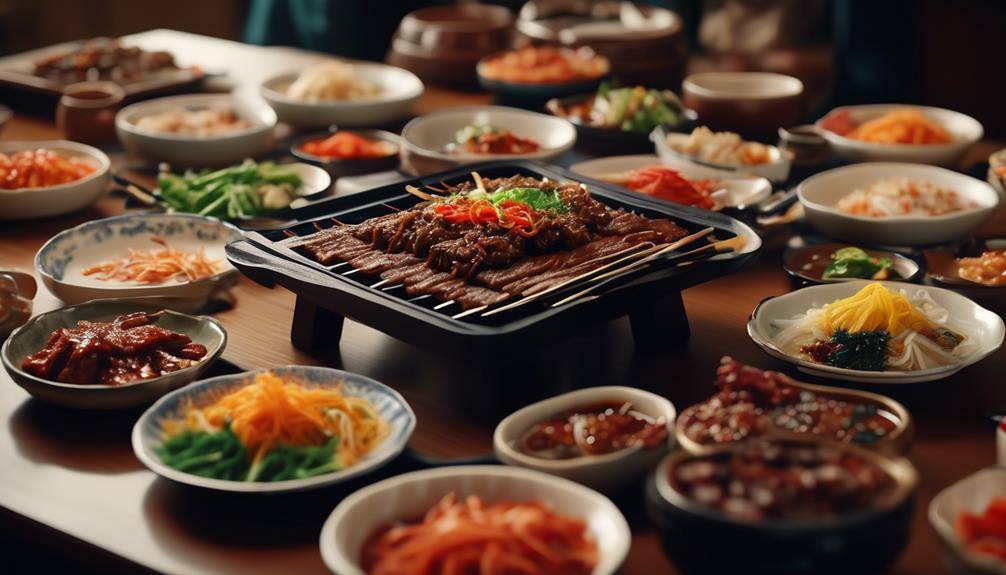
When it comes to classic Korean barbecue dishes, you will be delighted by the wide range of meat selection options available. From succulent beef bulgogi to flavorful pork belly, there is something to satisfy every palate. The grilling techniques used in Korean barbecue, such as grilling the meat at the table, add an interactive and social element to the dining experience. Additionally, the accompanying side dishes, like kimchi and pickled vegetables, provide a perfect balance of flavors and textures to complement the grilled meats.
Meat Selection Options
For an authentic and delicious experience of Classic Korean Barbecue, explore the diverse range of meat selection options available to enhance your dining pleasure. Korean cuisine offers a variety of meat preparation techniques that result in mouthwatering dishes. Here are four popular Korean meat dishes to consider:
- Galbi: These succulent beef short ribs are marinated in a combination of soy sauce, garlic, and sugar, then grilled to perfection. The result is tender, juicy meat with a sweet and savory flavor.
- Samgyeopsal: This dish features thick slices of pork belly that are grilled and enjoyed with various side dishes. The fatty, crispy meat pairs well with fresh lettuce wraps and spicy dipping sauces.
- Dakgalbi: Spicy chicken stir-fry that is cooked with vegetables and gochujang (Korean chili paste). The tender chicken is infused with the rich flavors of the sauce, creating a satisfying and fiery dish.
- Bulgogi: Thinly sliced beef marinated in a sweet and savory sauce made with soy sauce, sesame oil, garlic, and pear. The meat is grilled to perfection, resulting in a tender and flavorful experience.
With these meat selection options, you can indulge in the delightful flavors of Classic Korean Barbecue and savor the unique taste of Korean cuisine.
Grilling Techniques
To fully appreciate the mouthwatering flavors of Classic Korean Barbecue, it is essential to understand the various grilling techniques used to prepare these iconic dishes. Korean cuisine takes grilling to a whole new level, offering a range of techniques that enhance the taste and texture of the meats. One popular grilling technique is Bulgogi, where thinly sliced beef is marinated in a mixture of soy sauce, sugar, and spices before being grilled to perfection.
Another technique is Galbi, which involves marinating beef short ribs in a savory soy-based sauce and grilling them over an open flame. These grilling techniques not only infuse the meat with incredible flavor but also create a charred and smoky crust that adds depth to the dish. Korean cuisine also utilizes alternative cooking methods like frying and boiling, but grilling remains the highlight, showcasing the skill and expertise of Korean chefs.
Accompanying Side Dishes
One of the essential components of Classic Korean Barbecue is the array of accompanying side dishes that complement the grilled meats perfectly. These side dishes are an integral part of the dining experience and offer a variety of flavors and textures. Here are four reasons why Korean side dishes are a must-have:
- Traditional vs. Modern: Korean side dishes can range from traditional favorites like kimchi, pickled radish, and sesame spinach to more modern creations like corn cheese and Korean-style coleslaw. This blend of old and new adds depth and excitement to the meal.
- Nutritional Value: Korean side dishes are not just delicious, but also packed with nutrients. They often include vegetables, fermented foods, and seafood, providing a balanced and healthy accompaniment to the grilled meats.
- Balance and Harmony: The side dishes are carefully chosen to complement the flavors of the grilled meats. They provide a balance of sweet, salty, spicy, and tangy tastes, creating a harmonious and satisfying meal.
- Sharing and Community: Korean barbecue is often enjoyed in a group setting, and the side dishes encourage sharing and camaraderie. The variety of options allows everyone to find something they enjoy, promoting a sense of togetherness and enjoyment.
Delving Into Korean Noodle Dishes
Korean noodle dishes, with their rich flavors and diverse textures, offer a delightful culinary experience that will transport you to the vibrant streets of Seoul. From hearty soups to spicy stir-fries, there is a wide array of regional noodle varieties to choose from.
One popular Korean noodle dish is Japchae, made with sweet potato glass noodles stir-fried with an assortment of colorful vegetables and marinated meat. The noodles have a chewy texture, and the combination of soy sauce and sesame oil gives the dish a savory and slightly sweet flavor. Another beloved dish is Naengmyeon, a cold noodle soup typically served in the summertime. The noodles are made from buckwheat or sweet potato starch, and the soup is refreshing and tangy, garnished with cucumber, radish, and a boiled egg.
When it comes to toppings, Korean noodle dishes offer a variety of options to enhance the flavor. Some popular choices include thinly sliced beef or pork, marinated tofu, seafood, and vegetables such as mushrooms and spinach. You can also find toppings like kimchi, a spicy fermented cabbage, and gochujang, a spicy red pepper paste, which add a kick of heat to the dish.
Whether you prefer spicy, savory, or mild flavors, Korean noodle dishes have something for everyone. The combination of different textures, flavors, and toppings make these dishes a true delight. So, next time you’re in the mood for noodles, dive into the world of Korean cuisine and experience the mouthwatering flavors of its noodle dishes.
Sweet Treats in Korean Desserts
Indulge your taste buds with a delightful array of sweet treats found in Korean desserts. Korean dessert trends have been gaining popularity worldwide, and it’s easy to see why. From traditional favorites to modern innovations, there’s something for everyone to enjoy. Here are four unique ingredients commonly used in Korean sweet treats that will surely leave you craving for more:
- Red bean paste (Pat): This sweet and velvety paste made from boiled and mashed azuki beans is a staple in Korean desserts. It is often used as a filling in pastries like bungeoppang (fish-shaped bread) or served with shaved ice in the popular dessert called patbingsu.
- Sweet rice flour (Chapssalgaru): This flour is made from ground glutinous rice and is used to create chewy and delectable treats like tteok (rice cakes) and chapssal doughnuts. The unique texture and mild sweetness make it a favorite among Koreans.
- Persimmon (Gamu): This vibrant orange fruit is a common ingredient in Korean desserts, especially during the autumn season. It is often dried and used in traditional sweets like maesiljeon (persimmon jelly) or gamguk (persimmon punch).
- Black sesame seeds (Heukimja): These tiny seeds are full of flavor and are used in various Korean desserts. From black sesame ice cream to heukimja hwajeon (black sesame rice cake), they add a nutty and aromatic element to the sweet treats.
These unique ingredients are just a glimpse into the world of Korean desserts. So, go ahead and embark on a sweet adventure by trying these delectable treats and discovering the wonders of Korean cuisine.
The Role of Rice in Korean Cuisine
As you explore the diverse flavors of Korean desserts, it becomes evident that rice plays a vital role in Korean cuisine. Rice is not only a staple food in Korea but also holds cultural significance. Koreans have been cultivating rice for centuries, and it has become deeply ingrained in their culinary traditions.
Different types of rice are used in various Korean dishes, each bringing its own unique texture and flavor. The most commonly used rice in Korean cuisine is short-grain white rice, which is sticky and slightly sweet. This type of rice is the foundation of many Korean dishes, such as bibimbap and kimchi fried rice. Its sticky texture allows it to be easily formed into rice cakes, which are used in various traditional desserts like tteokbokki and songpyeon.
In addition to white rice, Koreans also use other types of rice, such as black rice and glutinous rice. Black rice, also known as purple rice, has a nutty flavor and a chewy texture. It is often used in rice porridge or mixed with white rice to add a visual and nutritional element to the dish. Glutinous rice, on the other hand, is stickier than regular rice and is commonly used to make rice cakes and traditional rice wine.
The cultural significance of rice in Korean cuisine extends beyond just being a staple food. Rice represents abundance, prosperity, and the importance of communal dining in Korean culture. It symbolizes the harmony and unity of the Korean people, as a meal without rice is considered incomplete. So, the next time you enjoy a flavorful Korean dish, remember the integral role that rice plays in Korean cuisine.
Regional Variations in Korean Food
With its rich history and diverse landscapes, it is no surprise that Korean cuisine has distinct regional variations that showcase the unique flavors and culinary traditions of different areas. From the bustling streets of Seoul to the tranquil countryside of Jeju Island, each region in Korea offers its own distinctive dishes that are influenced by local ingredients and traditional cooking methods. Here are four examples of regional variations in Korean food that will surely make your taste buds tingle:
- Jeolla Province: Located in the southwest of Korea, Jeolla Province is known for its vibrant and flavorful cuisine. The region’s fertile farmland and coastal waters provide an abundance of fresh produce and seafood, which are the backbone of many Jeolla dishes. Try the famous Jeonju bibimbap, a colorful and nutritious rice dish topped with an assortment of vegetables, meat, and a spicy chili paste called gochujang.
- Gangwon Province: Situated in the northeastern part of Korea, Gangwon Province is blessed with pristine mountains and clean rivers, making it a haven for nature lovers. The region’s cuisine reflects its natural surroundings, with a focus on hearty and nourishing dishes. Don’t miss out on the savory dakgalbi, a spicy stir-fried chicken dish cooked with vegetables and a flavorful gochujang sauce.
- Gyeongsang Province: Known for its rich history and cultural heritage, Gyeongsang Province in the southeastern part of Korea offers a wide variety of traditional dishes. The region is famous for its hearty soups and stews, such as the iconic kimchi jjigae, a spicy and tangy stew made with fermented cabbage and pork.
- Jeju Island: As Korea’s largest island located off the southern coast, Jeju Island has a cuisine that is distinct from the mainland. The island’s volcanic soil and coastal climate contribute to the unique flavors of its dishes. Try the delicious haemul pajeon, a savory pancake filled with fresh seafood and green onions, which perfectly captures the essence of Jeju’s coastal cuisine.
These regional variations in Korean food not only highlight the diverse culinary traditions of different areas but also showcase the abundance of local ingredients and traditional cooking methods. Exploring the regional cuisine of Korea is like embarking on a flavorful journey, where each bite tells a story of the land it comes from.
Tips for Pairing Korean Food With Beverages
After exploring the diverse regional variations in Korean cuisine, it’s time to discover the art of pairing Korean food with the perfect beverages. Pairing Korean food with the right beverage can enhance the flavors and overall dining experience. Whether you prefer traditional Korean drinks or want to experiment with something new, there are plenty of options to choose from.
When it comes to pairing Korean food, one popular choice is to pair it with traditional Korean drinks. For example, when enjoying spicy dishes like kimchi jjigae or buldak, a refreshing glass of soju can be the perfect complement. Soju, a clear distilled liquor, has a smooth and clean taste that helps to balance out the spiciness of the food. Another classic pairing is makgeolli, a milky rice wine, with savory pancakes like pajeon. The slightly sweet and tangy flavor of makgeolli complements the richness of the pancakes, creating a harmonious combination.
If you prefer non-alcoholic options, there are also beverage recommendations that can enhance your Korean dining experience. For instance, when enjoying Korean BBQ, a chilled glass of barley tea can be a great choice. The nutty and earthy flavors of barley tea help to cleanse the palate between bites of grilled meat. Another option is to pair seafood dishes like haemul pajeon (seafood pancake) with a light and crisp Korean green tea. The subtle grassy notes of the tea complement the delicate flavors of the seafood, creating a refreshing and balanced pairing.
Frequently Asked Questions: Simple Guide To Understanding Korean Cuisine
Are There Any Specific Health Benefits Associated With Korean Cuisine?
There are specific health benefits associated with Korean cuisine. It is known for its use of fresh ingredients, balanced flavors, and fermented foods, which can promote digestion, boost immunity, and provide essential nutrients. Additionally, Korean cuisine has cultural significance as it reflects the country’s history and traditions.
How Has Globalization Influenced Korean Cuisine?
Globalization has greatly influenced Korean cuisine. Cultural assimilation has led to the incorporation of foreign ingredients into traditional Korean dishes. This has resulted in a diverse and dynamic culinary landscape that reflects the interconnectedness of cultures.
What Are Some Unique Ingredients Used in Korean Cooking?
When exploring Korean cuisine, you’ll uncover unique ingredients that contribute to its distinct flavors. From gochujang, a spicy fermented chili paste, to doenjang, a savory soybean paste, these ingredients offer health benefits and enhance the taste of traditional dishes.
How Are Traditional Korean Cooking Techniques Different From Other Cuisines?
Exploring Korean cooking techniques reveals a unique approach to food preparation. Uncovering the secrets behind traditional methods uncovers a balance of flavors and textures that set Korean cuisine apart from others.
Can You Recommend Some Vegetarian or Vegan Options in Korean Cuisine?
If you’re looking for vegetarian or vegan options in Korean cuisine, there are plenty of delicious choices. From vegetable bibimbap to tofu kimchi stew, you’ll find a variety of flavorful and satisfying dishes to enjoy.

Conclusion
In conclusion, Korean cuisine is a rich and diverse culinary tradition that offers a unique blend of flavors, ingredients, and cooking techniques. From its historical roots to the regional variations in food, Korean cuisine has something to offer for every palate. Whether it’s the five basic flavors, the traditional cooking techniques, or the popular side dishes and sweet treats, Korean cuisine is sure to delight and satisfy. So why not explore this vibrant and delicious cuisine and discover the wonders of Korean food?
If you enjoyed exploring this topic and want to dive even deeper, be sure to check out some of our other articles here on Infinite Flavors. From rich culinary histories to creative twists on classic recipes, there’s always something new to discover. Whether you’re curious about the origins of a dish, looking for fresh inspiration in the kitchen, or simply love learning about food culture, our collection of posts is the perfect next step on your flavor journey.
Seven Easy Delicious Vegetarian Homemade Sauce Recipes
Unveiling The Great Secrets Of Authentic Greek Cuisine
Exploring Authentic Chinese Cuisine: A Comprehensive Guide