The Best Practices For Simmering Food
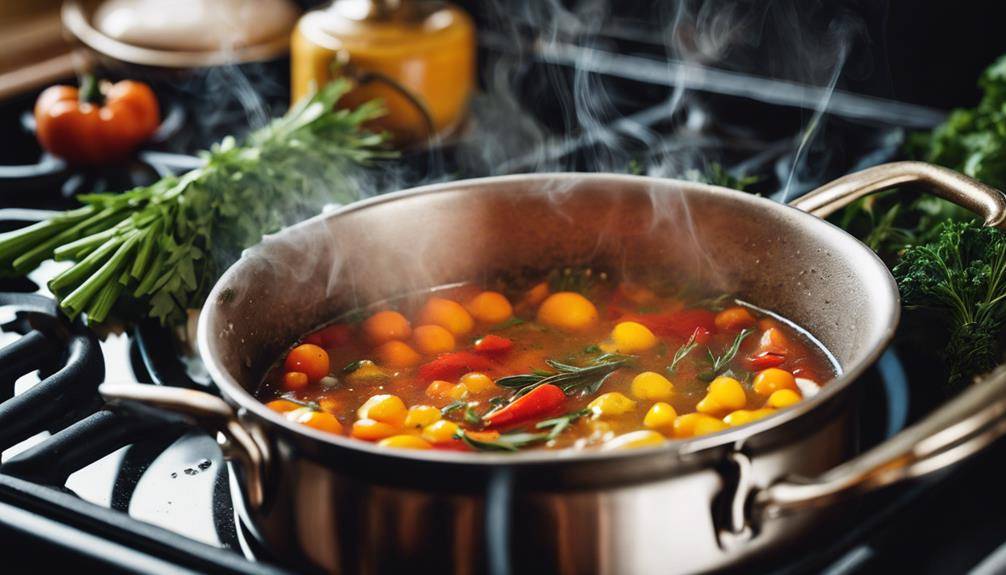
The Best Practices For Simmering Food; To simmer food effectively, you need to maintain a gentle heat just below boiling. Start with a heavy-bottomed pot to guarantee even heat distribution and avoid scorching. Adjust the temperature based on how vigorously the pot bubbles; too much heat may lead to boiling while too little results in no bubbles. Add ingredients at different stages for richer flavors, and stir occasionally to prevent sticking. Covering your pot can retain moisture, while leaving it uncovered can enhance sauce reduction. Monitoring timing and consistency is key to prevent overcooking. Keep exploring to uncover more tips for perfect simmering!
Understanding Simmering Basics
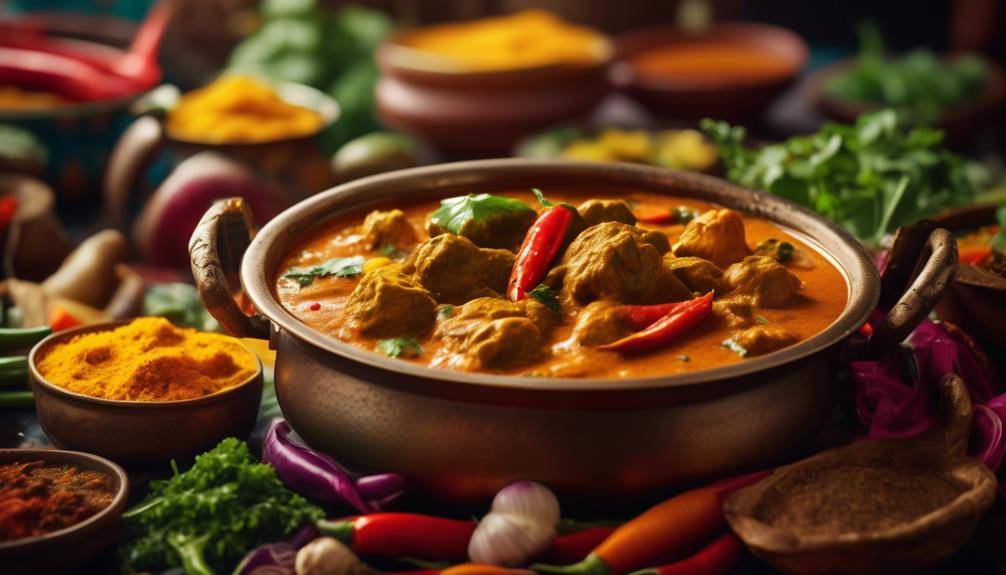
When you simmer food, you’re working with a gentle heat that’s perfect for cooking ingredients evenly and enhancing their flavors. Simmering involves maintaining a temperature just below boiling, where small bubbles rise to the surface. This technique can transform your dishes, but it’s vital to understand some basics to avoid common mistakes.
Many people fall prey to simmering myths. One common misconception is that simmering requires constant bubbling. In reality, you want a gentle, steady simmer, not a rolling boil. Another myth is that all ingredients should be added at once. Instead, consider the cooking times of each ingredient. Adding them at different stages allows for better flavor integration and texture.
A frequent mistake is not adjusting the heat properly. If you notice your liquid’s boiling too vigorously, turn down the heat. Conversely, if you don’t see any bubbles, you may need to increase the heat slightly. It’s important to keep an eye on your pot, as simmering can vary based on your stove and the type of pot you’re using.
Lastly, don’t forget to stir occasionally. This helps distribute heat evenly and prevents ingredients from sticking to the bottom. By understanding these basics of simmering, you’ll enhance your cooking skills and create dishes that truly shine. Remember, the goal is to coax out flavors and achieve the perfect texture, so pay attention to these details and enjoy the process!
Choosing the Right Pot
The choice of pot plays an essential role in achieving the desired results when simmering food. To start, you’ll want to ponder pot materials. Heavy-bottomed pots, such as those made from stainless steel or cast iron, distribute heat evenly and help prevent scorching. Nonstick pots can also work, but they may not retain heat as effectively. Each material has its strengths; for example, cast iron retains heat exceptionally well, making it perfect for long simmering sessions.
Next, think about pot sizes. The size of your pot should match the quantity of food you’re preparing. A pot that’s too small can lead to overflow, while an overly large pot may not retain heat efficiently, causing uneven cooking. If you’re simmering a small batch of soup, a 3-quart pot is likely sufficient. For larger quantities, like a hearty stew, a 6-quart or even an 8-quart pot will be more appropriate.
Keep in mind that pot shape also affects simmering. A wider pot exposes more surface area, which can help with evaporation if you’re looking to concentrate flavors. On the other hand, a taller pot can help in retaining moisture, especially useful for dishes that require a longer cooking time.
Selecting the Ideal Heat Level
When simmering, it’s essential to understand the right temperatures to achieve that perfect cooking state. You’ll need to adjust the heat based on your ingredients and their cooking times for ideal results. Mastering this balance will elevate your dishes and enhance their flavors.
Understanding Simmering Temperatures
Selecting the ideal heat level for simmering can make all the difference in your cooking. Many home cooks fall for simmering myths, believing that a rolling boil is necessary for effective simmering. In reality, simmering occurs at a lower temperature, typically between 180°F and 205°F (82°C to 96°C). At this range, you’ll notice small bubbles gently rising to the surface, which is perfect for developing flavors without overcooking your ingredients.
Understanding temperature variations is vital. If you set your heat too high, you risk boiling your dish, which can lead to a breakdown of delicate ingredients and uneven cooking. Conversely, if the heat’s too low, your food may not cook properly or could take much longer than necessary.
To find the right balance, start with medium heat, then adjust as needed. Keep an eye on your pot, and don’t be afraid to experiment; every stove is different. By mastering the art of simmering temperatures, you’ll elevate your dishes and create meals that are both flavorful and well-cooked. So, get ready to enjoy the benefits of perfect simmering!
Adjusting Heat for Ingredients
Finding the right heat level for different ingredients is essential for achieving the best results in your cooking. When you’re simmering, the temperature can make all the difference. For delicate ingredients, like herbs, you’ll want to keep the heat low. This way, you can create a beautiful herb infusion without risking bitterness or losing flavors.
On the other hand, sturdier ingredients like root vegetables or meats can handle a bit more heat. Adjusting the heat allows for proper ingredient pairing, ensuring everything cooks evenly. For example, if you’re simmering a broth with both vegetables and proteins, start with a higher heat to extract flavors, then lower it to let everything meld together.
Pay attention to how your ingredients react. If they’re bubbling too vigorously, it’s a sign to reduce the heat. Conversely, if nothing’s happening, you may need to turn it up a notch. Fine-tuning your heat level not only enhances flavors but also maintains the texture of your ingredients, leading to a more satisfying dish overall. Trust your instincts, and don’t be afraid to experiment with different heat settings for the best outcome.
Observing Cooking Time
Mastering the art of observing cooking time is essential for perfecting your simmering techniques. When you simmer, the goal is to maintain a gentle heat that allows flavors to meld without boiling away the essence of your ingredients. One common simmering myth is that longer cooking times always yield better results. In reality, effective time management is about understanding the right duration for each ingredient.
Start by checking recipes for suggested simmering times, but don’t be afraid to adjust based on your own observations. For instance, vegetables may only need 10-15 minutes, while meats could require an hour or more. Keep an eye on the pot; if you see bubbles breaking the surface too vigorously, turn down the heat.
Additionally, use a timer to track your cooking stages. This helps you avoid overcooking, which can lead to mushy textures and lost flavors. Remember, every simmering session is unique, so trust your instincts. By honing your ability to observe cooking time, you’ll elevate your dishes and dispel any simmering myths that may have held you back.
Timing Your Simmer
Timing your simmer is essential for achieving perfectly cooked dishes. When you simmer, the goal is to maintain a gentle heat that allows flavors to meld without overcooking the ingredients. Different simmering techniques can affect the overall outcome of your dish, so it’s vital to keep an eye on the clock and adjust accordingly.
Start by following the recommended simmer time in your recipe, but remember that timing variations exist based on factors like ingredient size, freshness, and even altitude. For instance, larger cuts of meat or hearty vegetables might require longer simmering times to become tender, while delicate items like fish or greens may only need a few minutes.
To master timing your simmer, it’s helpful to set a timer for the suggested cooking time and check for doneness as you go. Use a fork or knife to test the tenderness of your ingredients. If they’re not quite there, continue simmering and check back every few minutes.
It’s also important to adjust the heat as needed. If bubbles are rapidly breaking the surface, turn down the heat to avoid boiling. Conversely, if there’s hardly any movement in the pot, you might need to increase the heat slightly to reach a gentle simmer.
Flavor Development Techniques
Building layers of flavor is key to elevating your dishes while simmering. One effective technique you can use is herb infusion. By adding fresh or dried herbs at the right time, you’ll create a rich base for your simmered meals. Start by sautéing aromatics like onions, garlic, or leeks in oil. Once they’re fragrant, toss in your herbs—such as thyme, rosemary, or bay leaves—to allow their essential oils to release and mingle with the other ingredients. This initial infusion sets the stage for a robust flavor profile.
Next, consider spice layering. This technique involves adding spices in stages throughout the cooking process. When you sprinkle them in at different points, it helps to build complexity and depth. For instance, you might add cumin and coriander early on to create a foundational flavor. Then, towards the end of cooking, introduce more delicate spices like paprika or a dash of chili powder. This approach guarantees that each spice shines without overpowering the dish.
Remember to taste as you go. This will help you gauge when to adjust the seasoning. If you find your dish is lacking, a splash of acid like vinegar or a squeeze of lemon can brighten everything up. By mastering herb infusion and spice layering, you’ll transform simple ingredients into a harmonious and flavorful meal that’s sure to impress.
To Cover or Not to Cover
While deciding whether to cover your pot while simmering, consider how it affects the cooking process. Using a lid can offer significant lid benefits, particularly regarding moisture retention and heat regulation. When you cover your pot, the steam produced during cooking stays trapped inside, enhancing flavor concentration and promoting ingredient infusion. This means your dish can develop richer flavors, resulting in a more satisfying meal.
On the other hand, leaving the pot uncovered allows for steam escape, which can be beneficial in certain situations. It aids in evaporation control, especially if you need to reduce a sauce or thicken a broth. By allowing some moisture to escape, you can achieve a concentrated flavor without making your dish too watery.
When considering cooking efficiency, a covered pot often cooks food faster due to the retained heat. This is particularly useful for dishes that require longer cooking times, as the consistent heat helps break down tougher ingredients. Conversely, if you’re simmering something delicate, like a sauce, an uncovered pot may help you avoid overcooking and maintain the right consistency.
Ultimately, whether to cover your pot or not depends on your desired outcome. If you want moist, flavorful results, covering is the way to go. If you’re aiming for a thicker, more concentrated sauce, leave it uncovered. Understanding these dynamics will help you make the best choice for your simmering needs.
Adjusting Consistency and Texture
When you’re simmering, you might want to adjust the consistency and texture of your dish. Using thickening agents like cornstarch or flour can help achieve the perfect thickness, while cream or butter can create a rich, creamy texture. Understanding how to balance these elements will elevate your cooking and enhance the overall experience.
Thickening Agents Usage
Thickening agents are essential tools in the kitchen that can transform a runny sauce or soup into a rich, velvety dish. You can start by using a cornstarch slurry, which is simple to make and effective. Just mix equal parts cornstarch and cold water, then stir it into your simmering liquid. If you prefer a gluten-free option, arrowroot powder works similarly and gives a nice sheen.
For a heartier texture, a flour paste can be created by cooking flour in fat before adding it to your dish, ensuring a smooth result. If you’re working with desserts, gelatin sheets can provide a lovely gel-like consistency.
Xanthan gum is another versatile option; just a small amount can thicken without altering flavor or texture. For fruit-based sauces, pectin usage can help achieve that desired thickness.
Don’t forget the power of butter emulsification or cream reduction; both can enhance richness while thickening your sauce. By experimenting with these agents, you’ll find the perfect consistency for your culinary creations.
Achieving Creamy Texture
A creamy texture can elevate your dishes, making them more enticing and satisfying. To achieve this, consider your cream sources. Traditional dairy options like heavy cream or sour cream work well, but don’t overlook milk alternatives such as coconut or almond milk for a unique twist. Combining these ingredients can create rich flavor infusions and enhance the overall taste of your dish.
Utilize cooking techniques like gentle simmering to guarantee that your cream or milk alternative integrates smoothly without curdling. Temperature control is vital; always add dairy ingredients gradually and avoid boiling to maintain that creamy consistency. Experiment with different ingredient combinations to find the perfect balance that suits your palate.
Texture balancing is essential too. If your dish feels too thin, try incorporating a roux or a starch to thicken it while maintaining creaminess. For additional depth, consider adding spices or herbs during the simmering process. Keep an eye on the consistency, and don’t hesitate to adjust as you go. With these tips, you’ll create dishes that are not only creamy but also bursting with flavor, making every bite a delight.
Frequently Asked Questions: The Best Practices For Simmering Food
Can I Use Simmering for Cooking Proteins Like Chicken or Fish?
Yes, you can use simmering for cooking proteins like chicken or fish. It helps retain moisture, enhancing protein textures. Experiment with different simmering techniques to achieve the perfect tenderness and flavor for your dishes.
What Types of Ingredients Are Best Suited for Simmering?
When you’re simmering, focus on ingredients like vegetables, grains, and proteins. These absorb simmering liquids, enhancing flavor infusion. It’s a perfect method for creating rich broths and tender dishes that burst with taste.
How Do I Know When to Start Simmering a Dish?
You’ll know it’s time to start simmering when you see small bubbles rising to the surface. Maintain a steady simmering temperature around 180-205°F, and apply proper simmering techniques to achieve the desired texture and flavor.
Is It Safe to Simmer Food for Extended Periods?
Yes, it’s safe to simmer food for extended periods if you use proper simmering techniques. Just guarantee you maintain a consistent temperature and stir occasionally to prevent sticking, which keeps your dish delicious and safe.
Can I Simmer Food in a Slow Cooker Instead?
Yes, you can simmer food in a slow cooker. Its advantages include even heat distribution and convenience. You’ll find simmering techniques work well here, allowing flavors to meld beautifully while you go about your day.

Conclusion
Now that you know the best practices for simmering food, you’re ready to elevate your cooking skills. Remember to choose the right pot, adjust the heat, and pay attention to timing for ideal flavor. Experiment with covering your pot and adjusting consistency as needed. With these tips, you’ll create delicious, well-developed dishes every time. So, grab your ingredients, enjoy the process, and happy simmering!
If you enjoyed exploring this topic and want to dive even deeper, be sure to check out some of our other articles here on Infinite Flavors. From rich culinary histories to creative twists on classic recipes, there’s always something new to discover. Whether you’re curious about the origins of a dish, looking for fresh inspiration in the kitchen, or simply love learning about food culture, our collection of posts is the perfect next step on your flavor journey.
The Best Temperature For Simmering Food
The Great Difference Between Simmering Vs Boiling In Cooking
Great Cooking Techniques Understanding Simmering