Five Great Tips For Making Sushi-Grade Seafood At Home
Tips For Making Sushi-Grade Seafood At Home; Did you know that the popularity of sushi has skyrocketed in recent years, with Americans consuming over 4 billion pieces of sushi annually? With so many people indulging in this Japanese delicacy, you might be wondering how you can recreate that sushi-grade experience at home. Well, look no further! In this discussion, we will explore five expert tips that will help you make sushi-grade seafood right in the comfort of your own kitchen. So, if you’ve ever wanted to impress your friends and family with homemade sushi that rivals that of a professional sushi chef, then keep reading to discover the secrets to success.
Choose the Freshest Seafood
When selecting seafood for sushi, it is crucial to choose the freshest ingredients available. Sourcing seafood of the highest quality is the key to creating a truly authentic and delicious sushi experience. The freshness of the seafood directly impacts its taste, texture, and overall quality. To ensure you are using the best seafood for your sushi, here are some tips on sourcing and selecting the freshest seafood.
Firstly, it is important to consider the source of your seafood. Look for reputable suppliers or fish markets that have a reputation for providing fresh and sustainably sourced seafood. Check for certifications or labels that indicate the seafood has been responsibly harvested.
Next, pay attention to the appearance of the seafood. Fresh seafood should have vibrant colors, clear eyes, and shiny skin. Avoid any seafood that appears dull, discolored, or has a strong fishy smell, as these are signs of poor quality or spoilage.
Another important factor to consider is the texture of the seafood. Fresh seafood should feel firm to the touch and bounce back when pressed. Avoid seafood that feels mushy or has a slimy texture, as this indicates that it is past its prime.
Lastly, trust your instincts and rely on your senses when selecting seafood. Use your eyes, nose, and even your taste buds to determine the freshness of the seafood. If something doesn’t seem right, it’s best to err on the side of caution and choose a different option.
Understand Sushi-Grade Standards
To truly understand sushi-grade standards, it is essential to familiarize yourself with the specific criteria used to determine the quality and safety of seafood for raw consumption. Sushi-grade certification and labeling play a crucial role in ensuring that the seafood you use is suitable for making sushi at home.
Sushi-grade certification is a rigorous process that involves thorough inspections and adherence to strict guidelines. The certification ensures that the seafood has been handled and processed in a manner that minimizes the risk of contamination and ensures its suitability for raw consumption. Look for sushi-grade labels on the packaging, as this indicates that the seafood has met the necessary standards.
When it comes to sushi grade labeling, there are a few key points to keep in mind. Firstly, the label should clearly state that the seafood is sushi grade. This indicates that it has undergone the necessary inspections and is safe to consume raw. Additionally, the label should provide information on the source of the seafood, including where it was caught or farmed. This allows you to make informed decisions about the quality and sustainability of the seafood you are purchasing.
It’s important to note that sushi-grade standards can vary depending on the country or region. Some countries have specific regulations in place to ensure the safety of raw seafood, while others rely on industry standards. Familiarize yourself with the regulations and guidelines in your area to ensure that you are selecting seafood that meets the necessary standards.
Know Your Fish Options
When it comes to making sushi-grade seafood at home, it’s important to know your fish options. Understanding different fish types, quality standards, and sustainable sourcing is key to creating a truly authentic and delicious sushi experience. By familiarizing yourself with the various options available, you can make informed choices that not only meet your taste preferences but also align with your values.
Fish Types
Understanding the various types of fish available for sushi-grade seafood is essential for creating a delectable and authentic sushi experience. When it comes to fish selection, it’s important to consider sushi grade standards to ensure freshness and safety. Here are three popular fish options for sushi:
- Tuna: Known for its rich flavor and firm texture, tuna is a staple in sushi. Look for high-quality cuts such as bluefin, yellowfin, or bigeye tuna.
- Salmon: With its buttery taste and delicate texture, salmon is another popular choice for sushi. Opt for wild-caught salmon for the best flavor and freshness.
- Yellowtail: This fish offers a mild, slightly sweet taste and a tender texture. Yellowtail, also known as hamachi, is often used in sushi rolls and sashimi.
Quality Standards
Now let’s explore the crucial aspect of ensuring top-notch quality in your sushi-grade seafood selection. Quality control is essential when it comes to sushi, as the freshness of the fish directly affects the taste and safety of your dish. To ensure the highest quality, it’s important to assess the freshness of the seafood before purchasing it. Look for fish that has clear, shiny eyes, bright red gills, and firm flesh. The smell should be fresh and ocean-like, not fishy or pungent. Additionally, the fish should have a vibrant color and should bounce back when pressed gently. By carefully evaluating these factors, you can guarantee that the seafood you choose for your sushi is of the highest quality.
Sustainable Sourcing
To ensure the sustainability of your sushi-grade seafood, it is important to be knowledgeable about your fish options. By understanding where your seafood comes from and how it is sourced, you can make more informed choices and support responsible fishing practices. Here are three key points to consider when it comes to sustainable seafood:
- Source from reputable suppliers: Look for suppliers who prioritize sustainable fishing practices and follow regulations to protect fish populations and their habitats.
- Choose responsibly caught fish: Opt for species that are not overfished or at risk of depletion. Consult seafood guides or apps that provide information on the sustainability of different fish species.
- Support local and seasonal options: By choosing locally caught seafood that is in season, you can reduce the carbon footprint associated with transportation and support local fishing communities.
Properly Store and Handle Seafood
Properly storing and handling seafood is essential to maintaining its freshness and ensuring its quality for sushi-grade preparations. When it comes to seafood, freshness is key. To properly store seafood, start by placing it in airtight containers or wrap it tightly in plastic wrap to prevent air exposure. This will help preserve its delicate flavors and textures. Additionally, storing seafood at the right temperature is crucial. Keep it refrigerated at a temperature between 32°F and 38°F (0°C and 3°C) to prevent bacterial growth and maintain its quality.
When handling seafood, it’s important to follow proper hygiene practices to avoid contamination. Always wash your hands thoroughly before and after handling seafood to prevent the spread of bacteria. Furthermore, use separate cutting boards and utensils for seafood and other ingredients to avoid cross-contamination.
To maintain the quality of sushi-grade seafood, it’s advisable to consume it as soon as possible after purchase. However, if you need to store it for a short period, place it in the coldest part of your refrigerator and make sure to use it within one to two days.
When thawing frozen seafood, do it slowly in the refrigerator to prevent any loss of flavor or texture. Avoid thawing seafood at room temperature, as this can lead to bacterial growth.
Practice Safe Seafood Preparation
When preparing sushi-grade seafood, it is crucial to prioritize safety and follow proper guidelines. By practicing safe seafood preparation, you can ensure that your sushi is not only delicious but also safe to eat. Here are some important safety precautions and seafood handling techniques to keep in mind:
- Keep it fresh: Always purchase seafood from reputable sources and check for freshness. Look for clear eyes, shiny skin, and a mild oceanic smell. If the seafood smells fishy or has discolored flesh, it is best to avoid it.
- Maintain proper temperatures: Seafood should be kept at a safe temperature to prevent bacterial growth. Store it in the refrigerator at or below 40°F (4°C) until you are ready to use it. If you need to transport seafood, use a cooler with ice packs to keep it cold.
- Prevent cross-contamination: To avoid the risk of foodborne illnesses, it is essential to prevent cross-contamination. Use separate cutting boards, knives, and utensils for seafood and other ingredients. Clean and sanitize all surfaces thoroughly after handling raw seafood.
Master the Art of Sushi Rice
To master the art of sushi rice, you must strive for the perfect texture, achieving a delicate balance of vinegar and sweetness, and ensuring proper rice seasoning. Achieving the perfect texture requires careful attention to the rice’s water-to-rice ratio and cooking time. Balancing the vinegar and sweetness is crucial to enhance the flavor profile, while proper rice seasoning ensures every grain is evenly coated with the flavorful mixture. So, let’s delve into the intricacies of sushi rice and unlock the secrets to achieving sushi perfection at home.
Perfect Sushi Rice Texture
Achieving the perfect sushi rice texture is a delicate balance of water absorption and cooking time. To ensure your sushi rice is just right, follow these tips:
- Rinse the rice: Before cooking, rinse the rice under cold water until the water runs clear. This removes excess starch and prevents the rice from becoming too sticky.
- Water ratio: Use a 1:1 ratio of rice to water for sushi rice. This will result in a slightly sticky texture that holds together well.
- Cooking time: Cook the rice on low heat for about 15 minutes, then let it rest for an additional 10 minutes. This allows the rice to fully absorb the water and become tender.
Balancing Vinegar and Sweetness
Achieving the perfect balance of vinegar and sweetness is crucial in mastering the art of sushi rice. Balancing acidity and sweetness brings out the vibrant flavors in the rice, enhancing the overall taste of your sushi. To achieve this balance, start with a good quality rice vinegar and add it gradually to your cooked rice. This will allow you to taste and adjust the levels of acidity until you find the perfect harmony.
Additionally, consider incorporating other flavor combinations to complement the vinegar and sweetness. For example, you can add a touch of mirin, a sweet rice wine, or a small amount of sugar to enhance the sweetness. Experiment with different ratios and combinations to find the flavor profile that suits your taste buds. Mastering this delicate balance will elevate your sushi rice to a whole new level.
Proper Rice Seasoning
For a truly authentic and flavorful sushi rice, mastering the art of proper rice seasoning is essential. Achieving the perfect rice texture and balancing the vinegar flavors will elevate your homemade sushi to the next level. Here are three key tips to help you perfect your rice seasoning:
- Use high-quality sushi rice: Start with the right variety of rice, such as short-grain Japanese rice, to ensure the best texture and stickiness for your sushi.
- Season with sushi vinegar: To achieve the signature tangy flavor of sushi rice, mix rice vinegar, sugar, and salt. The vinegar adds acidity, while the sugar and salt balance out the flavors.
- Season rice while it’s hot: Mix the sushi vinegar into the rice while it’s still warm to ensure the flavors are evenly distributed.
Perfect Your Knife Skills
To enhance your sushi-making skills, mastering the art of precise knife techniques is essential. Knife skills play a crucial role in creating beautifully crafted sushi, ensuring that each slice of fish is cut with precision and finesse. By developing your slicing skills, you can elevate your sushi-making game to a whole new level.
When it comes to knife techniques for sushi, it is important to choose the right knife. A traditional Japanese knife, such as a Yanagiba or a Deba, is recommended for cutting fish. These knives are specifically designed with a long, thin blade that allows for clean and straight cuts. Additionally, keeping your knife sharp is crucial to achieve the desired results. Dull blades can lead to uneven cuts and damage the integrity of the fish.
To slice fish for sushi, start by removing any bones and skin. Then, hold the knife at a slight angle and make smooth, even strokes. The key is to let the knife do the work, using minimal force and allowing the sharp edge to glide effortlessly through the fish. Remember to maintain a steady hand and a consistent thickness in your slices to ensure a visually appealing presentation.
Mastering knife techniques takes practice and patience. Take the time to hone your skills and experiment with different cutting styles. As you become more comfortable, you will notice an improvement in the quality and appearance of your sushi. So, grab your knife and start perfecting those slicing skills to create sushi that not only tastes amazing but also looks like a work of art.
Use High-Quality Sushi Tools
Now that you have perfected your knife skills, it’s time to focus on the next crucial aspect of sushi-making: using high-quality sushi tools. The right tools can make all the difference in achieving the perfect sushi roll, so it’s worth investing in some top-notch equipment. Here are three essential sushi tools that will elevate your sushi-making techniques and ensure you create restaurant-quality sushi at home:
- Sushi Mat: A sushi mat, also known as a bamboo mat or makisu, is an indispensable tool for rolling sushi. It provides the necessary support and pressure to shape your sushi rolls into tight, uniform cylinders. Look for a sushi mat made from high-quality, food-grade bamboo that is sturdy and easy to clean.
- Sushi Knife: A sushi knife, or yanagiba, is a long, thin knife specifically designed for slicing fish and other ingredients for sushi. The sharp, single-edged blade allows for precise cuts, ensuring clean and smooth slices of fish. Invest in a high-quality sushi knife made from high carbon stainless steel, as it will retain its sharpness and durability.
- Rice Paddle: A rice paddle, or shamoji, is an essential tool for handling sushi rice. The wide, flat surface of the paddle helps to evenly mix and spread the rice, while the non-stick material prevents the rice from sticking. Look for a rice paddle made from durable plastic or bamboo, with a comfortable grip for easy handling.
Experiment With Different Sushi Styles
Explore the artistry of sushi-making by experimenting with various sushi styles, allowing your culinary creativity to shine. Sushi is not just about the fish and rice; it is a beautiful combination of flavors and textures that can be achieved through different sushi techniques. By trying out different styles, you can create unique sushi combinations that will impress your friends and family.
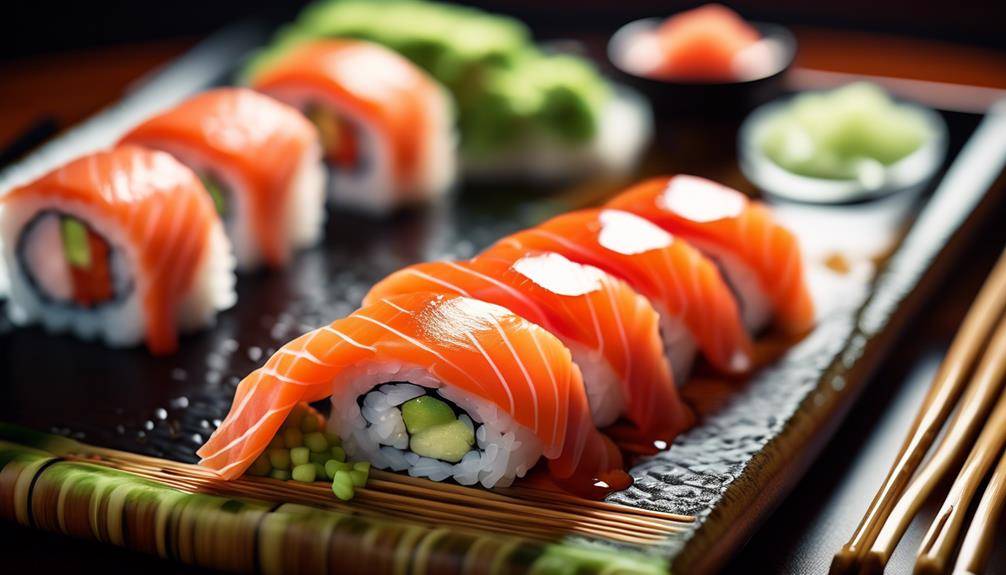
One sushi style to experiment with is Nigiri. Nigiri sushi consists of a small mound of vinegared rice topped with a slice of fresh fish or seafood. It is simple yet elegant, allowing the flavors of the fish to take center stage. You can try different types of fish, such as salmon, tuna, or even eel, and pair them with complementary toppings like avocado or thinly sliced cucumber.
Another style to explore is Maki sushi. Maki sushi is made by rolling ingredients in a sheet of seaweed called nori, along with the vinegared rice. The fillings can vary from traditional options like cucumber and avocado to more adventurous combinations like tempura shrimp or spicy tuna. Get creative with your fillings and experiment with different sauces and seasonings to elevate the flavors.
If you want to go beyond the traditional sushi styles, you can try making Temaki sushi, also known as hand rolls. Temaki sushi is made by wrapping the rice and fillings in a cone-shaped piece of nori. This style allows you to create unique combinations, as you have more freedom with the fillings. You can try using cooked ingredients like grilled vegetables or even incorporate non-traditional elements like cream cheese or mango.
Enhance Flavor With Seasonings and Sauces
As you continue your journey in sushi-making, take your culinary artistry to the next level by enhancing the flavors of your creations with a variety of seasonings and sauces. By incorporating these elements, you can elevate the taste of your sushi and create a truly memorable dining experience. Here are a few tips to help you enhance the flavors of your sushi:
- Enhancing umami: Umami, often described as the fifth taste, is a savory flavor that adds depth and richness to your sushi. To enhance umami, consider using ingredients such as soy sauce, miso paste, or bonito flakes. These ingredients are known for their umami-rich flavors and can bring out the best in your sushi.
- Exploring traditional flavors: Traditional sushi flavors are deeply rooted in Japanese cuisine and offer a unique taste experience. Experiment with ingredients like wasabi, pickled ginger, and sesame seeds to add a touch of authenticity to your sushi. These traditional flavors not only enhance the taste but also provide a delightful contrast to the freshness of the seafood.
- Sauces for added flavor: A well-crafted sauce can take your sushi to new heights. Try drizzling a spicy mayo sauce over your rolls for a kick of heat, or create a tangy ponzu sauce to complement the delicate flavors of your sashimi. Don’t be afraid to get creative and experiment with different sauce combinations to find the perfect flavor balance.
Get Creative With Sushi Fillings
To elevate your sushi-making skills, unleash your creativity by experimenting with an array of unique and tantalizing fillings. Don’t limit yourself to traditional ingredients like fish and seafood; get creative with vegetarian sushi fillings and try unconventional combinations that will surprise and delight your taste buds.
When it comes to vegetarian sushi fillings, the options are endless. You can use a variety of fresh and cooked vegetables to add color, texture, and flavor to your rolls. Thinly sliced cucumber, crisp bell peppers, creamy avocado, and tangy pickled radishes are just a few examples of delicious vegetarian fillings you can try. Don’t be afraid to mix and match different vegetables to create exciting and vibrant sushi rolls.
If you’re feeling adventurous, why not experiment with unconventional sushi fillings? Think outside the box and consider ingredients like fruits, nuts, and even tofu. Sweet and juicy mango slices can provide a burst of tropical flavor, while crunchy tempura-fried tofu can add a satisfying texture. Don’t be afraid to mix contrasting flavors and textures to create unique and unforgettable sushi rolls.
To make your sushi fillings even more interesting, you can also play around with different seasonings and sauces. Spicy mayo, soy-based glazes, and tangy ponzu can elevate the flavors of your fillings and add an extra layer of complexity to your sushi rolls. Remember to use these seasonings and sauces sparingly, as you don’t want to overpower the delicate flavors of the fillings.
Present Your Sushi Like a Pro
Enhance the visual appeal of your sushi creations by mastering the art of presenting them like a professional. The way you present your sushi can make a significant difference in how it is perceived and enjoyed. To elevate your sushi plating techniques, consider the following tips:
- Use vibrant ingredients: Incorporate colorful and fresh ingredients to make your sushi visually appealing. Include bright vegetables like carrots, cucumbers, and bell peppers, along with vibrant fish such as salmon or tuna. The contrasting colors will create a visually stunning presentation.
- Play with textures: Experiment with different textures to add visual interest to your sushi. Combine smooth and creamy avocado with crunchy tempura flakes or add a sprinkle of sesame seeds for a delightful crunch. Incorporating various textures will not only make your sushi more visually appealing but also enhance the overall dining experience.
- Pay attention to arrangement: Arrange your sushi pieces with precision and artistic flair. Consider using different shapes and sizes to create visual interest. Place the sushi rolls or nigiri in a way that complements each other and creates a harmonious composition. Pay attention to the negative space on the plate, as it can also contribute to the overall presentation.
Enjoy the Fruits of Your Labor
Now that you’ve successfully prepared sushi-grade seafood at home, it’s time to enjoy the fruits of your labor. To enhance your sushi experience, consider adding flavorful accompaniments such as soy sauce, wasabi, and pickled ginger. Additionally, don’t forget the importance of perfecting the sushi rice, as it serves as the foundation for your sushi creations.
Flavorful Sushi Accompaniments
For a truly satisfying sushi experience, complement your fresh seafood with an array of flavorful accompaniments. Enhance the flavors of your sushi rolls by incorporating these flavorful sushi accompaniments:
- Pickled Ginger: A palate cleanser that adds a tangy and refreshing element to your sushi bites.
- Wasabi: A pungent and spicy condiment that provides a kick of heat and depth of flavor.
- Soy Sauce: A classic dipping sauce that adds a savory and umami-rich taste to each bite.
These accompaniments not only add depth and complexity to your sushi, but also provide a balance of flavors that enhance the overall dining experience. Experiment with different combinations and ratios to find your perfect balance. Remember, the key to a memorable sushi meal lies in the creative sushi fillings and the flavorful accompaniments that accompany them.
Perfecting Sushi Rice
To truly enjoy the fruits of your labor, master the art of perfecting sushi rice. Sushi rice is the foundation of any great sushi dish, and getting it right is essential for achieving that authentic taste and texture. The key to perfecting sushi rice lies in the preparation and seasoning.
Start with high-quality short-grain rice and rinse it thoroughly to remove excess starch. Cook it with the right amount of water and let it steam to perfection. Once cooked, season the rice with a mixture of rice vinegar, sugar, and salt, gently folding it in to ensure even distribution. There are countless sushi rice recipes out there, so experiment and find the one that suits your taste buds best. Remember, the perfect sushi rice is the secret ingredient that elevates your homemade sushi to restaurant-quality.
Frequently Asked Questions: Tips For Making Sushi-Grade Seafood At Home
What Are Some Common Mistakes to Avoid When Choosing Seafood for Sushi?
Common misconceptions when choosing seafood for sushi include overlooking the importance of freshness and assuming all seafood is suitable. To choose the freshest seafood, look for clear eyes, shiny skin, and a pleasant ocean scent.
How Can I Tell if Seafood Is Sushi-Grade?
To determine if seafood is sushi-grade, examine its appearance, smell, and texture. Look for clear eyes, vibrant color, and a fresh, oceanic scent. The fish should also feel firm and bounce back when pressed.
Are There Any Types of Fish That Are Not Suitable for Making Sushi?
Some types of fish, like pufferfish or escolar, are not suitable for making sushi due to their potential toxicity. However, there are plenty of delicious alternatives for non sushi-grade seafood, such as cooked shrimp or smoked salmon.
What Are the Best Methods for Storing and Handling Seafood to Maintain Freshness?
To maintain freshness, handle and store seafood properly. Keep it in airtight containers, refrigerate at the right temperature, and use it within a few days. Always follow food safety guidelines for safe handling.
Are There Any Safety Precautions I Should Take When Preparing Sushi at Home?
When preparing sushi at home, it’s crucial to prioritize food handling safety. Make sure to follow proper sushi preparation techniques to ensure the highest quality and avoid any potential health risks.

Conclusion
In conclusion, by following these five tips, you can confidently create sushi-grade seafood at home. By choosing the freshest seafood, understanding sushi-grade standards, knowing your fish options, properly storing and handling seafood, and practicing safe seafood preparation, you can ensure the highest quality sushi experience. Enhancing flavors with seasonings and sauces, getting creative with fillings, and presenting your sushi like a pro will add an extra touch of artistry to your culinary creations. Enjoy the fruits of your labor and savor the deliciousness of homemade sushi.