10 Best Authentic Caribbean Recipes
10 Best Authentic Caribbean Recipes; You’re in for a treat with the 10 best authentic Caribbean recipes. Start with Jerk Chicken, marinated to perfection and grilled for that smoky flavor. Try Callaloo, a nutritious greens dish cooked with coconut milk. Don’t miss the bold taste of Curry Goat, or the delightful Roti stuffed with spiced fillings. Enjoy crispy Conch Fritters and colorful Fish Escovitch. For a side, Rice and Peas offers a creamy twist. Snack on Plantain Chips, and try a warm bowl of Pigeon Pea Soup. Finally, end with a rich Rum Cake to celebrate. Stick around to uncover more delightful Caribbean flavors!
Jerk Chicken
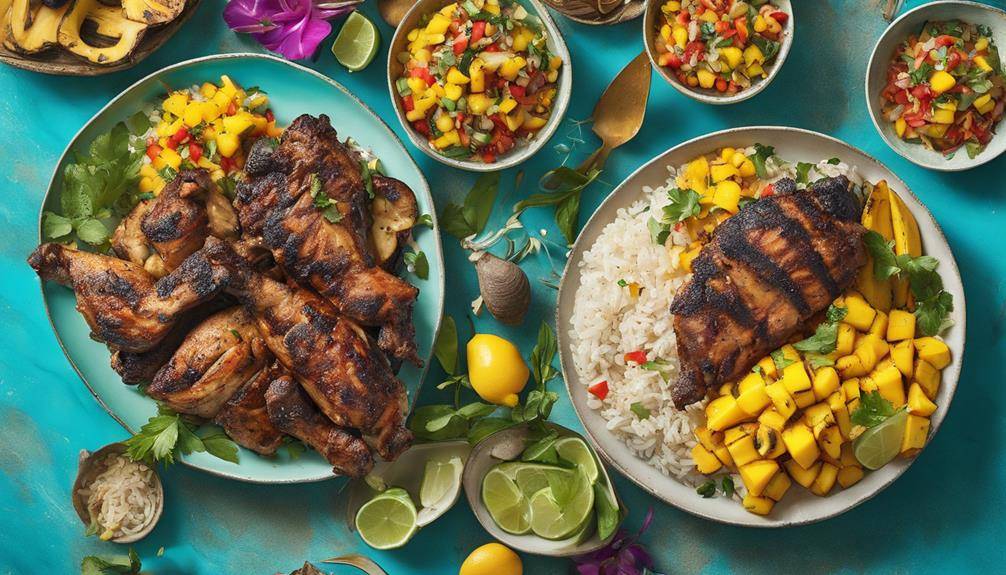
Jerk chicken is a flavorful dish that brings the vibrant tastes of the Caribbean right to your kitchen. To create an authentic jerk chicken, you’ll need to master the marinade methods. Start by combining fresh ingredients like scallions, garlic, ginger, Scotch bonnet peppers, allspice, and thyme. Blend these ingredients into a smooth paste, then mix in soy sauce and lime juice for that tangy kick. Don’t rush this process; let the chicken soak in the marinade for at least four hours, or ideally overnight. This’ll guarantee the flavors penetrate deeply, giving you the deliciousness you crave.
When you’re ready to grill, keep some key grilling tips in mind. Preheat your grill to medium-high heat, and make sure it’s clean to avoid flare-ups. Place the marinated chicken on the grill, but don’t overcrowd the space; this’ll help achieve that perfect char. Turn the chicken every 5-7 minutes, allowing it to cook evenly and develop a nice crust. Pay attention to internal temperatures; you’re aiming for 165°F to guarantee it’s fully cooked. If you want a smoky flavor, consider using wood chips on your charcoal grill.
Once your jerk chicken is cooked to perfection, let it rest for a few minutes before serving. This’ll lock in the juices, making each bite succulent and packed with flavor. Enjoy the taste of the Caribbean right at home!
Callaloo
After savoring that spicy jerk chicken, you might be looking for a complementary dish that embodies the vibrant flavors of the Caribbean. Callaloo is an excellent choice, known for its rich taste and health benefits. This leafy green dish comes from various callaloo varieties, with amaranth and taro leaves being the most popular.
When it comes to callaloo preparation, you’ll find it easy and quick. Simply sauté the greens with onions, garlic, and peppers, and add coconut milk for a creamy texture. This dish is not only delicious but also packed with nutritional value. It’s high in vitamins A, C, and K, making it a fantastic addition to your diet.
Callaloo holds cultural significance in the Caribbean, often served during festive occasions and family gatherings. Its flavor profiles can vary, from mild and earthy to spicy, depending on the ingredients you use. For some extra flair, consider adding crab or shrimp for a seafood twist.
When you’re ready to serve, plate the callaloo alongside rice, fried plantains, or even as a filling for a savory pastry. Here are some callaloo cooking tips: don’t overcook the greens, as you want to maintain their vibrant color and nutrients. Whether you’re enjoying it as a side dish or a main course, callaloo is sure to enhance your Caribbean culinary experience.
Curry Goat
Curry goat is a beloved dish in Caribbean cuisine, celebrated for its bold flavors and tender meat. This dish showcases a perfect blend of spice blends, which often include allspice, turmeric, and fresh herbs. The key to achieving the rich flavor profiles lies in your marination techniques. Allow the goat cuts to marinate for several hours, or ideally overnight, to absorb all those delicious spices.
When it comes to cooking, you’ll want to stick to traditional methods. A heavy pot or Dutch oven is ideal for slow cooking, allowing the meat to become tender while soaking up the curry sauce. As you cook, you might notice regional variations in the recipe, with some areas adding coconut milk for creaminess or scotch bonnet peppers for heat.
Curry goat holds cultural significance in many Caribbean communities, often featured at family gatherings and celebrations. The serving traditions vary as well; it’s typically served with rice and peas, providing a balance to the spicy flavors.
For meal presentation, consider garnishing with fresh cilantro or green onions to add a pop of color. This dish not only tantalizes the taste buds but also fosters a sense of community and togetherness. So, whether you’re preparing it for a special occasion or a cozy dinner at home, curry goat is sure to leave a lasting impression. Enjoy the experience and savor every bite!
Roti
Roti is a staple in Caribbean cuisine that pairs perfectly with dishes like curry goat, complementing its rich flavors. Its origins trace back to Indian cuisine, brought to the Caribbean by indentured laborers. Over time, roti has evolved into various forms, including dhalpuri, paratha, and sada roti, each with unique roti fillings and techniques.
When preparing roti, you’ll start with simple roti dough made of flour, water, and salt. Kneading it properly is essential to achieve that soft texture. Once your dough is ready, you’ll roll it out and cook it on a hot griddle, mastering the art of puffing it up. Some popular roti fillings include spiced potatoes, curried chicken, and chickpeas, making each bite flavorful.
For roti serving, it’s typically enjoyed warm, either on its own or as an accompaniment to rich curries and stews. You can also use it to scoop up your favorite dishes, enhancing the meal experience. Don’t forget to explore different roti recipes to find your favorite variation!
Roti festivals across the Caribbean celebrate this beloved dish, showcasing its cultural significance and versatility. Whether you’re enjoying a street food version at a local festival or making it at home, roti is sure to delight. So grab your ingredients, and plunge into the world of Caribbean roti—you won’t regret it!
Conch Fritters
Now that you’ve enjoyed roti, let’s turn our attention to conch fritters. You’ll need to gather fresh conch and a few other key ingredients, and we’ll explore the best cooking techniques for perfecting this Caribbean classic. Plus, I’ll share some delicious serving suggestions and pairings to elevate your dish!
Ingredients for Conch Fritters
Conch fritters are a delicious staple in Caribbean cuisine, and preparing them starts with gathering the right ingredients. First, you’ll need about one cup of fresh conch meat, which requires proper conch preparation. This involves cleaning and finely chopping the conch to guarantee it blends perfectly with the other ingredients.
Next, you’ll want to gather a cup of all-purpose flour, which serves as the base of your fritters. Combine this with a teaspoon of baking powder, a pinch of salt, and a bit of black pepper for flavor. For added zest, consider incorporating diced onions, bell peppers, and fresh herbs like parsley or thyme. You can also experiment with fritter variations by adding jalapeños or a dash of hot sauce to give your fritters an extra kick.
Cooking Techniques Explained
To make perfect conch fritters, mastering a few key cooking techniques is essential. Start by finely chopping the conch, which will help distribute its unique flavor throughout your batter. For a well-rounded taste, consider using marinating tips like letting the conch soak in lime juice for a short time before cooking. When it comes to frying styles, use a deep fryer or a heavy skillet with hot oil for that golden-brown crust.
For an alternative approach, you might explore grilling methods or baking essentials for a healthier option, though traditional frying is most common. Pay attention to seasoning approaches; using fresh herbs and spices can elevate your fritters considerably.
If you want to experiment further, you could try braising fundamentals by gently cooking the conch in a flavorful broth before mixing it into your batter. Boiling basics can also help tenderize the conch before frying. While steaming practices aren’t typical for fritters, they can be useful for preparing side dishes. Finally, sautéing techniques can be applied to any leftover fritter mixture you want to use creatively. Enjoy perfecting your conch fritters with these techniques!
Serving Suggestions and Pairings
Perfectly cooked conch fritters deserve equally delightful serving suggestions to enhance your dining experience. To elevate their flavors, consider pairing wines that complement the oceanic taste of the fritters—crisp whites like Sauvignon Blanc or a light Rosé work wonders. For side dishes, opt for vibrant salads featuring seasonal ingredients like mango or avocado to create invigorating flavor contrasts.
Traditional accompaniments such as tangy dipping sauces, like a spicy remoulade or a zesty lime aioli, add excitement to your meal. When planning your serving styles, think about festive presentations—arrange the fritters on a colorful platter with fresh herbs to impress your guests.
You might also explore vegetarian options by incorporating similar spices into vegetable fritters, keeping the cultural significance of Caribbean cuisine alive. Whether you’re hosting a tropical-themed party or a casual dinner, meal planning with conch fritters at the center guarantees a delightful experience. With these suggestions, you’ll not only enjoy the fritters but also create a memorable dining atmosphere that celebrates the richness of Caribbean flavors.
Rice and Peas
Rice and peas is a beloved staple in Caribbean cuisine that brings together vibrant flavors and hearty ingredients. This dish typically combines long-grain rice with kidney beans or pigeon peas, simmered in coconut milk, thyme, and scallions, creating a rich and aromatic base. You can prepare it using various cooking methods, like stovetop boiling or a pressure cooker, depending on your preference and time constraints.
If you’re looking to try ingredient substitutions, you can easily customize this dish to suit your taste. For instance, if you can’t find kidney beans, black beans or even chickpeas can work in a pinch. Similarly, if coconut milk isn’t available, you could use vegetable broth for a lighter flavor. Just keep in mind that the essence of the dish lies in its creamy texture and the aromatic herbs, so try to maintain those elements.
To make the most of your rice and peas, consider pairing it with grilled meats or spicy stews, enhancing the overall meal. This dish is not just filling but also a fantastic way to introduce the bold flavors of the Caribbean into your home cooking. Whether you’re hosting a gathering or simply enjoying a quiet dinner, rice and peas can elevate your table with its comforting presence and cultural richness. So, roll up your sleeves, gather your ingredients, and enjoy this delicious journey into Caribbean flavors!
Fish Escovitch
Fish Escovitch is a vibrant and tangy dish that showcases the Caribbean’s love for bold flavors. This traditional recipe involves frying whole fish or fillets until they’re golden brown, creating a crispy exterior that perfectly contrasts the zesty toppings. For your fish preparation, you can use snapper or mackerel, which are popular choices in the Caribbean. The key to a great escovitch lies in the marinade, which typically includes vinegar, onions, carrots, and bell peppers.
As you prepare your fish, season it with salt, pepper, and your favorite spices to enhance the flavor. Once it’s fried, you’ll want to whip up the escovitch sauce. Heat some oil in a pan, sauté the onions and peppers, and then stir in vinegar and a touch of sugar to balance the acidity. Let it simmer briefly, allowing the flavors to meld. Pour this vibrant mixture over your fried fish, letting it soak in those delicious flavors.
You might also explore escovitch variations by adding ingredients like thyme, Scotch bonnet peppers, or even fruits like mango for a unique twist. Each region in the Caribbean may have its own spin on this dish, so feel free to experiment with spices and vegetables that reflect your personal taste. Served with a side of festival or rice, Fish Escovitch is sure to impress anyone who tries it. Immerse yourself in this delightful dish and savor a taste of the Caribbean!
Plantain Chips
When it comes to plantain chips, understanding the different varieties of plantains can really enhance your cooking experience. You’ll discover various techniques to achieve that perfect crunch, and there are plenty of flavor enhancements you can try to elevate your snack. Let’s explore these aspects to make your plantain chips truly unforgettable!
Plantain Varieties Explained
Plantains come in several varieties, each offering a unique flavor and texture that can elevate your dishes. You’ll often encounter green plantains, which are starchy and perfect for savory dishes like tostones or plantain chips. Ripe plantains, on the other hand, develop a sweet flavor that works well in desserts or sweet plantain dishes.
Understanding plantain varieties is essential for maximizing their benefits. For instance, green plantains boast higher starch content while ripe ones are richer in sugars. Both types are packed with nutrients, making them a healthy addition to your meals. Their history intertwines with various cultures across the Caribbean, where each region has its unique cooking methods for plantains.
When it comes to storage, keep unpeeled plantains at room temperature until they ripen. Once ripe, you can refrigerate them to prolong their shelf life. This way, you can enjoy both green and ripe plantains, utilizing their nutrition and versatility in your cooking. Whether you fry, bake, or boil, plantains can enhance any dish, reflecting the rich plantain cultures thriving across the Caribbean.
Cooking Techniques Overview
Using the right cooking techniques can make all the difference in preparing plantain chips that are crispy and flavorful. When you’re ready to start, consider your frying tips—opt for oil that’s hot enough to create that perfect crunch without making the chips greasy. You might also explore marinade techniques to infuse authentic flavors, such as garlic or chili, before frying.
If you’re interested in alternative methods, grilling plantains can also yield stunning results. Use grilling methods to add a smoky flavor, and finish with a sprinkle of spice blends to elevate the taste. For a healthier option, think about slow cooking to achieve a softer texture before crisping them up in the oven.
Don’t hesitate to make ingredient substitutions, like using coconut oil for frying or opting for spices that reflect regional variations in Caribbean cooking. When it comes to meal prep, cut your plantains in advance and store them in an airtight container to maintain freshness.
Lastly, consider your presentation styles—serve your chips in a colorful bowl or alongside a dipping sauce to make your dish visually appealing. Enjoy experimenting with these techniques to find your favorite way to enjoy plantain chips!
Flavor Enhancements Suggestions
To elevate the flavor of your plantain chips, consider experimenting with various seasonings and toppings that complement their natural sweetness. Start by choosing spice blends that excite your palate. A mix of smoked paprika, garlic powder, and cayenne pepper can add a delightful kick. For a Caribbean twist, try jerk seasoning or allspice.
When it comes to herb selection, fresh cilantro or parsley can enhance the aroma and balance the flavors beautifully. You can also use marinade tips to infuse your chips before cooking. Simply toss sliced plantains in a mixture of lime juice and olive oil, then season to your taste.
Utilize different cooking methods for texture variations. Baking your chips gives a crisp finish, while frying results in a satisfying crunch. You can also play with taste balancing by pairing your chips with dips like guacamole or mango salsa, which can create rich flavor profiles.
Pigeon Pea Soup
Pigeon pea soup is a hearty and nutritious dish that’s a staple in many Caribbean kitchens. This comforting soup showcases the versatility of pigeon peas, which are not only flavorful but also packed with protein and fiber. You’ll find various soup variations across the islands, each reflecting local ingredients and cooking methods. For instance, some regions might include coconut milk for a creamy texture, while others focus on vibrant spices to enhance the flavor profiles.
Culturally, pigeon pea soup holds significant importance, especially during traditional celebrations like Christmas and carnival. It’s often served as a communal dish, bringing people together to enjoy its rich flavors. When sourcing ingredients, look for fresh vegetables and spices at local markets, as they elevate the soup’s taste and authenticity.
The nutritional benefits of pigeon peas are impressive; they’re low in fat and high in essential nutrients, promoting overall health. You’ll appreciate how this dish adapts to regional differences—whether it’s a spicy version from Trinidad or a milder variant from Barbados.
Serving traditions may vary, but typically, you can enjoy pigeon pea soup with crusty bread or rice, making it a fulfilling meal. So, when you’re ready to explore the depths of Caribbean cuisine, don’t miss out on this warming, soulful dish that celebrates the essence of the islands.
Rum Cake
Rich and indulgent, rum cake is a beloved dessert that embodies the spirit of the Caribbean. This moist and flavorful cake is often enjoyed during festive occasions, making it a staple in Caribbean traditions. When you bite into a slice of rum cake, you’ll experience the perfect blend of spices, fruits, and of course, the signature touch of rum that sets it apart.
To prepare this delightful treat, you start with a mixture of flour, sugar, butter, and eggs. Then, you fold in a medley of dried fruits—typically raisins, currants, and cherries—which you can soak in rum for added flavor. The key to a great rum cake lies in the balance of sweetness and the rich, aromatic taste of the rum. Many families have their own secret recipes passed down through generations, making each cake unique.
Rum cake isn’t just a dessert; it’s a celebration of culture and heritage. You’ll often find it served at weddings, Christmas gatherings, and birthdays, where it brings people together in joyful moments. As you enjoy your slice, you’re not just tasting a cake; you’re savoring a piece of Caribbean history.
Whether you’re baking it yourself or enjoying it at a local gathering, rum cake is sure to leave a lasting impression. So, the next time you celebrate a special occasion, don’t forget to bring this delectable dessert to the table—it’s sure to be a crowd-pleaser!
Frequently Asked Questions: 10 Best Authentic Caribbean Recipes
What Are the Best Side Dishes to Serve With Caribbean Meals?
You’ll love pairing rice and peas or fried plantains with your Caribbean meals. These sides enhance the vibrant Caribbean flavors, and the tropical pairings truly elevate your dining experience, creating a deliciously memorable feast.
How Can I Make Caribbean Dishes Vegetarian-Friendly?
To make Caribbean dishes vegetarian-friendly, focus on vegetarian substitutions like chickpeas, lentils, or tofu. Incorporate plant-based proteins into traditional recipes, ensuring you maintain those vibrant flavors that define Caribbean cuisine while catering to dietary preferences.
What Are Traditional Caribbean Cooking Techniques?
Traditional Caribbean cooking techniques include grilling methods that infuse smoky flavors, and using unique spice blends to elevate dishes. You can explore marinating, steaming, and slow-cooking to enhance the vibrant tastes of Caribbean cuisine.
Where Can I Find Authentic Caribbean Ingredients?
You can find authentic Caribbean ingredients at local Caribbean markets or through online retailers. Many specialty stores offer a variety of spices, sauces, and produce that’ll help you recreate the vibrant flavors of the region.
How Do I Properly Store Leftover Caribbean Food?
To properly store leftover Caribbean food, use airtight containers for effective food preservation. Cool your dishes before refrigerating to guarantee flavor retention. Consume within a few days for the best taste and quality. Enjoy your meals!

Conclusion
Now that you’ve explored these 10 authentic Caribbean recipes, it’s time to bring the vibrant flavors of the islands into your kitchen. Whether you’re grilling jerk chicken or frying up some conch fritters, each dish offers a taste of the Caribbean’s rich culinary heritage. So grab your ingredients, gather your friends and family, and enjoy the delicious journey. You’ll not only satisfy your taste buds but also create lasting memories with every bite. Happy cooking!
If you enjoyed exploring this topic and want to dive even deeper, be sure to check out some of our other articles here on Infinite Flavors. From rich culinary histories to creative twists on classic recipes, there’s always something new to discover. Whether you’re curious about the origins of a dish, looking for fresh inspiration in the kitchen, or simply love learning about food culture, our collection of posts is the perfect next step on your flavor journey.
Easy Guide To Traditional Caribbean Breakfast Dishes
Amazing Time-Saving Caribbean Appetizers: Simple And Tasty Ideas
9 Exciting Tantalizing Caribbean Bbq And Grilling Recipes