12 Tips For Cooking With Amazing Exotic Spices
12 Tips For Cooking With Amazing Exotic Spices: Cooking with exotic spices can elevate your meals greatly. Start with small quantities to gauge their flavors, and don’t forget to understand basic flavor profiles—these spices often shine when balanced with sweet or acidic elements. Toast your spices to release their essential oils, and pair them with complementary ingredients to enhance their taste. Experiment with different blends and keep a spice journal to track what works for you. Always store spices properly to maintain freshness, and explore regional uses for inspiration. Keep these tips in mind, and you’re well on your way to becoming a spice master!
Start With Small Quantities
Click Here and Turn Every Masterpiece into a Showstopper!
When experimenting with exotic spices, it’s wise to start with small quantities. These unique spices can pack a punch, and their flavor intensity can vary widely. If you go overboard, you might overpower your dish, making it unpalatable. Begin by measuring out just a pinch or a teaspoon, depending on the spice, to gauge how it interacts with your ingredients.
As you cook, remember that spice measurements are essential. You can always add more, but it’s tough to tone down a dish that’s too spicy or overly flavored. Take the time to taste as you go; this will help you adjust the seasoning to your liking. Keep a notebook handy to jot down your spice experiments, noting the amounts used and the resulting flavor profiles. This can save you from repeating mistakes and help you build your confidence in using exotic spices.
You’ll find that some spices become more pronounced as they cook, while others might mellow out. For instance, a small amount of saffron can add a luxurious touch, while a bit of sumac can brighten a dish. By starting small, you allow yourself room to explore and develop your palate without the risk of ruining a meal.
Ultimately, the key to successfully using exotic spices lies in moderation and patience. With each experiment, you’ll learn how to balance flavors and create dishes that excite the palate without overwhelming it. So, take it slow and enjoy the journey of discovering new flavors!
Understand Flavor Profiles
Understanding flavor profiles is key to successfully incorporating exotic spices into your cooking. Each spice has its own unique flavor intensity, which can either enhance or overwhelm your dish. To make the most of these spices, you need to know how they interact with each other and with the other ingredients in your recipe.
Start by familiarizing yourself with the basic flavor profiles: sweet, sour, salty, bitter, and umami. For instance, spices like cinnamon and cardamom bring a sweet warmth, while spices such as cumin and coriander offer earthy notes. Knowing these profiles helps you decide which spices to combine.
When experimenting with spice combinations, consider the balance of flavors. Too much of a potent spice can overpower the dish, so always start with small amounts and adjust as needed. Think about how spices can complement each other. For example, pairing the heat of chili with the sweetness of paprika can create a well-rounded flavor experience.
You’ll also want to take into account the type of cuisine you’re aiming for. Certain spices are more common in specific dishes, so understanding their traditional uses can guide your choices. Don’t hesitate to mix and match, but do so thoughtfully. Keep a journal of what works and what doesn’t, as this will help you refine your palate and enhance your culinary skills. By mastering flavor profiles and spice combinations, you’ll elevate your dishes and impress anyone who tastes your creations.
Toast Your Spices
How can toasting your spices transform your dishes? Toasting spices is a simple yet powerful technique that can elevate your cooking to new heights. When you heat spices in a dry pan, you release their essential oils, enhancing their natural flavors and aromas. This process not only intensifies the taste but also adds depth to your dishes, making them more flavorful and inviting.
To get started, choose whole spices like cumin seeds, coriander seeds, or cardamom pods. Place them in a dry skillet over medium heat, stirring frequently to prevent burning. You’ll know they’re ready when they become fragrant and slightly darker in color—usually just a couple of minutes will do. Once toasted, you can use them as is or take it a step further with spice grinding. Grinding the toasted spices brings forth even more flavor and helps create a uniform blend for your recipes.
The technique of toasting not only enhances the spices but also promotes flavor infusion in your dishes. Whether you’re preparing a curry, a soup, or a marinade, the toasted spices will infuse their rich flavors throughout, creating a harmonious balance in your meal. Remember that a little goes a long way—start with a small amount and adjust based on your taste preference. By toasting your spices, you’ll reveal a world of flavor that’ll make your culinary creations truly irresistible.
Pair With Complementary Ingredients
To create truly vibrant dishes, pairing your toasted spices with complementary ingredients is essential. Understanding spice pairings and flavor compatibility can elevate your culinary creations to new heights. When you choose ingredients that enhance the natural aromas and tastes of your spices, you’ll achieve a harmonious balance that delights the palate.
Start by considering the primary flavors of the spices you’ve toasted. For instance, if you’re working with cumin, its earthy, warm notes pair beautifully with ingredients like tomatoes, lentils, and cilantro. These combinations not only bring out the best in the cumin but also create a satisfying depth of flavor. Similarly, if you’re using cardamom, think about pairing it with fruits like pears or citrus, as their sweetness contrasts nicely with the spice’s aromatic profile.
Don’t forget about the role of fats in your dishes. Ingredients like olive oil, coconut milk, or butter can amplify the flavors of your spices, creating a richer experience. For instance, using coconut milk with curry spices can yield a creamy, delicious sauce that envelops your vegetables or proteins.
Also, consider the textures of your ingredients. Pairing crunchy vegetables with a spice blend can add exciting contrast, while tender meats can absorb and showcase the flavors of your spices. Ultimately, the key is to experiment with different combinations until you discover what works best for your taste preferences. With practice, you’ll master the art of pairing spices and ingredients, transforming your cooking into an adventure!
Experiment With Blends
Once you’ve got a handle on pairing spices with complementary ingredients, it’s time to get creative by experimenting with spice blends. Mixing different spices can reveal new dimensions of flavor in your dishes, so don’t be afraid to play around. Start by choosing a few spices that you enjoy, and think about how their flavors interact. For example, combining warm spices like cumin and coriander with a touch of heat from cayenne can create a well-rounded blend that’s perfect for stews or grilled meats.
When you’re trying out spice combinations, keep a notebook handy to jot down your ratios and thoughts. This way, you can replicate your successes and refine any blends that might need adjustment. Flavor experimentation is key here; you might discover that a pinch of cinnamon adds an unexpected warmth to a savory dish or that a dash of smoked paprika brings depth to a simple vegetable sauté.
Don’t hesitate to draw inspiration from various cuisines. For instance, try blending Middle Eastern za’atar with Italian herbs for a unique seasoning that’ll elevate roasted vegetables. You can also create your own curry powder by mixing turmeric, fenugreek, and black pepper. Remember, there are no hard and fast rules—what matters most is that you enjoy the process and the flavors you create. So roll up your sleeves, explore your spice rack, and let your culinary imagination run wild!
Use Fresh Spices
Fresh spices are often the secret ingredient that elevates your dishes to new heights. When you use fresh spices, you reveal a world of vibrant flavors and aromas that dried spices simply can’t match. Spice freshness is essential; it not only enhances the taste but also contributes considerably to the overall aroma of your meal.
To get the most out of your spices, consider buying them whole and grinding them yourself. This method preserves their essential oils and guarantees you’re using them at their peak freshness. For example, freshly ground cumin or coriander can transform a simple dish into something extraordinary. You’ll notice the difference in aroma enhancement immediately as you cook.
Storing your spices properly also plays an important role in maintaining their freshness. Keep them in airtight containers, away from light and heat. A cool, dark pantry is ideal. This way, you can enjoy their full flavor for a longer period.
When cooking, add your fresh spices at the right time. Some spices, like garlic and basil, shine when added towards the end of the cooking process. Others, like cinnamon or bay leaves, benefit from longer cooking times, allowing their flavors to meld with the dish.
Incorporating fresh spices into your cooking routine not only enhances the taste but also makes the cooking experience more enjoyable. So, next time you’re in the kitchen, reach for those fresh spices and elevate your culinary creations. You won’t regret it!
Consider Cooking Methods
Choosing the right cooking method can greatly impact how your spices contribute to a dish. Different cooking techniques can enhance or mute the flavors of your exotic spices, so it’s crucial to choose wisely. For instance, dry roasting your spices before adding them to your dish can create a stronger spice infusion, allowing their aromas and flavors to bloom. This method works particularly well with spices like cumin, coriander, and cardamom.
On the other hand, if you’re simmering a stew or sauce, you might contemplate adding your spices early in the cooking process. This allows for a gradual release of their flavors, resulting in a well-rounded dish. However, be careful with timing; adding delicate spices too early can lead to bitterness. Instead, save more sensitive spices, such as saffron or fresh herbs, for the last few minutes of cooking to preserve their vibrant flavors.
Another technique to reflect on is marinating. If you’re grilling or roasting meats, marinating them with a blend of exotic spices and some acid, like citrus juice or vinegar, can create a fantastic flavor profile. This not only helps in spice infusion but also tenderizes the meat, making it more enjoyable to eat.
Click Here and Turn Every Masterpiece into a Showstopper!
Balance Heat With Sweetness
While cooking with exotic spices, balancing heat with sweetness can elevate your dishes to new heights. Combining sweet heat creates a flavor balance that excites your palate and enhances the overall experience. When you think of spice synergy, consider how the sweetness can tone down the heat, allowing the intricate flavors of your spices to shine through.
To achieve heat moderation, start by adding sweet enhancements gradually. Honey, maple syrup, or even sweet fruits can counteract the intensity of spicy ingredients. This doesn’t just tone down the heat; it introduces contrasting flavors that create taste harmony. For instance, pairing a fiery chili with the sweetness of mango can transform a dish, making it more complex and enjoyable.
Don’t shy away from experimenting with different combinations. Culinary creativity is key here. You might find that a pinch of brown sugar in a spicy barbecue rub or a drizzle of agave in your spicy stir-fry takes the dish to an unexpected level. Remember, the goal is to create a balanced flavor profile where neither the heat nor the sweetness dominates.
As you explore various spices, take note of how they interact with sweet elements. Whether you’re cooking a savory meal or a dessert, the right sweet heat combination can lead to truly memorable dishes. Embrace the dance of contrasting flavors, and watch how your culinary creations come alive!
Incorporate Acidity
Acidity can be a game-changer in your culinary adventures, bringing brightness and balance to dishes that feature exotic spices. When you incorporate acidic ingredients, like citrus juices, vinegars, or tamarind, they can enhance the overall flavor profile, making your dishes pop. This contrast helps to cut through the richness and heat often found in spicy or heavily seasoned meals, creating a more harmonious taste.
Using acidity isn’t just about adding a sour note; it also acts as a flavor enhancer. For instance, a squeeze of lime over a spicy curry can elevate the dish, emphasizing the spices without overwhelming your palate. Similarly, a splash of balsamic vinegar can add depth to a salad sprinkled with za’atar, revealing layers of flavor you might not have noticed otherwise.
When experimenting with exotic spices, don’t hesitate to play with different acidic ingredients. Try pairing sumac with yogurt and a drizzle of olive oil for a revitalizing dip, or use pomegranate molasses to balance the heat of harissa in a marinade.
Store Properly
To keep your exotic spices fresh, store them in airtight containers. Make sure you place them in a cool, dark location away from heat and light. This simple practice will help preserve their unique flavors and aromas for your cooking adventures.
Airtight Containers Essential
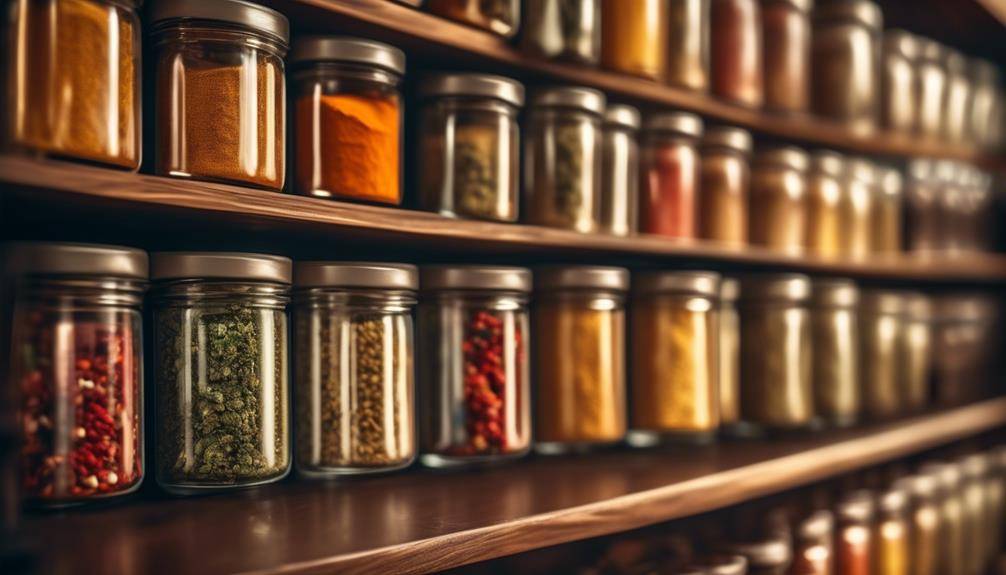
When it comes to preserving the vibrant flavors of exotic spices, using airtight containers is essential. Proper spice preservation starts with selecting the right container types. Glass jars with tight-fitting lids are a popular choice, as they’re not only durable but also non-reactive, preventing any unwanted chemical interactions. Alternatively, you might consider metal tins that offer excellent sealing properties, ensuring your spices stay fresh.
When you store your spices in these containers, make sure they’re clean and completely dry. Moisture can quickly ruin even the most robust flavors, leading to spoilage. If you’re short on space, opt for smaller containers that still provide an airtight seal. This way, you can keep your spices organized without taking up too much room.
Labeling your containers is also a great idea, so you can easily identify each spice. Remember, each time you open a container, air can affect the flavor, so minimize exposure by working quickly. Investing in quality airtight containers not only keeps your exotic spices fresh longer but also enhances your cooking experience. Enjoy cooking with spices that remain as vibrant as the day you bought them!
Cool, Dark Storage Location
Even the best airtight containers can’t maintain spice freshness if they’re not stored properly. To truly preserve the flavors of your exotic spices, pick a cool, dark storage location. Your spice shelf should be away from heat sources, such as the stove or oven, as high temperatures can degrade the spices over time.
Aim for an ideal temperature around 60-70°F, which helps keep the essential oils intact and the flavors vibrant. Avoid areas that experience temperature fluctuations, like near windows or in poorly insulated cabinets. Light can also be a sneaky enemy; exposure to sunlight can cause spices to lose their potency quickly.
Consider using a cupboard or pantry that remains consistently cool and dark. If you’re worried about humidity, you might also want to keep your spices in a dry place, as moisture can lead to clumping and spoilage.
Learn Regional Uses
Understanding the origins and traditions of spices can transform your cooking experience. Each region has unique practices that highlight their local spices in delicious ways. By exploring these cultural nuances, you’ll elevate your dishes and impress your guests.
Spice Origins and Traditions
As you explore the rich tapestry of global cuisine, you’ll find that each spice carries unique stories rooted in its region of origin. Understanding spice history can deepen your appreciation for the culinary rituals that accompany them. For instance, cardamom, prized in Indian cooking, boasts a cultural significance tied to traditional recipes like chai, while its flavor symbolism represents warmth and hospitality.
The spice trade has historically linked diverse cultures, introducing spices like saffron from Persia and chili peppers from the Americas to various regions. Each spice has its regional variations, which impact how they’re used in dishes. For example, cumin in Middle Eastern recipes contrasts with its role in Mexican cuisine.
Moreover, many spices have medicinal uses that reflect ancient practices. Turmeric, celebrated for its anti-inflammatory properties, is a staple in South Asian diets and rituals. By learning about these origins and traditions, you not only enhance your cooking but also engage with the rich narratives behind each ingredient. So, the next time you reach for an exotic spice, remember its journey and the cultural heritage it represents.
Cultural Cooking Practices
How do regional cooking practices influence the way spices are used in everyday dishes? The answer lies in cultural significance and the unique flavors that define different cuisines. Each region has its own set of spices that reflect its history, climate, and available ingredients. For instance, in Indian cooking, you’ll often find a blend of spices like garam masala, which embodies the rich tapestry of Indian culture.
On the other hand, in Mexican cuisine, you’ll discover the vibrant use of chili peppers and cumin, showcasing the country’s diverse agricultural bounty. These regional variations not only enhance the dishes but also tell a story of the people and traditions behind them.
When you incorporate exotic spices into your cooking, consider the cultural practices surrounding them. For example, how spices are toasted or ground can notably affect their flavor profiles. By embracing these regional techniques, you’ll not only elevate your dishes but also connect with the history and traditions of the cuisine. So, don’t hesitate to explore and adapt these practices in your own kitchen, celebrating the rich diversity that spices bring to the table.
Keep a Spice Journal
A spice journal is your gateway to discovering the vibrant world of flavors. By keeping a detailed record of your spice inventory, you can track which spices you have on hand, their origins, and their flavor profiles. This not only helps you avoid duplicates but also encourages you to use spices you might otherwise overlook.
Start by listing each spice in your collection, noting its characteristics, and any unique qualities that might inspire your cooking. You can also include sections for flavor experiments. Whenever you try a new recipe or create your own dish, jot down your thoughts on the spices you used. Did a particular spice elevate the dish? Was there a combination that didn’t quite work? Documenting these experiences will refine your palate and cooking skills over time.
As you cook, refer back to your journal to see what worked well in past dishes. This will boost your confidence in using exotic spices and help you innovate. You might even find yourself recording ideas for future meals inspired by your favorite spice combinations.
In essence, your spice journal becomes a personalized cookbook that reflects your unique taste journey. It’s a valuable tool for anyone looking to master the art of cooking with exotic spices. So, grab a notebook or use a digital app to start your spice journal today, and watch your culinary adventures unfold!
Click Here and Turn Every Masterpiece into a Showstopper!
Frequently Asked Questions: Tips For Cooking With Amazing Exotic Spices
How Do I Know if a Spice Is Fresh?
To know if a spice is fresh, check its aroma; strong scents indicate freshness. Also, taste a bit—if the flavor intensity is vibrant, it’s likely fresh. Dull aromas or weak flavors suggest it’s past its prime.
Can I Use Ground Spices Instead of Whole Spices?
You can definitely use ground spices instead of whole spices. Ground spices offer convenience and quicker flavor release, while whole spices provide deeper, more complex flavors. It’s all about balancing those ground spice advantages with whole spice flavors.
What Are the Best Storage Containers for Spices?
When choosing storage containers for spices, consider glass or metal for durability and airtight seals. Prioritize spice organization by labeling and arranging them logically, ensuring you easily access your favorite flavors whenever you cook.
How Long Do Spices Typically Last Before Losing Potency?
Spices typically last about one to three years before losing potency. To check spice shelf life, look for changes in color, aroma, or flavor—these are key spice potency indicators you shouldn’t ignore.
Are There Any Health Risks Associated With Exotic Spices?
Yes, there can be health risks with exotic spices. You should watch for spice allergies and potential digestive issues. It’s important to introduce new spices gradually to monitor your body’s reactions effectively.

Conclusion
Cooking with exotic spices can elevate your dishes and ignite your culinary creativity. By starting with small quantities and understanding flavor profiles, you’ll discover the unique nuances each spice brings. Don’t forget to toast them for enhanced flavor and pair them with complementary ingredients. Keep experimenting and documenting your favorite blends, and you’ll soon master the art of spice. With proper storage and knowledge of regional uses, you’ll transform your cooking into a vibrant, flavorful experience.