7 Best Techniques For Fermenting Soybeans Successfully
7 Best Techniques For Fermenting Soybeans Successfully: To ferment soybeans successfully, start by selecting high-quality, organic soybeans free from blemishes. Soak and rinse them thoroughly, then boil or pressure-cook until soft. Choose the right starter culture based on your flavor preference. Maintain ideal conditions by controlling temperature and humidity, usually within the 68°F to 86°F range. Monitor fermentation progress through taste and aroma changes, and be ready to troubleshoot common issues like contamination. Finally, store your fermented soy products in suitable containers. Follow these techniques, and you'll be on your way to delicious results that you can further explore.
Selecting Quality Soybeans
Click Here and Turn Every Masterpiece into a Showstopper!
When it comes to fermenting soybeans, selecting quality beans is essential for a successful outcome. You'll want to reflect on different soybean varieties, as each type can impact the flavor and texture of your final product. For instance, some varieties are better suited for miso or tempeh, while others may work best for soy sauce. Research the specific characteristics of each variety to find the one that aligns with your fermentation goals.
Organic sourcing plays an important role in selecting quality soybeans, too. By choosing organically grown beans, you avoid pesticides and harmful chemicals that could affect the fermentation process. Organic soybeans often have a richer flavor and higher nutrient content, which can enhance the overall quality of your fermented products. When shopping for soybeans, look for reputable suppliers who can guarantee organic certification and provide information about the soybean's origin.
Pay attention to the visual and tactile qualities of the beans. They should be uniform in color, free of blemishes, and firm to the touch. Avoid beans that appear shriveled or discolored, as these may indicate poor quality or spoilage. Once you've selected your soybeans, store them in a cool, dry place until you're ready to start the fermentation process. By taking these steps to select quality soybeans, you'll set the foundation for a successful fermentation experience that yields delicious and nutritious results.
Preparing Soybeans for Fermentation
To kick off the fermentation process, it's important to prepare your soybeans properly. Start by selecting high-quality soybeans, as their freshness will impact the final product. Once you've got your soybeans, you'll want to employ effective soaking methods. Soak the beans in water for at least 8 to 12 hours, which softens them and makes them easier to cook. This step is essential, as it also helps to remove some of the indigestible sugars that can cause gas.
After soaking, drain the beans and rinse them thoroughly to eliminate any residual impurities. Next, you'll need to use appropriate cooking techniques to make sure your soybeans are ready for fermentation. Boil the soaked beans in fresh water for about 30 to 45 minutes until they're tender but not mushy. If you have a pressure cooker, you can greatly reduce cooking time—just around 10 to 15 minutes under high pressure will do the trick.
Once cooked, drain the soybeans and let them cool to room temperature. This cooling phase is crucial, as you want them to be warm but not hot when you introduce your starter culture later on. Proper preparation of your soybeans sets the stage for successful fermentation, so take your time with these steps. By following these soaking methods and cooking techniques, you'll make sure your soybeans are primed for the fermentation process ahead.
Choosing the Right Starter Culture
After your soybeans have been properly prepared and cooled, the next step is selecting a suitable starter culture for fermentation. The right starter culture can greatly impact both the flavor and texture of your final product. You'll find various starter culture types, each offering unique benefits. Some common options include commercial cultures specifically designed for soybean fermentation, while others are traditional cultures passed down through generations.
When choosing a starter culture, consider the desired flavor profile and texture. For instance, if you're looking for a robust taste, a culture rich in specific bacteria may work best. On the other hand, a milder culture could yield a subtler flavor. It's also essential to think about microbial diversity; a diverse mix of microorganisms can lead to more complex flavors and enhance the fermentation process. A culture that includes both yeasts and lactic acid bacteria can provide that diversity, contributing to a well-rounded final product.
You can source starter cultures from several places, including specialty stores, online retailers, or even local fermentation communities. If you're adventurous, you might even try cultivating your own starter from previous batches. Just remember that using a starter culture gives you more control over the fermentation process, ensuring consistent results. With the right starter culture in hand, you're well on your way to creating delicious fermented soy products!
Maintaining Optimal Fermentation Conditions
To achieve the best results in fermenting soybeans, you need to pay close attention to temperature control, humidity levels, and fermentation duration. These factors directly influence the activity of your starter culture and the overall quality of your product. By carefully managing these conditions, you can create an ideal environment for fermentation.
Temperature Control Importance
Maintaining the right temperature during soybean fermentation is vital for achieving ideal results. The fermentation temperature plays an important role in the growth of beneficial bacteria and yeast, which are key to transforming your soybeans into delicious fermented products. If you don't maintain ideal heating, you risk slowing down the fermentation process or encouraging the growth of unwanted microorganisms.
Aim for a consistent temperature that falls within the recommended range for your specific fermentation method. Too high of a temperature can lead to off-flavors and spoilage, while too low can stall fermentation altogether. To achieve the best results, invest in a reliable thermometer to monitor the temperature closely.
You might also consider using a controlled environment, like a fermentation chamber or a simple heating pad, to help maintain steady temperatures. Remember, during fermentation, fluctuations can impact the quality of your final product. By keeping a close eye on the fermentation temperature, you'll guarantee that your soybeans ferment evenly and effectively, resulting in a tasty and nutritious outcome. Don't underestimate the power of temperature control; it's a game-changer in the fermentation process!
Humidity Level Management
Humidity levels are just as essential as temperature when it comes to fermenting soybeans effectively. You need to maintain the right moisture balance to guarantee a successful fermentation process. If the humidity is too low, your soybeans may dry out, preventing proper fermentation. On the other hand, excessive humidity can promote unwanted mold growth, leading to poor quality or spoiled product.
To manage humidity, start by selecting appropriate fermentation containers. Look for containers that seal well, which will help retain moisture without allowing too much air in. If you're fermenting on a larger scale, consider using containers that have ventilated lids, enabling you to control airflow while keeping humidity levels stable.
During the fermentation process, monitor the moisture levels regularly. If you notice the soybeans drying out, you can mist them lightly with water to restore balance. Conversely, if your container seems too moist, open it briefly to let some humidity escape. By actively managing humidity, you'll create the best environment for your soybeans to ferment successfully, guaranteeing a flavorful, high-quality product in the end.
Duration of Fermentation
The duration of fermentation plays a significant role in achieving the desired flavor and texture of your soybeans. To get the best results, you'll want to monitor the fermentation duration closely. Generally, the ideal time for fermenting soybeans varies depending on the specific recipe and desired outcome. Most fermentations last between 24 to 72 hours, but this can change based on temperature and humidity levels.
You should regularly check the soybeans during this period. Taste-testing is essential; this way, you can determine if the flavor has reached your preferred level. A shorter fermentation duration might yield a milder taste, while a longer process can develop deeper, more complex flavors.
Keep in mind that maintaining stable conditions—like temperature and humidity—can also impact how long you should ferment. If you're working in a warmer environment, your soybeans might ferment more quickly, so adjust the duration accordingly.
Ultimately, patience is key. By closely monitoring the fermentation duration and making adjustments as needed, you'll create deliciously fermented soybeans that suit your palate perfectly.
Click Here and Turn Every Masterpiece into a Showstopper!
Monitoring Fermentation Progress
To guarantee your soybeans are fermenting properly, keep an eye out for visual indicators like bubbles or changes in color. You'll also want to monitor the temperature and stick to time guidelines that suit your specific recipe. As the fermentation progresses, pay attention to the aroma and flavor changes, which signal that your soybeans are transforming into a delicious product.
Visual Indicators of Fermentation
Monitoring fermentation progress in soybeans involves paying close attention to several visual indicators that signal changes in the process. As you observe your beans, you'll notice distinct fermentation stages marked by specific visual cues. Early on, you might see subtle color changes, such as a shift from a light beige to a deeper hue, indicating the onset of fermentation.
Texture variations are also vital; the beans may become softer, showing that they're absorbing moisture and breaking down. Keep an eye out for gas production, which can manifest as bubbles forming or escaping from your fermentation vessel. This suggests that fermentation is actively occurring.
Additionally, pH shifts can influence the appearance of your soybeans. A decrease in pH often correlates with a tangy taste, so you might also want to sample a few beans to assess taste indicators. Finally, be vigilant for any mold appearance. While some molds are harmless, others can spoil your batch, so it's important to identify and address any issues quickly. By monitoring these visual indicators, you'll gain a better understanding of your fermentation process and guarantee a successful outcome.
Temperature and Time Guidelines
Understanding temperature and time guidelines is essential for successful soybean fermentation. The right temperature can greatly influence the fermentation process, so you'll want to maintain a steady environment for your fermentation vessels. Ideally, aim for a temperature range of 68°F to 86°F (20°C to 30°C). If you notice temperature fluctuations outside this range, it could hinder the growth of beneficial microbes and lead to undesirable results.
Time is just as important as temperature. Depending on your desired end product, fermentation typically lasts from 24 hours to several days. For instance, a shorter fermentation time will yield a milder flavor, while longer fermentation can enhance the complexity of taste. Keep an eye on your fermentation vessels during this period, checking for visual indicators like bubbles or changes in texture.
Monitoring these factors closely allows you to adjust the conditions if needed. If you find that the temperature has dropped or risen greatly, consider relocating the fermentation vessels to stabilize the environment. By staying vigilant about temperature and time, you'll set yourself up for a successful fermentation that meets your flavor expectations.
Aroma and Flavor Changes
The aroma and flavor of your fermenting soybeans can offer valuable insights into the progress of the fermentation process. As fermentation begins, you'll notice a shift in the aroma compounds. Initially, you might detect a raw, earthy scent, but as time passes, this transforms into a more complex, savory fragrance. Keep an eye on these changes; they're key indicators of how well your fermentation is progressing.
Pay attention to the flavor profile as well. Early on, the flavor might be bland or even slightly bitter. However, as fermentation continues, you'll start to taste deeper, richer flavors developing. This evolution is a sign that beneficial microbes are working effectively, breaking down the soybeans' compounds and enhancing taste.
To monitor the fermentation closely, regularly sample your soybeans. Take note of any shifts in both aroma and flavor at various stages. If you detect off-putting smells or flavors, it could indicate issues like contamination or inadequate fermentation conditions. By remaining attentive to these sensory changes, you can guarantee your fermented soybeans turn out delicious and successful.
Troubleshooting Common Issues
Fermenting soybeans can sometimes present a few hiccups, but don't worry—most issues are easily fixable. One of the most common problems you might encounter is unwanted contamination. This usually occurs when harmful bacteria or molds infiltrate your fermentation environment. To prevent contamination, make certain you prioritize equipment sanitation. Start by thoroughly cleaning all tools and containers with hot soapy water and rinsing them well. You can also use food-grade sanitizers to guarantee everything's clean before starting your fermentation process.
Another issue could be the temperature. If your fermentation isn't progressing, it might be too cold. Soybeans typically ferment best between 68°F and 86°F (20°C to 30°C). If you notice slow fermentation, consider moving your setup to a warmer spot or using a heat mat to maintain the right temperature.
Texture changes can also signal a problem. If your soybeans become overly mushy or retain an off-putting texture, it could be due to over-fermentation. Keep an eye on the time; generally, 2 to 3 days is sufficient for most recipes.
Lastly, if you're unhappy with the flavor, remember that fermentation is an art. You can adjust the seasoning or type of culture used in future batches to achieve your desired taste. With these tips, you'll be well-equipped to troubleshoot common fermentation issues and enjoy your homemade soy products!
Storing Fermented Soy Products
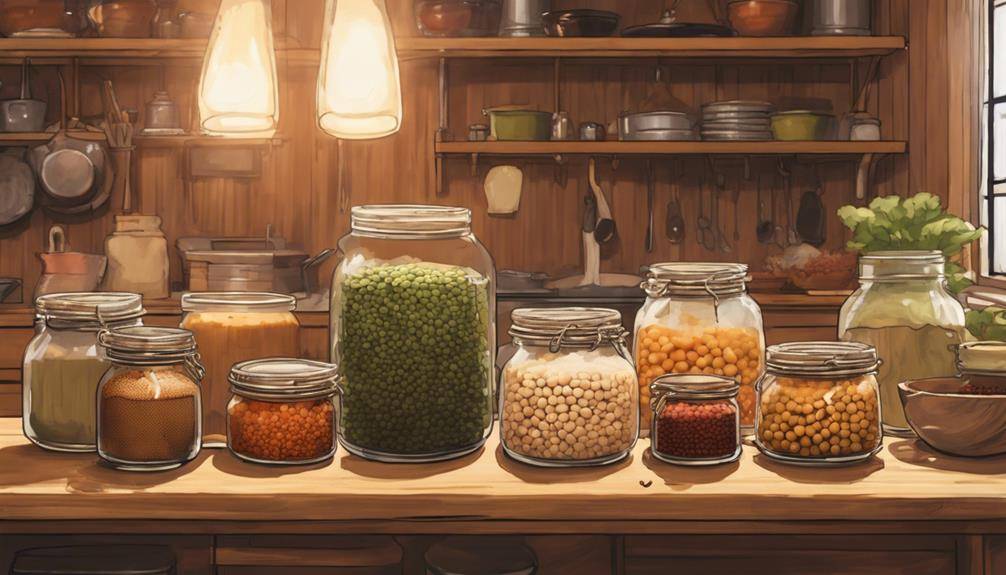
When you've successfully fermented your soybeans, knowing how to store the finished products is vital for maintaining their flavor and quality. Effective storing techniques can greatly extend the shelf life of your fermented soy products. Start by choosing the right fermentation containers; glass jars or food-grade plastic containers work best as they prevent contamination and preserve flavor retention.
For short-term storage, refrigeration is your go-to option. Make certain to keep your jars tightly sealed to minimize exposure to air, which can lead to spoilage. A good tip is to label your containers with the date of fermentation, so you can easily track freshness. If you want to extend the shelf life even further, consider freezer storage. You can freeze smaller portions in vacuum-sealed bags, which not only saves space but also preserves the flavor and texture.
When it comes to packaging options, using airtight containers is essential. Vacuum sealing is especially effective as it removes excess air, helping to maintain quality during storage. Always remember to thaw frozen products in the refrigerator to guarantee they retain their original taste and texture.
Click Here and Turn Every Masterpiece into a Showstopper!
Frequently Asked Questions: 7 Best Techniques For Fermenting Soybeans Successfully
Can I Ferment Soybeans Without a Starter Culture?
Yes, you can ferment soybeans without a starter culture. By embracing natural fermentation or wild fermentation, you allow beneficial bacteria from the environment to thrive, creating unique flavors and textures in your soybeans.
How Long Can I Store Unfermented Soybeans?
You can store unfermented soybeans for up to a year if you maintain proper storage conditions. Different soybean varieties may have varying shelf lives, but cool, dry environments will help preserve their quality longer.
What Containers Are Best for Fermenting Soybeans?
When fermenting soybeans, choose fermentation vessels made from food-grade materials like glass or stainless steel. These containers guarantee ideal conditions, preventing unwanted reactions and contamination. Avoid plastics, as they can leach harmful substances during fermentation.
Can I Ferment Soybeans at Room Temperature?
Yes, you can ferment soybeans at room temperature. For successful room temperature fermentation, keep the environment stable and follow soybean fermentation tips like maintaining cleanliness and monitoring moisture levels to achieve the desired flavor and texture.
Are There Any Health Risks Associated With Fermented Soy Products?
When considering fermented soy health, it's vital to note that some individuals might experience allergies or sensitivities. Properly fermented soy product safety is important, so always choose reputable brands and make sure they're prepared correctly.

Conclusion
By following these seven techniques, you can successfully ferment soybeans and create delicious, nutritious products. Remember to select quality beans, prepare them properly, and choose a suitable starter culture. Keep an eye on fermentation conditions and progress to guarantee the best results. If you encounter any issues, troubleshooting can help you get back on track. Finally, store your fermented soy products correctly to enjoy their benefits for longer. Happy fermenting!