Perfecting Your Sushi Rolls For A Tighter Finish
Your Sushi Rolls For A Tighter Finish: To perfect your sushi rolls and achieve a tighter finish, focus on mastering your rolling technique. Start with high-quality short-grain sushi rice and guarantee it’s evenly seasoned. When laying the nori, shiny side down, make sure to wet your hands to prevent sticking. Spread the rice evenly but avoid overfilling, as this can lead to a messy roll. Roll gently while applying consistent pressure and dampen the exposed edge of the nori to secure it. Finally, let your roll rest seam side down to hold its shape. Keep practicing, and you’ll discover even more helpful tips along the way.
Choosing the Right Ingredients
Click Here and Turn Every Masterpiece into a Showstopper!
When it comes to sushi rolls, selecting the right ingredients is essential for achieving that authentic taste and texture. You’ll want to prioritize ingredient freshness, as it directly impacts the overall quality of your sushi. Fresh fish, crisp vegetables, and high-quality nori make all the difference. When you’re at the market, don’t hesitate to ask about the catch of the day or the farm’s harvest. This extra attention guarantees you’re getting the best selection available.
Next, focus on achieving a flavor balance in your rolls. Each ingredient should complement the others, creating a harmonious blend. For example, pairing fatty tuna with the crunch of cucumber can elevate the taste experience. Consider adding a touch of wasabi or pickled ginger to enhance the flavor profile without overwhelming it. Remember, each element should work together to create a cohesive bite.
Moreover, think about the color and texture of your ingredients. Vibrant colors not only make your sushi visually appealing but also indicate freshness. Choose ingredients that offer a variety of textures—creamy avocado, crunchy tempura, and silky fish can all contribute to a more satisfying experience.
Preparing Your Sushi Rice
Achieving the perfect sushi roll hinges not just on quality ingredients but also on well-prepared sushi rice. The foundation of any great sushi roll begins with the rice, so let’s explore how you can prepare it to elevate your sushi game.
Start with high-quality short-grain sushi rice, as its sticky texture is essential for holding your rolls together. Begin the process by thoroughly washing the rice. Rinse it under cold water until the water runs clear, removing excess starch. This step is vital; it prevents your rice from becoming gummy and helps achieve a better texture. After washing, soak the rice for about 30 minutes to allow it to absorb water, which helps it cook evenly.
Next, cook the rice according to your method of choice, whether it’s a rice cooker or stovetop. Once it’s cooked, transfer it to a large bowl. While the rice cools, you’ll want to prepare your seasoning. A good balance of rice vinegar, sugar, and salt is key to achieving that perfect flavor.
The seasoning balance should be tailored to your taste, but a common ratio is 1 part vinegar, 1 tablespoon sugar, and ½ teaspoon salt for every cup of rice. Gently fold the seasoning into the rice using a wooden spatula, taking care not to mash the grains. Allow it to cool to room temperature before using it in your sushi rolls. With well-prepared sushi rice, you’re one step closer to mastering your sushi rolls!
Mastering the Rolling Technique
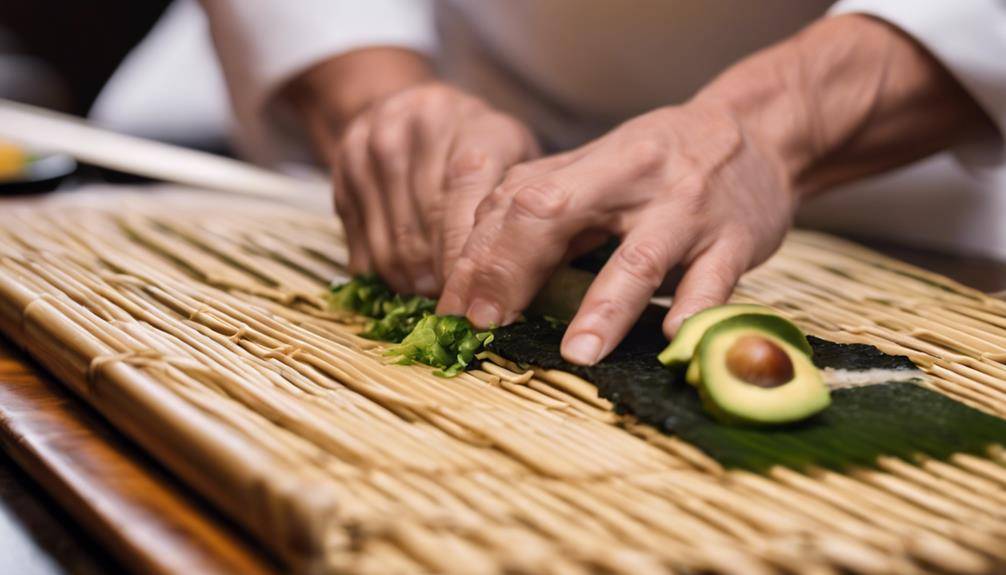
Mastering the rolling technique is essential for crafting perfectly shaped sushi rolls. When you start, lay your sushi mat on a flat surface and place a sheet of nori on top, shiny side down. Wet your hands to prevent the rice from sticking, then grab a handful of sushi rice and spread it evenly across the nori, leaving a small gap at the top.
Now, it’s time to focus on the roll direction. As you begin to roll, use your fingers to tuck the nori over the filling, ensuring it’s snug but not overly tight. The goal is to keep everything together while avoiding a squished roll. As you continue to roll, apply gentle pressure with your hands, guiding the sushi mat to help shape the roll. Remember, the sushi mat is your ally here; it allows for even pressure and helps maintain the roll’s integrity.
When you reach the exposed edge of the nori, dampen it slightly with water to secure the roll. Finish rolling and gently squeeze the sushi mat to tighten the roll even more. Once you’re satisfied with the shape, let it rest seam side down for a minute. This brief resting period helps the roll hold its shape better when you slice it. With practice, your rolling technique will improve, leading to tighter, more visually appealing sushi rolls that will impress everyone at the table.
Using the Right Tools
To create the perfect sushi rolls, having the right tools on hand can make all the difference. First and foremost, invest in high-quality sushi mats. These bamboo mats provide the ideal surface for rolling and help guarantee your sushi maintains its shape. Look for mats that are tightly woven to prevent sticking and allow for even pressure during the rolling process.
Next, consider using rolling guides. These handy tools can help you achieve a consistent thickness and tightness in your rolls. Rolling guides often come in various sizes to accommodate different types of sushi, so choose one that suits your needs. They’re particularly useful for beginners who may struggle with the rolling technique.
In addition to mats and guides, don’t overlook other essential tools like a sharp knife for slicing your finished rolls. A clean cut is vital for presentation and can also help prevent your sushi from falling apart. A rice paddle is another must-have; it allows you to handle sushi rice without crushing it, guaranteeing a fluffy texture.
You might also want to have a small bowl of water nearby for wetting your hands and knife. This can help prevent sticking and make the entire process smoother. By gathering these tools, you’ll set yourself up for success in creating beautifully rolled sushi that’s not only delicious but also visually appealing.
Click Here and Turn Every Masterpiece into a Showstopper!
Common Mistakes to Avoid
When you’re rolling sushi, it’s easy to make a couple of common mistakes that can ruin your creation. Overfilling the roll can lead to messy results, while inconsistent rice pressure can affect the overall texture. Let’s go over these pitfalls to help you achieve that perfect sushi roll every time.
Overfilling the Roll
As you prepare to roll your sushi, it’s important to avoid the temptation of overfilling. When you pack too many ingredients into your roll, you exceed its roll capacity, making it difficult to seal properly. This not only compromises the aesthetic of your sushi but also affects its taste. A well-balanced roll should highlight each ingredient’s flavor; overloading it dilutes the flavor balance, turning a delightful bite into a jumbled mess.
To achieve the perfect sushi roll, think about how each component interacts. Choose a few key ingredients that complement each other rather than tossing in everything you have on hand. This keeps your roll manageable and allows the flavors to shine through. Remember, less is often more when it comes to sushi.
If you find yourself struggling with overfilling, consider using smaller portions or even smaller rolls, like hosomaki or temaki. These options still deliver a delicious taste without the risk of overflow. With practice, you’ll learn the right amount to fill your rolls, ensuring they’re both visually appealing and packed with flavor.
Inconsistent Rice Pressure
Often, inconsistent rice pressure can make or break your sushi roll. When you’re rolling, it’s essential to apply even pressure throughout. If you press too hard in one spot and too lightly in another, you’ll end up with a roll that’s uneven and falls apart. This inconsistency can stem from not properly managing rice moisture. If your rice is too wet, it’ll stick together, making it hard to roll tightly. Conversely, if it’s too dry, you won’t get that cohesion needed for a firm roll.
To achieve ideal roll tightness, start by distributing your rice evenly across the nori. Then, as you roll, maintain a steady pressure, ensuring each part of the roll feels uniform. Using a bamboo mat can help you gauge the right amount of pressure. Remember, it’s not just about rolling; it’s about creating a balanced roll that holds together.
Also, practice makes perfect. The more you roll, the better you’ll understand how different rice moisture levels affect your technique. Keep these tips in mind, and you’ll be well on your way to perfect sushi rolls every time!
Practicing for Consistency
To master sushi rolling, you need to practice essential techniques consistently. Start by honing your ingredient preparation, as fresh and properly cut components make all the difference. With each roll, you’ll find your rhythm and improve your consistency, making your sushi truly shine.
Essential Rolling Techniques
Mastering essential rolling techniques is essential for creating consistent sushi rolls that impress. Start by ensuring your rice quality is first-rate; it’ll make a significant difference in your rolling outcome. Use short-grain sushi rice, as its sticky texture helps hold the roll together.
When you begin sushi rolling, lay a sheet of nori on your bamboo mat, shiny side down. Wet your hands to prevent sticking, and grab a handful of rice. Spread it evenly over the nori, leaving about an inch at the top edge. This inch is vital for sealing your roll later.
As you add your fillings, don’t overstuff. Less is often more; balance the flavors while keeping the roll manageable. Now, grasp the mat with both hands and start rolling away from you, applying gentle pressure. Use your fingers to tuck the filling as you roll, ensuring it stays compact.
Once you reach the exposed nori, dampen it slightly with water to seal the roll. Finish by giving the roll a gentle squeeze in the mat for a tighter finish. Practice these techniques consistently, and you’ll create impressive sushi rolls in no time!
Ingredient Preparation Tips
When preparing ingredients for your sushi rolls, a little attention to detail goes a long way in achieving consistency. Start by slicing vegetables into uniform pieces. This not only enhances the presentation but also guarantees even distribution in each roll. Aim for thin, even slices; this helps the vegetables blend seamlessly with the rice and seafood, creating a balanced taste in every bite.
Next, focus on seasoning seafood properly. Whether you’re using fish, shrimp, or crab, a light seasoning can elevate the flavors considerably. A sprinkle of salt or a dash of soy sauce can make a huge difference. Make sure to season your seafood evenly, allowing the flavors to penetrate for maximum impact.
Lastly, always prep your ingredients in advance. Having everything ready to go reduces stress during the rolling process and allows you to concentrate on technique. Consistent ingredient preparation leads to more uniform sushi rolls, making your final product not only delicious but also visually appealing. With these tips, you’ll find that practicing ingredient preparation will boost your sushi-making confidence and improve your overall results.
Click Here and Turn Every Masterpiece into a Showstopper!
Frequently Asked Questions: Your Sushi Rolls For A Tighter Finish
What Types of Fish Work Best for Sushi Rolls?
When choosing sushi fish varieties, opt for sustainable seafood options like salmon, tuna, and mackerel. These not only taste great but also support responsible fishing practices, ensuring a healthier ocean for future generations.
Can I Use Brown Rice Instead of White Rice?
Absolutely, you can use brown rice instead of white rice! Brown rice offers health benefits like more fiber and nutrients, enhancing your sushi’s overall healthiness. It adds a nuttier flavor and texture, making your rolls unique.
How Do I Prevent Seaweed From Getting Soggy?
To prevent seaweed from getting soggy, focus on proper seaweed preparation. Store your sushi in an airtight container to maintain freshness, and keep the fillings separate until you’re ready to roll for ideal texture.
What Are Some Creative Fillings for Sushi Rolls?
When exploring creative fillings for sushi rolls, try unusual ingredients like mango, cream cheese, or even spicy tuna. Experiment with flavor combinations such as avocado and shrimp or roasted vegetables and sesame for a delightful twist.
How Long Can I Store Leftover Sushi Rolls?
You can store leftover sushi rolls in the fridge for up to 24 hours. To maintain sushi freshness, wrap them tightly in plastic and keep them in an airtight container. Enjoy your sushi safely!

Conclusion
By focusing on quality ingredients, perfecting your sushi rice, and honing your rolling technique, you’ll see a significant improvement in your sushi rolls. Remember to use the right tools and be mindful of common mistakes that can hinder your progress. With practice, you’ll achieve a tighter finish and impress everyone with your sushi skills. So roll up your sleeves, keep experimenting, and enjoy the delicious results of your hard work! Happy sushi making!