Great Middle Eastern Slow Cooker Recipes
Great Middle Eastern Slow Cooker Recipes; You can effortlessly bring the vibrant flavors of Middle Eastern cuisine to your kitchen with slow cooker recipes. Try Chicken Shawarma by marinating tender chicken in yogurt and spices before cooking it for hours. Or, enjoy a savory Beef Tagine with sweet apricots, perfect for soaking up with crusty bread. Vegetarian Moroccan Couscous offers a colorful, wholesome main course that’s packed with nutrients. Don’t forget to experiment with essential spices like cumin and coriander for an authentic taste. Each recipe tells a delicious story, and there’s so much more to explore that’ll elevate your meals.
Overview of Middle Eastern Cuisine
When you plunge into Middle Eastern cuisine, you’ll discover a rich tapestry of flavors and ingredients shaped by centuries of cultural exchange. This region encompasses a diverse array of countries, each contributing unique culinary traditions and practices. You’ll find that the food reflects the influences of various civilizations, from the ancient Egyptians to the Ottoman Empire, creating a vibrant mix of tastes and textures.
As you explore this cuisine, you’ll notice regional variations that play a significant role in defining dishes. For instance, in Lebanon, fresh herbs and spices like za’atar and sumac dominate the palate, while in Iran, you’ll encounter saffron and pomegranate, which add depth to meals. In contrast, the Gulf states often emphasize the use of rice and seafood, showcasing a bounty of flavors straight from the Arabian Sea.
You’ll also appreciate how Middle Eastern cuisine embraces a balance of vegetarian and meat-based dishes. Ingredients like lentils, chickpeas, and eggplant take center stage in many meals, providing hearty options for those leaning towards plant-based diets. At the same time, you can’t overlook the importance of lamb and chicken, which frequently grace the tables across the region.
As you dive deeper into Middle Eastern cooking, you’ll find that each dish tells a story, revealing the cultural influences that have shaped it over generations. This rich culinary landscape invites you to savor and celebrate the diversity that defines Middle Eastern cuisine.
Benefits of Slow Cooking
Slow cooking’s charm lies in its ability to transform humble ingredients into flavorful, comforting meals with minimal effort. This method not only enhances the flavors of your dishes, but it also provides several health benefits. By cooking at lower temperatures over an extended period, you preserve nutrients that might otherwise be lost in high-heat cooking methods.
One of the biggest advantages is time efficiency. Imagine tossing your ingredients into the slow cooker in the morning, and by dinner, you’ve got a delicious meal ready to go. This convenience factor makes meal prep a breeze, freeing you to focus on other tasks or spend quality time with your family. Plus, when everyone gathers around the table to enjoy a home-cooked meal, it fosters family bonding and creates lasting memories.
Culinary exploration is another perk of slow cooking. You can experiment with various Middle Eastern spices and ingredients, discovering new flavor profiles without the pressure of immediate results. The energy savings associated with slow cookers also can’t be overlooked. They consume less electricity than an oven, making them an eco-friendly choice for conscientious cooks.
Essential Spices for Middle Eastern Dishes
To create authentic Middle Eastern dishes, you need to master a few essential spices that define the region’s vibrant flavors. You’ll find key flavor profiles and common spice blends that elevate your slow cooker meals. Plus, knowing how to store these spices will keep them fresh and ready for your culinary adventures.
Key Flavor Profiles
What makes Middle Eastern dishes so irresistible? It’s the bold and aromatic flavor profiles that stem from a rich tapestry of cultural influences and regional variations. As you explore essential spices, you’ll find that each ingredient tells a story, bringing depth and warmth to your slow cooker meals.
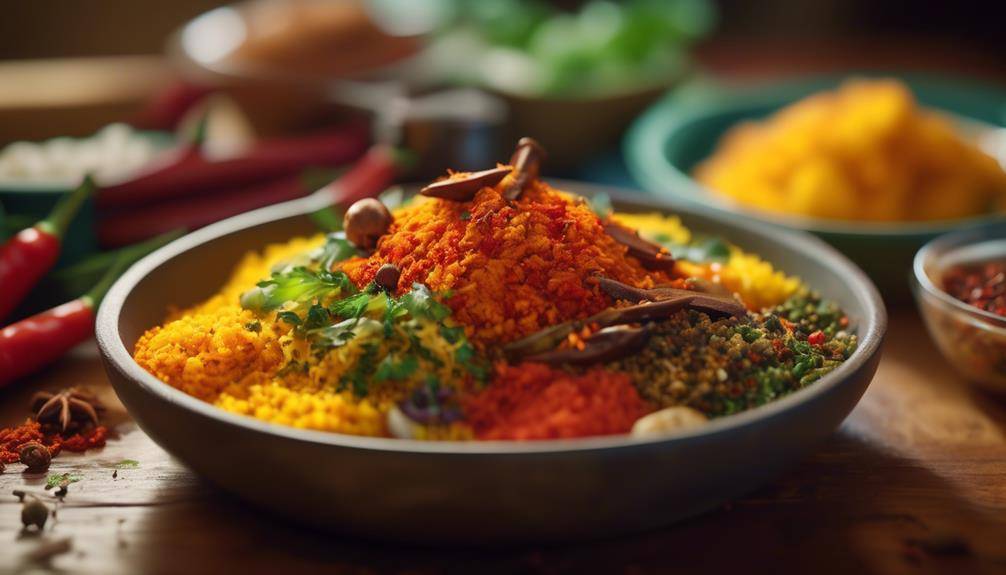
Start with cumin, known for its earthy, nutty flavor. It’s a staple in many dishes, enhancing everything from stews to rice. Next, consider coriander, which adds a citrusy brightness and complements the warmth of spices like cinnamon and allspice. Don’t forget about paprika—whether sweet or smoked, it lends a beautiful color and a mild kick.
Turmeric is another key player, offering not just its vibrant yellow hue but also a slightly bitter, peppery taste. As for herbs, fresh parsley and cilantro bring a fresh burst that balances the richness of meats and legumes.
Together, these spices create a symphony of flavors that reflect the diverse culinary traditions of the Middle East. By understanding these key flavor profiles, you’ll elevate your slow cooker recipes and delight in the vibrant tastes of this fascinating cuisine.
Common Spice Blends
Commonly, Middle Eastern cuisine showcases a variety of spice blends that transform simple ingredients into vibrant dishes. You’ll find that these blends draw from rich spice origins, often influenced by the region’s history and culture. For instance, za’atar, a popular blend, typically combines dried thyme, sumac, and sesame seeds, and can vary by country, with some adding oregano or marjoram for a unique twist.
Another essential blend is baharat, a warm, aromatic mix that often includes black pepper, coriander, and paprika. The specific spices you’ll use can change based on regional variations, giving each dish a distinct character. In Lebanon, you might find a sweeter version with cinnamon, while in Iraq, it leans more towards heat with the addition of chili.
Don’t overlook the versatility of ras el hanout, a Moroccan blend that contains a mix of up to 30 spices, usually featuring cardamom, cumin, and cloves. This spice blend can elevate your slow cooker meals, marrying flavors beautifully. By understanding these common spice blends, you can create authentic Middle Eastern dishes that burst with flavor and warmth.
Storage and Freshness Tips
Proper storage of spices is key to maintaining their freshness and potency, especially in Middle Eastern cooking where flavor is paramount. To keep your spices at their best, store them in airtight containers away from light, heat, and moisture. Glass jars or high-quality plastic containers work well.
You should also label your spices with the purchase date, as freshness indicators can help you determine when they’ve lost their effectiveness. Most ground spices last about six months to a year, while whole spices can last up to two to three years.
For longer-term storage, consider using freezing techniques. You can freeze whole spices or spice blends in small portions. This helps preserve their flavor and aroma, allowing you to enjoy vibrant tastes in your dishes. Just remember to let them come to room temperature before using, as moisture can develop when you take them out of the freezer.
Slow Cooker Chicken Shawarma
When you make slow cooker chicken shawarma, the marinade is key to packing in flavor. You’ll want to pay attention to cooking time to guarantee the chicken turns out tender and juicy. Plus, I’ll share some serving suggestions that will elevate your meal to new heights.
Flavorful Marinade Ingredients
To create a truly flavorful marinade for your slow cooker chicken shawarma, you’ll want to focus on a blend of spices and ingredients that infuse the meat with rich, aromatic flavors. Start with a base of yogurt, which not only tenderizes the chicken but also adds creaminess. Combine it with freshly squeezed lemon juice, garlic, and a mix of spices like cumin, coriander, paprika, and turmeric. These spices are essential for that authentic shawarma taste.
When using marinade techniques, make certain you let the chicken soak for at least a few hours, or ideally overnight. This allows the flavors to penetrate deeply. If you don’t have yogurt, you can use buttermilk or a dairy-free alternative like coconut yogurt as ingredient substitutions.
Don’t forget to add a splash of olive oil to help meld the flavors together and to keep the chicken moist while it cooks. A touch of salt and pepper will enhance everything, so season generously. With this marinade, your chicken will emerge from the slow cooker bursting with flavor, ready to be served in wraps or over rice. Enjoy the delicious journey of Middle Eastern cuisine right in your home!
Cooking Time Tips
For perfectly tender chicken shawarma, timing is key in the slow cooker. You’ll want to plan ahead and manage your time wisely to achieve the best results. Generally, cooking your chicken on low for 6-8 hours yields the most flavorful and juicy results. If you’re in a hurry, you can make slow cooker adjustments and cook it on high for 3-4 hours, but keep an eye on it to prevent overcooking.
To guarantee your shawarma turns out just right, check the internal temperature of the chicken. It should reach at least 165°F. If you notice the chicken is cooking faster than expected, you can reduce the cooking time accordingly. Also, consider the thickness of the chicken pieces you’re using; thinner cuts will cook quicker than thicker ones.
Make it a habit to check your slow cooker a little earlier than planned, especially if you’re trying a new recipe. Good time management will help you avoid dry chicken and keep it tender. With these tips, you’ll master the art of cooking chicken shawarma perfectly every time!
Serving Suggestions Ideas
Serving chicken shawarma from your slow cooker opens up a world of delicious possibilities. For an enticing meal presentation, consider using vibrant plates that highlight the shawarma’s golden-brown color. You can use various plating techniques, like stacking the chicken slices or arranging them in a fan shape, to make the dish visually appealing.
Garnish ideas like fresh parsley, pickled red onions, or a sprinkle of sumac can elevate your dish. For a family-style serving, place the shawarma on a large platter surrounded by pita bread, hummus, and fresh vegetables. This approach encourages sharing and creates a warm, inviting atmosphere, perfect for festive occasions.
When it comes to portion sizes, aim for a generous amount of chicken, allowing guests to fill their plates as they desire. Pair your meal with invigorating beverages like mint lemonade or a light white wine to balance the rich flavors of the shawarma. By incorporating these cultural traditions and thoughtful serving suggestions, you’ll create a memorable dining experience that celebrates the essence of Middle Eastern cuisine. Enjoy!
Beef Tagine With Apricots
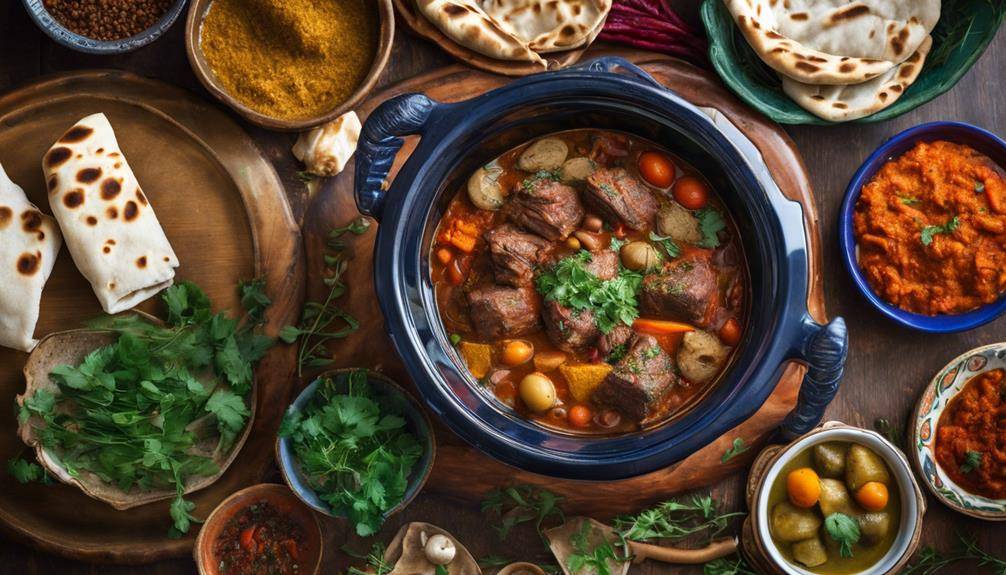
Aromatic and hearty, Beef Tagine with Apricots brings the rich flavors of the Middle East right into your kitchen. This dish combines tender beef with sweet apricots, creating a perfect balance of savory and sweet that’ll delight your taste buds. Using a slow cooker simplifies the cooking process. Just brown the beef, toss everything in, and let it simmer to perfection.
To prepare your beef tagine, you’ll want to use robust spices such as cumin, coriander, and cinnamon. These spices not only enhance the flavor but also contribute to the dish’s aromatic profile. Searing the beef first locks in moisture and adds depth to the dish, so don’t skip this essential step.
If you’re in need of ingredient substitutions, you can easily adjust the recipe to suit your pantry. For example, if you don’t have apricots, dried peaches or even raisins can work well. Additionally, if you prefer a lighter protein, chicken or lamb can be swapped in without losing the essence of the dish.
Once everything is in the slow cooker, let it do its magic. The slow cooking technique allows the flavors to meld beautifully, resulting in a dish that’s rich and satisfying. Serve your Beef Tagine with a side of couscous or crusty bread to soak up the delicious sauce. Enjoy the warm, comforting taste of this Middle Eastern classic, right from your own home!
Vegetarian Moroccan Couscous
While you might think of couscous as a simple side dish, Vegetarian Moroccan Couscous transforms it into a vibrant and wholesome main course. This dish showcases the rich flavors of Moroccan cuisine while keeping it entirely meat-free. To start, you’ll want to choose high-quality couscous, which serves as the perfect base for an array of colorful vegetables and spices.
Begin by sautéing onions, garlic, and a medley of your favorite veggies—think bell peppers, zucchini, and carrots—in a slow cooker. Add in spices like cumin, coriander, and a pinch of cinnamon to elevate those flavors. Once your vegetables are tender and aromatic, stir in the couscous and some vegetable broth, allowing it to absorb all the deliciousness.
What makes this dish even more exciting are the vegetarian variations you can explore. You could toss in chickpeas for added protein, or for a touch of sweetness, include raisins or dried apricots.
And don’t forget the couscous toppings! A sprinkle of fresh herbs like cilantro or parsley can brighten the dish, while toasted almonds or pine nuts add a delightful crunch. A drizzle of olive oil or a squeeze of lemon juice will enhance the flavors even further.
This Vegetarian Moroccan Couscous isn’t just a meal; it’s a celebration of textures and tastes, making it perfect for any occasion. You’ll find it satisfying and nourishing, while also impressing your friends and family with its exotic flair.
Spiced Lamb and Chickpea Stew
If you’re ready to explore heartier flavors, Spiced Lamb and Chickpea Stew is a fantastic choice. This dish combines tender lamb with the earthy richness of chickpeas, making it a filling meal that’s perfect for any occasion. When it comes to lamb sourcing, opt for high-quality cuts like shoulder or shank; they become melt-in-your-mouth tender when slow-cooked.
To start, gather your ingredients. You’ll need lamb, chickpeas, onions, garlic, and a medley of spices like cumin, coriander, and cinnamon. Chickpea varieties can make a difference in texture and flavor; you can choose between dried or canned, but if you go for dried, make sure to soak them overnight for the best results.
In your slow cooker, layer the ingredients, starting with the onions and garlic at the bottom. This allows them to caramelize beautifully as the stew cooks. Next, add the lamb, followed by the chickpeas and spices. Pour in some broth or water to keep everything moist and flavorful.
Set your slow cooker to low and let it work its magic for about 6-8 hours. The long cooking time allows the lamb to become tender and the spices to meld perfectly. When it’s ready, serve your Spiced Lamb and Chickpea Stew over fluffy couscous or with warm pita. You’ll find it’s a comforting, satisfying meal that’s sure to impress your family and friends. Enjoy!
Middle Eastern Lentil Soup
When you’re looking for a comforting bowl of soup, Middle Eastern Lentil Soup delivers warmth and flavor in every spoonful. This hearty dish is not only delicious but also packed with nutrition. Lentils are a powerhouse of protein and fiber, making them an excellent choice for your diet. Their health benefits, often referred to as lentil health, include supporting digestion and stabilizing blood sugar levels.
To make this soup in your slow cooker, you’ll need basic ingredients like lentils, onions, garlic, and spices such as cumin and coriander. Simply toss everything into the slow cooker, add some vegetable broth, and let it simmer until the lentils are tender. The result is a fragrant, satisfying soup that’s perfect for any occasion.
One of the best things about Middle Eastern Lentil Soup is its versatility. You can easily customize it to suit your taste or dietary needs. Want a bit of a kick? Add some chili powder or diced jalapeños. Prefer a creamier texture? Blend part of the soup before serving. You can also explore soup variations by incorporating different vegetables like carrots or spinach, or even adding a splash of lemon juice for brightness.
No matter how you choose to prepare it, Middle Eastern Lentil Soup is bound to become a staple in your meal rotation. Enjoy it on its own or pair it with warm pita bread for a complete meal.
Tomato and Eggplant Bake
When you’re ready to create a delicious Tomato and Eggplant Bake, you’ll want to gather some key ingredients that pack a flavorful punch. You’ll also need to contemplate the cooking time and a few helpful tips to get it just right. Finally, think about how to serve it and what pairings will elevate your meal.
Ingredients for Flavorful Bake
Creating a flavorful Tomato and Eggplant Bake requires a harmonious blend of fresh ingredients that elevate the dish. Start with ripe tomatoes and tender eggplants, as they form the foundation of your bake. You’ll want to slice the eggplants into rounds, sprinkling them with salt to draw out moisture and bitterness. Fresh herbs like basil and oregano add a fragrant touch, while garlic brings depth to the flavor.
For the sauce, consider using canned tomatoes if fresh ones aren’t available. You can even experiment with ingredient substitutions, such as adding bell peppers or zucchini for extra veggies. A splash of olive oil is essential for richness, and a sprinkle of feta or mozzarella cheese on top creates a delightful, melty finish.
Don’t forget about seasoning; salt, pepper, and a pinch of red pepper flakes can enhance the dish’s overall taste. When you use effective baking techniques, like layering the ingredients for even cooking, you’ll achieve a perfectly baked dish. Remember, every ingredient plays a role in creating that warm, comforting flavor you crave. Enjoy preparing this delicious bake, and get ready to savor the Middle Eastern flavors!
Cooking Time and Tips
Cooking your Tomato and Eggplant Bake to perfection requires attention to timing and technique. Start by prepping your ingredients, ensuring the vegetables are sliced evenly for consistent cooking. Once you’ve got everything ready, select the appropriate slow cooker settings. For this dish, using the low setting is ideal, allowing the flavors to meld beautifully over several hours.
Plan for about 6 to 8 hours of cooking time. If you’re in a hurry, the high setting can work in about 3 to 4 hours, but keep an eye on it to prevent overcooking. Remember, slow cooking is all about patience, and letting your bake simmer will enhance the dish’s depth of flavor.
For effective meal prep, consider making this dish a day in advance. It tastes even better the next day! Simply store it in the fridge after it cools, then reheat in the slow cooker on low for an hour before serving. This not only saves time but also gives the ingredients a chance to develop even richer flavors. With these tips, you’ll serve a delicious Tomato and Eggplant Bake that impresses every time!
Serving Suggestions and Pairings
A hearty Tomato and Eggplant Bake pairs beautifully with a variety of sides and accompaniments. For side dishes, consider serving it alongside fluffy couscous or warm pita bread, which enhances the meal’s cultural significance. You can also add a fresh salad with cucumbers and tomatoes to create delightful flavor contrasts.
When it comes to presentation, use vibrant serving platters that highlight the dish’s rich colors. Garnish options like fresh parsley or crumbled feta can elevate its visual appeal and provide a burst of flavor. For beverage pairings, a chilled mint lemonade or a light red wine complements the bake perfectly, making your meal feel festive.
During family gatherings or special occasions, this dish can be the centerpiece of your table. Meal prep is easy; you can prepare the bake ahead of time and reheat it, saving you effort on busy days. Don’t forget to personalize your servings, allowing guests to help themselves. By incorporating these tips, you’ll not only impress your guests but also create a warm, inviting atmosphere that celebrates good food and togetherness.
Slow Cooker Falafel
With the aroma of spices wafting through your kitchen, slow cooker falafel offers a delicious twist on this classic Middle Eastern dish. Instead of frying, you can enjoy the health benefits of this baked version while retaining the authentic flavors you love. This method makes the falafel easy to prepare, letting you focus on other elements of your meal.
To create slow cooker falafel, start by combining soaked chickpeas, fresh herbs like parsley and cilantro, garlic, and spices such as cumin and coriander in your slow cooker. You can experiment with slow cooker variations by adding ingredients like chopped onion or even some hot pepper for an extra kick. Blend everything until it reaches a coarse consistency, then let it cook for a few hours until the mixture is firm and flavorful.
Once your falafel is ready, you’ll want to think about falafel dipping options. A classic tahini sauce is perfect, offering a creamy counterpart to the crispy texture. Alternatively, whip up a zesty yogurt sauce with garlic and lemon for a revitalizing twist. Serve your slow cooker falafel alongside fresh veggies or in a pita, allowing everyone to create their own delicious wraps.
This slow cooker falafel not only simplifies your cooking process but also brings a delightful taste to your table. You’ll love how easy it is to impress friends and family with this flavorful dish!
Fragrant Rice Pilaf
Pairing perfectly with your slow cooker falafel, fragrant rice pilaf brings a comforting and aromatic element to your Middle Eastern meal. This dish boasts a saffron infusion that not only enhances its flavor but also adds warm, vibrant colors that catch the eye. You can use different rice variations, such as basmati or jasmine, to achieve varying degrees of fluffiness and nutty textures that elevate your pilaf.
To prepare your rice pilaf, start by sautéing aromatic herbs like cumin, coriander, and cardamom in your slow cooker. These herbs infuse the rice with a rich perfume that transports you to the bustling markets of the Middle East. After adding your rice and a proper amount of stock, let it cook slowly, allowing the flavors to meld beautifully. You’ll soon find that this traditional cooking method results in a dish that’s both comforting and deeply satisfying.
Fragrant rice pilaf holds cultural significance in many Middle Eastern households, often served during festive occasions and family gatherings. It’s a dish that symbolizes hospitality and warmth, making it a perfect companion to your falafel. Whether you’re celebrating a special event or simply enjoying a cozy dinner, this pilaf will surely impress your guests. So, don’t skip this essential component of your Middle Eastern meal; it’s more than just a side dish—it’s a delicious tradition that brings people together.
Herb-Infused Roasted Vegetables
Herb-infused roasted vegetables are a vibrant addition to your Middle Eastern feast, bringing a burst of color and flavor to the table. Picture a colorful medley of bell peppers, zucchini, eggplant, and carrots, all roasted to perfection. To elevate their taste, you can experiment with various herb varieties. Fresh parsley, coriander, thyme, and rosemary work beautifully together, each adding its unique aroma and depth to the dish.
When you prepare your vegetables, start by cutting them into uniform pieces to guarantee even cooking. Toss them in a generous amount of olive oil, then sprinkle your selected herbs over the top. Don’t shy away from using a mix; blending different herb varieties creates an exciting flavor profile. You can even add spices like cumin or paprika to enhance the Middle Eastern flair.
Roasting techniques play an essential role in achieving that perfect caramelization and texture. Preheat your oven to a high temperature, around 425°F (220°C). Spread your seasoned vegetables in a single layer on a baking sheet, making sure they aren’t overcrowded. This allows them to roast rather than steam, resulting in crispy edges and tender centers. Keep an eye on them, turning occasionally, until they’re golden brown and fragrant.
Once done, serve your herb-infused roasted vegetables alongside your other Middle Eastern dishes. They’ll not only satisfy your taste buds but also impress your guests with their vibrant appearance and delightful aroma.
Cooking Tips for Best Results
To get the best results from your Middle Eastern slow cooker recipes, pay attention to the quality of your ingredients. Fresh, high-quality produce and spices can make a huge difference in flavor. Also, mastering spice blending techniques will elevate your dishes and bring out the authentic tastes you’re aiming for.
Ingredient Quality Matters
Quality ingredients are the backbone of any great dish, especially when it comes to Middle Eastern slow cooker recipes. When you’re diving into ingredient sourcing, consider visiting local markets where you can find organic produce and seasonal vegetables. These options not only taste better but also contribute to sustainable ingredients that benefit your health and the environment.
For meats, prioritize quality; seek out ethically sourced options. High-quality meats will enhance the flavors of your dish, ensuring that each bite is tender and flavorful. Don’t forget about spice freshness, as it plays a significant role in flavor enhancement. Fresh spices can elevate your meal far beyond what stale ones can offer.
Engaging in taste testing while cooking can help you adjust seasonings and ingredients to your preference. By focusing on these factors, you’ll create dishes that are not just good but exceptional. Always remember, the effort you put into choosing the best ingredients pays off in the end. So, next time you prepare a Middle Eastern slow cooker recipe, make it a point to invest in quality. Your taste buds will thank you!
Spice Blending Techniques
Mastering spice blending is essential to revealing the rich flavors of Middle Eastern dishes. Understanding spice origin helps you choose the right ingredients, while exploring blending methods allows you to experiment. You’ll want to focus on flavor balance—combining spices like cumin, coriander, and paprika to create aromatic combinations that elevate your meal.
Different regional variations will influence your spice ratios. For instance, a Moroccan blend may require more cinnamon, while a Lebanese mix might lean towards sumac. Pay attention to grinding techniques, as freshly ground spices can greatly enhance the freshness impact on your dishes.
Layering your seasoning is vital. Start with the base spices and gradually add others, ensuring each layer contributes to the overall flavor profile. This method not only builds complexity but also honors culinary traditions. Don’t be afraid to taste as you go; adjusting the blend allows you to achieve your preferred flavor balance.
With practice, you’ll discover the perfect combinations that resonate with your palate. Remember, the joy of cooking lies in experimentation, so have fun as you develop your unique spice blends!
Serving Suggestions and Pairings
When serving Middle Eastern slow cooker dishes, think about vibrant accompaniments that enhance the flavors. Fresh herbs like parsley or cilantro add a revitalizing touch, while a sprinkle of sumac can bring a zesty kick to the meal presentation. You might also consider serving your dish with a side of tangy yogurt or tzatziki, which complements the spices beautifully and adds a creamy texture.
Don’t forget about the importance of bread! Warm pita or fluffy naan can serve as a perfect vehicle for scooping up your delicious slow-cooked creations. These breads have cultural significance in Middle Eastern dining, symbolizing hospitality and togetherness. You could also pair your dish with a colorful salad, such as tabbouleh or fattoush, which brings a crisp contrast to the richness of the slow-cooked flavors.
For an extra layer of flavor, consider adding a side of spiced rice, like saffron-infused basmati or lemon pilaf. These side dishes not only elevate the meal presentation but also enhance the overall dining experience. Finally, if you’re feeling adventurous, serve your slow cooker creation with a few marinated olives or pickled vegetables. These additions provide a delightful punch while respecting the traditional Middle Eastern palate.
Storing and Reheating Leftovers
After enjoying your flavorful Middle Eastern slow cooker dishes and their vibrant accompaniments, you’ll likely have some leftovers to store. Proper leftover storage is crucial for maintaining the quality and taste of your meals. Start by letting your leftovers cool down to room temperature. Once cooled, transfer them into airtight containers to prevent moisture loss and contamination. Label each container with the date, so you can keep track of how long they’ve been stored. Most Middle Eastern dishes will stay fresh in the refrigerator for about 3 to 4 days, but you can freeze them for longer storage—up to three months.
When you’re ready to enjoy your leftovers, it’s important to use the right reheating techniques to preserve their deliciousness. If you’re reheating on the stovetop, add a splash of water or broth to keep the dish moist, and warm it over low heat, stirring occasionally. Microwave reheating is also an option; just use a microwave-safe container and cover it with a lid or microwave-safe wrap. Make sure to stir halfway through to guarantee even heating.
For dishes like stews or rice, consider reheating them in the oven. Preheat the oven to 350°F (175°C), place your dish in an oven-safe container, and cover it with foil to lock in moisture. Heat for about 20-30 minutes or until it’s warmed through. Enjoy your leftovers, knowing you’ve preserved the flavors of your Middle Eastern culinary creations!
Frequently Asked Questions: Great Middle Eastern Slow Cooker Recipes
Can I Use Frozen Ingredients in My Slow Cooker Recipes?
Yes, you can use frozen ingredients in your slow cooker recipes. Just remember to thaw frozen meats safely beforehand. Try these thawing tips: place them in the fridge overnight or use cold water for quicker results.
What Are Common Side Dishes to Serve With Middle Eastern Slow Cooker Meals?
You can elevate your meals by serving rice pilaf, tabbouleh salad, or hummus dips. Pita bread, roasted vegetables, and yogurt sauce also complement your dishes perfectly, adding flavor and variety to your dining experience.
How Can I Adjust Spice Levels in These Recipes?
To adjust spice levels, you can experiment with spice substitutions. Start with a small amount, then gradually increase to find your desired heat. Remember, it’s easier to add than to remove spices once they’re in!
Are There Vegetarian Options for Traditional Middle Eastern Dishes?
Absolutely, you can enjoy vegetarian options in traditional Middle Eastern dishes! Use vegetarian substitutions like chickpeas or lentils instead of meat, and keep those traditional ingredients like spices and herbs to enhance the flavors.
How Do I Know When My Slow Cooker Dish Is Done?
To know when your slow cooker dish is done, check the cooking time and look for texture indicators. If it’s tender and flavors meld, you’re good to go. Trust your instincts and taste!

Conclusion
Incorporating these Middle Eastern slow cooker recipes into your meal rotation can transform your cooking experience. You’ll enjoy the rich flavors and comforting aromas that fill your kitchen while saving time on busy days. With essential spices and simple techniques, you can create delightful dishes like Chicken Shawarma and Beef Tagine. Don’t forget to experiment with different combinations and pairings. Enjoy the journey of cooking and savor every bite of your delicious creations!