Scandinavian Cuisine A Great 13-Dish Cooking Guide
Scandinavian Cuisine A Great 13-Dish Cooking; Scandinavian cuisine is a treasure trove of comforting flavors, timeless traditions, and dishes that have been perfected over generations. From savory classics like Swedish Meatballs and Norwegian Gravlax to sweet favorites such as Swedish Cinnamon Buns and Princess Cake, this region’s food is rooted in simplicity, freshness, and bold character. Whether you’re exploring Nordic cooking for the first time or looking to deepen your appreciation for these iconic dishes, this 13‑dish guide will walk you through the flavors, techniques, and cultural stories that make Scandinavian cuisine so unforgettable.
By the end of this post, readers will understand:
- The cultural roots behind Scandinavian cooking
- How iconic dishes like Swedish Meatballs, Gravlax, and Smørrebrød are prepared
- Why Nordic cuisine emphasizes fresh, seasonal, and preserved ingredients
- The traditional techniques behind curing, baking, and slow cooking
- How sweet treats like Cinnamon Buns and Princess Cake became cultural staples
- How to recreate 13 classic Scandinavian dishes at home
Swedish Meatballs
To make mouthwatering Swedish meatballs, you’ll need to master the art of blending succulent ground meat with aromatic spices and creating a velvety, flavorful sauce. Swedish meatballs are a classic dish that has gained popularity all over the world. These bite-sized delights are known for their rich flavors and tender texture. What makes Swedish meatballs unique is the combination of ground meat, usually a mix of beef and pork, with ingredients like breadcrumbs, onions, and various spices.
When it comes to Swedish meatball variations, there are a few different options you can explore. One popular variation is the addition of grated cheese to the meat mixture, which adds a creamy and tangy element to the meatballs. Another variation involves using different types of ground meat, such as veal or turkey, to create a lighter and healthier version of the dish.
Now, let’s talk about the star of the show—the Swedish meatball sauce. The sauce is what elevates these meatballs from ordinary to extraordinary. Traditionally, Swedish meatball sauce is a creamy and velvety concoction made with a combination of beef broth, heavy cream, and a touch of soy sauce. The sauce is simmered with the meatballs, allowing all the flavors to meld together and create a truly decadent dish.
If you’re looking to switch things up, there are also several Swedish meatball sauce recipes that you can try. Some variations include using lingonberry jam or cranberry sauce to add a hint of sweetness to the sauce. Others incorporate ingredients like Dijon mustard or Worcestershire sauce for a tangy and savory twist.
Whether you stick to the classic recipe or experiment with different variations, Swedish meatballs are sure to be a crowd-pleaser. So, grab your apron and get ready to impress your friends and family with this delicious Scandinavian dish.
Norwegian Gravlax
Have you ever wondered how to make the perfect Norwegian Gravlax, a traditional Scandinavian delicacy? Gravlax is a cured salmon dish that is incredibly popular in Norway. It is made by curing fresh salmon with a combination of salt, sugar, and dill. The curing process gives the salmon a unique, delicate flavor and a silky texture. Here is a step-by-step guide to making your own Norwegian Gravlax:
- Start by selecting a fresh, high-quality salmon fillet. Make sure it is skin-on, as the skin will help hold the curing mixture in place.
- In a bowl, mix together equal parts salt and sugar. You will need enough of this mixture to completely cover the salmon.
- Place the salmon fillet skin-side down on a large piece of plastic wrap. Sprinkle the salt and sugar mixture evenly over the salmon, making sure to cover every inch.
- Next, sprinkle a generous amount of chopped fresh dill over the salmon. The dill adds a wonderful herbal flavor to the gravlax.
- Wrap the salmon tightly in the plastic wrap, making sure it is completely sealed. Place it in the refrigerator for at least 24 hours, flipping it over halfway through.
Once your Norwegian Gravlax is ready, there are several delicious ways to serve it:
- Thinly slice the gravlax and serve it on crispy rye bread or crackers with a dollop of mustard-dill sauce.
- Use it as a topping for salads, adding a burst of flavor and texture.
- Serve it as an elegant appetizer, accompanied by thinly sliced cucumbers and a squeeze of fresh lemon juice.
- Enjoy it simply on its own, savoring the delicate flavors of the cured salmon.
Norwegian Gravlax is a true culinary delight that is surprisingly easy to make at home. Give it a try and impress your friends and family with this traditional Scandinavian delicacy.
Danish Smørrebrød
Get ready to tantalize your taste buds with the traditional toppings for Danish Smørrebrød! From pickled herring to roast beef with remoulade, these open-faced sandwiches are bursting with flavor. Once you’ve gathered your ingredients, follow our tips for assembling the perfect Smørrebrød and elevate your sandwich game to a whole new level.
Traditional Toppings for Danish Smørrebrød
When it comes to traditional toppings for Danish Smørrebrød, you’ll find a wide array of delicious and savory options to choose from. Here are four traditional condiments and modern twists that are commonly used to adorn this classic Danish open-faced sandwich:
- Pickled Herring: A staple in Scandinavian cuisine, pickled herring is a popular choice for Smørrebrød. The tangy and briny flavors of the herring perfectly complement the rich rye bread.
- Remoulade: This Danish condiment adds a creamy and tangy element to the sandwich. Made with mayonnaise, pickles, capers, and spices, remoulade offers a modern twist to the traditional toppings.
- Roast Beef: Thinly sliced, tender roast beef is a classic choice for Danish Smørrebrød. It adds a savory and meaty flavor to the sandwich, making it a satisfying option for meat lovers.
- Smoked Salmon: Another popular topping, smoked salmon brings a delicate and smoky taste to the Smørrebrød. Its rich and buttery texture pairs perfectly with the crispness of the bread.
With these traditional condiments and modern twists, you can create a variety of flavorful Danish Smørrebrød that are sure to impress.
Tips for Assembling Smørrebrød
To assemble a mouthwatering Smørrebrød, follow these tips for creating a visually appealing and flavorful Danish open-faced sandwich. When it comes to assembly techniques, start by selecting the right bread. Rye bread is the traditional choice, as it provides a hearty and robust base for the toppings. Look for dense and thinly sliced rye bread that can hold up well under the weight of the ingredients.
Next, consider the layering of toppings. Start with a generous spread of butter or a creamy sauce as a base. This will help to hold the other ingredients in place. Then, arrange the toppings in an aesthetically pleasing manner, using contrasting colors and textures. Finally, don’t forget the finishing touches. Add a sprinkle of fresh herbs or a drizzle of sauce to enhance the flavors and make your Smørrebrød truly irresistible.
Finnish Salmon Soup
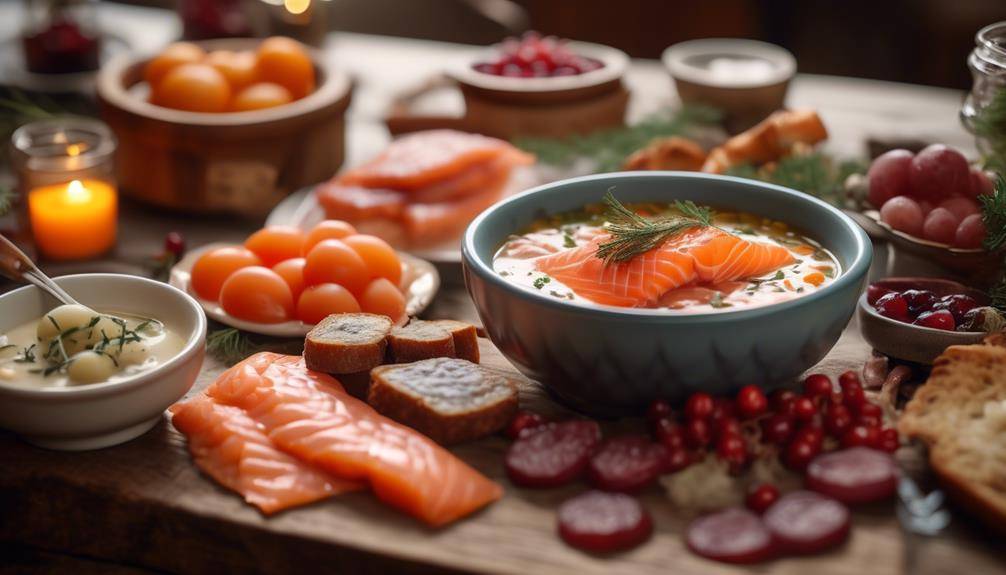
Get ready to indulge in the traditional flavors of Finland with a steaming bowl of Finnish Salmon Soup. Not only does this dish offer a burst of Nordic taste, but it also packs a nutritional punch with the goodness of salmon. Whether you prefer a creamy version or a lighter broth, there are plenty of cooking tips and variations to explore.
Traditional Finnish Flavors
Immerse yourself in the rich and comforting flavors of traditional Finnish cuisine with a steaming bowl of Finnish Salmon Soup. This classic dish showcases the unique and delicious flavors that are synonymous with Finnish cooking. Here are some traditional Finnish flavors that you should definitely try:
- Rye bread: A staple in Finnish cuisine, this dark and hearty bread is often served alongside soups and stews. Its distinct flavor and dense texture make it a perfect accompaniment to any meal.
- Lingonberries: These tart and slightly sweet berries are commonly used in Finnish desserts and sauces. They add a burst of flavor and a touch of acidity to dishes like pancakes and meatballs.
- Finnish squeaky cheese: Known as “leipäjuusto” or “juustoleipä,” this cheese has a unique texture that squeaks when you bite into it. It is often served warm with cloudberry jam, creating a delicious combination of sweet and salty flavors.
- Bilberries: Similar to blueberries, bilberries are smaller and have a more intense flavor. They are often used in Finnish desserts like pies, tarts, and jams, adding a vibrant burst of sweetness to these treats.
These traditional Finnish flavors will transport you to the heart of Finland, allowing you to experience the country’s rich culinary heritage in every bite.
Nutritional Benefits of Salmon
As you savor the flavors of the Finnish Salmon Soup, you’ll not only indulge in the traditional Finnish tastes, but also benefit from the nutritional value that salmon brings to this iconic dish. Salmon is known for its rich content of omega-3 fatty acids, which are essential for your overall health.
These fatty acids have been shown to reduce inflammation, support brain health, and improve heart health. Incorporating salmon into your diet is a simple way to reap these benefits. To ensure a balanced diet, aim to include salmon at least twice a week. You can enjoy it grilled, baked, or even in a comforting soup like the Finnish Salmon Soup. By incorporating this nutritious fish into your meals, you’ll be taking a step towards a healthier lifestyle.
Cooking Tips and Variations
To enhance the flavor and texture of your Finnish Salmon Soup, consider incorporating various cooking tips and variations that will elevate this traditional dish to new heights. Here are some ideas to get you started:
- Cooking Techniques: Experiment with different cooking techniques to bring out the best in your salmon soup. Try poaching the salmon for a tender and moist texture, or grilling it for a smoky flavor.
- Regional Variations: Explore the different regional variations of Finnish Salmon Soup. In some areas, the soup is made with a creamy base, while in others, it is more broth-like. You can also add unique ingredients like dill, potatoes, or carrots for a twist on the classic recipe.
- Garnish and Presentation: Pay attention to the garnish and presentation of your soup. Fresh herbs, such as dill or chives, can add a pop of color and flavor. Consider serving the soup in individual bowls with crusty bread on the side for a complete meal.
- Adding Depth of Flavor: Experiment with adding other ingredients to enhance the flavor of your soup. For example, you can add a splash of white wine or a squeeze of lemon juice to brighten the taste. Don’t be afraid to get creative and make the dish your own.
Swedish Cinnamon Buns
For a delectable treat that will transport you to the cozy cafes of Stockholm, look no further than Swedish Cinnamon Buns. These sweet and savory pastries are a beloved staple of Swedish cuisine and are sure to satisfy your cravings for something warm, gooey, and utterly delicious.
When it comes to Swedish Cinnamon Buns, there are endless variations to explore. The classic version is made with a sweet dough that is generously filled with a mixture of cinnamon, sugar, and butter. However, if you’re feeling adventurous, you can also try savory variations that incorporate ingredients like cheese, bacon, or even smoked salmon. The possibilities are truly endless!
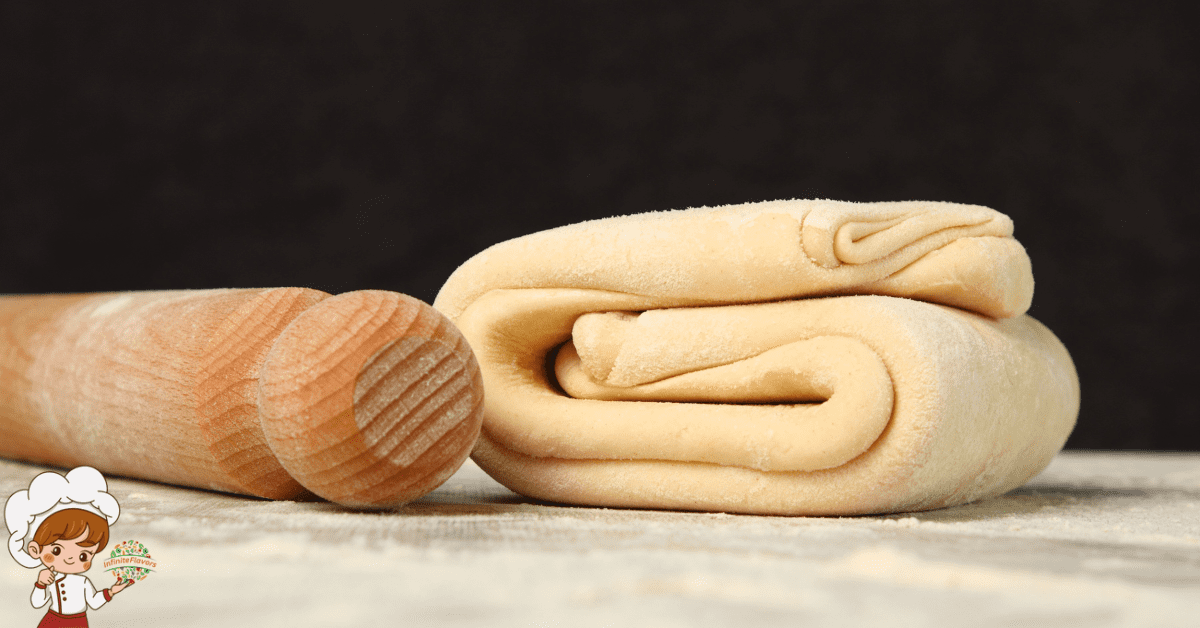
To achieve the perfect Swedish Cinnamon Bun, it’s important to master the art of baking. Start by making a soft and elastic dough using flour, yeast, sugar, butter, and milk. Knead the dough until it becomes smooth and supple, then let it rise until it doubles in size. Once the dough is ready, roll it out into a rectangle and spread the filling evenly across the surface. Roll the dough tightly into a log and cut it into individual buns. Let the buns rise again before baking them to golden perfection.
When it comes to baking, timing is everything. To ensure that your cinnamon buns are soft and fluffy, bake them at a moderate temperature for about 15-20 minutes, or until they are lightly golden on top. Be sure to keep a close eye on them to prevent over-baking.
With these baking techniques and tips in mind, you’re ready to embark on a culinary adventure with Swedish Cinnamon Buns. So, grab your apron and get ready to indulge in a treat that will transport you straight to the heart of Scandinavia. Enjoy!
Norwegian Lutefisk
If you’re ready to explore another mouthwatering dish from Scandinavian cuisine, prepare to be intrigued by the unique flavors of Norwegian Lutefisk. This traditional dish is made from dried white fish, typically cod, that has been soaked in water and lye, giving it a gelatinous texture and pungent aroma. Lutefisk is a beloved delicacy in Norway and is often enjoyed during festive occasions such as Christmas.
To prepare lutefisk, follow these steps:
- Soak the dried fish in water for several days to rehydrate it.
- Rinse the fish thoroughly to remove any excess lye.
- Boil the fish until it becomes translucent and flaky.
- Serve the lutefisk hot with melted butter and a squeeze of lemon juice.
Traditional lutefisk accompaniments include boiled potatoes, peas, and white sauce. The creamy white sauce adds a touch of richness to the dish, while the potatoes and peas provide a satisfying contrast in texture. Some people also enjoy lutefisk with lingonberry jam, which adds a hint of sweetness to balance out the savory flavors.
When eating lutefisk, it’s important to embrace its unique characteristics. The gelatinous texture may take some getting used to, but the delicate flavor of the fish shines through. The combination of the fish, butter, and lemon creates a harmonious blend of flavors that is both comforting and satisfying.
Danish Aebleskiver
Indulge in the delightful world of Danish cuisine with the mouthwatering treat known as Danish Aebleskiver. These small, round, pancake-like balls are a beloved Danish tradition, often enjoyed during the holiday season or as a special treat on weekends. Aebleskiver, which translates to “apple slices” in Danish, are typically cooked in a special aebleskiver pan that has multiple round indentations.
To make aebleskiver, you will need a few essential techniques. First, prepare the batter by whisking together flour, sugar, baking powder, salt, buttermilk, eggs, and melted butter. The batter should be smooth and slightly thick. Next, heat the aebleskiver pan over medium-low heat and grease each indentation with butter or oil. Pour the batter into each hole, filling them about three-quarters of the way full. As the batter cooks, use a skewer or a knitting needle to gently turn the aebleskiver, allowing them to cook evenly and develop a golden-brown crust on all sides. The result is a crispy exterior with a fluffy and tender interior.
While traditional aebleskiver are often served plain or dusted with powdered sugar, you can also get creative with the fillings. Some popular options include jam, Nutella, cheese, or even small pieces of fruit like apple or cherry. To fill the aebleskiver, simply add a spoonful of your desired filling into the center of each pancake as you cook them. As the batter cooks, the filling will melt and create a delightful surprise when you bite into the aebleskiver.
Whether you enjoy them plain or filled with your favorite flavors, Danish aebleskiver are sure to delight your taste buds and transport you to the cozy cafes of Denmark. So grab your aebleskiver pan and start experimenting with different fillings to create your own delicious twist on this classic Danish treat.
Finnish Karelian Pies
Get ready to experience the mouthwatering flavors of Finnish cuisine with the delectable delight known as Finnish Karelian Pies. These traditional pastries have been a staple in Finnish households for centuries, and once you taste them, you’ll understand why. Made with a thin rye crust and filled with a variety of delicious options, Karelian pies are a true treat for the taste buds.
Here are some key aspects of Finnish Karelian Pies:
- Filling Variations: One of the unique features of Karelian pies is the wide range of fillings you can choose from. The most popular filling is a mixture of rice and milk, which gives the pie a creamy and comforting texture. However, other fillings like mashed potatoes, carrots, and even fish are also common. Each filling variation adds its own distinct flavor profile to the pie.
- Traditional Preparation Methods: Making Karelian pies is a labor of love, as they require a delicate touch and attention to detail. The dough is rolled out thinly and cut into circles, which are then filled with the desired filling. The edges are then crimped to create a beautiful pattern. The pies are typically baked in a hot oven until the crust turns golden brown and crispy.
- Serving Suggestions: Karelian pies are often served as part of a traditional Finnish breakfast, accompanied by a spread of butter and a sprinkling of hard-boiled egg. They can also be enjoyed as a snack or appetizer, especially when served with a dollop of lingonberry or cranberry jam.
- Cultural Significance: Karelian pies hold a special place in Finnish culture, symbolizing the rich culinary heritage of the region. They are often served during festive occasions, such as weddings and holidays, and are a source of pride for the Finnish people.
Now that you know more about Finnish Karelian Pies, it’s time to roll up your sleeves and try your hand at making these mouthwatering treats yourself. Get ready to indulge in the flavors of Finland!
Swedish Princess Cake
Now let’s turn our attention to another delightful Scandinavian treat that will captivate your taste buds: the Swedish Princess Cake. This iconic dessert is a true delight for both the eyes and the palate. The Swedish Princess Cake, also known as Prinsesstårta in Swedish, is a classic confection that has become synonymous with Swedish cuisine.
The traditional Swedish Princess Cake consists of layers of sponge cake, raspberry jam, vanilla custard, and whipped cream, all enveloped in a thick layer of green marzipan. The marzipan is then adorned with delicate pink marzipan roses, giving the cake a truly regal appearance. It is a perfect blend of sweetness, tartness, and creaminess that will leave you craving for more.
While the traditional recipe is divine, there are also variations and substitutes that you can try. Some bakers replace the raspberry jam with strawberry or blueberry jam, adding a unique twist to the cake. Others experiment with different flavors of custard or use chocolate ganache instead. These variations allow for personalization and creativity, making the Swedish Princess Cake truly versatile.
The history and cultural significance of the Swedish Princess Cake are also worth mentioning. The cake was first created in the early 20th century by a Swedish baker named Jenny Åkerström. It was said to be her contribution to the royal wedding of Princess Margaretha in 1930. Since then, the cake has become a staple in Swedish celebrations and is often served on birthdays and special occasions.
Frequently Asked Questions: Scandinavian Cuisine A Great 13-Dish Cooking
What Are the Main Ingredients Used in Swedish Meatballs?
Swedish meatballs, a beloved dish, can be made with a mix of ground beef and pork, breadcrumbs, onions, and spices. They’re typically served with lingonberry sauce, adding a sweet and tangy flavor to the meatballs. Try them with mashed potatoes for a classic combination.
Can Gravlax Be Made With Any Type of Fish?
Yes, gravlax can be made with different types of fish. It is a traditional Scandinavian pickled fish dish that has variations depending on the region.
What Are Some Traditional Toppings Used in Danish Smørrebrød?
When it comes to Danish smørrebrød, traditional toppings include pickled herring, liver pâté, and roast beef. Swedish meatballs are made with a mix of ground beef and pork. Gravlax can be made with any type of fish. Finnish salmon soup can be served as a main course or starter. And making Swedish cinnamon buns from scratch takes time, but it’s worth it!
Is Finnish Salmon Soup Typically Served as a Main Course or a Starter?
Finnish salmon soup can be enjoyed as a main course or a starter. It is a traditional dish with rich flavors and creamy texture. In Scandinavian cuisine, salmon soup recipes are popular starters and main course dishes.
How Long Does It Take to Make Swedish Cinnamon Buns From Scratch?
To make Swedish cinnamon buns from scratch, you’ll need to master the art of creating the perfect dough. Once you’ve got that down, it’s all about the technique for achieving the perfect cinnamon swirl.

Conclusion
Scandinavian cuisine offers a rich blend of comforting dishes, fresh ingredients, and centuries‑old culinary traditions. From savory favorites like Swedish Meatballs and Finnish Salmon Soup to sweet treats such as Cinnamon Buns and Princess Cake, each recipe reflects the heart of Nordic culture. Whether you’re drawn to the simplicity, the bold flavors, or the deep heritage behind these dishes, exploring Scandinavian cooking is a delicious journey worth taking. With this 13‑dish guide, you can bring the warmth and charm of Nordic kitchens right into your home.