The Great Simmering In Cooking Techniques Explained
Simmering In Cooking Techniques Explained; Simmering is an essential cooking technique you’ll love for bringing out rich flavors in soups, stews, and sauces. It involves heating liquids just below boiling, typically between 180°F and 205°F. This gentle heat allows ingredients, like tough meats and hearty vegetables, to become tender while maintaining their structure. Unlike boiling, which can break apart food, simmering promotes the harmonious melding of flavors. For best results, use a heavy-bottomed pot and monitor the temperature closely. With patience and the right ingredients, you can master simmering, enhancing your dishes in ways you might not expect. Keep exploring to uncover more cooking tips!
What Is Simmering?
Simmering is a cooking technique that involves heating a liquid just below its boiling point, typically between 180°F and 205°F (82°C to 96°C). This method is essential for creating dishes like soups, stews, and sauces, as it allows flavors to meld without the harshness that boiling can bring. When you simmer, you’re promoting gentle cooking, which helps maintain the integrity of delicate ingredients while ensuring thorough cooking.
To master simmering techniques, start by choosing the right pot. A heavy-bottomed pot distributes heat evenly, preventing hotspots that can lead to scorching. Once you’ve brought your liquid to a boil, reduce the heat and watch for small bubbles rising to the surface—this is the sweet spot for simmering. Adjust the heat as needed to maintain this gentle bubbling.
Beware of common simmering myths. One prevalent myth is that simmering is just a more relaxed way of boiling. While they may seem similar, boiling can break down ingredients too quickly and lead to undesirable textures. Another myth is that you can’t achieve flavor development if you’re simmering; in reality, the slow cooking process allows spices and herbs to infuse their essence deeply into the dish.
The Science Behind Simmering
When you understand the science behind simmering, you can appreciate why it’s such an effective cooking method. Simmering involves heating liquids to a temperature just below boiling, typically between 180°F and 205°F (82°C to 96°C). This gentle heat allows flavors to meld while preventing the harsh agitation that boiling can cause. It’s an ideal way to tenderize meats and infuse flavors without overcooking or breaking down delicate ingredients.
Many simmering myths suggest that it’s a simple, mindless technique. However, there’s a careful balance of heat involved. If the temperature is too low, the food may not cook properly or could become mushy. If it’s too high, you risk boiling, which can alter the texture and flavor of your dish.
Historically, simmering has been a staple in kitchens around the world, used for everything from soups to stews. It originated as a way to make the most of limited resources, allowing cooks to create hearty meals over extended periods. The low, consistent heat breaks down tough cuts of meat and melds flavors, resulting in dishes that are rich and satisfying.
Understanding the science of simmering helps you master your cooking. You’ll realize that this technique isn’t just about temperature; it’s about patience, precision, and the art of coaxing flavors to their fullest potential. So, next time you simmer, remember the science at work, and enjoy the delicious results!
Simmering Vs. Boiling
When you simmer and boil, you’re working with different temperatures that affect your cooking. Understanding these differences can help you choose the right method for your dish and improve your results. Let’s explore how cooking time varies between simmering and boiling to get the best flavors and textures.
Temperature Differences Explained
Understanding the differences in temperature between simmering and boiling is vital for achieving the perfect dish. Simmering typically occurs at a temperature range of 180°F to 205°F, where small bubbles form and gently rise to the surface. This method allows for better temperature control, as it’s less aggressive than boiling, which usually reaches temperatures of 212°F and above.
When you boil, the vigorous bubbles can cause ingredients to break apart, leading to a less desirable texture. In contrast, simmering techniques let flavors meld without overcooking delicate components. For instance, when making a sauce or soup, keeping the liquid at a simmer allows you to extract flavors from herbs and spices without overwhelming the dish.
To master these techniques, it’s important to keep an eye on your heat source. If you notice the bubbles have become too vigorous, you can easily adjust the heat to maintain a simmer. This precise temperature control not only enhances the flavors but also guarantees that your ingredients cook evenly. By understanding these temperature differences, you’re well on your way to perfecting your culinary skills.
Cooking Time Comparison
The cooking time required for simmering and boiling can greatly impact the final outcome of your dish. When you boil, you’re typically looking at a shorter cooking duration, often just a few minutes. This method uses high heat to cook foods quickly, making it ideal for pasta or blanching vegetables. However, this rapid cooking can lead to a loss of flavor and texture if you’re not careful.
On the other hand, simmering techniques require a longer cooking duration, allowing flavors to meld and develop. When you simmer, you’re working at a lower temperature, which means your ingredients cook gently, preserving their texture and enhancing taste. For instance, simmering a stew for hours allows the meat to become tender and the flavors to deepen, resulting in a more satisfying dish.
Ultimately, choosing between simmering and boiling hinges on what you aim to achieve. If you’re in a rush, boiling might be your go-to. But if you want rich flavors and tender ingredients, embracing simmering techniques is the way to go. Always consider the cooking duration to guarantee your dish turns out just right!
Ideal Ingredients for Simmering
When you’re simmering, choosing the right vegetables and proteins is key to achieving that perfect flavor. Fresh, hearty veggies like carrots and potatoes hold up well, while proteins like chicken or beans add substance. Don’t forget about seasoning; it can really enhance the overall taste of your dish.
Suitable Vegetables and Proteins
For a successful simmer, choosing the right vegetables and proteins is essential. Your vegetable selection should include hearty options like carrots, potatoes, and root vegetables, which hold up well during cooking. These choices not only enhance texture variations but also promote nutrient retention, ensuring your dish remains nutritious.
When it comes to protein types, consider using tougher cuts of meat such as beef chuck or chicken thighs. These proteins benefit from simmering advantages, as the slow cooking process breaks down collagen, resulting in tender, flavorful meat. Seafood can also be a great option if added later in the simmering process to avoid overcooking.
Seasoning for Enhanced Flavor
Seasoning plays an essential role in elevating the flavors of your simmered dishes. To achieve that perfect taste, focus on your herb selection and seasoning ratios. Fresh herbs like thyme, rosemary, and parsley can bring a vibrant touch to your meal, while dried herbs offer convenience and concentrated flavors. When choosing your herbs, consider the dish’s profile—stronger flavors pair well with hearty proteins, while lighter ones complement delicate vegetables.
For seasoning ratios, a good rule of thumb is to start with a small amount, then adjust as needed. A pinch of salt can enhance the overall flavor, while a dash of pepper adds warmth. Remember, you can always add more, but it’s difficult to fix an over-seasoned dish. Balancing your herbs and spices is vital; too much can overpower your dish, while too little might leave it bland.
Experimenting is key! Don’t be afraid to tweak your combinations based on personal taste. Keep notes on what works and what doesn’t, and soon you’ll discover the perfect blend to enhance your simmered creations. Happy cooking!
Equipment Needed for Simmering
To achieve the perfect simmer, you’ll need a few essential pieces of equipment that work together seamlessly. First and foremost, a sturdy pot or saucepan is vital. Look for one with a heavy bottom; this helps distribute heat evenly and prevents hotspots that can lead to boiling instead of simmering. Whether you choose stainless steel or enameled cast iron, make sure it’s the right size for your recipe.
Next, a lid is an essential tool for simmering. It helps retain heat and moisture, allowing your ingredients to cook evenly. When you’re simmering, a lid can help maintain the liquid level, ensuring your dish doesn’t dry out.
A heat source is equally important. If you’re using a stovetop, make sure your burner has good temperature control. You don’t want to crank up the heat too much; a gentle flame is key to achieving that perfect simmer.
Don’t forget a good-quality spoon or ladle for stirring. You’ll want to check on your dish periodically, ensuring the ingredients are mingling nicely and nothing’s sticking to the bottom.
Lastly, a timer can be a valuable piece of simmering equipment. It helps you keep track of cooking times, ensuring your dish reaches the desired flavor and texture without overcooking. With these essential tools, you’ll be well-equipped to master the art of simmering and elevate your cooking skills.
Step-by-Step Simmering Process
Once you’ve gathered the right equipment for simmering, it’s time to put it all into action. Start by selecting a suitable pot or saucepan, making sure it’s large enough for your ingredients. Pour in enough liquid—water, broth, or sauce—so that it covers the ingredients adequately. Remember, the key to effective simmering techniques is maintaining a gentle heat.
Next, place your pot over medium heat. You’ll want to watch closely as the liquid heats up; bubbles should form slowly, rising to the surface. This indicates you’ve reached the simmering stage, typically between 180°F and 205°F. If bubbles are breaking the surface vigorously, you’re boiling, which isn’t what you want. Adjust the heat as necessary to keep it at a simmer.
Now, add your ingredients. Stir occasionally to prevent sticking and guarantee even cooking. Keep an eye on the simmering process; this is where many simmering myths come into play. Some believe that a lid must always be on the pot, but it’s actually about balancing moisture and evaporation based on your recipe’s needs.
Set a timer to monitor cooking times. Check for doneness as needed, and remember to taste your dish to adjust seasoning. Finally, when your food reaches the desired tenderness and flavor, remove it from the heat. You’ve successfully navigated the simmering process, and you’re one step closer to a delicious meal!
Common Dishes That Use Simmering
When you think of simmering, soups and stews likely come to mind first. These comforting dishes rely on low and slow cooking to develop rich flavors. Sauces and braises also benefit from simmering, creating depth that elevates your meals.
Soups and Stews
Soups and stews are beloved staples in many kitchens, offering comfort and warmth with every spoonful. They’re perfect for using simmering techniques, allowing flavors to meld beautifully. You can start with a variety of broth variations—chicken, vegetable, or beef—depending on your preference. If you’re looking for a lighter option, consider using a homemade vegetable broth.
One of the great things about soups and stews is their versatility. You can easily make ingredient substitutions based on what you have on hand. If a recipe calls for carrots but you only have sweet potatoes, go ahead and swap them in! Similarly, if you don’t have thyme, try using basil or rosemary instead.
As you simmer, keep an eye on your ingredients. You want the vegetables to be tender but not mushy, and the protein to be cooked through while still retaining moisture. This process takes patience, but the payoff is well worth it. A hearty stew or a soothing soup can turn a simple meal into a memorable experience. So, grab your pot and let those ingredients simmer down into something delicious!
Sauces and Braises
Sauces and braises are essential techniques that elevate your cooking, transforming simple ingredients into rich, flavorful dishes. When you simmer sauces, you create depth and complexity. Think about classic sauce variations like marinara, béchamel, or a luscious mushroom sauce. Each one benefits from a slow simmer, allowing flavors to meld beautifully.
For braising, you’re looking at a method that involves cooking meat or vegetables slowly in a bit of liquid. You might start with tougher cuts of meat, using braise techniques like searing the meat first to lock in flavor before adding broth or wine. As it simmers, the low heat breaks down the collagen, resulting in tender, juicy bites.
Don’t hesitate to experiment with both sauces and braises in your kitchen. You can mix and match ingredients, adding herbs, spices, or even a splash of citrus to brighten things up. Whether you’re making a hearty coq au vin or a smooth cheese sauce, remember that simmering is your secret weapon for achieving that intense flavor. Immerse yourself in these techniques, and you’ll find your dishes transforming into something truly special.
Flavor Development Through Simmering
Simmering is an essential cooking technique that enhances flavor by allowing ingredients to meld together over low, steady heat. When you simmer, you create an environment where flavors can develop gradually, resulting in a rich and complex dish. As the liquid heats, it draws out the natural essences of your ingredients. This process leads to an aromatic infusion that elevates the overall taste.
When you add herbs, spices, or aromatics at the beginning of a simmer, their flavors slowly dissolve into the liquid, creating a depth that’s hard to achieve with other methods. For instance, tossing in a bay leaf or some garlic while your soup simmers allows those flavors to penetrate the broth, offering a savory backbone that enhances every spoonful.
The beauty of simmering lies in its ability to transform basic ingredients into something extraordinary through gradual enhancement. With time, even humble vegetables can become tender and flavorful, contributing to a balanced dish. You’ll also notice that proteins, like meats or legumes, become more tender as the simmering process breaks down tough fibers, allowing the flavors to mingle deliciously.
Benefits of Simmering
Often overlooked, the benefits of this cooking technique extend beyond just flavor enhancement. When you simmer, you’re not just cooking; you’re also preserving the nutrients in your ingredients. Unlike boiling, which can leach valuable vitamins and minerals into the water, simmering maintains a gentle heat that helps keep those nutrients intact. This means you’re getting the most out of your vegetables, meats, and grains, resulting in healthier meals for you and your loved ones.
Another significant advantage of simmering is its ability to enhance texture. By cooking food at a lower temperature for an extended period, you allow flavors to meld beautifully while tenderizing tougher cuts of meat and fibrous vegetables. The slow cooking process breaks down collagen in meats, making them melt-in-your-mouth tender. You’ll notice that dishes like stews and sauces benefit greatly from this technique, as ingredients become soft yet still hold their shape, creating a delightful mouthfeel.
Additionally, simmering allows for better absorption of flavors. As you cook, the gentle heat encourages the ingredients to release their natural flavors, which then infuse the dish. This results in a more harmonious balance of tastes, elevating your culinary creations.
Tips for Successful Simmering
To achieve perfect results when simmering, start by choosing the right pot. A heavy-bottomed pot distributes heat evenly, preventing hot spots that can cause uneven cooking. Make sure your pot has a tight-fitting lid to maintain moisture and heat effectively.
Next, pay attention to your liquid. Use enough to cover the ingredients, but not so much that it dilutes the flavors. Many simmering myths suggest that you should constantly stir; however, that can actually disrupt the simmering process. Instead, let the ingredients sit undisturbed to allow the flavors to meld beautifully.
When it comes to heat, keep it low. You want small bubbles rising to the surface, not a roiling boil. Adjust the heat gradually, testing as you go. If you see too many bubbles, lower the temperature. This is key to mastering simmering techniques.
Timing matters too. Different ingredients require varying simmering times, so check for doneness periodically. Use a timer for precise cooking, ensuring you don’t overcook delicate items.
Lastly, don’t forget to taste as you go. Simmering can intensify flavors, so adjust seasonings accordingly. By following these tips, you’ll navigate the world of simmering with confidence, debunking common simmering myths along the way. Embrace these techniques, and you’ll find your dishes turning out richer and more delicious every time!
Troubleshooting Simmering Issues
When you encounter simmering issues, it’s essential to pinpoint the problem quickly to salvage your dish. Common issues include the temperature being too high or too low. If your pot’s contents are boiling rather than gently bubbling, you may need to reduce the heat. Conversely, if you don’t see any activity in the pot, you might need to increase the heat slightly.
Another aspect to take into account is the type of pot you’re using. Materials like stainless steel or cast iron retain and distribute heat differently, which can affect your simmering techniques. If you’re using a non-stick pan, be aware that it may not conduct heat as effectively, leading to uneven simmering.
You might also fall victim to simmering myths. For instance, some believe that adding salt to water helps it boil faster, but this can actually alter the boiling point and affect your simmer. Additionally, it’s a myth that you should constantly stir a simmering dish. Too much agitation can disrupt the cooking process, especially for delicate ingredients.
If you’re simmering a sauce or stew and it tastes too bland, let it simmer longer to deepen the flavors. On the flip side, if it’s too salty, adding a bit of water or unsalted broth can help balance it out. By identifying these issues early on, you can adjust your approach and guarantee a delicious result every time.
Incorporating Simmering Into Meals
Simmering adds depth and richness to your meals, making it a valuable technique in your cooking repertoire. By incorporating simmering techniques, you can transform ordinary ingredients into extraordinary dishes. This method is particularly effective for soups, stews, sauces, and braised meats, allowing flavors to meld and intensify over time.
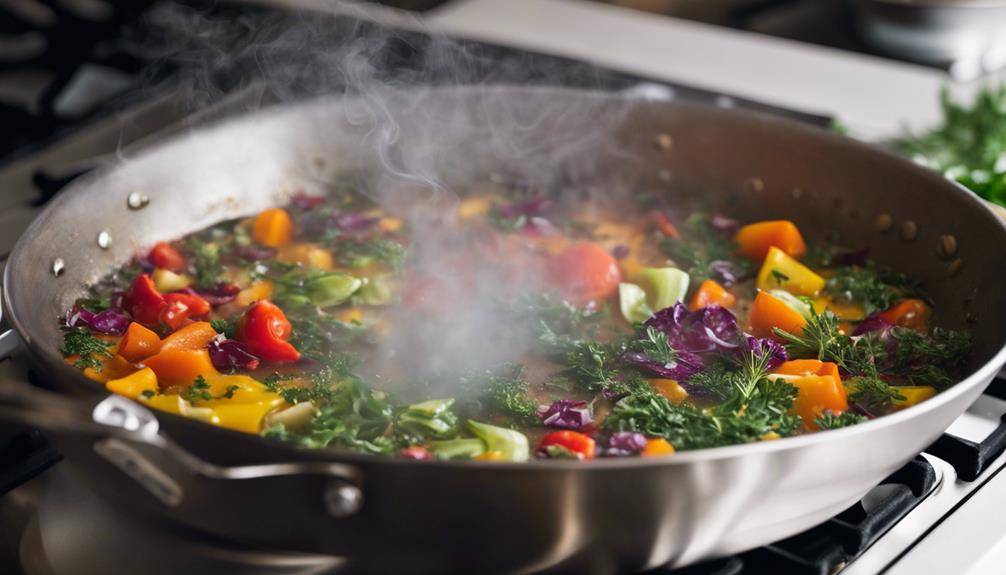
To get started, choose a base for your dish, such as broth, stock, or a combination of liquids. As you heat your mixture to a gentle simmer, you’ll notice the steam rising and small bubbles forming. This is the sweet spot for flavor extraction, so resist the urge to boil vigorously. Instead, let the ingredients work together at this lower temperature.
You can enhance your meals further by adding aromatic vegetables like onions, garlic, or carrots early in the process. They’ll infuse the liquid with their flavors, enriching the overall profile of your dish. Adding herbs and spices at the right moment is also essential; consider tossing them in during the last stages of simmering for ideal flavor without losing their potency.
Don’t forget about thickening your sauces or soups! You can use cornstarch or a roux, introducing it just a few minutes before serving. This can elevate your meal with a velvety texture.
Frequently Asked Questions: Simmering In Cooking Techniques Explained
Can Simmering Be Used for Pressure Cooking?
You can use simmering methods in a pressure cooker, but it’s not typical. Pressure cooker techniques usually cook at higher temperatures, so you’ll get faster results. Adjust your expectations for timing and moisture levels accordingly.
What Is the Difference Between Simmering and Poaching?
Simmering techniques involve cooking food gently in liquid just below boiling, while poaching methods cook food in simmering liquid, often at lower temperatures. Both methods enhance flavors but differ in temperature and texture achieved.
How Long Can I Simmer Food Safely?
You can safely simmer food for several hours, depending on the dish. Aim for simmering times that keep your food at safe temperatures, typically around 180-205°F, ensuring it’s tender and fully cooked without risk.
Can I Simmer in a Slow Cooker?
Yes, you can simmer in a slow cooker. Use the appropriate slow cooker settings to achieve low, consistent heat. Simmering benefits include enhanced flavors and tender textures, making your meals delicious and satisfying. Enjoy the process!
Does Simmering Affect the Nutritional Value of Food?
Simmering can affect nutrient retention, but it often preserves more vitamins compared to other cooking methods. By cooking gently, you can minimize nutrient loss, ensuring your meals remain nutritious and flavorful.

Conclusion
Simmering is a versatile cooking technique that enhances flavors while keeping your dishes tender and delicious. By understanding the science behind it and using the right ingredients and equipment, you can elevate your meals effortlessly. Don’t forget to follow our tips for success and troubleshoot any issues that arise. With a little practice, you’ll find that simmering can transform your cooking, making it an indispensable skill in your culinary repertoire. So, get simmering and enjoy the delicious results!
If you enjoyed exploring this topic and want to dive even deeper, be sure to check out some of our other articles here on Infinite Flavors. From rich culinary histories to creative twists on classic recipes, there’s always something new to discover. Whether you’re curious about the origins of a dish, looking for fresh inspiration in the kitchen, or simply love learning about food culture, our collection of posts is the perfect next step on your flavor journey.
Great Cooking Techniques Understanding Simmering
The Best Practices For Simmering Food
Great Cooking Techniques Understanding Simmering