The Best Temperature For Simmering Food
The Best Temperature For Simmering Food; To simmer food perfectly, you’ll want to maintain a temperature between 180°F and 205°F. This range allows for gentle bubbling, which helps meld flavors and tenderize ingredients. Start by heating on medium-low and adjust as you see small bubbles forming. It’s crucial to monitor your heat closely, as too high a temperature can lead to boiling rather than simmering. Different dishes might require slight adjustments, but waiting patiently guarantees better flavor development. For more tips on achieving that ideal simmer, you might find some valuable insights that can elevate your cooking experience.
Understanding Simmering Temperature
Simmering temperatures typically range between 180°F and 205°F (82°C to 96°C). This range is vital for mastering various simmering techniques. When you achieve the right temperature, you create a gentle bubbling that allows flavors to meld without overcooking your food. It’s important to monitor your heat closely, as even slight temperature variations can greatly impact the outcome of your dish.
To begin, set your stove to medium-low heat and wait for the liquid to warm up. You’ll notice small bubbles forming on the surface; that’s your cue to adjust the heat if necessary. If the bubbles start breaking the surface aggressively, you’ve likely reached a boil, which isn’t what you want for simmering. You need to maintain that delicate balance, making sure the liquid stays just below boiling point.
Different foods might require slight adjustments in temperature. For example, heartier dishes like stews may benefit from a slightly higher simmer, while delicate sauces should stay closer to the lower end of the range. Having a reliable kitchen thermometer on hand can help you achieve and maintain the ideal simmering temperature.
As you practice these simmering techniques, you’ll gain a better understanding of how to control heat effectively. This skill will not only enhance your cooking but also guarantee that your dishes turn out delicious every time. Remember, the key is patience and attention to those little bubbles that tell you when you’re simmering just right.
Recognizing the Perfect Simmer
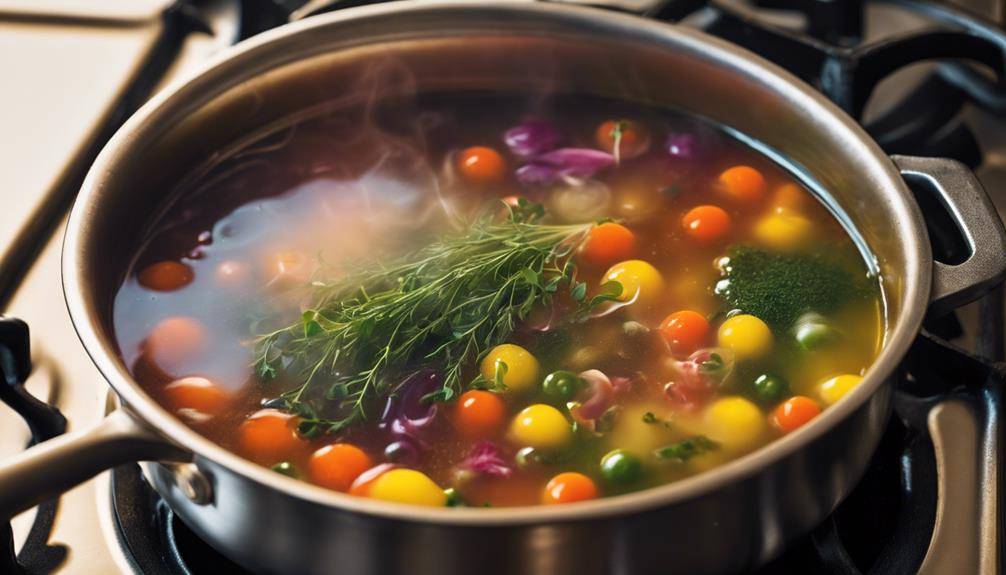
You can easily recognize the perfect simmer by observing the behavior of the bubbles in your pot. When you’ve reached that ideal simmer, you’ll notice small bubbles gently rising to the surface, creating a soft, steady motion. This is the hallmark of effective simmering techniques, allowing your food to cook evenly without the aggressive turbulence seen in boiling.
Look for visual cues that indicate you’re in the sweet spot. The bubbles should be small and consistent, not bursting violently. If they’re too big or frequent, your heat might be too high, and you’ll need to lower it a notch. Conversely, if you see only a few bubbles or they’ve almost disappeared, it’s a sign that you may need to increase the heat slightly to maintain that simmer.
Timing is also vital. Once you’ve achieved the right temperature, it’s important to keep an eye on it. As you adjust your heat, remember that the simmer can easily slip into boiling if you’re not careful. This balance is essential for dishes that require longer cooking times, such as stews or sauces.
Importance of Simmering in Cooking
A gentle simmer plays an essential role in cooking, allowing flavors to meld and develop more fully. When you simmer a dish, you’re creating an environment where the ingredients can interact harmoniously. This slow cooking technique not only enhances the flavor but also allows for a more complex taste profile, making every bite more enjoyable.
As you simmer, you’re promoting ingredient infusion, where the essence of herbs, spices, and other components gradually permeates the dish. This process guarantees that your final meal is rich and deeply flavored, rather than just a collection of separate tastes. For instance, when you simmer a stew, the meat tenderizes while absorbing the savory notes from vegetables and seasonings. The result is a dish that feels cohesive and well-rounded.
Simmering isn’t just about bringing ingredients together; it’s also about patience. Taking the time to let your food simmer can lead to significant flavor enhancement. Rapid boiling might seem tempting for a quick meal, but it often results in harsh flavors and underdeveloped textures. Instead, by keeping the heat low and allowing your dish to gently bubble, you’re assuring that each element has time to shine.
Incorporating this technique into your cooking routine can elevate your culinary creations. You’ll not only notice the difference in taste but also impress those who share your meals. So, embrace the art of simmering, and watch as your dishes transform into flavorful masterpieces.
Tips for Maintaining Simmering Heat
Maintaining the right simmering heat is essential for achieving the best flavor and texture in your dishes. To do this effectively, you’ll want to master a few simmering techniques that guarantee your food cooks evenly without boiling over. Start by using a heavy-bottomed pot or pan, as it distributes heat more evenly, preventing hot spots that can lead to uneven cooking.
Once your dish reaches a boil, reduce the heat gradually to find that sweet spot where you see gentle bubbles rising to the surface. This might take a little trial and error, so don’t hesitate to make heat adjustments as needed. If you notice vigorous bubbling, turn the heat down to avoid boiling; conversely, if it looks too calm, raise the heat slightly.
Another tip is to keep a close eye on your food while it simmers. Stir occasionally to promote even cooking and check the consistency. If you’re simmering for an extended period, you may need to adjust the heat to maintain that gentle simmer. Remember, the goal is to create a low, rolling bubble, which allows flavors to meld beautifully without compromising the texture of your ingredients.
Common Mistakes to Avoid
Even with the right techniques in place, it’s easy to make common mistakes that can undermine your simmering efforts. One of the biggest pitfalls is falling for simmering myths. Many believe that a vigorous boil is necessary for flavor development, but that’s far from the truth. In fact, when you boil food, you risk overcooking and losing essential nutrients. Instead, aim for a gentle bubble that maintains a consistent temperature.
Another mistake you might encounter involves temperature variations. It’s vital to monitor your heat closely. If you let the temperature fluctuate too much, you’ll end up with uneven cooking. A simmer should be steady, generally between 180°F to 205°F (82°C to 96°C). Use a thermometer to keep tabs on this, especially when you’re working with delicate ingredients like fish or vegetables.
Also, don’t forget to account for the size of your pot. Using a too-small pot can cause the heat to concentrate too much, leading to scorching or burning. Conversely, a pot that’s too large can disperse the heat, making it hard to maintain a consistent simmer.
Lastly, avoid the temptation to peek too often. Lifting the lid disrupts the cooking process and can lead to unwanted temperature drops. Stick to these tips, and you’ll sidestep these common mistakes, leading to perfectly simmered dishes every time.
Frequently Asked Questions: The Best Temperature For Simmering Food
Can I Simmer Food in a Microwave?
Yes, you can simmer food in a microwave. By adjusting the microwave settings to low power, you can effectively use simmering techniques. Just stir occasionally to guarantee even cooking and prevent splattering. Enjoy your meal!
What Types of Pots Are Best for Simmering?
When simmering, you’ll want pots like cast iron or stainless steel for even heat. Non-stick pans are convenient, while enameled Dutch ovens excel at slow cooking. Copper pots and pressure cookers also work well for simmering.
Does Altitude Affect Simmering Temperature?
Yes, altitude affects simmering temperature. As you go higher, the boiling point decreases, requiring altitude adjustments in your cooking. This means you might need to simmer foods longer to achieve the desired tenderness and flavor.
How Long Can Food Be Simmered Safely?
You can safely simmer food for various times depending on the dish, but generally, aim for at least 30 minutes to guarantee flavors meld and safe temperatures are maintained. Check occasionally for doneness too.
Can Simmering Reduce the Nutritional Value of Food?
Simmering can impact nutrient retention, but it often retains more nutrients than boiling. By choosing the right cooking techniques, you can minimize nutrient loss while still achieving delicious, tender results in your dishes.

Conclusion
To sum up, mastering the simmering temperature is key to elevating your cooking. By recognizing the signs of a perfect simmer and maintaining consistent heat, you’ll guarantee your dishes are flavorful and well-cooked. Avoid common mistakes, and you’ll transform your meals into culinary delights. So, the next time you’re in the kitchen, remember to embrace the art of simmering—it’s a simple yet powerful technique that can make all the difference in your cooking!
If you enjoyed exploring this topic and want to dive even deeper, be sure to check out some of our other articles here on Infinite Flavors. From rich culinary histories to creative twists on classic recipes, there’s always something new to discover. Whether you’re curious about the origins of a dish, looking for fresh inspiration in the kitchen, or simply love learning about food culture, our collection of posts is the perfect next step on your flavor journey.
The Best Easy Steps To Pan Fry Shrimp
How To Easily Prevent Over Boiling
The Exciting Boiling Points Of Different Liquids