Reducing Oil In Stir-Frying Methods
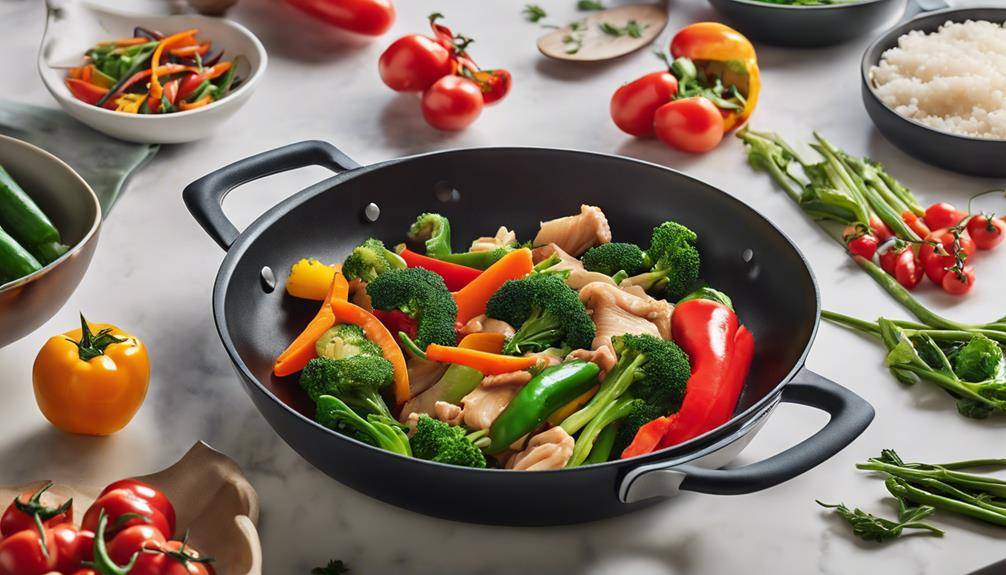
Reducing Oil In Stir-Frying Methods: You can reduce oil in stir-frying by choosing nonstick cookware and mastering heat control. Start by heating your pan properly to create a non-stick surface, which lets ingredients glide easily. Try cooking sprays for controlled oil use or replace oil with broth, citrus juices, or vinegars for added flavor. Consider adding water during cooking to steam ingredients, keeping them tender without extra fat. Finally, enhance your dishes with fresh herbs and spices instead of relying on oil for taste. With a few adjustments and smart choices, you can create healthier stir-fries that are just as delicious. Discover more tips to transform your cooking!
Click Here and Turn Every Masterpiece into a Showstopper!
Understand Oil's Role in Stir-Frying
Understanding oil's role in stir-frying is vital for achieving the perfect dish. When you stir-fry, the right oil not only enhances flavor but also guarantees your ingredients cook evenly. Different oil types have unique smoke points and flavor profiles, making them essential for your cooking technique. For instance, oils like peanut and canola are popular due to their high smoke points, which allow you to cook at high temperatures without burning.
The oil benefits extend beyond flavor. It helps to create a non-stick surface, allowing your vegetables and proteins to sear beautifully while retaining their nutrients. When you use oil correctly, it also promotes even cooking, ensuring that every bite is delicious. You'll find that a small amount of oil can greatly impact the texture and taste of your dish.
While you might think that reducing oil is a way to make stir-frying healthier, it's important to recognize that some oil is necessary for achieving that signature stir-fried taste and texture. By choosing the right oil types, you can balance flavor and health. Experiment with various oils, like sesame for its nutty flavor or olive oil for a Mediterranean twist, to find what suits your palate best. Ultimately, understanding how these elements interact will not only improve your stir-frying skills but also elevate your entire cooking experience. So, embrace the oil benefits and start creating delicious stir-fried dishes!
Choose the Right Cookware
Choosing the right cookware can greatly impact your stir-frying results. When you're ready to whip up a delicious stir-fry with less oil, consider using nonstick pans or stainless steel. Each option has its advantages, and knowing which one to use can help you achieve the perfect balance of flavor and health.
Nonstick pans are fantastic for reducing oil. Their smooth surface allows ingredients to glide easily, preventing sticking without needing excessive oil. You'll find that you can cook vegetables and proteins with just a small amount of oil or even none at all. Just make sure to use utensils that won't scratch the coating, as maintaining the integrity of the nonstick surface is vital for longevity.
On the other hand, stainless steel cookware offers excellent heat retention and distribution, which is essential for achieving that perfect stir-fry sear. You might need a bit more oil initially, but with practice, you'll learn how to control the heat and use less oil as you build up your cooking skills. Plus, stainless steel is durable and versatile, making it a great investment for any kitchen.
Ultimately, your choice between nonstick pans and stainless steel depends on your cooking style. Experiment with both to find out what works best for you. By choosing the right cookware, you can enhance your stir-frying experience while reducing oil and enjoying healthier meals.
Explore Oil Alternatives
Exploring oil alternatives can transform your stir-frying experience while keeping dishes lighter and healthier. Instead of relying solely on traditional oils, consider using cooking sprays. They allow you to control the amount of fat you use, providing a light coating that helps prevent sticking without adding excess calories. With just a quick spritz, you can achieve that delicious sear without the greasy aftermath.
Another fantastic option is broth substitutes. Using vegetable, chicken, or beef broth not only adds flavor but also keeps your stir-fry moist. When you add your vegetables and proteins to the hot pan, pour in a splash of broth instead of oil. This method enhances the taste while infusing your dish with moisture, making it just as satisfying without the added fat.
You can also experiment with citrus juices or vinegars. A dash of lemon or lime juice can brighten up your dish, while balsamic or rice vinegar can add depth. These options work well in combination with cooking sprays or broth substitutes to create a balanced flavor profile.
Don't forget about using water! If you're looking to minimize oil even further, simply adding a little water to the pan while cooking can help steam your ingredients and keep them tender. Overall, by incorporating these oil alternatives, you'll find that you can stir-fry delicious meals that are both healthier and lighter, without sacrificing flavor!
Click Here and Turn Every Masterpiece into a Showstopper!
Adjust Cooking Techniques
Adjusting your cooking techniques can considerably reduce the amount of oil needed in stir-frying. One effective way to do this is by paying close attention to cooking temperatures. When you heat your pan properly before adding ingredients, you create a non-stick surface that allows food to sear quickly. This means you won't need to rely on excess oil to prevent sticking, leading to healthier meals.
Another essential aspect is ingredient preparation. Cut your vegetables and proteins into uniform sizes to guarantee even cooking. If everything cooks at the same rate, you'll avoid the need for extra oil to compensate for unevenly cooked pieces. Prepping your ingredients ahead of time also helps you maintain a steady cooking flow, keeping the heat high and the food moving in the pan, which further reduces the chances of sticking.
Consider using a non-stick or well-seasoned cast-iron skillet to minimize the oil you need. These surfaces require less oil for effective cooking. Also, when stir-frying, add your ingredients gradually instead of all at once. This technique helps maintain the pan's heat, allowing each ingredient to cook quickly and evenly, which means you won't need to add more oil to keep things from sticking.
Enhance Flavor With Seasonings
Seasonings play an essential role in elevating the flavor of your stir-fry without the need for excess oil. By incorporating the right herb blends and spice combinations, you can create a dish that's bursting with flavor and satisfaction. Start by selecting fresh herbs like basil, cilantro, or green onions. These add a vibrant taste and aroma that can enhance your dish considerably.
Next, consider spice combinations that complement the ingredients in your stir-fry. A pinch of cumin or coriander can add depth, while chili flakes or fresh ginger can introduce a delightful heat. Don't shy away from experimenting with different blends. You might find that a dash of smoked paprika or a hint of turmeric can transform your meal.
Another effective way to boost flavor is by using sauces. Low-sodium soy sauce, oyster sauce, or even a splash of rice vinegar can heighten the taste without needing to rely on oil. If you want a more robust flavor profile, try marinating your proteins in these sauces beforehand. This not only adds flavor but also helps tenderize the meat.
Click Here and Turn Every Masterpiece into a Showstopper!
Frequently Asked Questions: Reducing Oil In Stir-Frying Methods
Can I Use Water Instead of Oil for Stir-Frying?
You can't completely replace oil with water for stir-frying, but you can use water alternatives like broth or vegetable juice. Experiment with cooking techniques, adding liquid gradually to prevent sticking while enhancing flavors.
What Types of Vegetables Are Best for Low-Oil Stir-Frying?
For low-oil stir-frying, focus on crunchy vegetables like bell peppers, broccoli, and snap peas. Their texture holds up well in various cooking techniques, ensuring you get the best flavor without needing excessive oil.
How Does Oil Quantity Affect Cooking Time in Stir-Frying?
Oil quantity directly affects cooking time in stir-frying. Less oil increases oil viscosity, which can lead to lower cooking temperatures, slowing down the process. You'll need to adjust your heat for ideal results.
Are There Health Benefits to Reducing Oil in Stir-Frying?
Yes, reducing oil in stir-frying has health benefits. You'll consume fewer calories and fats, making your meals lighter. By exploring different cooking techniques, you can enhance flavors without needing excessive oil, promoting better overall health.
Can Stir-Frying Without Oil Affect Food Texture?
Stir-frying without oil can impact food texture. You'll need oil alternatives to retain moisture, ensuring your dish remains tender. Experiment with broth or water to achieve that satisfying crunch without sacrificing flavor or moisture.

Conclusion
By understanding oil's role and choosing the right cookware, you can stir-fry with less oil without sacrificing flavor. Exploring oil alternatives and adjusting your cooking techniques will help you create healthier dishes. Don't forget to enhance your meals with seasonings that bring out the best in your ingredients. With these tips, you'll enjoy delicious, lower-fat stir-fries that are just as satisfying and packed with flavor! Happy cooking!