Guide To Poaching Seafood
Guide To Poaching Seafood: Poaching seafood is a gentle cooking method that involves simmering your seafood in a flavorful liquid. It helps retain moisture, ensuring your dish turns out tender and succulent. Start by choosing the right seafood, like salmon or shrimp, and prepare a poaching liquid—water or broth works well. Keep the temperature between 160°F and 180°F for ideal results. Avoid overcrowding your pan and remember to season your liquid before adding the seafood. This technique not only enhances flavors but also preserves nutrients. Stick around, and you'll discover even more tips and tricks for perfect poached seafood!
Click Here and Turn Every Masterpiece into a Showstopper!
What Is Poaching?
Poaching is a gentle cooking method that involves submerging seafood in simmering liquid, allowing for delicate flavors and textures to shine. This technique is widely praised for its ability to maintain moisture in fish and shellfish, resulting in tender and succulent dishes. You might find that using poaching techniques, like adjusting the temperature and choosing the right poaching liquid, can enhance the overall taste of your seafood.
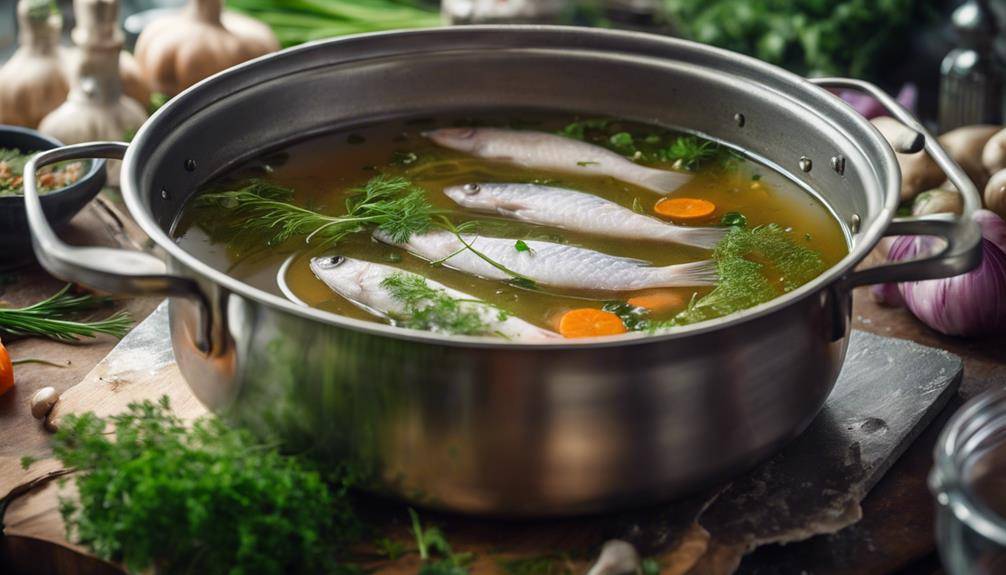
The history of poaching dates back centuries and can be traced across various cultures. In ancient times, cooks often utilized this method to prepare fish, as it required minimal equipment and helped preserve the natural flavors of the ingredients. You'll see that different regions have developed their own unique poaching liquids, from simple water to complex broths flavored with herbs, spices, and aromatics.
When you decide to try poaching, you'll want to focus on the right temperature. Ideally, the liquid should be kept just below boiling to prevent the seafood from becoming tough. This method works wonderfully for a variety of seafood, including salmon, cod, and even shrimp.
As you explore the art of poaching, you'll appreciate how it emphasizes the natural qualities of seafood while providing an opportunity for creativity in your choice of flavors. Whether you're preparing a simple weeknight meal or an impressive dish for guests, mastering poaching techniques can elevate your culinary skills.
Benefits of Poaching Seafood
When you poach seafood, you help retain its nutritional value, making it a healthy cooking option. This gentle cooking method also enhances the natural flavors, allowing the seafood to shine on its own. You'll find that poaching creates a tender texture that's hard to beat.
Retains Nutritional Value
Many seafood lovers appreciate that poaching helps retain the dish's nutritional value. Unlike frying or grilling, which can diminish nutrients, poaching involves cooking seafood gently in water or broth. This method guarantees ideal nutrient retention, allowing you to enjoy all the health benefits seafood has to offer.
By using lower cooking temperatures and avoiding added fats, poaching preserves crucial vitamins and minerals found in fish and shellfish. For instance, omega-3 fatty acids, known for their heart health benefits, remain intact during the poaching process. The gentle cooking also helps maintain protein quality, making it easier for your body to absorb these essential nutrients.
Since poaching doesn't require much oil or butter, it's a great option for those aiming to eat healthier. This method encourages you to savor the natural flavors of the seafood while keeping it light and nutritious. Whether you're poaching salmon, shrimp, or scallops, you can rest assured that you're maximizing the health benefits of your meal. So next time you want a seafood dish that's both delicious and nourishing, consider poaching—it's a winning choice for your wellness and taste buds!
Enhances Flavor Profile
One of the standout benefits of poaching seafood is how it enhances the flavor profile of the dish. When you use poaching techniques, you're not just cooking the seafood; you're infusing it with subtle flavors that elevate every bite. The gentle cooking method allows the natural flavors of the seafood to shine through, creating a delicate taste that's hard to replicate with other cooking methods.
Incorporating seafood marinades before poaching can take this flavor enhancement to another level. By marinating the seafood in herbs, spices, and acidic ingredients like citrus or vinegar, you're adding an extra layer of flavor that melds beautifully during the poaching process. The low and slow heat of poaching helps the seafood absorb these marinade flavors without overwhelming its natural essence.
Additionally, poaching in a broth or flavored liquid can further enrich the dish. Whether you opt for a simple water-based broth or a more complex stock, the poaching liquid becomes infused with the seafood's taste, creating a delicious base for sauces or soups. Overall, poaching seafood is a fantastic way to achieve a vibrant and nuanced flavor profile that's sure to impress.
Best Types of Seafood to Poach
When you're choosing seafood to poach, some varieties stand out for their flavor and texture. Fish like salmon and cod are excellent options, while shellfish like shrimp and scallops bring a delightful twist. Let's explore which types will make your poaching experience truly enjoyable.
Ideal Fish Varieties
For a successful poaching experience, selecting the right fish varieties makes all the difference. You'll want to choose fish that not only hold up well during cooking but also absorb flavors beautifully. Look for species like salmon, trout, or halibut, which are excellent choices due to their firm textures. These fish have a rich taste that enhances with poaching, making them favorites among seafood lovers.
When deciding, consider sustainable fishing practices. Supporting fisheries that prioritize sustainability guarantees you're enjoying seafood that's good for both you and the environment. Additionally, pay attention to seasonal availability. Fresh fish is always preferable, and sourcing it during its peak season ensures the best flavors and textures.
For instance, salmon is often at its best from spring to early fall, while halibut shines in late winter and early spring. By being mindful of these factors, you'll not only enjoy a delicious meal but also contribute to responsible seafood consumption. So, next time you plan your poaching, opt for these ideal fish varieties that align with sustainable fishing and take advantage of their seasonal availability. You'll be glad you did!
Shellfish Selection Tips
In selecting shellfish for poaching, you'll find that freshness and quality are key to achieving a tender, flavorful dish. When you're at the market, look for shellfish varieties like shrimp, scallops, and mussels. These options not only cook quickly but also absorb flavors beautifully during the poaching process.
Pay attention to seasonal selection, as certain shellfish are at their peak during specific times of the year. For instance, sweet summer corn pairs wonderfully with shrimp, making it an ideal choice for your summer poaching adventures. In colder months, consider heartier shellfish like clams and oysters, which can withstand longer cooking times.
Always check for signs of freshness, such as a clean, briny scent and shells that are tightly closed. If you're buying live shellfish, verify they're active and responsive. Avoid any that are cracked or have an off-putting smell.
Essential Poaching Equipment
To successfully poach seafood, having the right equipment is important. Start with a large, heavy-bottomed pot. This not only distributes heat evenly but also helps maintain a steady temperature, which is critical for effective poaching techniques. Look for a pot that's deep enough to fully submerge your seafood, ensuring even cooking.
Next, invest in a fine-mesh strainer or skimmer. This tool allows you to easily remove your poached seafood from the pot without breaking it apart. It's also handy for skimming off any impurities that rise to the surface during the poaching process, promoting seafood safety.
A digital thermometer is another essential piece of equipment. Keeping an eye on the water temperature is key to poaching; you want it to be between 160°F and 180°F. A thermometer helps you avoid overcooking, ensuring the seafood remains tender and flavorful.
Consider using a lid for your pot. This helps retain heat and moisture, making your poaching process more efficient. If you're poaching delicate items like fish fillets, a lid can also help prevent the seafood from drying out.
Finally, have some kitchen towels or a heat-resistant spatula on hand for safe handling. These tools will help you maneuver your seafood in and out of the pot without burns or spills.
With these essential items, you'll be well-equipped to master the art of poaching seafood while ensuring both flavor and safety.
Ideal Poaching Liquids
When it comes to poaching seafood, your choice of liquid plays an essential role in flavor. You can opt for simple water or a rich broth, but don't forget to enhance it with flavorful additions like herbs, spices, or citrus. These choices can elevate your dish and transform the poaching process into a culinary experience.
Water Vs. Broth Choices
Choosing the right poaching liquid can elevate your seafood dish from ordinary to extraordinary. When deciding between water and broth, consider how each option impacts flavor and texture. Water, while neutral, allows the natural taste of your seafood to shine through. However, it's essential to maintain the proper water temperature—ideally between 160°F to 180°F—so your seafood cooks gently without becoming tough.
On the other hand, broth selection can greatly enhance the overall flavor profile of your dish. Whether you choose a chicken, vegetable, or fish broth, each option offers a unique depth of flavor that complements various seafood types. Just remember to adjust the seasoning accordingly, as broths often come pre-salted.
Ultimately, the choice between water and broth depends on your desired outcome. If you want a clean, subtle taste, stick with water. If you're aiming for a richer, more complex flavor, opt for a well-chosen broth. Whichever you select, make certain it's heated to the right temperature to achieve perfectly poached seafood that's tender and delicious. Enjoy experimenting with both options to find the perfect balance for your culinary creations!
Flavorful Additions to Liquids
Enhancing the flavor of your poaching liquid can transform an ordinary seafood dish into a memorable culinary experience. To achieve this, consider incorporating various flavorful additions that complement your seafood. Start with herb infusions; fresh herbs like dill, parsley, or thyme can elevate your poaching liquid considerably. Simply add a handful of your chosen herbs to the water or broth, and let them simmer to release their aromatic oils.
Next, don't overlook the power of citrus zest. Grating the skin of lemons, limes, or oranges into your poaching liquid adds brightness and a zesty kick that pairs beautifully with seafood. The acidity of citrus also helps to balance out richer flavors, making your dish more dynamic.
You can also experiment with other flavor enhancers like garlic, onion, or even a splash of white wine. Each addition brings its own unique character, allowing you to tailor the poaching liquid to your taste preferences. Remember, the goal is to create a flavorful environment for your seafood, so don't be afraid to get creative! Your poached seafood will thank you for the effort.
Click Here and Turn Every Masterpiece into a Showstopper!
Temperature Guidelines for Poaching
Poaching seafood requires careful attention to temperature to achieve the perfect balance of tenderness and flavor. Understanding the right temperature ranges is vital for successfully poaching fish, shellfish, and other seafood. Generally, you'll want to keep your poaching liquid between 160°F and 180°F (70°C to 82°C). This temperature range allows the proteins in seafood to cook gently, preventing them from becoming tough or rubbery.
When using poaching techniques, you can choose between shallow or deep poaching, both of which benefit from maintaining these temperature guidelines. For shallow poaching, the seafood is partially submerged in liquid, while deep poaching means it's fully immersed. Regardless of the method you pick, you should monitor the temperature closely. A food thermometer can help you verify that your poaching liquid doesn't exceed the ideal range, as going too high can lead to overcooked seafood.
If you're poaching delicate items like fish fillets, aim for the lower end of the temperature range. For heartier seafood like lobster or shrimp, you can venture towards the higher end. Remember, patience is key; letting your seafood cook slowly will yield the best results. By adhering to these temperature guidelines, you'll enhance the flavors and textures of your poached seafood, making your culinary efforts truly shine. So, keep that thermometer handy and enjoy the art of poaching!
Step-by-Step Poaching Process
Start by gathering your ingredients and equipment, as a well-prepared setup is key to a successful poaching experience. You'll need a wide, shallow pan, fresh seafood, and your poaching liquid, which can include water, broth, or wine. Make sure you have a thermometer handy to monitor poaching temperatures, ensuring everything stays within the ideal range.
Next, add your poaching liquid to the pan, filling it to a depth that will cover the seafood completely. Heat the liquid over medium until it reaches the appropriate poaching temperature—ideally between 160°F and 180°F. This range allows the seafood to cook gently without becoming tough or rubbery.
Once your liquid's ready, carefully lower the seafood into the pan. Depending on the thickness of the fillets or shellfish, adjust your cooking time accordingly. Thin fillets might only need 5 to 10 minutes, while thicker pieces could take up to 15 minutes. Keep an eye on the seafood, checking for doneness by ensuring it's opaque and flakes easily with a fork.
As you cook, use a slotted spoon to gently move the seafood, allowing even cooking. If you notice the temperature dropping too low, increase the heat slightly to maintain those essential poaching temperatures. Once done, carefully remove your seafood from the liquid and let it rest for a minute before serving. With these poaching techniques, you're well on your way to creating perfectly poached seafood every time!
Flavoring Your Poaching Liquid
To make your poached seafood truly stand out, flavoring your poaching liquid is vital. Start with a well-thought-out spices selection that complements the seafood you're using. Consider using spices like fennel seeds or coriander for a subtle warmth. Next, focus on herb infusion; fresh herbs like dill or parsley can elevate your dish with their aromatic qualities.
When it comes to acidity balance, adding a splash of white wine or lemon juice can brighten the flavors, enhancing your seafood's natural taste. Remember, achieving flavor layering is key. You can add aromatics like sliced onions, garlic, or even citrus peels to create a more complex flavor profile.
Pay attention to liquid temperature and poaching time. A gentle simmer is ideal for allowing the flavors to meld without overcooking your seafood. If the poaching liquid's too hot, you risk toughening the fish or shellfish.
Use seasoning techniques wisely; a pinch of salt can make a significant difference. Taste your poaching liquid before adding the seafood, adjusting it as necessary to guarantee it's flavorful but not overpowering.
Common Poaching Mistakes
One of the biggest pitfalls in poaching seafood is using the wrong temperature. If you're not careful, you might end up with tough, overcooked seafood or undercooked, unsafe meals. The ideal poaching temperature ranges between 160°F and 180°F. It's essential to keep an eye on your thermometer and adjust the heat accordingly.
Another common misconception is thinking that you can use any liquid for poaching. While water works fine, you'll get better results from flavorful liquids like broth, wine, or even infused water. Always consider the poaching technique you're using and how it complements the seafood you've chosen.
Many home cooks also underestimate the significance of timing. Each seafood type has a different cooking time, and leaving it in the poaching liquid too long can ruin your dish. For instance, delicate fish like sole may need just a few minutes, while shellfish might take a bit longer.
Don't forget to season your poaching liquid adequately. A bland liquid won't impart much flavor to the seafood, leading to a disappointing meal.
Lastly, avoid overcrowding the pan. If you're poaching multiple pieces of seafood at once, make sure they have enough space to cook evenly. This can prevent steaming and allow for a more consistent texture. By being mindful of these common poaching mistakes, you'll be on your way to mastering this gentle cooking technique.
Serving and Pairing Poached Seafood
When it comes to serving poached seafood, presentation and pairing can elevate your dish from ordinary to extraordinary. Start by arranging the seafood on a clean, white plate to highlight its natural colors. You might consider garnishing with fresh herbs like dill or parsley, which add a pop of color and a hint of freshness. A drizzle of flavored oil or a light sauce can also enhance the visual appeal and complement the seafood's taste.
For serving suggestions, think about accompanying your poached seafood with seasonal vegetables or a light salad. A citrus vinaigrette can add brightness, balancing the delicate flavors of the seafood. You could also serve it over a bed of quinoa or a light risotto, which will soak up the poaching liquid's flavors and provide a satisfying texture.
Wine pairings are essential for a complete dining experience. If you've poached fish, consider a crisp white wine like Sauvignon Blanc or a light-bodied Pinot Grigio. These wines enhance the seafood's freshness without overpowering it. For shellfish, a sparkling wine or Champagne can work wonders, as the bubbles cleanse the palate between bites. If you're serving poached salmon, a light red, such as Pinot Noir, can be an excellent match, bringing out the richness of the fish.
With thoughtful serving suggestions and the right wine pairings, your poached seafood dish will surely impress your guests. Enjoy!
Click Here and Turn Every Masterpiece into a Showstopper!
Frequently Asked Questions: Guide To Poaching Seafood
Can I Poach Frozen Seafood, or Should It Be Thawed First?
You can poach frozen seafood, but it's best to thaw it first for even cooking. Using proper poaching techniques guarantees tenderness and flavor, enhancing your dish's overall quality and making it more enjoyable.
How Long Should I Let Poached Seafood Rest Before Serving?
After poaching, let your seafood rest for about 5 minutes. This ideal resting time helps enhance the seafood texture, allowing the flavors to settle and ensuring a more enjoyable dining experience. Enjoy your meal!
Can I Reuse Poaching Liquid for Other Seafood Dishes?
Yes, you can reuse poaching liquid for other seafood dishes. Just remember to store it properly. The flavor absorption from the seafood enhances the liquid, making it a great base for soups or sauces.
Is It Safe to Poach Seafood at Home?
Yes, it's safe to poach seafood at home if you follow proper seafood safety practices. Use effective poaching techniques, ensuring your seafood reaches the right temperature, which helps prevent bacteria and keeps your meal delicious.
Can Poaching Be Done in a Microwave?
Yes, you can poach seafood in a microwave using specific techniques. Just guarantee you monitor the cooking time closely, as it affects seafood textures. Experimenting will help you achieve the perfect doneness for your dish.

Conclusion
To sum up, poaching seafood is a simple and healthy cooking method that brings out the natural flavors of your ingredients. By using the right techniques and flavors, you can create delicious dishes that impress your guests. Remember to choose the best seafood, experiment with poaching liquids, and avoid common mistakes for the best results. So, grab your equipment, start practicing, and enjoy the delightful taste of perfectly poached seafood!