Mastering Aromatic Indonesian Spice Dishes: The Best How-To Guide

Mastering Aromatic Indonesian Spice Dishes; To master aromatic Indonesian spice dishes, start by using fresh ingredients and exploring key spices like turmeric, coriander, and lemongrass. Focus on traditional techniques, such as grinding spices and sautéing aromatics to boost flavors. Try popular spice blends like Bumbu Bali and Bumbu Rujak for authentic tastes. Incorporate must-try dishes, including Nasi Goreng and Rendang, to refine your skills. Remember to balance flavors by combining sweet, salty, sour, and spicy elements. With a bit of practice, you’ll enhance your cooking and elevate every meal. Stick around, and you’ll discover even more tips to perfect your dishes!
Essential Indonesian Spices
When you plunge into Indonesian cuisine, you’ll quickly discover that the magic lies in its spices. These vibrant flavors are deeply rooted in the rich Indonesian spice origins, which have been shaped by centuries of trade and cultural exchange. You’ll find that spices like turmeric, coriander, and lemongrass not only enhance your dishes but also contribute to the overall health benefits you gain from consuming them.
Turmeric, known for its bright yellow hue, is a staple in Indonesian cooking. It’s packed with curcumin, a compound celebrated for its anti-inflammatory and antioxidant properties. Adding turmeric to your meals not only elevates the taste but also boosts your immune system and promotes overall wellness.
Coriander, another essential spice, brings a warm, citrusy flavor to various dishes. The seeds contain beneficial compounds that support digestion and may even help lower cholesterol levels. You’ll love how this spice complements both savory and sweet dishes alike.
Lemongrass, with its invigorating citrus notes, is perfect for infusing flavor into soups and curries. Beyond its aromatic qualities, it’s been known to ease digestive issues and act as a natural antibacterial agent.
As you explore Indonesian cuisine, remember that these essential spices do more than flavor your food; they offer notable spice health benefits that enhance your cooking experience. Embrace the incredible flavors and healthful properties of Indonesian spices, and you’ll find that your culinary journey becomes even more rewarding.
Key Cooking Techniques
When you cook Indonesian dishes, mastering key techniques is essential for bringing out the rich flavors. You’ll want to focus on how to prepare spices effectively, ensuring they release their full aroma. Balancing these flavors will elevate your dishes, creating that authentic taste everyone loves.
Essential Spice Preparation Methods
Often, mastering vital spice preparation methods can elevate your Indonesian dishes to new heights. One of the key techniques you’ll want to embrace is spice grinding. Freshly ground spices release vibrant flavors, making your dishes more authentic. Use a mortar and pestle for a traditional approach or an electric spice grinder for speed. Just be sure to grind only what you need to maintain that fresh taste.
Another significant method is herb chopping. Fresh herbs like cilantro, lemongrass, and kaffir lime leaves are staples in Indonesian cooking. To get the most out of these herbs, chop them finely. This not only enhances their flavor but also guarantees they blend seamlessly into your dishes. A sharp knife is essential here; it allows for clean cuts that preserve the herbs’ vital oils.
Don’t forget about toasting whole spices before grinding. This step reveals deeper flavors and aromas, making a noticeable difference in your final dish. By mastering these vital spice preparation methods—spice grinding and herb chopping—you’ll set the foundation for creating truly aromatic Indonesian meals. Happy cooking!
Cooking Techniques for Depth
To create truly flavorful Indonesian dishes, mastering key cooking techniques is vital. One of the most effective ways to deepen flavors is through marinating methods. When you marinate your proteins in a blend of spices, herbs, and acidic ingredients like lime juice or vinegar, you allow those flavors to penetrate the meat, enhancing its taste. A good marinade can transform a simple chicken or fish dish into a savory masterpiece.
Simmering techniques also play an important role in developing depth. By gently simmering your ingredients, you create a harmonious blend of flavors over time. This slow cooking method allows spices to release their essential oils, enriching the overall dish. Whether you’re preparing a rich curry or a comforting broth, simmering helps meld the spices and ingredients together, resulting in a complex and satisfying flavor profile.
Don’t forget to monitor the simmering process closely; adjusting the heat guarantees you maintain that perfect gentle bubble. By incorporating these marinating methods and simmering techniques into your cooking, you’ll elevate your Indonesian dishes, making them irresistible to anyone who takes a bite.
Balancing Flavors and Aromatics
Achieving the perfect balance of flavors and aromatics is essential in Indonesian cooking, and it starts with understanding the key ingredients. The diverse flavor profiles in Indonesian cuisine often come from a variety of spices, herbs, and aromatics like lemongrass, galangal, and kaffir lime leaves. To master this balance, you’ll need to layer these ingredients thoughtfully throughout your cooking process.
Begin by sautéing your base ingredients, such as onions and garlic, to build a robust foundation. Then, gradually introduce your spices, allowing them to bloom and release their vital oils. This technique enhances the aromatic balance in your dish, creating a harmonious blend of flavors. Remember, it’s important to taste as you go; adjusting saltiness, sweetness, and acidity will refine your dish.
Experiment with different combinations to discover what works for you. For instance, pairing spicy chilies with sweet palm sugar can create a delightful contrast. Always keep in mind that the goal is to achieve a well-rounded flavor profile that highlights each component without overpowering others. With practice, you’ll confidently master the art of balancing flavors and aromatics in your Indonesian spice dishes.
Popular Spice Blends
When exploring Indonesian cuisine, you’ll find that essential spice mixes are the heart of many dishes. Each region has its own unique variations, adding to the rich tapestry of flavors. Let’s look at how to use these blends effectively in your cooking.
Essential Spice Mixes
Aromatic spice blends are the heart of Indonesian cuisine, adding depth and flavor to a variety of dishes. To truly capture the essence of these dishes, you’ll want to familiarize yourself with some essential spice mixes. One popular blend is “Bumbu Bali,” which combines shallots, garlic, ginger, turmeric, and chilies. This mix is fantastic for marinades and stir-frying.
Another staple is “Bumbu Rujak,” a sweet and spicy blend made from tamarind, palm sugar, and chili. It’s especially great for salads or as a dipping sauce. When sourcing your spices, consider traditional spice cultivation methods. Seek out local markets or online suppliers who emphasize organic practices to guarantee high-quality flavors.
For spice sourcing tips, look for whole spices rather than pre-ground ones. Whole spices retain their flavor longer, and you can grind them fresh for maximum potency. Experiment with these blends, and don’t hesitate to adjust the proportions to suit your taste. Mastering these essential spice mixes will elevate your cooking and bring a taste of Indonesia right to your kitchen.
Regional Variations Explained
Indonesia’s diverse regions each boast unique spice blends that reflect local ingredients and cultural influences. In Java Cuisine, you’ll find a balance of sweet and savory, often highlighted by the use of kecap manis, a sweet soy sauce that adds depth to dishes. Bali Flavors showcase a vibrant mix of spices, incorporating ingredients like lemongrass and kaffir lime, creating a distinct freshness that’s hard to miss.
When it comes to Sumatra Spices, expect bold and robust flavors, often featuring chili and ginger. Sulawesi Ingredients introduce earthy tones, utilizing spices like nutmeg and cloves, which are reflective of the region’s historical trade. Flores Dishes combine maritime influences with aromatic spices, often resulting in a delightful fusion of flavors.
Lombok Herbs are known for their heat, primarily from fresh chilies, adding a fiery kick to your meals. Kalimantan Cooking emphasizes the use of local herbs and spices that result in rich and hearty dishes. Finally, Papua Traditions offer a unique twist, with spice blends that often include wild herbs and roots, making every dish a true taste of the region. Each of these blends tells a story of its origin, waiting to be explored in your kitchen.
Usage Tips and Techniques
Exploring popular spice blends can elevate your cooking and bring authentic Indonesian flavors to your kitchen. Start with a basic blend like Bumbu Bali, which combines shallots, garlic, ginger, turmeric, and chili. This blend forms a fantastic base for many dishes, allowing you to build complexity through flavor layering.
When using spice blends, consider the timing of your additions. Toasting spices in a dry pan before adding them to your dishes can enhance their flavors. For curries, add your blend early in the cooking process, allowing the spices to infuse and develop richness. For a fresher taste, try adding some towards the end.
Proper spice storage is essential. Keep your blends in airtight containers, away from heat and light, to maintain their potency. Remember to check freshness regularly; expired spices can dull the vibrant flavors you’re aiming for.
Experiment with mixing blends like Rendang and Sate to create unique dishes. Don’t hesitate to adjust the ratios to suit your taste. With these tips, you’ll master the art of Indonesian cooking and impress your family and friends with your aromatic creations!
Must-Try Indonesian Dishes
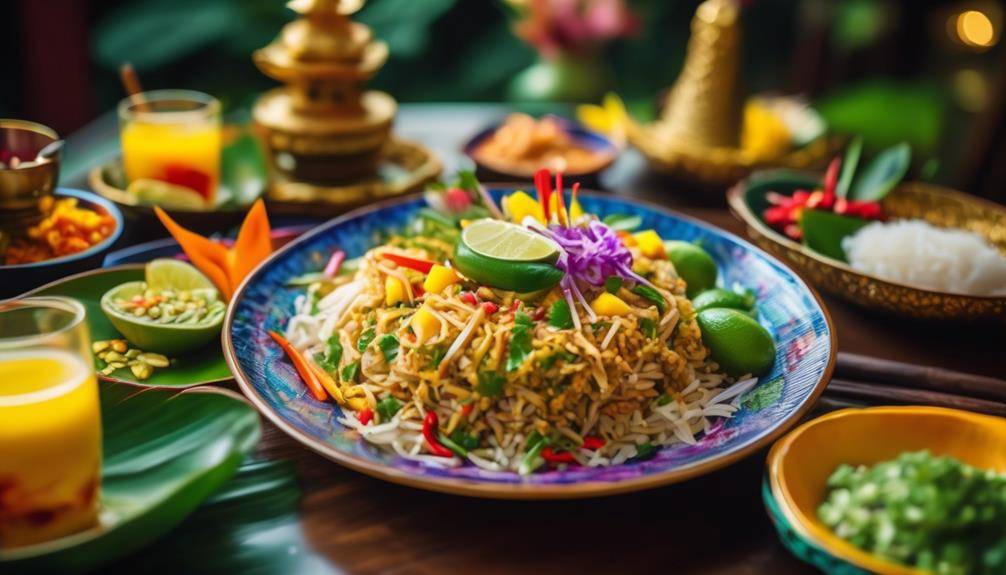
When you think of must-try Indonesian dishes, several vibrant flavors and enticing aromas immediately come to mind. One dish that stands out is nasi goreng, Indonesia’s beloved fried rice. This dish is often infused with a mix of spices, vegetables, and proteins, creating a satisfying meal that can be enjoyed any time of day. You can customize it by adding your favorite ingredients, such as chicken, shrimp, or tofu, and don’t forget the sweet soy sauce that gives it that distinctive flavor.
Next up is rendang, a slow-cooked beef dish that’s rich and aromatic. It’s packed with spices like ginger, turmeric, and lemongrass, simmered until the meat is tender and the flavors meld beautifully. Each bite transports you to the heart of Indonesia, showcasing the country’s depth of flavor.
No Indonesian meal would be complete without sambal varieties. This chili-based condiment comes in numerous forms, each with its unique taste and heat level. Try sambal terasi for a robust flavor, or go for sambal matah, a fresh and zesty option. You’ll definitely want to keep a jar handy for drizzling over dishes or using as a dip.
Cooking Tips for Success
To truly capture the vibrant flavors of Indonesian cuisine at home, mastering a few key cooking tips can make all the difference. First, focus on your ingredient sourcing. Fresh, high-quality ingredients are essential for authentic taste. Whenever possible, visit local Asian markets or specialty stores to find unique spices and herbs. Don’t hesitate to ask for recommendations on the best products; the staff often have valuable insights.
Next, pay attention to spice storage. Properly storing your spices guarantees they maintain their potency. Use airtight containers and keep them in a cool, dark place away from moisture and heat. Whole spices last longer than ground ones, so consider buying whole spices and grinding them as needed for maximum flavor. A mortar and pestle or a spice grinder can be great tools for this.
Another tip is to balance your flavors. Indonesian dishes often feature a combination of sweet, salty, sour, and spicy elements. Taste as you cook, and adjust your seasoning accordingly. Don’t be afraid to experiment with different spice blends, like sambal or rendang, to find your preferred flavor profile.
Lastly, embrace the cooking techniques common in Indonesian cuisine. Techniques like sautéing, braising, and steaming can help you achieve the right textures and flavors. With these cooking tips under your belt, you’re well on your way to creating aromatic Indonesian spice dishes that’ll impress your family and friends. Enjoy the journey and let your culinary creativity shine!
Pairing Dishes With Sides
A well-planned meal can elevate your Indonesian spice dishes, making the dining experience even more enjoyable. When you prepare a flavorful main dish, choosing the right side dishes can enhance those spice combinations and create harmony on your plate.
For instance, if you’re serving a rich rendang, consider pairing it with steamed jasmine rice, which balances the dish’s deep flavors. The rice absorbs the sauce, allowing you to savor every bite. You might also want to add a side of sautéed greens, like bok choy or spinach, tossed with garlic and a splash of soy sauce. This brings a crisp crunch that complements the richness of the rendang.
If you’re preparing a spicy sambal or a grilled chicken marinated in turmeric, a cooling cucumber salad can work wonders. The invigorating crunch of cucumbers, along with a drizzle of lime and a sprinkle of salt, helps tone down the heat while adding a zesty contrast.
For a vegetarian option, consider serving tempeh or tofu with a side of coconut rice. The creamy coconut flavor enhances the umami of the protein, making it a satisfying meal.
Don’t forget about the spices in your side dishes. Incorporating ingredients like coriander, lemongrass, or even a pinch of chili can tie everything together, allowing all the elements of your meal to shine. By thoughtfully selecting your sides, you’ll create a memorable dining experience that showcases the best of Indonesian cuisine.
Frequently Asked Questions: Mastering Aromatic Indonesian Spice Dishes
What Are the Health Benefits of Indonesian Spices?
Indonesian spices offer numerous health benefits, often used in traditional medicine. By incorporating spice combinations like turmeric and ginger, you can boost immunity, improve digestion, and reduce inflammation while adding delicious flavors to your meals.
Can I Substitute Indonesian Spices With Others?
Yes, you can make spice substitutions, but be mindful of the flavor profiles. Experiment with similar spices to achieve desired tastes; just remember that the unique essence of Indonesian spices may not fully replicate.
How Do I Store Indonesian Spices for Freshness?
To store Indonesian spices for freshness, use airtight storage containers. Keep them in a cool, dark place to maximize spice longevity. Avoid exposure to moisture and heat for the best flavor retention.
Are There Vegetarian Options for Traditional Indonesian Spice Dishes?
Yes, there are plenty of vegetarian options for traditional Indonesian spice dishes! You can make vegetarian adaptations by using tofu or tempeh, and spice alternatives like coconut milk to maintain that rich, flavorful essence.
What Is the History of Indonesian Cuisine and Its Spices?
Indonesian cuisine’s history reflects regional variations influenced by the spice trade. As you explore, you’ll discover how diverse cultures shaped flavors, blending indigenous ingredients with spices that attracted traders from around the world.

Conclusion
Now that you’ve explored the essential spices, techniques, and dishes of Indonesian cuisine, it’s time to get cooking! Remember to experiment with spice blends and adjust flavors to your liking. Don’t shy away from trying new combinations and pairings with your favorite sides. With a bit of practice, you’ll be mastering aromatic Indonesian dishes in no time. So, grab your spices, roll up your sleeves, and enjoy the delicious journey ahead!