Exciting Pro Tips For Expert Fresh Fish Filleting
Pro Tips For Expert Fresh Fish Filleting; Welcome, aspiring fish filleters, to the deep sea of knowledge where the art of filleting fish is as graceful as a dolphin gliding through the waves. As you embark on this journey, you’ll discover the secrets behind expertly filleting fresh fish. But before we dive into the nitty-gritty details, let me tease you with a taste of the invaluable tips and techniques that will elevate your filleting game to new heights. So, tighten your apron strings and prepare to uncover the key to perfectly filleted fish that will leave your friends and family hooked for more.
Choosing the Right Fillet Knife
To ensure the cleanest and most efficient filleting process, it is crucial to carefully select the perfect fillet knife for the task at hand. Choosing the right fillet knife can greatly enhance your filleting experience and improve the quality of your fillets. Here is a comprehensive buying guide to help you make an informed decision.
When it comes to selecting a fillet knife, there are a few key factors to consider. The first is the blade length. A longer blade, typically between 7 and 9 inches, is ideal for larger fish, while a shorter blade, around 5 or 6 inches, is better suited for smaller fish. It is important to choose a blade length that matches the size of the fish you will be filleting.
Another important feature to consider is the flexibility of the blade. A flexible blade allows for greater control and precision while filleting. Look for a knife with a thin, flexible blade that can easily navigate around bones and contours.
Additionally, the handle of the fillet knife is an important consideration. Look for a handle that feels comfortable and secure in your hand. A non-slip grip is essential to ensure safety and prevent accidents while filleting.
Once you have chosen the right fillet knife, it is important to keep it sharp. Dull knives can lead to messy and uneven fillets. Regularly sharpening your fillet knife will ensure clean and precise cuts. There are various sharpening techniques available, such as using a sharpening stone or a honing rod. Find the method that works best for you and maintain a sharp edge on your fillet knife.
Properly Cleaning and Scaling the Fish
After carefully selecting the perfect fillet knife, the next step in the filleting process is properly cleaning and scaling the fish. Cleaning and scaling a fish is an essential step to ensure that the fillet is free from any unwanted debris and scales. To do this, you will need a clean workspace, a fish scaler, and running water.
First, rinse the fish under cold running water to remove any loose scales and dirt. Make sure to handle the fish with care to avoid damaging the delicate flesh. Once the fish is clean, hold it firmly and use a fish scaler to remove the remaining scales. Start from the tail and work your way towards the head, using short and quick strokes. Be thorough in your scaling to ensure that no scales are left behind.
To make the cleaning process easier, consider using a fish cleaning technique called “gutting” the fish. This involves removing the internal organs of the fish, which can help eliminate any unpleasant odors and make the filleting process smoother. To gut the fish, make an incision along the belly, starting from the anal vent towards the head. Use your fillet knife to carefully remove the internal organs, taking care not to puncture the intestines.
Once the fish is cleaned and scaled, rinse it one final time under cold running water to remove any remaining debris. Pat the fish dry with a clean towel before proceeding with the filleting process. Properly cleaning and scaling the fish is crucial to ensure the quality and taste of the fillet. By following these fish cleaning techniques and removing fish scales thoroughly, you can achieve expert results in your filleting endeavors.
Essential Knife Skills for Filleting
Now that you’ve learned how to properly clean and scale the fish, it’s time to focus on the essential knife skills for filleting. To achieve successful filleting, you must have a proper grip and control of the knife, allowing for precise cutting techniques. Additionally, knife maintenance and care are crucial to ensure the longevity and effectiveness of your tools. Mastering these points will elevate your filleting skills and make the process more efficient and enjoyable.
Proper Grip and Control
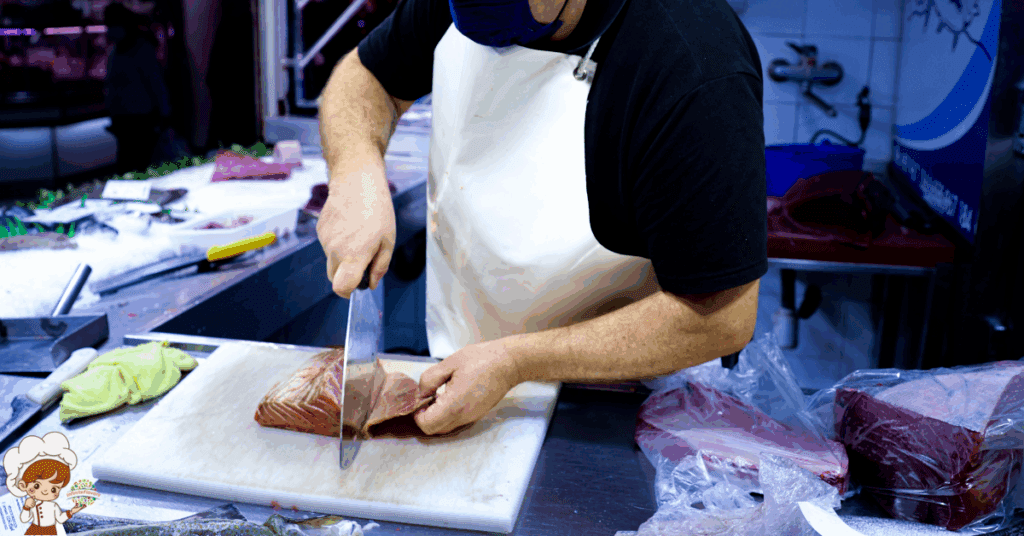
For a firm and confident grip that ensures precise control, hold the knife with your dominant hand and wrap your fingers securely around the handle. Grip techniques and hand positioning are crucial when it comes to filleting fish with finesse. By holding the knife properly, you will have better control over the blade and minimize the risk of accidents. Position your thumb along the spine of the knife for added stability and leverage.
Keep your fingers curled slightly to avoid any slippage or loss of control. Remember to maintain a relaxed grip to prevent fatigue and allow for smooth, fluid movements. With the right grip and control, you will be able to navigate the knife through the fish with ease, resulting in clean and precise fillets.
Precise Cutting Techniques
To achieve clean and precise fillets, mastering essential knife skills for filleting requires precise cutting techniques. Here are some key techniques to help you improve your knife skills mastery:
- Maintain a sharp knife: A sharp knife ensures clean cuts and reduces the risk of accidents.
- Practice proper hand placement: Hold the knife with a firm grip, using your thumb and index finger for control.
- Utilize the entire blade: Make long, smooth strokes along the spine of the fish, using the full length of the blade.
- Use gentle pressure: Apply just enough force to slice through the flesh without damaging it.
Knife Maintenance and Care
Continuing to maintain and care for your knife is crucial for mastering essential knife skills in filleting fresh fish. Proper knife sharpening is essential to ensure clean and precise cuts. A dull knife not only makes the filleting process more difficult but also increases the risk of accidents. Regularly sharpening your knife will keep the blade sharp and ready for use. Remember to use a sharpening stone or a honing rod to maintain the knife’s edge.
Additionally, preventing rust is vital to prolong the lifespan of your knife. After each use, thoroughly clean and dry your knife to remove any moisture that could lead to corrosion. Applying a thin layer of oil to the blade can further protect it from rusting. By following these maintenance and care practices, you will keep your knife in optimal condition, allowing you to fillet fish with precision and ease.
Identifying the Key Anatomical Parts for Filleting
To successfully fillet a fresh fish, you must have a thorough understanding of its key anatomical parts. Identifying these key features is essential in order to achieve clean and precise fillets. Here are four important anatomical parts to be aware of when filleting a fish:
- Head: The head of the fish is an important reference point for filleting. It provides stability and allows you to locate other key features such as the gills and the throat latch.
- Gills: The gills are located on both sides of the fish’s head and are responsible for extracting oxygen from the water. When filleting, it is important to carefully remove the gills to avoid any unwanted flavors or textures.
- Pectoral Fins: The pectoral fins are the pair of fins located on the sides of the fish, near the head. These fins can be used as additional reference points when positioning your knife for filleting.
- Lateral Line: The lateral line is a visible line that runs along the side of the fish, from the gills to the tail. This line serves as a guide for filleting and helps you maintain straight and even cuts.
Understanding fish anatomy and identifying these key anatomical parts will greatly enhance your filleting skills. By familiarizing yourself with these features, you will be able to approach filleting with confidence and precision. Remember to always work with a sharp knife and take your time to ensure clean and efficient fillets. Happy filleting!
Step-by-Step Filleting Techniques for Different Fish Types
When filleting different types of fish, it is important to follow specific step-by-step techniques to achieve the best results. Each fish has its own unique anatomical structure, which requires a tailored approach to ensure maximum yield and minimal waste. Here, we will guide you through the filleting techniques for different fish types, providing you with the knowledge and expertise to handle each fish with confidence.
For lean fish such as cod or halibut, start by removing the head. Make an incision just behind the gills and cut along the backbone, separating the fillet from the body. Next, remove the rib bones by making a shallow cut along the top side of the fillet and carefully pulling them out. For oily fish like salmon or mackerel, the process is similar, but you may need to remove the belly flap and pin bones as well.
Now, let’s explore the best seasoning options for fresh fish fillets. A simple yet delicious combination is salt, pepper, and lemon juice. This enhances the natural flavors of the fish without overpowering them. For a more adventurous taste, try marinating the fillets in a mixture of soy sauce, ginger, and garlic before cooking. The umami flavors will take your dish to the next level.
Once you have your fillets ready, it’s time to get creative with recipes. Grilling or pan-searing is a popular method that brings out the natural flavors and gives the fish a crispy exterior. For a twist, try making fish tacos with a tangy slaw and chipotle mayo. Another option is to bake the fillets with a herb crust and serve them with roasted vegetables for a healthy and satisfying meal.
Tips for Maintaining the Quality and Freshness of Filleted Fish
To ensure the highest quality and freshness of your filleted fish, it is essential to follow these expert tips and techniques:
- Proper Storage: After filleting the fish, it is crucial to store it properly to maintain its freshness. Place the fillets in an airtight container or wrap them tightly in plastic wrap. Make sure to remove all the air to prevent freezer burn. Store the fillets in the coldest part of your refrigerator or freezer to keep them fresh for longer periods.
- Temperature Control: Maintaining the right temperature is key to preserving the quality of your filleted fish. Keep your refrigerator set at or below 40°F (4°C), and your freezer at 0°F (-18°C) or lower. These temperatures will slow down the growth of bacteria and help retain the fish’s texture and flavor.
- Hygiene Practices during Transportation: When transporting filleted fish, it is crucial to ensure proper hygiene practices. Use clean, food-grade containers that are designed for transporting fish. Keep the fillets separate from other food items, and place them on ice or use gel packs to maintain a cool temperature. Avoid exposing the fillets to direct sunlight or high temperatures during transportation.
- Quick Handling: Minimize the time between filleting the fish and storing it. The longer the fillets are exposed to air, the faster they will deteriorate. Handle the fillets gently to avoid bruising or damaging the delicate flesh. Avoid touching the fish with bare hands and use clean utensils to prevent contamination.
Frequently Asked Questions: Pro Tips For Expert Fresh Fish Filleting
How Long Can I Store Filleted Fish in the Refrigerator Before It Goes Bad?
You can store filleted fish in the refrigerator for up to 2 days before it goes bad. Keep an eye on freshness indicators like smell and texture to ensure it’s still good to eat.
Can I Use a Regular Kitchen Knife Instead of a Fillet Knife for Filleting Fish?
You can use a regular kitchen knife for fish filleting, but there are pros and cons. A fillet knife is designed specifically for this task, providing better precision and control.
What Is the Best Way to Remove the Skin From a Fish Fillet?
To remove the skin from a fish fillet, start by making a small incision at the tail end. Grip the skin with a paper towel and use a smooth, steady motion to peel it away. A fillet knife is the best tool for this task.
How Do I Know if a Fish Is Fresh Enough to Be Filleted?
To check if a fish is fresh enough to be filleted, look for clear eyes, bright red gills, and shiny skin. Press the flesh to ensure it’s firm and springs back. A fresh fish will have a mild, oceanic smell.
Are There Any Special Techniques for Filleting Round-Shaped Fish Like Salmon or Trout?
When filleting round-shaped fish like salmon or trout, it’s crucial to use proper knife technique. Make sure to angle the blade correctly and follow the natural shape of the fish for clean, precise cuts.

Conclusion
In conclusion, mastering the art of fresh fish filleting requires the right tools, proper cleaning techniques, and essential knife skills. By understanding the key anatomical parts of each fish and following step-by-step filleting techniques, you can ensure precision and efficiency. Lastly, maintaining the quality and freshness of filleted fish is crucial for a satisfying culinary experience. With practice and attention to detail, you can become an expert in the art of filleting and enjoy delicious, perfectly prepared fish dishes.