The Sweet and Surprising History of Peppermint Bark
Surprising History of Peppermint Bark; The history of peppermint bark is a fascinating blend of tradition, creativity, and the natural evolution of holiday desserts. Although peppermint bark feels like a timeless classic that has existed for generations, its emergence as a beloved seasonal staple is surprisingly modern. The earliest versions of peppermint bark can be traced to confectioners who experimented with the pairing of chocolate and peppermint long before the fully formed treat became known by its iconic name.
Chocolate makers in Europe and America were long accustomed to combining cocoa with mint, but peppermint bark represented an entirely new category—one that relied on layering, texture, and visual appeal as much as flavor. Over time, this treat developed into a symbol of nostalgia, celebration, and the unmistakable charm of wintertime flavors.
The early foundation for peppermint bark can be tied to the long history of peppermint candy making. Peppermint itself dates back centuries, prized for its cooling and refreshing qualities. P
eppermint oil and peppermint candy both grew in popularity throughout the 1800s, and candy canes eventually emerged as one of the most iconic holiday confections in the world. While the candy cane’s origin story is steeped in folklore and varying accounts, one truth is undeniable: by the early 20th century, candy canes were everywhere during Christmastime, making them the perfect ingredient for dessert makers looking for creative new ways to incorporate their festive crunch and flavor. Peppermint bark would later take advantage of this abundance of peppermint candy, turning it into a treat that combines the indulgence of chocolate with the playful crackle of crushed candy canes.
Peppermint Bark Origins and How It Became a Holiday Favorite
Despite its popularity today, peppermint bark is not as old as many assume. Modern peppermint bark recipes did not appear in print until the late twentieth century. Before that, chocolate bark existed in various forms, with confectioners creating “barks” by spreading melted chocolate onto sheets, topping it with nuts, fruits, or cookie crumbs, and breaking it apart after cooling. Chocolate bark was simple, adaptable, and ideal for gifting, which helped establish the foundation for peppermint bark’s eventual debut.
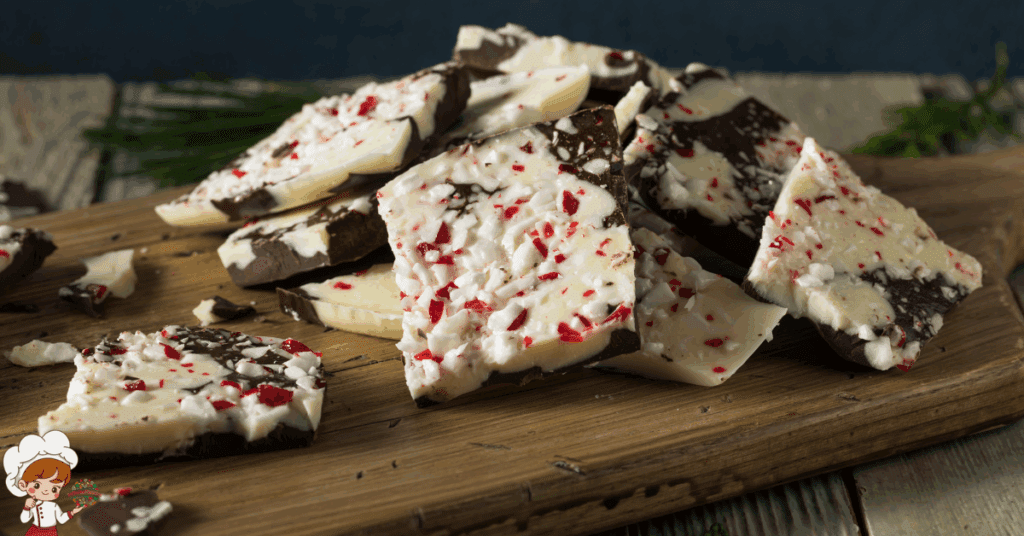
The rise of peppermint bark as a specific holiday confection came from a combination of consumer trends, food innovation, and seasonal marketing. Peppermint bark’s earliest commercial versions appeared in specialty candy shops, where chocolatiers experimented with layering white and dark chocolate and topping the surface with crushed peppermint candies. White chocolate, which had gained widespread popularity earlier in the century, provided the perfect canvas for the bright red and white flecks of crushed peppermint. The color contrast, combined with its smooth sweetness and cooling minty bite, made peppermint bark instantly recognizable and aesthetically tied to winter holidays.
It wasn’t long before peppermint bark shifted from a specialty treat to a mainstream holiday product. By the 1990s and early 2000s, major candy companies and gourmet brands began packaging peppermint bark seasonally. Its availability only during the winter months created a sense of anticipation and exclusivity, turning it into a must-have treat for holiday celebrations. Families began incorporating peppermint bark into annual traditions—gifting it, baking with it, and enjoying it throughout December as part of their seasonal rituals. Soon, peppermint bark was everywhere from Christmas stockings to office parties, becoming one of the most popular confections of the holiday season.
Why Peppermint Bark Became a Christmas Classic
Peppermint bark became a Christmas classic not only because of its festive colors and flavors but also because of how seamlessly it fits into holiday traditions. The combination of peppermint and chocolate has long been associated with winter, thanks to its refreshing coolness and comforting sweetness. Peppermint bark captures the essence of the season in both taste and appearance. The snowy white chocolate, deep dark chocolate layers, and red peppermint pieces make it look like a dessert designed specifically for the holidays.
Another factor in its popularity is its versatility. Although the treat itself is simple, peppermint bark is incredibly adaptable in the culinary world. It can be eaten as-is, used as a topping for cookies and cupcakes, stirred into hot chocolate, or incorporated into ice cream and cheesecakes. Many families enjoy making homemade peppermint bark as an easy seasonal project, especially because it requires no special equipment and can be prepared in minutes. This accessibility allowed peppermint bark to flourish across households of all ages and cooking abilities.
Peppermint bark also benefited from the rise of food gifting. As holidays became more centered on homemade treats, families looked for edible gifts that were affordable yet impressive. Peppermint bark’s beautiful shards, long shelf life, and rich flavor made it an ideal gift for teachers, neighbors, coworkers, and friends. The treat travels well, stores beautifully, and looks elegant packaged in tins, boxes, or cellophane bags. Its popularity skyrocketed as gifting culture expanded, and peppermint bark became synonymous with sharing sweetness during the holiday season.
The Evolution of Peppermint Bark Through the Decades
As peppermint bark gained traction, it naturally evolved with culinary trends. In the early 2000s, creative variations began appearing everywhere. Some versions swapped dark chocolate for milk chocolate. Others added peppermint extract to intensify flavor. Some included additional toppings like chocolate drizzle or edible glitter to make the bark even more visually appealing. White-chocolate-only versions grew in popularity as well, offering a milder cocoa base with a stronger focus on peppermint flavor.
Gourmet and artisan chocolatiers pushed the boundaries further by experimenting with single-origin chocolates, infused oils, and organic peppermint candy. Some bakeries introduced “gourmet peppermint bark” with enhanced textures, layering techniques, and specialty ingredients. Peppermint bark even became a popular component of holiday beverage menus, inspiring peppermint bark lattes, milkshakes, and frozen treats.
As peppermint bark continued to evolve, it became more than just a seasonal candy—it became a symbol of holiday creativity and culinary craftsmanship. Today, it is considered one of the most iconic Christmas sweets, beloved not only for its flavor but also for the sense of joy, warmth, and nostalgia it brings with every piece.
Peppermint Bark in Modern Holiday Culture
Modern holiday culture has embraced peppermint bark in countless ways. While it remains primarily a December treat, consumers’ excitement for peppermint bark begins as early as November when seasonal displays appear in stores. Social media has also contributed to its popularity, with thousands of videos showcasing creative peppermint bark desserts, wrapper hacks, and holiday recipe inspiration. Peppermint bark has become a digital-era dessert star, thanks to its photogenic appearance and crave-worthy flavor.
Families continue to pass down peppermint bark traditions from generation to generation, making it a dessert deeply tied to family bonding. Whether made at home or purchased from a favorite brand, peppermint bark represents togetherness and celebration. Its role in holiday gatherings is undeniable—appearing on dessert tables, tucked into stockings, packaged in gift baskets, and even used as a centerpiece for festive dessert boards.
Peppermint bark also resonates with nostalgia. Many adults associate the treat with childhood memories of decorating Christmas cookies, breaking peppermint candies, or sharing chocolatey treats during winter celebrations. Its enduring charm lies in its simplicity and the comforting familiarity of its flavors. Peppermint bark is a dessert that brings people together in the spirit of the holidays, making it one of the most enduring holiday sweets of all time.

Peppermint Bark
Ingredients
- 12 ounces dark chocolate chopped
- 12 ounces white chocolate chopped
- 1 cup crushed peppermint candies
Instructions
- Melt the dark chocolate until smooth, then spread it evenly onto a lined baking sheet.
- Allow it to partially set.
- Next, melt the white chocolate and gently pour it over the dark chocolate layer, spreading it carefully to avoid mixing the layers.
- Immediately sprinkle the crushed peppermint candies over the top while the white chocolate is still warm.
- Let the bark cool completely at room temperature or in the refrigerator until fully hardened.
- Once set, break the peppermint bark into pieces and serve.
FAQ: Surprising History of Peppermint Bark
What exactly is peppermint bark?
Peppermint bark is a layered chocolate confection typically made with dark or milk chocolate, white chocolate, and crushed peppermint candies. It is broken into pieces once set, giving it a rustic “bark” appearance.
When did peppermint bark originate?
Peppermint bark emerged in the late twentieth century, inspired by earlier versions of chocolate bark that date back much further. Its rise as a Christmas staple began in the 1990s and early 2000s.
Is peppermint bark considered a traditional Christmas dessert?
Although relatively modern, peppermint bark has become one of the most recognizable holiday treats and is embraced as a traditional Christmas dessert in many households.
Why is peppermint bark associated with Christmas?
Its flavors, colors, and use of candy canes—an iconic Christmas candy—tie peppermint bark directly to holiday culture. Its refreshing, minty taste also fits perfectly with winter flavors.
Is peppermint bark always made with two kinds of chocolate?
Not necessarily. While many versions use layers of dark and white chocolate, some recipes use only white chocolate or only milk or dark chocolate.
Can peppermint bark be made without candy canes?
Peppermint bark can be made using peppermint hard candies, peppermint chips, or even peppermint extract, though candy canes remain the most iconic topping.
Why is peppermint bark so popular for gifting?
It stores well, looks festive, tastes delicious, and is easy to package in tins, bags, or boxes. Its long shelf life and widespread appeal make it perfect for holiday gifting.
Is peppermint bark the same as chocolate bark?
Peppermint bark is a specialized form of chocolate bark. While chocolate bark can be topped with nuts, fruits, or cookies, peppermint bark specifically features peppermint flavor and candy pieces.

Why Peppermint Bark Will Always Be a Holiday Icon
Peppermint bark has earned its place as one of the most iconic Christmas treats by combining flavor, tradition, beauty, and joy in every bite. Its history, though relatively young compared to centuries-old confections, is rich and meaningful, shaped by holiday culture and beloved traditions. From the rise of peppermint candies to the creative evolution of chocolate bark, peppermint bark represents the spirit of holiday indulgence and togetherness. Families continue to embrace peppermint bark not only for its delicious taste but for the memories it inspires and the traditions it strengthens.
As holiday celebrations continue to grow and evolve, peppermint bark remains a timeless reminder of the warmth and sweetness of the season. Whether it’s enjoyed fresh from the kitchen, given as a thoughtful gift, or savored while wrapped in a cozy blanket by the fire, peppermint bark has become an irreplaceable part of winter festivities. Its charm endures, its flavor delights, and its history continues to sweeten every holiday season.
If you enjoyed exploring this topic and want to dive even deeper, be sure to check out some of our other articles here on Infinite Flavors. From rich culinary histories to creative twists on classic recipes, there’s always something new to discover. Whether you’re curious about the origins of a dish, looking for fresh inspiration in the kitchen, or simply love learning about food culture, our collection of posts is the perfect next step on your flavor journey.
The Great History Of Mint Chocolate Chip Brownies
The History Easy Slow Cooker Hot Fudge Brownie Cake
The Great Origin Of Slow Cooker Pumpkin Spice Cake