Mastering Sushi Rolling: A Detailed Instructional Guide
Sushi Rolling: A Detailed Instructional Guide: To master sushi rolling, you need a few essential ingredients like quality nori, fresh fish, and sushi vinegar. Start by choosing the right short-grain rice, rinsing it thoroughly, and letting it soak. Organize your workspace by decluttering and keeping everything within reach. Use proper techniques when rolling, ensuring the nori is placed shiny side down and the rice is evenly spread. Avoid common mistakes such as overfilling and uneven pressure. Finally, enhance your presentation with garnishes and creative serving ideas. Stick around for more tips that'll take your sushi skills to the next level.
Essential Sushi Ingredients
Click Here and Turn Every Masterpiece into a Showstopper!
When it comes to sushi, you'll find that having the right ingredients is vital to achieving that authentic taste and texture. One key component is sushi vinegar, which plays a significant role in flavoring your rice. You've got several sushi vinegar types to choose from, including seasoned, unseasoned, and even homemade varieties. Seasoned vinegar often contains sugar and salt, giving your sushi a perfect balance of sweetness and tang. Unseasoned vinegar allows you to control the flavor more precisely, so it's a great option if you're experimenting with different taste profiles.
Next up is nori, the seaweed used to wrap your sushi. Nori quality can greatly impact your final product. Always opt for high-grade nori that's dark green and has a shiny surface. If it's dull or brittle, it won't hold together well when you roll your sushi, and you'll end up with a messy result. Fresh nori should also have a slightly sweet, ocean-like aroma, which enhances the overall flavor of your sushi.
In addition to vinegar and nori, consider other ingredients like fresh fish, vegetables, and seasonings. They'll add layers of flavor and texture, making your sushi not just a meal, but an experience. By focusing on these vital sushi ingredients, you'll set a solid foundation for mastering your sushi rolling skills.
Choosing the Right Rice
Choosing the right rice is vital for making delicious sushi, and you can't go wrong with short-grain varieties, like sushi rice or japonica. These rice types are sticky, which helps them hold together when you roll your sushi. When you head to the grocery store, look for labeled sushi rice varieties; this guarantees you'll get the texture and flavor you need.
Once you've selected your rice, mastering rice cooking techniques is important. Rinse your rice thoroughly under cold water until the water runs clear, removing excess starch. This step will help achieve a non-mushy texture. Next, soak the rice for about 30 minutes before cooking. This allows the grains to absorb water and cook evenly.
When it comes time to cook, use a rice cooker or a pot on the stovetop. If you're using a rice cooker, follow the manufacturer's instructions for the right water-to-rice ratio—typically about 1:1.2. If you're using the stovetop method, bring the rice and water to a boil, then reduce to a simmer and cover for about 18 minutes. After cooking, let the rice sit for another 10 minutes without lifting the lid; this helps the moisture distribute evenly.
Preparing Your Workspace
A clean and organized workspace is essential for rolling sushi efficiently and effectively. Before you start, take a moment to declutter your countertop. Remove any unnecessary items that might distract you or take up valuable space. A tidy environment not only helps you focus but also prevents contamination of your ingredients.
Next, think about workspace organization. Arrange your tools and ingredients in a way that makes sense for the sushi you're preparing. Place your bamboo mat, sharp knife, and cutting board within easy reach. This minimizes movement and helps you maintain a steady workflow. Keep your rice, vegetables, fish, and any other fillings nearby, guaranteeing ingredient accessibility throughout the rolling process.
It's also wise to have a damp cloth handy to wipe your hands and surfaces as needed. This helps maintain cleanliness and guarantees that your sushi doesn't stick to your fingers or the mat. If you're using multiple ingredients, consider using small bowls or containers to separate them. This not only keeps everything organized but also allows you to see all your options at a glance.
Techniques for Rolling Sushi
To roll sushi like a pro, you'll need a few essential tools to get started. Once you have everything ready, you can follow a simple step-by-step technique that makes the process easier and more enjoyable. Let's explore what you need and how to roll sushi perfectly every time.
Essential Tools Needed
Equipping yourself with the right tools makes sushi rolling a more enjoyable and successful experience. To start, you'll need a sushi mat, which comes in a few different types. The most common are bamboo mats, known for their flexibility and ease of use, and plastic mats, which are easier to clean. Choose the one that feels best for you, as it'll impact your rolling technique.
Next, focus on knife selection. A sharp, high-quality knife is essential for slicing your sushi rolls cleanly. Look for a sushi knife, or a good chef's knife, as these will give you the precision you need. A dull knife can crush your rolls and ruin the presentation.
Additionally, consider a rice paddle for handling your sushi rice without getting it too sticky, and a bowl of water to keep your hands moist while you work. Finally, a cutting board provides a stable surface for slicing your rolls. With these essential tools, you're well on your way to mastering the art of sushi rolling!
Step-by-Step Rolling Techniques
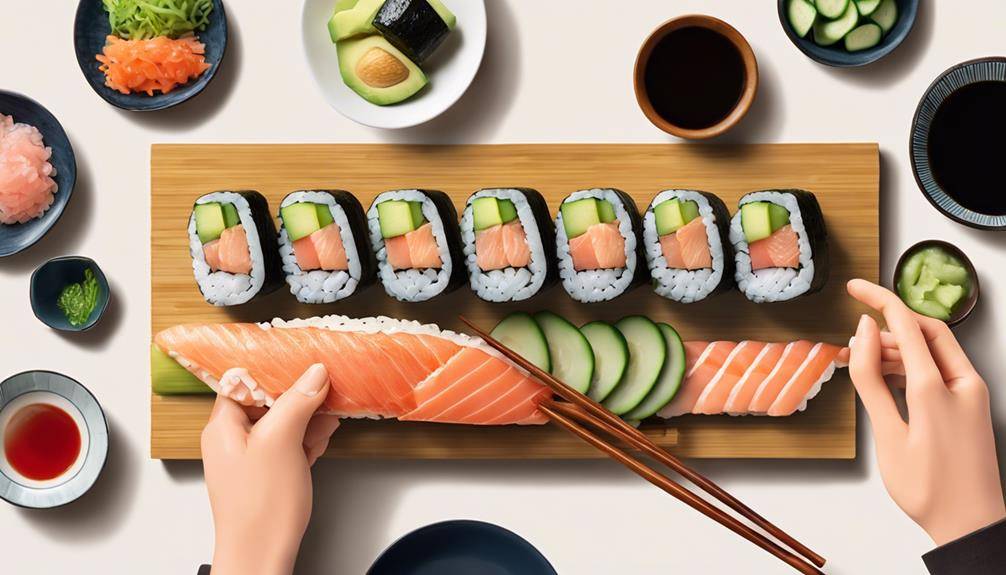
Getting started with sushi rolling can feel challenging, but breaking it down into simple steps makes it much easier. First, lay your nori shiny side down on the bamboo mat. Use your fingers to wet the edges of the nori, which helps seal the roll later. Now, it's time to add your sushi rice. Spread an even layer, leaving about an inch at the top.
As you add fillings, remember to keep them centered. This guarantees an even roll. Now comes the essential part: hand positioning. Use your fingers to hold the fillings in place while keeping one hand on the mat. Your other hand should grip the edge of the mat to start the roll.
When you begin rolling, maintain a consistent rolling speed. A slow, steady motion guarantees the roll tightens without squishing the ingredients. As you roll, apply gentle pressure and tuck the nori over the fillings, continuing to roll until you reach the exposed edge. Once you've completed the roll, use your mat to shape it tightly, giving it a nice round form. Finally, slice your sushi with a sharp knife, and enjoy your delicious creation!
Popular Sushi Fillings
When it comes to sushi, the filling you choose can make all the difference. You can stick with traditional options like tuna and avocado, or get adventurous with creative fusion ingredients. Let's explore some popular choices that will elevate your sushi game!
Traditional Sushi Fillings
Exploring traditional sushi fillings opens up a world of flavors and textures that can elevate your sushi-making skills. To get started, consider the classic ingredients that define sushi, such as fresh fish, vegetables, and rice. For nigiri variations, you might choose slices of tuna, salmon, or eel, each providing a distinct taste and mouthfeel. This minimalist approach lets the freshness of the fish shine through.
When you want to experiment with sashimi styles, think about how different cuts and seasonings can enhance your dish. For instance, adding a touch of wasabi or soy sauce can bring out the natural flavors of the fish. You can also include vegetables like cucumber or avocado; they're not just for rolls but can add a revitalizing crunch to nigiri.
Don't forget about pickled ingredients like daikon radish or ginger, which can balance the richness of the fish. By mastering these traditional fillings, you'll build a solid foundation for your sushi repertoire, making it easier to venture into more creative options down the line. Enjoy the process, and let the quality of your ingredients shine!
Creative Fusion Options
If you're ready to take your sushi-making to the next level, integrating creative fusion options can transform your rolls into a culinary adventure. Why stick to tradition when you can reimagine sushi in exciting ways? Start with sushi tacos, where you use a crispy seaweed shell filled with your choice of protein and vibrant veggies. Next, consider sushi burritos, which offer a hearty wrap of rice and fillings, perfect for a quick meal on the go.
Don't forget about sushi nachos! Layer crispy wonton chips with sushi toppings like spicy tuna and avocado for a fun twist. For those with a sweet tooth, dessert sushi is a must-try—think coconut rice with fruit like mango and strawberries, rolled up and drizzled with chocolate sauce.
You can also get creative with sushi sandwiches, using rice as the bread and filling them with everything from crab salad to pickled vegetables. Finally, sushi bowls allow you to customize your ingredients in a bowl format, making it easy to enjoy a variety of flavors. Embrace these fusion options, and you'll never look at sushi the same way again!
Click Here and Turn Every Masterpiece into a Showstopper!
Common Mistakes to Avoid
Rolling sushi can be a rewarding culinary experience, but it's easy to fall into common pitfalls that can ruin your efforts. One major mistake is overfilling sushi. While it's tempting to load up your roll with all your favorite ingredients, doing so can lead to a messy outcome. When you try to roll too much at once, the ingredients can spill out, making it hard to achieve that perfect cylindrical shape. Stick to smaller amounts; you can always create more rolls.
Another frequent error is applying uneven pressure while rolling. When you roll your sushi, it's essential to apply consistent, gentle pressure throughout the process. If you push too hard in one spot, you risk crushing the rice, which can lead to a mushy texture. Conversely, if you're too gentle, your roll might not hold together, causing it to fall apart.
Take your time and practice finding that sweet spot of pressure. Additionally, don't forget to wet your hands before handling the sushi rice. This helps prevent it from sticking to your fingers, allowing for smoother rolling and cleaner results.
Lastly, make sure your sushi mat is aligned properly. Misalignment can cause the roll to twist or crumple, leading to uneven sushi. By avoiding these common mistakes, you'll find that your sushi rolls come out looking and tasting better, giving you the satisfying results you desire. Remember, practice makes perfect, so keep rolling!
Serving and Presentation Tips
Presenting your sushi with flair can elevate the dining experience, making it not just a meal but a feast for the eyes. Choose the right sushi plateware options to enhance your presentation. Opt for traditional wooden or lacquered platters for a classic feel, or go with sleek, modern white plates to create a striking contrast against the vibrant colors of your sushi. The choice of plate can set the tone for the entire dining experience.
Next, think about your garnishing techniques. Fresh herbs, edible flowers, or finely sliced vegetables can add visual interest and a burst of color. Arrange your sushi artfully, ensuring each piece is easily accessible. Try placing a small mound of pickled ginger and a dollop of wasabi next to your sushi. Not only do they add flavor, but they also enhance the visual appeal.
Don't forget about the use of sauces. Drizzle a line of soy sauce or a spicy mayo around the plate for an artistic touch. You can even use a squeeze bottle for precise designs. If you're feeling adventurous, consider adding a sprinkle of sesame seeds or a dash of furikake for texture.
Cleaning and Maintenance Guide
After creating beautiful sushi presentations, maintaining your tools and equipment is key to ensuring they last and perform well. Start with your sushi knife. A sharp knife is essential for clean cuts, so regular sushi knife maintenance is important. After each use, rinse the blade under warm water to remove any residue. Avoid using harsh detergents, as they can damage the blade. Instead, use a soft sponge and mild soap if necessary. Dry the knife thoroughly with a soft cloth to prevent rust. For deeper maintenance, hone the blade using a whetstone every few weeks, or take it to a professional for sharpening when it starts to dull.
Next, let's talk about bamboo mat care. Your bamboo mat is essential for rolling sushi perfectly, so keep it in top shape. After each use, scrape off any rice or filling stuck to the mat using a soft spatula or cloth. Rinse it under warm water, avoiding submersion, as this can warp the bamboo. Allow it to air dry completely before storing it in a cool, dry place. If you notice any signs of mold or odor, you can wipe it down with a mixture of vinegar and water to sanitize it.
Click Here and Turn Every Masterpiece into a Showstopper!
Frequently Asked Questions: Sushi Rolling: A Detailed Instructional Guide
Can I Use Brown Rice for Sushi Rolling?
Yes, you can use brown rice for sushi rolling! It adds nutritional benefits and a nuttier flavor, but expect a different sushi texture. Experiment to find a balance that suits your taste preferences. Enjoy!
What Are the Best Side Dishes to Serve With Sushi?
When serving sushi, consider delicious sushi pairings like edamame, seaweed salad, or pickled ginger. Don't forget dipping sauces, such as soy sauce or ponzu, to enhance the flavors and complement your meal beautifully!
How Can I Store Leftover Sushi Properly?
To store leftover sushi properly, wrap it tightly in plastic wrap and refrigerate. For sushi preservation techniques, consider using airtight containers. You can also create delicious leftover sushi recipes, like sushi salads or rolls.
What Are Some Sushi Alternatives for Dietary Restrictions?
If you're looking for sushi alternatives, consider vegan sushi with ingredients like avocado and cucumber. You can also explore gluten-free options, using rice paper instead of nori, to cater to your dietary restrictions effectively.
Is It Safe to Eat Sushi Made With Raw Fish?
Eating sushi made with raw fish can be safe if you choose high-quality, fresh ingredients and check for sushi safety standards. Always trust reputable sources, and be cautious if you're pregnant or have compromised immunity.

Conclusion
Now that you've mastered the essentials of sushi rolling, you're ready to impress your friends and family with your skills. Remember to experiment with different fillings and techniques to find your favorites. Don't forget to keep your workspace clean and maintain your tools for the best results. With practice, you'll create beautiful, delicious sushi that showcases your creativity. So, grab your ingredients and start rolling—your sushi journey is just beginning!