Great Reasons Why To Opt For High-Protein Vegetarian Recipes
To Opt For High-Protein Vegetarian Recipes; Did you know that approximately 9.7% of the global population follows a vegetarian diet? With the rising popularity of plant-based eating, it’s no wonder that people are seeking high-protein vegetarian recipes. But why exactly should you opt for these recipes? Well, the benefits go beyond just reducing your carbon footprint. In fact, high-protein vegetarian meals can provide numerous health benefits and help you achieve your fitness goals. So, if you’re curious to learn more about how these recipes can enhance your well-being and transform your plate, then keep reading.
Health Benefits of High-Protein Vegetarian Recipes
High-protein vegetarian recipes offer numerous health benefits, making them a delicious and nutritious choice for individuals seeking a plant-based diet. When it comes to protein intake for vegetarians, it’s important to ensure adequate consumption as it plays a crucial role in various bodily functions. Fortunately, there are several benefits of vegetarian protein that can contribute to overall health and well-being.
One of the key benefits of high-protein vegetarian recipes is that they can help meet the recommended daily protein intake. Protein is essential for building and repairing tissues, producing enzymes and hormones, and supporting a healthy immune system. By incorporating protein-rich plant-based foods such as legumes, tofu, tempeh, and quinoa into your diet, you can ensure that you are getting the necessary amino acids to support these functions.
Additionally, high-protein vegetarian recipes can aid in weight management. Protein has been found to increase feelings of fullness and reduce appetite, which can help with weight loss or maintenance. Studies have shown that a high-protein diet can lead to greater satiety and improved body composition compared to diets that are lower in protein.
Another benefit of vegetarian protein is its potential to lower the risk of chronic diseases. Research suggests that plant-based diets, which are typically higher in protein from sources such as beans, lentils, and nuts, may help reduce the risk of heart disease, type 2 diabetes, and certain types of cancer. Additionally, vegetarian protein sources are often lower in saturated fat and cholesterol, making them a healthier choice for overall cardiovascular health.
Meeting Protein Needs on a Vegetarian Diet
To ensure adequate protein intake on a vegetarian diet, it is important to incorporate a variety of plant-based protein sources into your meals. Meeting protein needs on a vegetarian diet can be easily achieved by including a combination of legumes, grains, nuts, and seeds in your daily meals. Legumes, such as lentils, chickpeas, and black beans, are excellent sources of protein and can be used in a variety of dishes like stews, soups, and salads. They not only provide protein but are also rich in fiber, vitamins, and minerals.
Grains like quinoa, brown rice, and whole wheat bread are also great sources of protein. These grains can be consumed as a side dish or used as the base for a main meal. Additionally, they offer essential amino acids, fiber, and other nutrients that are important for a balanced vegetarian diet.
Nuts and seeds, such as almonds, chia seeds, and flaxseeds, are another fantastic source of protein. They can be sprinkled on top of salads, blended into smoothies, or used as a topping for yogurt or oatmeal. These plant-based protein sources are not only rich in protein but also provide a healthy dose of healthy fats, vitamins, and minerals.
Incorporating a variety of vegetarian protein sources into your meals ensures that you are meeting your protein needs. It is also important to note that while plant-based proteins can be slightly lower in certain amino acids, consuming a diverse range of protein sources throughout the day can help to provide all the essential amino acids your body needs. By making thoughtful choices and combining different plant-based protein sources, you can easily meet your protein needs on a vegetarian diet.
Plant-Based Protein Sources for Vegetarians
Including a variety of plant-based protein sources in your vegetarian diet is essential for meeting your protein needs. Fortunately, there are plenty of plant-based protein options available that can provide you with all the essential amino acids your body needs. Not only are these options rich in protein, but they also offer numerous other health benefits.
Legumes, such as lentils, chickpeas, and black beans, are excellent plant-based protein sources. They are not only high in protein but also packed with fiber, vitamins, and minerals. Additionally, legumes are low in fat and cholesterol, making them a heart-healthy choice.
Quinoa is another great plant-based protein option. This ancient grain is not only a complete protein but also rich in fiber, iron, and magnesium. It is easy to cook and can be used as a base for salads, bowls, or as a side dish.
Nuts and seeds are also fantastic sources of plant-based protein. Almonds, walnuts, chia seeds, and flaxseeds are all packed with protein, healthy fats, and essential nutrients. They can be added to smoothies, oatmeal, or salads to increase your protein intake.
Soy products, such as tofu and tempeh, are popular plant-based protein options among vegetarians. They are not only rich in protein but also contain essential amino acids. Additionally, soy products are a good source of calcium and iron.
Incorporating these plant-based protein sources into your vegetarian diet can provide you with the necessary nutrients and help you meet your protein needs. By choosing these options, you can enjoy the benefits of vegetarian protein, such as improved heart health, weight management, and reduced risk of chronic diseases. So, go ahead and explore the delicious and nutritious world of plant-based protein options!
Boosting Muscle Growth With High-Protein Vegetarian Meals
Enhance your muscle growth with delicious and nutritious high-protein vegetarian meals. Whether you’re a vegetarian or simply looking to incorporate more plant-based protein into your diet, these meals can help you boost your athletic performance and aid in post-workout recovery. Here are four key ways high-protein vegetarian meals can support your muscle growth:
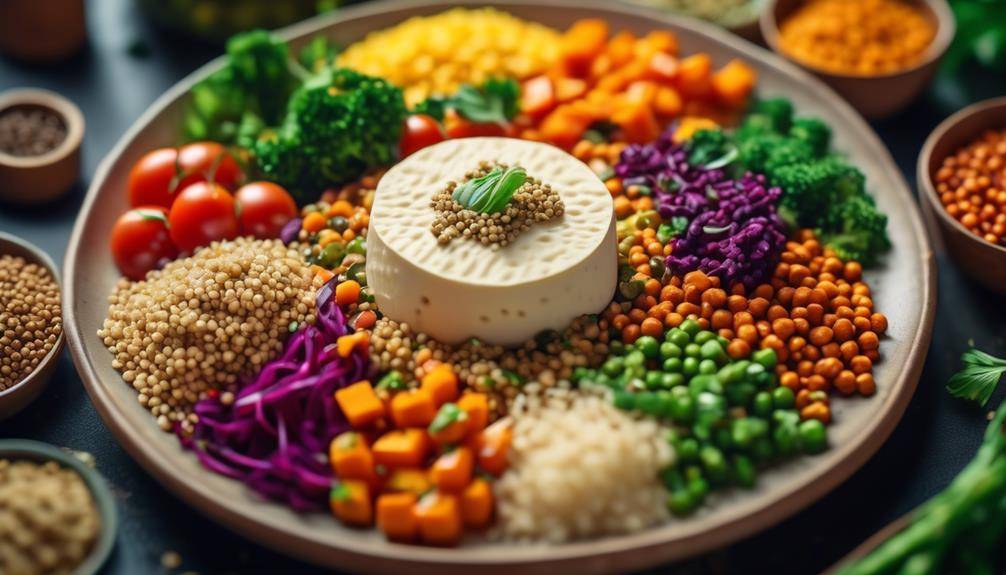
- Complete protein: Contrary to popular belief, it is possible to obtain all the essential amino acids needed for muscle growth from vegetarian sources. Foods such as quinoa, tofu, and tempeh are considered complete proteins, meaning they contain all nine essential amino acids. Including these in your meals ensures that your body has the necessary building blocks for muscle repair and growth.
- Increased protein synthesis: Vegetarian protein sources like legumes, lentils, and chickpeas are not only high in protein but also rich in other nutrients such as fiber and antioxidants. These nutrients help enhance protein synthesis, the process by which your body converts dietary protein into new muscle tissue. By promoting protein synthesis, high-protein vegetarian meals can support muscle growth and recovery.
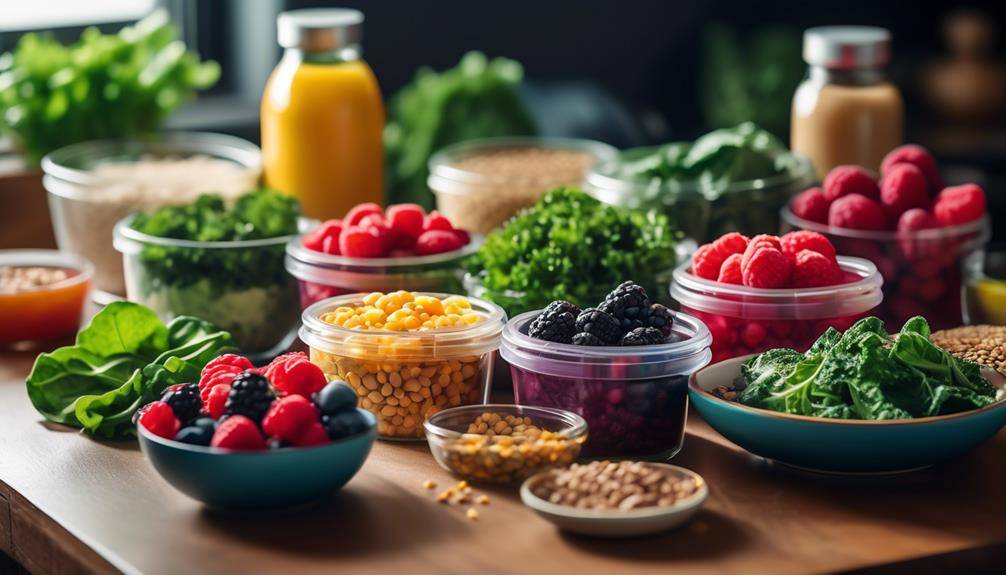
- Plant-based antioxidants: Many high-protein vegetarian foods, such as leafy greens, berries, and nuts, are packed with antioxidants. These compounds help reduce oxidative stress caused by intense exercise, which can lead to muscle damage and inflammation. By including antioxidant-rich foods in your meals, you can support post-workout recovery and minimize muscle soreness.
- Nutrient density: High-protein vegetarian meals often feature a variety of nutrient-dense ingredients, such as whole grains, vegetables, and seeds. These foods provide essential vitamins and minerals that support overall health and well-being. When your body receives the necessary nutrients, it can function optimally, allowing for efficient muscle growth and repair.
Incorporating high-protein vegetarian meals into your diet can be a great strategy for boosting muscle growth and supporting athletic performance. By focusing on complete proteins, promoting protein synthesis, harnessing plant-based antioxidants, and prioritizing nutrient density, you can optimize your post-workout recovery and achieve your fitness goals.
Weight Management and High-Protein Vegetarian Recipes
Incorporating high-protein vegetarian recipes into your diet can be a beneficial strategy for managing weight while ensuring optimal nutrition. When it comes to weight loss, protein plays a crucial role as it helps to increase satiety, reduce appetite, and boost metabolism. While many people believe that animal products are the only sources of protein, there are plenty of vegetarian protein sources that can help you achieve your weight loss goals.
One of the best vegetarian protein sources for weight management is legumes. Lentils, chickpeas, black beans, and other legumes are not only high in protein but also rich in fiber. This combination helps to keep you feeling full for longer and reduces the likelihood of overeating. Additionally, legumes are low in fat and calories, making them an excellent choice for those looking to shed pounds.
Another great option is tofu and other soy-based products. Soy is a complete protein, meaning it contains all the essential amino acids your body needs. It is also low in fat and cholesterol-free, making it a healthier alternative to animal-based proteins. Tofu is incredibly versatile and can be used in a variety of dishes, making it an ideal choice for weight management.
Quinoa is another vegetarian protein source that can aid in weight loss. This ancient grain is not only high in protein but also contains all the essential amino acids. Quinoa is also a good source of fiber, which helps to regulate blood sugar levels and keep you feeling satisfied.
Enhancing Energy Levels With Plant-Based Proteins
If you’re looking to enhance your energy levels, plant-based proteins can be a great addition to your diet. Not only do they provide the necessary building blocks for muscle repair and growth, but they also offer numerous other health benefits. Plant-based proteins, such as beans, lentils, quinoa, and tofu, are rich in essential amino acids, vitamins, minerals, and antioxidants that can help increase stamina and support overall well-being.
Plant-Based Protein Benefits
Boost your energy levels with the power of plant-based proteins. Incorporating plant-based proteins into your diet can have numerous benefits, especially when it comes to enhancing your energy levels. Here are four ways plant-based proteins can help boost your energy:
- Increased nutrient intake: Plant-based proteins, such as legumes, nuts, and seeds, are packed with essential nutrients like iron, magnesium, and B vitamins. These nutrients are vital for energy production in the body.
- Faster muscle recovery: For athletes, plant-based proteins can aid in muscle recovery and repair. They contain all the essential amino acids needed for muscle building, allowing you to bounce back faster and perform at your best.
- Weight management: Vegetarian protein sources are often low in calories and high in fiber, making them a great choice for weight loss. Maintaining a healthy weight can have a positive impact on your energy levels.
- Sustained energy release: Unlike refined carbohydrates, plant-based proteins provide a slow and steady release of energy, helping you avoid energy crashes throughout the day.
Incorporating plant-based proteins into your diet can be a great way to enhance your energy levels while reaping the benefits of a balanced and nutritious diet.
Increased Stamina With Vegetarian Protein
To enhance your energy levels and increase stamina, incorporating plant-based proteins into your diet can be a beneficial choice. While it is commonly believed that meat is the best source of protein for building endurance, vegetarian protein sources can provide the same benefits. Plant-based proteins such as lentils, quinoa, tofu, and tempeh are not only rich in protein but also contain essential vitamins, minerals, and antioxidants that contribute to increased energy.
These proteins are easily digestible, allowing your body to efficiently absorb the nutrients and convert them into sustained energy. Additionally, vegetarian protein sources are low in saturated fats and cholesterol, which can help improve cardiovascular health and prevent fatigue. So, if you want to boost your stamina and maintain increased energy throughout the day, consider incorporating more plant-based proteins into your diet.
High-Protein Vegetarian Recipes for a Balanced Diet
For a balanced diet, incorporating high-protein vegetarian recipes is a smart choice to ensure you meet your nutritional needs without relying on meat. Vegetarian diets can provide all the essential nutrients, including protein, as long as you choose the right ingredients. Here are four high-protein vegetarian recipes that can help you meet your protein requirements and maintain a balanced diet:
- Lentil and Vegetable Stir-Fry: Lentils are a great vegetarian protein source, providing about 18 grams of protein per cooked cup. Combine cooked lentils with a variety of colorful vegetables like bell peppers, broccoli, and carrots, and stir-fry them in a flavorful sauce made with soy sauce, ginger, and garlic. Serve over brown rice or quinoa for a complete meal.
- Chickpea Salad: Chickpeas, also known as garbanzo beans, are packed with protein, fiber, and essential minerals. Make a delicious salad by mixing cooked chickpeas with diced cucumbers, cherry tomatoes, red onions, and fresh herbs like parsley or cilantro. Dress it with a tangy lemon vinaigrette for a refreshing and protein-rich meal.
- Tofu and Vegetable Curry: Tofu is a versatile and protein-rich ingredient, with about 20 grams of protein per 3.5 ounces. Make a flavorful curry by sautéing tofu cubes with a mix of vegetables like bell peppers, zucchini, and eggplant. Add a curry paste or powder, coconut milk, and simmer until the flavors meld together. Serve over brown rice or quinoa for a satisfying meal.
- Quinoa and Black Bean Burritos: Quinoa is a complete protein, meaning it contains all the essential amino acids. Combine cooked quinoa with black beans, diced tomatoes, corn, and your favorite spices to make a delicious burrito filling. Wrap it in a whole wheat tortilla and top with avocado and salsa for a protein-packed meal on the go.
Incorporating these high-protein vegetarian recipes into your diet can help you meet your protein requirements and maintain a balanced, nutritious diet without relying on meat. Experiment with different vegetarian protein sources and enjoy the benefits of a plant-based diet.
Improving Digestion With Plant-Based Protein
Improving digestion can be achieved by incorporating plant-based protein into your diet. Plant-based protein sources, such as legumes, tofu, tempeh, and quinoa, offer numerous benefits for digestive health. These protein-rich foods contain high amounts of fiber, which aids in digestion and promotes regular bowel movements. Fiber adds bulk to your stool, making it easier to pass through the digestive system and preventing constipation. Additionally, plant-based protein sources are generally easier to digest compared to animal protein, as they are less likely to cause inflammation and irritation in the digestive tract.
For athletes, plant-based protein can be particularly beneficial for digestive health. Intense physical activity can sometimes lead to digestive issues, such as bloating, gas, and stomach discomfort. Plant-based protein, like pea protein or hemp protein, can help alleviate these symptoms due to their high fiber content. Fiber acts as a prebiotic, nourishing the beneficial bacteria in your gut and promoting a healthy gut microbiome. A well-balanced gut microbiome is crucial for optimal digestion and nutrient absorption.
Furthermore, choosing plant-based protein over animal protein can also reduce the risk of developing certain digestive disorders. Research suggests that a diet rich in plant-based protein may lower the risk of conditions such as diverticulitis, inflammatory bowel disease, and colon cancer. These conditions are often associated with a diet high in animal protein and low in fiber. By incorporating more plant-based protein into your diet, you can support overall digestive health and reduce the risk of these digestive disorders.
Delicious and Nutritious High-Protein Vegetarian Meals
Incorporate these delicious and nutritious high-protein vegetarian meals into your diet to support your overall health and well-being. Meeting your protein needs is essential for maintaining muscle mass, supporting a healthy immune system, and promoting optimal digestion. Additionally, consuming high-protein vegetarian meals can aid in weight management by increasing satiety and reducing cravings. Here are four tasty options to try:
- Lentil and vegetable stir-fry: Combine protein-rich lentils with a variety of colorful vegetables like bell peppers, broccoli, and carrots. Stir-fry them in a small amount of oil and season with herbs and spices for a flavorful and filling meal.
- Quinoa and black bean salad: Quinoa is a complete protein, meaning it contains all the essential amino acids your body needs. Mix cooked quinoa with black beans, diced tomatoes, corn, and a squeeze of lime juice for a refreshing and protein-packed salad.
- Tofu stir-fry with cashew nuts: Tofu is an excellent source of plant-based protein. Cut firm tofu into cubes and stir-fry it with a medley of vegetables like mushrooms, snow peas, and bok choy. Add a handful of cashew nuts for extra crunch and protein.
- Chickpea curry: Chickpeas are an incredibly versatile legume that can be used in various dishes. Prepare a flavorful curry by simmering chickpeas in a tomato-based sauce with spices like turmeric, cumin, and coriander. Serve it with brown rice or whole wheat naan for a satisfying and protein-rich meal.
Frequently Asked Questions: To Opt For High-Protein Vegetarian Recipes
Can High-Protein Vegetarian Recipes Provide All the Necessary Nutrients for a Balanced Diet?
High-protein vegetarian recipes can meet your nutrient requirements for a balanced diet. They can provide a variety of essential nutrients, such as protein, fiber, vitamins, and minerals, while helping to balance your nutrient intake.
Are There Any Potential Drawbacks or Side Effects of Consuming High-Protein Vegetarian Meals?
Potential risks associated with consuming high-protein vegetarian meals include dietary imbalances. It is important to ensure you are getting a variety of plant-based protein sources to meet your nutritional needs and avoid deficiencies.
Can High-Protein Vegetarian Meals Help With Weight Loss or Weight Management?
High-protein vegetarian meals can aid in weight loss or management by promoting satiety and supporting gut health. Including these meals in your diet can help you feel fuller for longer and potentially lead to better weight control.
How Can High-Protein Vegetarian Recipes Contribute to Muscle Growth and Recovery?
High-protein vegetarian recipes can contribute to muscle growth and recovery by providing plant-based protein sources that are essential for repairing and building muscle tissue. Opting for these recipes can support your fitness goals and overall health.
Are There Any Special Considerations or Modifications Needed for Individuals With Specific Dietary Restrictions or Health Conditions When Following a High-Protein Vegetarian Diet?
If you have specific dietary restrictions or health conditions, it’s important to consider modifications when following a high-protein vegetarian diet. Consult with a healthcare professional or registered dietitian for personalized advice.

Conclusion
In conclusion, opting for high-protein vegetarian recipes can provide numerous health benefits, help meet protein needs, boost muscle growth, aid in weight management, enhance energy levels, improve digestion, and contribute to a balanced diet. By incorporating plant-based protein sources into our meals, we can enjoy delicious and nutritious vegetarian dishes that support our overall well-being. So why not give high-protein vegetarian recipes a try and experience the benefits for yourself?
If you enjoyed exploring this topic and want to dive even deeper, be sure to check out some of our other articles here on Infinite Flavors. From rich culinary histories to creative twists on classic recipes, there’s always something new to discover. Whether you’re curious about the origins of a dish, looking for fresh inspiration in the kitchen, or simply love learning about food culture, our collection of posts is the perfect next step on your flavor journey.
14 Amazing Ways For Crafting Flavorful Vegetarian Dishes
Great Top Vegetarian Cooking Tips And Techniques
Why Opt For Fast Easy Vegetarian Meals On Busy Days