Great Reasons Why Beginners Should Try Ethiopian Cuisine
Why Beginners Should Try Ethiopian Cuisine; You should definitely try Ethiopian cuisine because it offers a vibrant mix of unique flavors and communal dining experiences. Each dish is infused with rich spices like berbere and mitmita, giving you a chance to explore diverse tastes. The iconic injera serves not just as a plate but as a part of the meal, enhancing your connection to the culture. You’ll find plenty of vegetarian options that are both hearty and delicious, making it perfect for all diets. Plus, the communal style encourages sharing and bonding over food, making every meal a memorable adventure. You’ll uncover even more exciting aspects soon!
Unique Flavors and Ingredients
When diving into Ethiopian cuisine, you’ll quickly discover a vibrant array of unique flavors and ingredients that set it apart from other culinary traditions. Central to this experience are the spice profiles, which are both complex and bold, often featuring a mix of berbere, mitmita, and other local spices. These blends not only provide heat but also layers of flavor that awaken your palate. You’ll find that each dish tells a story, thanks to the careful balance of spices that have been passed down through generations.
Ingredient sourcing plays a significant role in Ethiopian cooking, as many ingredients are sourced locally. Fresh vegetables, legumes, and grains make up the foundation of many meals, ensuring that what you’re eating is not only delicious but also sustainable. The use of teff, for instance, is quintessential; this ancient grain is not only gluten-free but packed with nutrients, making it a staple in injera, the beloved flatbread that accompanies almost every meal.
As you explore Ethiopian cuisine, you’ll notice how these unique flavors come together to create a dining experience that’s rich in history and culture. Each bite invites you to engage with the ingredients and spices, offering a taste of Ethiopia’s diverse landscapes and communities. So, prepare to initiate a culinary journey that’s as exciting as it is flavorful, and don’t be surprised if you find yourself craving more of these exceptional dishes.
The Experience of Sharing
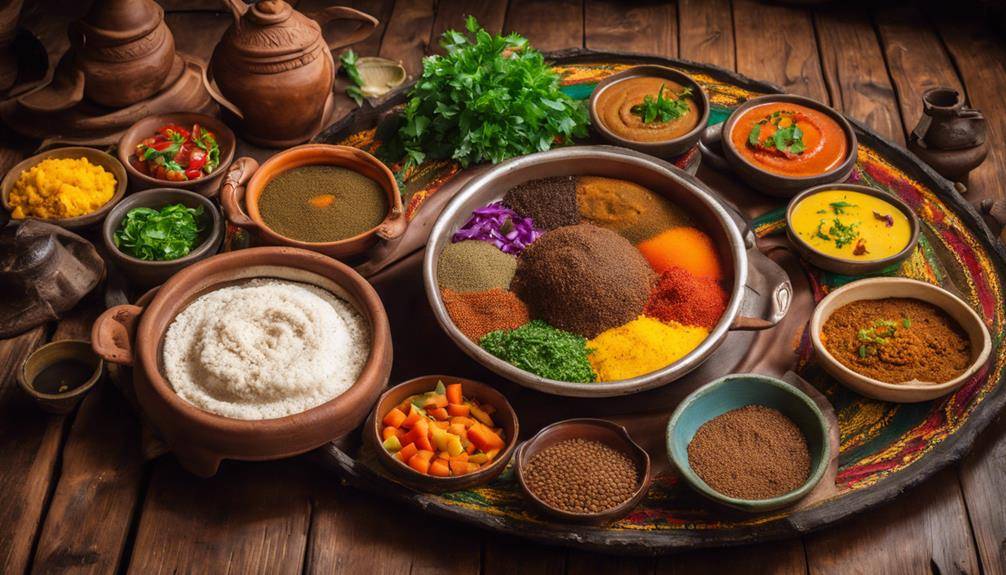
Sharing Ethiopian cuisine is more than just a meal; it’s a communal experience that brings people together. When you sit down to eat, you’ll notice the absence of individual plates. Instead, a large platter filled with colorful dishes takes center stage, inviting everyone to dig in together. This setup fosters communal bonding, as you and your companions share the same food, breaking bread in a way that encourages conversation and laughter.
As you scoop up the flavorful dishes with your hands, you create shared connections that deepen your relationships. There’s something special about the tactile nature of eating Ethiopian food; it invites you to engage not just with the food but with the people around you. Each bite becomes a part of a collective memory, a moment you all cherish together.
In Ethiopian culture, meals often symbolize unity and hospitality. When you share a meal, you’re not just nourishing your body; you’re also nurturing friendships and family ties. The act of gathering around a single platter creates a sense of togetherness that’s hard to replicate. You’ll find that the experience of sharing Ethiopian cuisine transcends the food itself, turning a simple meal into a celebration of community.
Iconic Dish: Injera
Injera, a spongy flatbread made from teff flour, is the cornerstone of Ethiopian cuisine. You’ll find it served alongside nearly every meal, acting as both a plate and a utensil. When you immerse yourself in Ethiopian cuisine, injera isn’t just a side dish; it’s an experience in itself. The unique fermentation process gives it a slightly tangy flavor and a soft, porous texture, perfect for soaking up delicious sauces.
As you explore injera varieties, you’ll notice that they can differ in color and thickness based on the flour used or the preparation method. Traditional injera, made from 100% teff flour, has a rich, earthy taste, while blends with other flours, like barley or wheat, can yield different textures and flavors. Don’t hesitate to try these variations; they can enhance your dining experience.
The fun really begins when you choose injera toppings. Ethiopian cuisine offers a vibrant array of stews, vegetables, and meats to accompany your injera. Dishes like doro wat (spicy chicken stew) or misir wat (spicy lentils) are common choices. You’ll often find these toppings served on a large platter, with injera underneath, allowing you to tear off pieces of injera and scoop up the flavorful toppings.
Injera not only fills your stomach but also connects you to the culture and traditions of Ethiopia. So, when you try it, remember to savor each bite, and enjoy the communal spirit that comes with sharing this iconic dish.
Diverse Meal Options
What meal options can you explore in Ethiopian cuisine? You’ll find a delightful array of dishes that reflect the country’s rich diversity. Each region of Ethiopia brings its unique flavors and ingredients, creating a tapestry of tastes for you to enjoy. For instance, in the northern regions, you might savor spicy stews like Doro Wat, a chicken dish simmered with berbere spice, while the southern regions often feature milder, vegetable-based dishes.
Ethiopian meal presentations are another fascinating aspect of this cuisine. Meals are typically served on a large communal platter, covered with injera. You’ll appreciate how the injera not only serves as a base but also as a utensil, allowing you to scoop up the various dishes with your hands. This interactive dining experience encourages sharing and conversation, making your meal feel more like a celebration.
Don’t forget to explore the vegetarian options, which are abundant and flavorful. Many dishes are made with lentils, chickpeas, and an array of vegetables, seasoned with spices that pack a punch. Each meal can vary greatly depending on the region and the occasion, so you’ll never run out of options to try.
Rich Cultural Heritage
When you try Ethiopian cuisine, you’re not just tasting food; you’re experiencing a rich cultural heritage. Each ingredient carries historical significance, reflecting the unique culinary traditions of the region. Plus, the communal dining experience invites you to connect with others, making every meal a celebration of togetherness.
Unique Culinary Traditions
Exploring Ethiopian cuisine reveals a tapestry of unique culinary traditions that reflect the country’s rich cultural heritage. When you immerse yourself in Ethiopian food, you’re not just tasting flavors; you’re experiencing a way of life. One standout aspect is the communal style of dining, where injera—a spongy flatbread—serves as both a plate and a utensil. This tradition encourages sharing and connection among family and friends.
During Ethiopian feasts, you’ll find an array of vibrant dishes, each with its own significance. The colorful spread often includes various stews and lentil dishes, showcasing the diversity of ingredients used. You’ll also discover the significance of culinary festivals, where communities come together to celebrate their heritage through food. These events often highlight traditional cooking methods and regional specialties, making each festival a feast for the senses.
As you explore these unique culinary traditions, you’ll appreciate how food binds communities and preserves history. So, whether you’re enjoying a simple meal or partaking in a grand celebration, Ethiopian cuisine invites you to be part of a rich cultural experience that transcends mere dining.
Historical Significance of Ingredients
Delving into the historical significance of ingredients in Ethiopian cuisine reveals a fascinating narrative that intertwines culture, geography, and tradition. You’ll find that these ingredients have deep roots in ancient trade and have been shaped by centuries of cultural exchanges. The origins of spices used in dishes like berbere can be traced back to distant lands, revealing how Ethiopia’s culinary landscape has evolved over time.
Traditional farming practices have also played a vital role in this evolution. Farmers have cultivated indigenous grains like teff and barley, ensuring that these staples continue to thrive in Ethiopian kitchens. Spice routes crisscrossed the region, introducing new flavors and further enriching the culinary tapestry.
Consider how historical influences from neighboring countries have led to regional variations in dishes. For instance, the incorporation of various legumes and vegetables showcases the adaptability of Ethiopian cuisine, reflecting the resources available in different areas. Each bite tells a story of resilience and creativity, blending flavors and techniques that have been passed down through generations. Exploring these ingredient origins and their significance can enhance your appreciation of the rich cultural heritage that Ethiopian cuisine offers.
Community Dining Experience
Gathering around a communal plate of injera not only brings people together but also immerses you in the vibrant tapestry of Ethiopian culture. This unique dining experience emphasizes communal feasting, where everyone shares the same dish, fostering a sense of unity and connection. You’ll find that meals often revolve around family gatherings, where stories are exchanged, laughter fills the air, and bonds are strengthened.
As you dig in with your hands, you’ll notice that this hands-on approach transforms the meal into an engaging social event. It encourages you to interact with your fellow diners, breaking down barriers and creating a warm atmosphere. The act of sharing food embodies the Ethiopian belief in hospitality and generosity, making each meal a celebration of community.
In Ethiopian culture, food is more than just sustenance; it’s a way of nurturing relationships. Whether you’re in a bustling restaurant or at a friend’s home, the communal dining experience invites you to savor not just the flavors, but the connections that enrich your life. So, embrace the tradition of sharing a meal and discover the joy that comes from communal feasting in Ethiopian cuisine.
Community and Connection
Sharing a plate of injera and flavorful stews is more than just a meal; it’s a doorway into the heart of Ethiopian culture, where community and connection thrive. When you gather around the table with friends or family, you’re participating in a tradition that values togetherness and shared experiences. In Ethiopian culture, food isn’t just sustenance; it’s an essential part of social bonding and cultural gatherings.
Imagine sitting down for a food celebration, where everyone dips their fingers into the communal dish, savoring the rich flavors and textures. This act of sharing fosters a sense of unity, breaking down barriers as you engage in lively conversation and laughter. You’re not just enjoying a meal; you’re creating memories and strengthening relationships.
Ethiopian cuisine encourages communal eating, which deepens connections with those around you. As you pass around the injera, you might find yourself exchanging stories and learning about each other’s lives. This shared experience can lead to new friendships and a greater appreciation for diverse cultures.
Health Benefits of Ingredients
Ethiopian cuisine isn’t just about the joy of communal dining; it also boasts a variety of ingredients that offer significant health benefits. You’ll find that many staples of this cuisine are packed with nutritional value. For instance, lentils and chickpeas are common in many dishes, providing you with protein, fiber, and essential vitamins. These ingredients can help improve digestion and keep your energy levels steady throughout the day.
The vibrant use of spices like turmeric, berbere, and garlic not only enhances flavor but also contributes to your well-being. Turmeric, for example, is known for its anti-inflammatory properties, while garlic may support heart health. When you explore Ethiopian dishes, you’re not just savoring unique flavors; you’re also nourishing your body.
Ingredient sourcing plays an important role in Ethiopian cooking. Many of the ingredients are sourced from local farmers, ensuring you’re consuming fresh produce. This not only enhances the taste but also retains the nutritional value of the food. Eating locally sourced food means you’re likely enjoying ingredients that are in season, which are often more nutrient-dense.
Vegetarian and Vegan Choices
Ethiopian cuisine offers a vibrant array of vegetarian and vegan options that showcase diverse plant-based ingredients. You’ll love how unique flavor combinations come together in dishes like misir wot and shiro, making every bite a delightful experience. Whether you’re a seasoned vegan or just exploring, there’s something delicious waiting for you.
Diverse Plant-Based Ingredients
When exploring the world of Ethiopian cuisine, you’ll quickly discover a treasure trove of diverse plant-based ingredients that cater to both vegetarian and vegan diets. These dishes often highlight plant-based proteins like lentils, chickpeas, and various beans, ensuring you get a hearty meal without meat. You’ll find an abundance of seasonal vegetables, such as collard greens, carrots, and potatoes, which not only bring color but also nutrient diversity to your plate.
Traditional herbs like berbere and mitmita elevate the flavor profiles of these meals, making every bite a journey through Ethiopian culinary heritage. The cooking techniques employed, such as steaming and sautéing, allow the natural flavors of the ingredients to shine through, promoting a wholesome dining experience.
What’s more, many Ethiopian dishes emphasize local sourcing and sustainable practices, showcasing a commitment to the environment and community. This means you’re not just enjoying delicious food; you’re also supporting a system that values fresh, quality ingredients. So, immerse yourself in this vibrant cuisine and relish the variety of plant-based options that Ethiopian cooking has to offer!
Unique Flavor Combinations
Diving into the unique flavor combinations of Ethiopian cuisine reveals a symphony of spices and ingredients that excite your palate. You’ll find that the vibrant dishes often feature unexpected pairings, like spicy lentils served alongside sweet, caramelized onions. These contrasts aren’t just delicious; they create a delightful balance that keeps you coming back for more.
One of the highlights is the endless variety of vegetarian and vegan choices, where bold contrasts take center stage. For instance, the earthiness of chickpeas perfectly complements the zesty brightness of lemon and fresh herbs. You’ll uncover dishes like misir wot, a lentil stew bursting with berbere spice, which pairs wonderfully with the cooling effect of tangy yogurt or a revitalizing salad.
Ethiopian cuisine also showcases unique ingredients such as injera, a sourdough flatbread that acts as both a staple and a utensil. Its slightly tangy flavor and soft texture elevate the overall dining experience, making each bite an adventure. With every meal, you’ll explore a world of flavors that challenge your expectations and redefine your understanding of vegetarian and vegan options.
Spice Levels for Everyone
Exploring the spice levels in Ethiopian cuisine can feel like unearthing a treasure chest of flavors. One of the most appealing aspects of this cuisine is its ability to cater to every palate. Whether you’re a spice enthusiast or someone who prefers milder flavors, there’s something for everyone.
Ethiopian dishes often feature a blend of spices that range from mild to fiery hot. The key to their success lies in the careful balance of spice intensity and flavor balance. For instance, a dish like Doro Wat, a spicy chicken stew, showcases a robust flavor profile that’s rich and complex, but you can easily adjust the heat levels by controlling the amount of berbere spice used.
If you’re new to spice, start with milder options like Shiro, a chickpea stew that offers a gentle warmth without overwhelming your taste buds. As you become more comfortable, gradually explore dishes with higher spice intensity, such as Kitfo, which can be prepared raw or cooked lightly with an array of spices.
Many Ethiopian restaurants understand that spice levels can be a concern, so don’t hesitate to ask for recommendations or modifications. Chefs are often more than willing to customize dishes to suit your preferences. By taking the time to explore Ethiopian cuisine, you’ll discover a spectrum of flavors that not only excite your palate but also invite you to expand your culinary horizons.
Traditional Cooking Methods
When you explore Ethiopian cuisine, you’ll discover unique ingredients and spices that set it apart. Traditional hand-cooked techniques play a crucial role in bringing out rich flavors, often requiring time and care. Plus, the community sharing practices make every meal a celebration of togetherness and culture.
Unique Ingredients and Spices
In traditional Ethiopian cooking, unique ingredients and spices play a crucial role in creating the bold flavors that define the cuisine. You’ll discover an array of spice profiles that transform simple dishes into extraordinary meals. Berbere, a signature spice blend, combines chili peppers, garlic, ginger, and various other spices, giving dishes their characteristic heat and depth.
Ethiopian cuisine also features mitmita, another spice blend that adds a fiery kick to various dishes. Understanding the ingredient origins is essential, as many spices come from Ethiopia’s diverse landscapes, contributing to the distinct taste of the cuisine.
You’ll find that teff, a tiny grain, is not only nutritious but also forms the base for injera, the traditional flatbread. It serves as both a plate and a utensil, soaking up the rich stews and sauces.
Exploring Ethiopian cuisine means embracing these unique ingredients and spices, which create harmonious flavors that resonate with the country’s rich culinary heritage. So, don’t hesitate to plunge into and experience the vibrant tastes that await you!
Hand-Cooked Techniques
Ethiopian cuisine thrives on hand-cooked techniques that bring out the authentic flavors of the ingredients. When you step into a traditional Ethiopian kitchen, you’ll often find cooks skillfully preparing dishes by hand, which adds a personal touch to every meal. One of the most iconic elements is hand-rolled injera, the spongy flatbread that serves as both a plate and a utensil. Watching someone expertly roll and ferment the injera is an indication of the care that goes into this staple.
In many households, communal cooking is a cherished practice. Families gather together to prepare meals, creating a sense of unity and tradition. This hands-on approach allows everyone to contribute, whether it’s chopping vegetables or stirring stews. The process is often enriched by the sharing of stories and laughter, making the cooking experience itself a celebration.
Community Sharing Practices
Cooking isn’t just about preparing food; it’s a communal experience that strengthens bonds among family and friends. In Ethiopian culture, communal meals are at the heart of social gatherings, where everyone shares a platter of delicious dishes. You’ll find that the traditional Ethiopian way of eating encourages you to dig in with your hands, making the experience even more intimate.
When you gather around a mesob, the woven basket that holds your food, you’re engaging in a practice that emphasizes unity and togetherness. Dishes like injera, a spongy flatbread, serve as both a meal and a utensil, allowing you to savor various stews and salads while connecting with those around you.
The act of sharing food not only nourishes the body but also fosters conversation and laughter, creating lasting memories. Whether it’s a family event or a friendly get-together, these communal meals invite you to partake in a rich cultural tradition. So, when you try Ethiopian cuisine, you’re not just tasting flavors; you’re embracing a lifestyle that celebrates community and connection.
Affordable Dining Options
Many people might think trying Ethiopian cuisine comes with a hefty price tag, but that’s far from the truth. In fact, you’ll find plenty of budget-friendly options that make it easy to enjoy this vibrant culinary tradition without breaking the bank. Many Ethiopian restaurants offer affordable dishes, and you can often find large portions that are perfect for sharing, which allows you to sample a variety of flavors for a reasonable price.
When you think about casual dining, Ethiopian restaurants often create a warm and inviting atmosphere where you can relax with friends or family. The communal style of eating—using injera to scoop up dishes—adds to the overall experience and encourages social interaction. You don’t have to worry about formalities or dress codes; just come as you are, ready to immerse yourself in a delicious culinary adventure.
Many places also have lunch specials or combo meals that provide excellent value for your money. You’ll be surprised at how much you can get for a modest sum. Plus, you can often enjoy a hearty meal that fills you up, making it a smart choice for budget-conscious diners.
Exploring Ethiopian cuisine doesn’t have to be an expensive endeavor. So, gather some friends, hit up a local Ethiopian spot, and indulge in a casual dining experience that’s both delicious and easy on your wallet. You’ll be glad you did!
Popular Dishes to Try
When you try Ethiopian cuisine, you can’t miss the traditional injera experience; it’s the perfect base for your meal. Pair it with flavorful stews and spices that truly showcase the rich culinary heritage of Ethiopia. Get ready to savor a unique and vibrant dining experience!
Traditional Injera Experience
Experiencing traditional Ethiopian cuisine often starts with injera, a spongy flatbread that’s fundamental to the meal. This uniquely textured bread is made from teff flour, which gives it a slightly nutty flavor. The injera preparation involves fermenting the batter, leading to its signature tanginess and the iconic bubbles that create pockets for scooping up delicious toppings.
You’ll find injera variations across different regions of Ethiopia. While the classic injera is made solely with teff, some locales mix in other flours, such as barley or wheat, resulting in a different taste and texture. Each version brings its own flair to the dining experience and showcases the local ingredients.
When you sit down for a meal, the injera serves as both a plate and utensil. You’ll often see it topped with an array of colorful dishes, creating a vibrant spread. Don’t be shy—use your hands to tear off pieces of injera and scoop up the flavorful offerings. This communal style of eating not only highlights the importance of injera but also immerses you in the rich culture of Ethiopia. Enjoy every bite and savor the experience!
Flavorful Stews and Spices
Ethiopian cuisine bursts with flavor, primarily through its rich stews known as “wot.” These hearty dishes, made from various meats, lentils, and vegetables, are infused with a blend of spices that create a unique and unforgettable taste. One of the most popular wots is Doro Wot, a chicken stew simmered with berbere—a spice blend that delivers a perfect kick.
As you immerse yourself in Ethiopian cuisine, you’ll discover the art of spice blending, essential for crafting these flavorful stews. Each dish showcases aromatic profiles that surprise and delight your palate. Vegetarian options like Misir Wot, made from lentils, and Shiro Wot, featuring ground chickpeas, also highlight the diverse flavors Ethiopian cooking has to offer.
When you sit down to enjoy these dishes, you’ll notice the rich textures and complex flavors that each bite brings. Pairing them with injera not only enhances the experience but also allows you to savor every morsel. Whether you’re a fan of spicy or prefer milder tastes, Ethiopian stews cater to all preferences, making your culinary journey both exciting and satisfying. So, don’t hesitate—explore these flavorful stews and let your taste buds dance!
Cultural Significance of Food
Food in Ethiopia holds deep cultural significance, reflecting the country’s rich history and diverse traditions. When you immerse yourself in Ethiopian cuisine, you’re not just enjoying a meal; you’re participating in a story that spans centuries. Each dish you encounter is steeped in food symbolism, often representing themes of unity, family, and celebration. For instance, the traditional use of injera, a sourdough flatbread, serves not only as a staple but also as a communal plate where everyone shares food, reinforcing bonds among family and friends.
Communal rituals play a crucial role in Ethiopian dining culture. You’ll find that meals often bring people together, creating a space for connection and conversation. Sharing food is more than just nourishment; it signifies respect and hospitality. When you’re invited to dine with Ethiopians, expect a warm welcome, where food becomes a medium for expressing love and friendship.
Moreover, certain dishes are prepared for specific occasions, embodying the spirit of the event. Whether it’s a wedding or a holiday, the food served carries its own significance, often marked by carefully chosen ingredients and preparations that reflect cultural values. By participating in these communal rituals, you’ll gain a deeper appreciation for the intricacies of Ethiopian life. So, as you explore this vibrant cuisine, remember that every bite connects you to a rich tapestry of history and tradition, making your culinary journey truly meaningful.
Fun Eating Etiquette
When dining in Ethiopia, you’ll find that certain customs make the experience both engaging and enjoyable. One of the most delightful aspects of Ethiopian cuisine is its emphasis on communal dining. Meals are typically served on a large platter, encouraging everyone at the table to share and enjoy together. This not only fosters a sense of community but also allows you to sample a variety of dishes all in one sitting.
Ethiopian food is primarily eaten with your hands, making it a fun finger food experience. You’ll be using a traditional flatbread called injera to scoop up flavorful stews and salads. When you tear off a piece of injera, be sure to use your right hand—it’s considered polite and respectful. The left hand is reserved for personal hygiene and shouldn’t touch the food.
Don’t be surprised if your host offers you the best pieces of food; this is a sign of hospitality. If you’re dining with others, you might even find yourself sharing bites directly, which is a common practice. Remember, eating together is about bonding and enjoying each other’s company, so don’t be shy!
Lastly, if you feel adventurous, try the Ethiopian coffee ceremony that often follows the meal. It’s a wonderful way to conclude your dining experience while engaging in a cherished cultural tradition. Embrace these customs, and you’ll find that your meal becomes much more than just food; it’s a shared experience that’s truly unforgettable!
Accessibility of Ethiopian Restaurants
Finding an Ethiopian restaurant in your area can be an exciting adventure for your taste buds. With the growing popularity of Ethiopian cuisine, you’re likely to discover several restaurant locations nearby. Whether you’re in a bustling city or a small town, these gems are becoming more accessible, ensuring you can plunge into the rich flavors of this unique culinary tradition.
One of the best parts about exploring Ethiopian restaurants is the menu variety they offer. From savory stews like doro wat to flavorful lentil dishes and fresh injera, there’s something for everyone. Many restaurants pride themselves on showcasing authentic recipes and ingredients, giving you a true taste of Ethiopia. You might even find vegetarian and vegan options, which are abundant in Ethiopian cuisine, catering to diverse dietary preferences.
To make your search easier, consider using online platforms like Yelp or Google Maps. These tools can help you locate Ethiopian restaurants in your vicinity and offer reviews that can guide your choices. Don’t hesitate to ask friends or family for recommendations; they may already have a favorite spot to share.
Once you find a restaurant, you’ll likely enjoy the warm and inviting atmosphere that often accompanies Ethiopian dining. So, go ahead and start this culinary journey—exploring the accessibility of Ethiopian restaurants not only introduces you to new flavors but also opens the door to a vibrant culture.
Frequently Asked Questions: Why Beginners Should Try Ethiopian Cuisine
What Should I Wear When Dining at an Ethiopian Restaurant?
When dining at an Ethiopian restaurant, wear comfortable, casual attire. Respect cultural significance by avoiding overly formal clothing. Understanding dining etiquette, like using your right hand, enhances your experience and shows appreciation for the cuisine.
Are There Any Common Allergens in Ethiopian Dishes?
Ethiopian dishes often include common ingredients like lentils, chickpeas, and spices. If you have dietary restrictions, check with the restaurant about allergens, as some dishes may contain nuts or gluten not immediately apparent in the menu.
How Do I Properly Eat With My Hands?
To properly eat with your hands, use injera to scoop up food. Keep your right hand only, as left hand’s considered impolite. Tear off a piece, pinch the food, and enjoy hand etiquette!
Can I Find Ethiopian Cuisine in My Area?
You can definitely find Ethiopian cuisine in your area! Check out local Ethiopian restaurants to explore their specialties. You’ll discover unique flavors and dishes that’ll make your dining experience truly memorable. Enjoy your culinary adventure!
What Beverages Pair Well With Ethiopian Food?
When enjoying Ethiopian food, try traditional drinks like tej, a honey wine, or t’ej, a spiced honey mead. Don’t miss the coffee ceremony, where rich, aromatic coffee enhances your dining experience beautifully.

Conclusion
Trying Ethiopian cuisine is an adventure you won’t want to miss. The unique flavors, communal experience, and rich cultural heritage make every meal memorable. From enjoying injera to exploring diverse dishes, you’ll discover a world of taste that connects people and traditions. Plus, with plenty of Ethiopian restaurants popping up, it’s easier than ever to immerse yourself in this vibrant culinary experience. So go ahead, gather some friends, and share a delicious Ethiopian feast!
If you enjoyed exploring this topic and want to dive even deeper, be sure to check out some of our other articles here on Infinite Flavors. From rich culinary histories to creative twists on classic recipes, there’s always something new to discover. Whether you’re curious about the origins of a dish, looking for fresh inspiration in the kitchen, or simply love learning about food culture, our collection of posts is the perfect next step on your flavor journey.
11 Great Regional Variations Of Ethiopian Cuisine
3 Best Ethiopian Dishes Unveiling Unique Flavors
The 9 Best Ethiopian Food Celebrations And Cuisines