Six Essential Guidelines For Workout Meal Prep
Six Essential Guidelines For Workout Meal Prep: To optimize your workout meal prep, start by evaluating your nutritional needs to align meals with your fitness goals. Plan your meals ahead of time, and create a grocery list to stick to healthy choices. Choose the right storage containers to keep your meals fresh, and embrace batch cooking techniques which save time and effort. Don't forget to label and store your meals properly to guarantee freshness. Finally, stay flexible—be ready to adjust your plans and ingredients based on availability or taste preferences. Stick around to discover even more tips for a successful meal prep journey!
Assess Your Nutritional Needs
Click Here and Turn Every Masterpiece into a Showstopper!
Before diving into meal prep, it's vital to assess your nutritional needs. Start by identifying your nutritional goals, whether you want to lose weight, build muscle, or maintain your current physique. Knowing your specific goals will help you tailor your meal prep to support your fitness journey effectively.
Next, consider your dietary preferences. Are you vegetarian, vegan, or following a specific eating plan like keto or paleo? Understanding what foods you enjoy and what fits within your dietary restrictions will make meal prep more enjoyable and sustainable. You don't want to dread your meals; instead, you should look forward to them!
Once you've outlined your goals and preferences, calculate your daily caloric intake and macronutrient distribution. Use online calculators or consult with a nutritionist to determine how much protein, carbohydrates, and fats you should be consuming. This information is vital as it informs your food choices and portion sizes.
Remember to listen to your body. What works for one person might not work for you. Keep a food diary to track how different meals affect your energy levels and performance. Adjust accordingly to find the best balance that meets your nutritional needs while aligning with your dietary preferences.
Plan Your Meals Ahead
Effective meal planning is your secret weapon for successful workout meal prep. By taking the time to plan your meals ahead, you're setting yourself up for success in achieving your fitness goals. Start by outlining your weekly meals based on your nutritional needs and the workouts you have scheduled. This way, you'll know exactly what to prepare and when.
Once you've got your meal plan, it's time for grocery shopping. Make a detailed list of the ingredients you need, focusing on whole foods that support your workout regimen. Stick to your list to avoid impulse buys that can derail your nutrition. Planning your meals not only saves you time during the week but helps you avoid unhealthy last-minute choices.
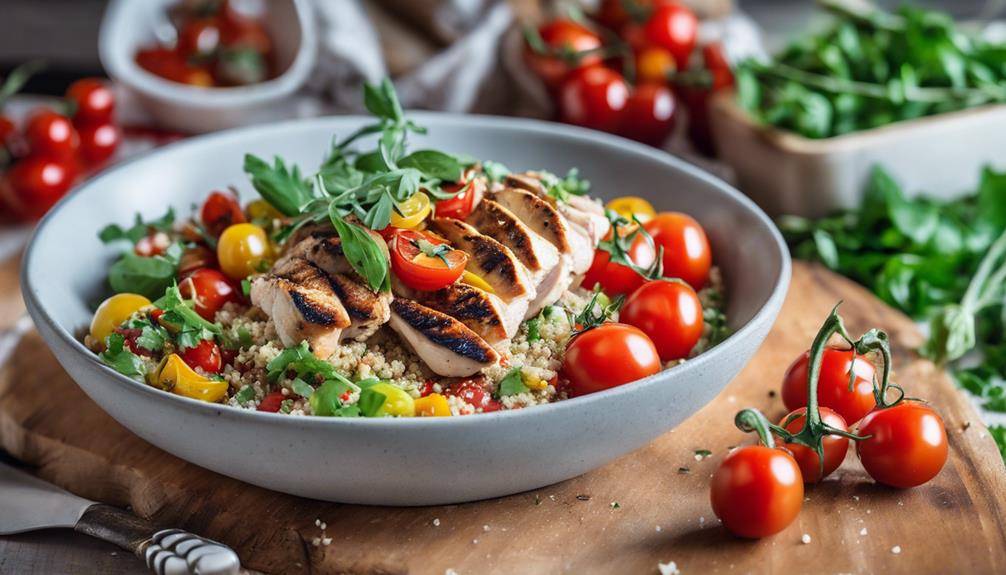
When you plan ahead, you can also batch cook certain items. For instance, cooking a large batch of quinoa or grilled chicken can provide versatile components for multiple meals. This approach streamlines your cooking process and minimizes the time you spend in the kitchen.
Don't forget to adjust your meal plan as needed. Life can be unpredictable, so be flexible with your schedule. If you have a busy day ahead, consider preparing meals in advance to guarantee you always have healthy options on hand. By prioritizing meal planning, you're taking control of your nutrition and making strides toward your fitness goals. Remember, consistency is key, and planning ahead makes it easier to stay on track.
Choose the Right Containers
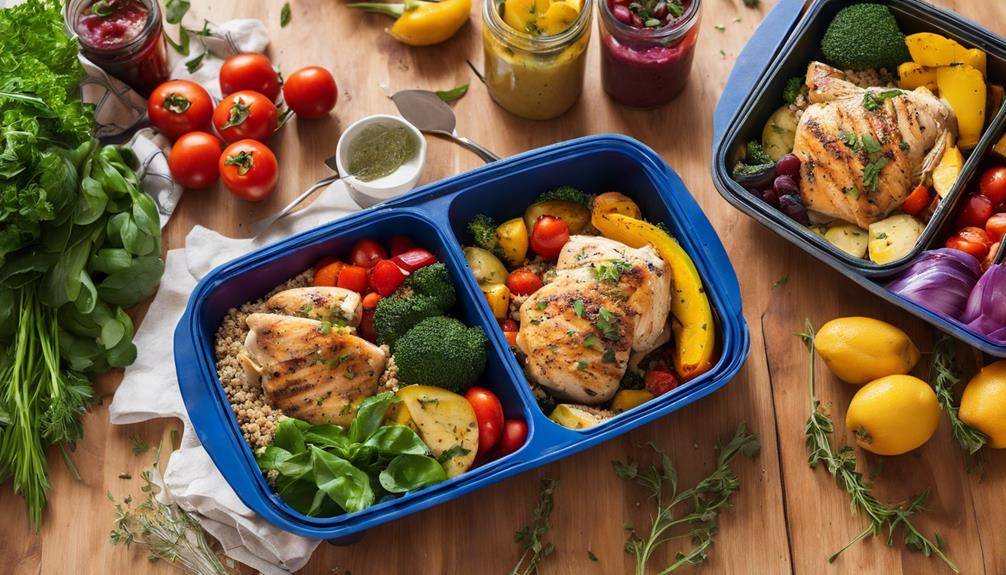
When it comes to meal prep, the containers you choose can make a big difference. You'll want to contemplate material quality for durability, size for portion control, and an airtight seal to keep your meals fresh. Selecting the right containers will set you up for success in your workout nutrition.
Material Quality Matters
Choosing the right containers for your meal prep can make a significant difference in both the quality of your meals and your overall experience in the kitchen. When you invest in high-quality materials, like glass or BPA-free plastic, you guarantee that your organic ingredients and seasonal produce stay fresh longer.
Glass containers are non-toxic and won't leach harmful chemicals, so you can feel confident storing your meals. They also tolerate heat well, making it easy to reheat leftovers without worrying about melting or warping. On the other hand, BPA-free plastic containers are lightweight and often come with secure lids, perfect for on-the-go meals.
You'll also want to take into account airtight seals. These help prevent moisture and air from compromising the integrity of your meals. If you're preparing dishes with delicate ingredients, like fresh herbs or salads, the right container can keep them crisp and flavorful.
Ultimately, choosing containers made from quality materials not only enhances the taste and freshness of your meals, but it also adds convenience to your meal prep routine. So, take the time to select the best containers for your healthy cooking journey.
Size and Portion Control
Selecting the right size containers is just as important as the material you choose. When prepping your meals, consider portion sizes carefully. Using containers that fit your calorie counting goals helps maintain nutrient balance and guarantees you're getting the right amount of food for your workout needs.
Think about meal timing too. If you're packing meals for the week, having different container sizes allows you to separate main dishes from snack options. It's crucial to have a variety of container sizes to accommodate the range of food variety you might prepare, from hearty lunches to lighter snacks.
Also, consider the visual appeal of your meals. Bright, colorful foods look more appetizing and can encourage you to stick to your meal prep plan. When you prepare your meals, use serving utensils to portion out the food accurately into your containers. This not only aids in portion control but also helps maintain your meal's presentation.
In short, choosing the right container sizes will make your workout meal prep more effective, guaranteeing you enjoy balanced meals that fit your fitness goals.
Airtight Seal Importance
An airtight seal is essential for preserving the freshness and quality of your prepped meals. When you choose the right containers with an airtight design, you're ensuring that your food stays safe from exposure to air, which can lead to spoilage. One of the key airtight seal benefits is moisture prevention. By keeping moisture out, you're reducing the risk of mold and bacteria growth, which can ruin your hard work.
When selecting containers, look for options made from durable materials that provide a tight fit. Glass or BPA-free plastic containers often work best. Check the seals for any gaps or weaknesses—these can compromise the effectiveness of the airtight mechanism.
Remember, proper sealing doesn't just keep your meals fresh; it also locks in flavors, so your dishes taste as good as they should. Additionally, an airtight seal can make meal prep more efficient by allowing you to store food longer, reducing waste and saving you money.
Investing in high-quality containers with airtight seals is a small step that can lead to big rewards in your meal prep journey. Your future self will thank you!
Batch Cooking Techniques
When it comes to batch cooking, choosing versatile ingredients is key to maximizing your meals. You'll also want to utilize storage containers effectively to keep everything fresh and organized. Simplifying your cooking methods can save you time and energy, making meal prep a breeze.
Choose Versatile Ingredients
To make your meal prep more efficient, choosing versatile ingredients is key. These are the building blocks of multiple meals, allowing you to mix and match effortlessly. For instance, grains like quinoa or brown rice can serve as the base for salads, bowls, or stir-fries. You can easily switch up your proteins too; chicken, tofu, or beans can be seasoned differently to create entirely new dishes.
Don't forget about seasonal produce. Using fruits and vegetables that are in season not only enhances flavor but can also save you money. Think about how you can incorporate ingredients like sweet potatoes, spinach, or zucchini into various meals. You can roast them, sauté them, or toss them in salads.
Also, consider ingredient substitutions. If a recipe calls for an ingredient you don't have, don't stress! Get creative—Greek yogurt can replace sour cream, and mashed bananas work well in place of oil in baked goods. By focusing on these versatile ingredients, you'll make meal prep a breeze and keep your taste buds excited throughout the week.
Utilize Storage Containers
Efficient meal prep hinges on the right storage containers, which play an essential role in preserving your hard work and ensuring meals stay fresh throughout the week. Choosing the right containers can enhance your container organization, making it easier to access your meals when you need them. Opt for clear, stackable options that allow you to see what's inside at a glance.
Investing in a variety of sizes will help you accommodate different types of meals and snacks. For instance, larger containers work well for bulk dishes like stews or grain bases, while smaller ones are perfect for portioning out individual servings of protein or veggies.
Don't forget to label your containers with the meal name and date to keep track of freshness. This simple step not only aids in container organization but also encourages meal variety by reminding you of what's available.
Simplify Cooking Methods
Organizing your meals in the right containers sets the stage for successful batch cooking techniques. When you simplify your cooking methods, you not only save time but also make meal prep more enjoyable. One of the best strategies is to focus on one pot meals. These dishes allow you to combine proteins, grains, and veggies all in one pot, minimizing cleanup and maximizing flavor.
Another great tool is your slow cooker. Just toss in your ingredients, set it, and forget it! You can prepare hearty stews, soups, or even shredded meats while you go about your day. This hands-off approach guarantees you have a nutritious meal waiting for you, without hovering over the stove.
Consider planning your week around these methods. Choose a couple of one pot meals and a slow cooker recipe to make life easier. You'll be amazed at how much time you save. Plus, the variety keeps your meals interesting and delicious. By simplifying your cooking techniques, you'll streamline your meal prep and stick to your fitness goals more effectively. So, grab those containers and get started!
Click Here and Turn Every Masterpiece into a Showstopper!
Store and Label Properly
Properly storing and labeling your meal prep containers is essential for keeping your food fresh and easily identifiable. When it comes to food safety, the way you store meals can make all the difference. Start by using airtight containers to prevent moisture and air from spoiling your food. Glass containers are a great option, as they're durable and won't leach chemicals into your meals. If you're using plastic, make sure it's BPA-free.
Next, consider portion sizes. Dividing your meals into single servings not only helps with portion control but also makes it easier to grab and go. Remember to use labels on your containers. You can write the meal name and date on each label, which will help you keep track of freshness. You don't want to end up eating something that's past its prime!
When it comes to storage tips, utilize your freezer wisely. Many meals can be frozen, so don't hesitate to prepare larger batches. Just make sure to let your food cool before sealing it in containers, as this helps maintain quality and prevents condensation. Organize your fridge and freezer by placing older meals in the front and newer ones in the back. This way, you'll use your meals in the order they were prepared, reducing waste.
Stay Flexible and Adjust
Even with well-stored meals, you'll find that flexibility is key to making meal prep work for you. Life can be unpredictable, and sticking rigidly to a meal plan might not always suit your schedule or cravings. Instead, embrace meal variety and be open to adjusting your plans as needed.
When you prepare meals, think of them as a framework rather than a strict script. If you've got a recipe that calls for chicken but you're in the mood for turkey, go ahead and make that ingredient swap. It's all about using what you have on hand and what you enjoy. This not only keeps your meals exciting but also minimizes food waste.
You might also find that certain veggies or grains are just not appealing one week. Don't hesitate to switch them out for something you're craving or that's in season. Exploring different flavors and textures can make your meal prep feel less like a chore and more like an adventure.
Additionally, consider portion sizes. If you're feeling hungrier on workout days, increase your portions slightly. If a less active day arrives, reduce them accordingly. Remember, meal prep is meant to enhance your fitness journey, not constrain it. So, stay flexible and allow your meal prep to adapt to your lifestyle and preferences. By doing this, you'll enjoy a balanced diet that fuels your workouts while keeping your taste buds happy.
Click Here and Turn Every Masterpiece into a Showstopper!
Frequently Asked Questions: Six Essential Guidelines For Workout Meal Prep
How Can I Incorporate Snacks Into My Meal Prep?
You can incorporate snacks into your meal prep by focusing on snack portioning. Choose healthy alternatives like nuts, fruit, or yogurt, and pre-pack them in small containers to grab when you're hungry.
What Are Some Quick Meal Prep Ideas for Beginners?
For quick meal prep, try easy recipes like overnight oats or pre-chopped veggies. Use time-saving techniques like batch cooking proteins and freezing portions. You'll streamline your meals and simplify your week, making healthy eating effortless!
Is It Necessary to Follow a Specific Diet for Meal Prep?
It isn't necessary to follow a specific diet for meal prep. Embrace diet flexibility to enjoy meal variety, ensuring you meet your nutritional needs while keeping things interesting and satisfying in your routine.
How Do I Avoid Meal Prep Burnout?
To avoid meal prep burnout, switch things up with new recipes and creative containers. Keep your meal prep motivation high by experimenting with flavors, colors, and textures that excite your palate while making it fun!
Can I Meal Prep for Special Dietary Restrictions?
Absolutely, you can meal prep for special diets! Focus on meal prep tips tailored to your restrictions. Research recipes, plan balanced meals, and guarantee your ingredients align with your dietary needs for a successful prep experience.

Conclusion
By following these six essential guidelines for workout meal prep, you can streamline your nutrition and boost your fitness journey. Assess your needs, plan meals, and choose the right containers to make cooking and storing easier. Embrace batch cooking techniques and always label your meals for quick access. Remember, staying flexible with your plans allows you to adjust as needed. With these tips, you'll be well on your way to fueling your workouts and achieving your goals!