The Science Behind Stir-Frying Technique
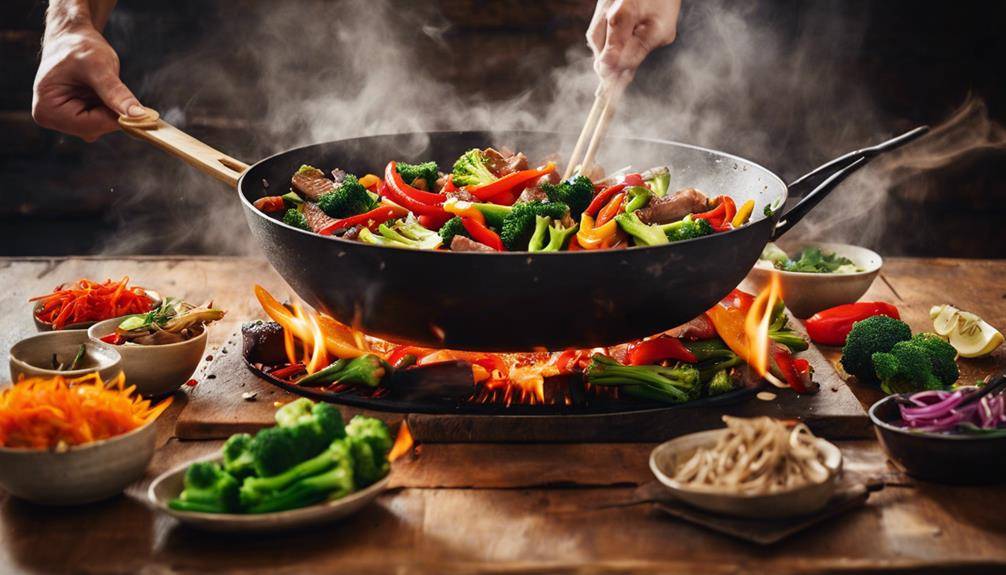
The Science Behind Stir-Frying Technique: Stir-frying is all about combining high heat and rapid cooking to bring out complex flavors and vibrant textures. You need to preheat your wok for even heat distribution, which guarantees your ingredients cook quickly without sticking. The Maillard reaction happens when amino acids and sugars in your food caramelize, developing rich flavors. For the best results, choose fresh, colorful ingredients and oils with high smoke points. Timing's essential; each ingredient has an ideal cooking time. Master these techniques, and you'll enjoy delicious, nutritious meals. Stick around, and you'll uncover even more tips for perfect stir-frying!
Click Here and Turn Every Masterpiece into a Showstopper!
Understanding Heat Transfer
Heat transfer is vital to mastering the stir-frying technique. When you stir-fry, you rely on effective heat transfer to cook your ingredients evenly and quickly. Understanding how heat moves through your cooking surface and into your food is fundamental to achieving that perfect dish.
In stir-frying, thermal conduction plays a significant role. This process occurs when heat moves from the hot surface of your wok or skillet to the food in contact with it. The better your cooking surface conducts heat, the quicker your ingredients will cook. High-quality carbon steel or cast iron woks excel at thermal conduction, allowing the heat to penetrate your vegetables and proteins efficiently.
Equally important is heat distribution. You want to guarantee that the heat spreads evenly across the cooking surface. If you've ever experienced unevenly cooked stir-fry, you know how disappointing it can be. To achieve ideal heat distribution, preheat your wok thoroughly before adding any ingredients. This allows the entire surface to reach the desired temperature, creating a consistent cooking environment.
As you stir-fry, make sure to keep your ingredients moving. This constant agitation not only prevents them from sticking but also promotes even cooking by allowing all pieces to come into contact with the hot surface. By mastering heat transfer through thermal conduction and heat distribution, you'll enhance your stir-frying skills and elevate your dishes to a new level of deliciousness.
The Maillard Reaction Explained
The Maillard reaction is a fascinating chemical process that plays an essential role in developing the rich flavors and appealing colors of stir-fried dishes. When you heat your ingredients, this reaction occurs between amino acids and reducing sugars, leading to complex flavor development. It's not just about cooking; it's about the intricate ingredient interaction that happens at high temperatures.
As you stir-fry, you'll notice the surface browning of your ingredients. This browning is a sign that the Maillard reaction is taking place, creating a delightful color transformation that makes your dish visually enticing. The golden-brown hues not only signal doneness but also contribute to the overall taste complexity of your meal. This transformation enhances the aroma, filling your kitchen with enticing scents that heighten your anticipation.
In culinary science, understanding the Maillard reaction is crucial. You can manipulate cooking times and temperatures to optimize this chemical reaction, ensuring you achieve that perfect balance of flavors. For instance, high heat promotes rapid surface browning, while lower temperatures might slow down the process, giving you the chance to coax out various flavors.
When stir-frying, keep in mind that the ingredients you choose and how you cook them directly influence the Maillard reaction. So, make sure to pay attention to these details, as they will elevate your dishes from ordinary to extraordinary. Embrace this fascinating process, and watch your culinary creations come to life with depth and character.
Choosing the Right Ingredients
When you're stir-frying, freshness is key to enhancing flavor and texture. Look for vibrant colors and firm textures in your ingredients, as they not only make your dish visually appealing but also guarantee great taste. Choosing the right ingredients sets the stage for a delicious meal.
Freshness Matters Most
Freshness plays a pivotal role in stir-frying, directly impacting the flavor and texture of your dish. When you choose ingredients, prioritize those that are freshly sourced. This means selecting seasonal produce, which not only enhances taste but also supports local farmers and reduces your carbon footprint. Seasonal ingredients often boast higher nutrient levels, making your meals healthier and more vibrant.
To guarantee you're picking the best, visit local farmers' markets or join a community-supported agriculture (CSA) program. These options allow you to connect with growers and understand the journey of your food. When you know where your ingredients come from, you can appreciate their quality and freshness even more.
Incorporating fresh vegetables, herbs, and proteins into your stir-fry will elevate the dish, making each bite satisfying and flavorful. Keep in mind that the freshness of your ingredients can influence cooking times and techniques, so always prepare accordingly. By focusing on ingredient sourcing and seasonal produce, you'll not only enhance your stir-fry but also cultivate a deeper appreciation for the food you enjoy. Remember, the best stir-fries start with the freshest ingredients!
Color and Texture
As you prepare your stir-fry, consider how color and texture play essential roles in creating a visually appealing and satisfying dish. A vibrant mix of ingredients not only makes your stir-fry eye-catching but also enhances the overall flavor profile. Think about incorporating vegetables like bright red bell peppers, deep green broccoli, and sunny yellow carrots. The color contrast not only attracts the eye but also signals the nutritional diversity of your meal.
When choosing your ingredients, pay attention to texture variety as well. Combine crisp vegetables like snap peas and water chestnuts with softer ones like mushrooms or zucchini. This contrast keeps each bite interesting, providing a delightful crunch alongside tender morsels.
Don't forget about proteins! Adding diced chicken, beef, or tofu can introduce another layer of texture to your dish. For an added crunch, toss in some roasted nuts or seeds just before serving.
Importance of Oil Selection
Oil selection plays an essential role in achieving the perfect stir-fry, influencing both flavor and cooking performance. When you choose the right cooking oils, you're not just adding fat; you're enhancing the dish's overall flavor profiles. Different oils come with unique oil properties that can notably affect your stir-fry. For instance, oils like peanut or canola have high smoke points, making them ideal for high-temperature cooking.
Consider viscosity factors when selecting your oil. Thicker oils can create a different mouthfeel, while lighter oils may let the dish's ingredients shine through. You can also experiment with oil combinations—mixing oils can provide a balance of flavors and improve the cooking experience. For instance, combining sesame oil with a neutral oil can impart depth without overpowering the dish.
Health considerations matter too. Some oils are richer in healthy fats than others, so choose options like olive or avocado oil if health is a priority. Don't forget to explore regional oils; they can introduce unique flavors and authenticity to your stir-fry. For example, using coconut oil can add a tropical twist to your meal.
Ultimately, the oil you choose sets the stage for your stir-fry's success. So, take the time to understand the oils available, their smoke points, and how they fit into your dish's overall profile. Making informed oil selections will elevate your cooking and delight your taste buds.
Click Here and Turn Every Masterpiece into a Showstopper!
Timing and Temperature Control
Getting the timing and temperature right is essential for perfect stir-frying. If you don't manage heat levels and cooking time precisely, your ingredients can end up overcooked or undercooked. Let's explore how to master these elements for the best results.
Importance of Heat Levels
Achieving the perfect stir-fry hinges on the right heat levels, making timing and temperature control vital. You need to pay attention to flame intensity to guarantee that your ingredients cook evenly and retain their vibrant colors. A high flame creates immediate heat, allowing you to sear meats and vegetables quickly while locking in flavors.
However, it's essential to maintain consistent heat distribution across the pan. Uneven heat can lead to some ingredients cooking too fast while others remain undercooked. To manage this, you can adjust the flame or reposition the pan on the burner. For instance, if certain parts of your stir-fry start to char, reducing the flame slightly can help balance the cooking process.
Additionally, using a well-seasoned wok or a heavy-bottomed pan can enhance heat retention, promoting better heat distribution. As you stir-fry, be mindful of the ingredients' placement in the pan; keep denser vegetables closer to the heat source and quicker-cooking items toward the edges. This way, you'll achieve that delightful contrast of textures and flavors that makes stir-frying so enjoyable.
Cooking Time Precision
Timing is essential in stir-frying, as each ingredient has its own ideal cooking time. When you stir-fry, you're working with various vegetables and proteins, each requiring different durations to reach that perfect tender-crisp texture. For instance, quick-cooking ingredients like bell peppers and snow peas should be added later, while denser items like carrots need a head start.
To master this technique, familiarize yourself with the cooking methods and the ingredient ratios you're using. You'll want to cut your ingredients uniformly to guarantee even cooking. For example, if you're using chicken and broccoli, slice the chicken thinly and chop the broccoli into smaller florets. This way, they'll cook harmoniously.
Techniques for Perfect Stir-Frying
Stir-frying is an art that transforms simple ingredients into a delicious dish in a matter of minutes. To achieve the perfect stir-fry, you need to master a few key techniques. First, focus on your utensil choice. A wok is ideal for stir-frying because its shape allows for even heat distribution, helping to quickly sear your ingredients. If you don't have a wok, a large skillet can work too, but make certain it's sturdy and has high sides to contain the ingredients.
Next, prep all your ingredients before you start cooking. This means chopping vegetables and proteins into uniform pieces to guarantee even cooking. When you're ready to cook, heat your pan until it's smoking hot. This high temperature is essential for achieving that sought-after char and flavor balance in your dish.
Don't overcrowd the pan; it's better to cook in batches if you have a lot of ingredients. Overcrowding leads to steaming rather than stir-frying, and you'll miss out on that delightful texture and flavor. Once you add your ingredients, keep them moving. Stir constantly to allow each piece to come into contact with the heat.
Nutritional Benefits of Stir-Frying
With its quick cooking method and high temperatures, stir-frying not only enhances the flavors of your ingredients but also preserves their nutritional value. Unlike boiling or steaming, where nutrients can leach into the water, stir-frying keeps vitamins and minerals intact. The high heat cooks food rapidly, limiting the time that nutrients are exposed to heat. This means you'll enjoy more vitamins in every bite.
One of the standout benefits of stir-frying is its impact on fiber retention. When you stir-fry vegetables, you maintain their crunchy textures and vibrant colors, which often indicate high fiber content. Fiber is essential for healthy digestion and helps keep you feeling full longer, making stir-fried dishes not only satisfying but also beneficial for weight management.
Moreover, stir-frying is fantastic for vitamin preservation. Many vegetables lose essential vitamins, like vitamin C and several B vitamins, when cooked for extended periods. The rapid cooking technique allows you to enjoy the full spectrum of nutrients that these vegetables offer. By keeping the cooking time short, you're not just enhancing taste; you're ensuring you're getting the maximum nutritional benefit from your ingredients.
Click Here and Turn Every Masterpiece into a Showstopper!
Frequently Asked Questions: The Science Behind Stir-Frying Technique
Can I Stir-Fry With a Non-Stick Pan?
Yes, you can stir-fry with a non-stick pan! The non-stick benefits make cooking easier, but remember to avoid high heat to maintain the pan. Proper care guarantees longevity while enjoying your delicious stir-fried meals.
What Types of Dishes Can I Stir-Fry?
You can stir-fry a variety of dishes, from vegetables and proteins to rice and noodles. Just combine fresh stir fry ingredients with flavorful stir fry sauces for a delicious, quick meal that everyone will love.
How Long Does It Take to Stir-Fry Vegetables?
When you stir-fry vegetables, it usually takes about 3 to 5 minutes for ideal cooking. This time enhances the vegetable texture, ensuring they remain crisp yet tender, maximizing flavor and nutritional value in your dish.
Is Stir-Frying Suitable for Meal Prep?
Absolutely, stir-frying's perfect for meal prep! It offers meal prep efficiency and health benefits, letting you cook veggies quickly while preserving nutrients. You'll enjoy delicious, nutritious meals ready to go in no time!
Can I Use Frozen Ingredients for Stir-Frying?
Yes, you can use frozen vegetables for stir-frying. Just adjust your stir fry timing; they may need a bit longer to cook through compared to fresh veggies. Always check for tenderness before serving.

Conclusion
To sum up, mastering stir-frying isn't just about tossing ingredients in a hot pan; it's a blend of science and art. By understanding heat transfer, the Maillard reaction, and the right ingredient choices, you can elevate your cooking. Pay attention to oil selection, timing, and temperature control for the best results. With these techniques, you'll not only enjoy delicious meals but also reap the nutritional benefits. So grab your wok and get cooking!