The History of Amazing Almond Joy Cookies
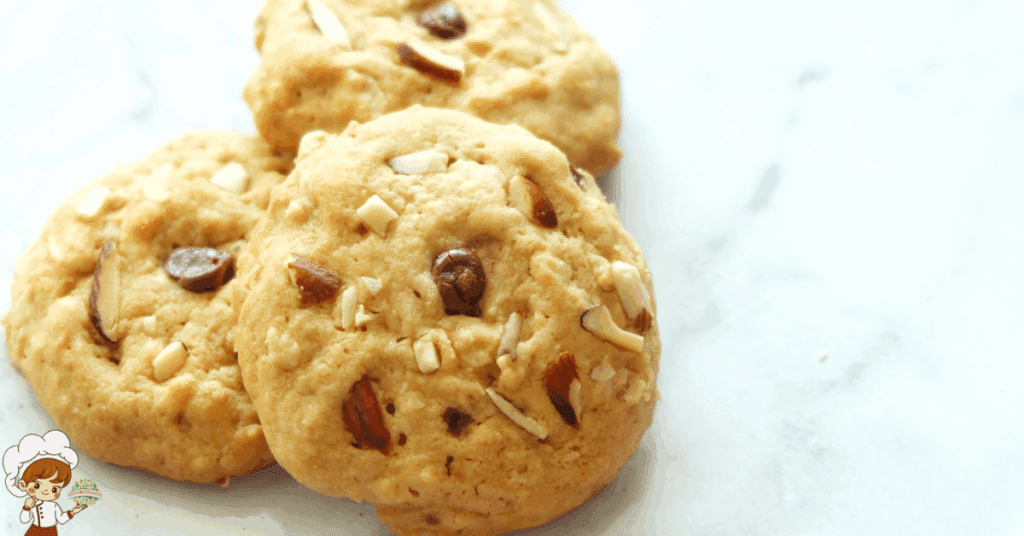
The History of Amazing Almond Joy Cookies; When you think of the perfect cookie — chewy, chocolatey, and just the right amount of sweetness — it’s hard not to imagine one packed with coconut, almonds, and rich chocolate. Enter the Almond Joy Cookie, a delightful twist on the beloved candy bar that has been a staple of American snacking for generations.
These cookies take all the flavors of the iconic Almond Joy candy bar and transform them into a soft, decadent dessert that feels both nostalgic and new. But behind every delicious bite lies a fascinating history — one that starts not in a cookie jar, but in a candy factory during the early 20th century.
In this blog, we’ll explore the history and origin of Almond Joy cookies, tracing their roots back to the creation of the Almond Joy candy bar, its connection to the Mounds bar, and how creative bakers turned this candy favorite into one of today’s most popular homemade cookies.
The Origins of Almond Joy: The Candy That Inspired the Cookie
To understand the story of Almond Joy cookies, we first need to look at the origins of the candy bar that inspired them. The Almond Joy bar was introduced in 1946 by the Peter Paul Candy Manufacturing Company, a business founded in 1919 in New Haven, Connecticut.
Peter Paul’s first major success came in 1920 with the Mounds bar, a dark chocolate–covered coconut candy that quickly became a hit. Its name came from the “mounds” of coconut filling that topped the bar. Mounds was rich, tropical, and unlike anything else on the American candy market at the time.
After World War II, the company sought to expand its product line. In 1946, they introduced Almond Joy, a similar treat to Mounds — but with a sweeter milk chocolate coating and a whole almond on top. The tagline “Sometimes you feel like a nut, sometimes you don’t” became one of the most recognizable slogans in candy history, cleverly advertising both Almond Joy and its sibling, Mounds.
The combination of coconut, chocolate, and almonds struck a perfect balance of texture and flavor, appealing to both candy lovers and chocolate purists.
From Candy Bar to Cookie: The Birth of the Almond Joy Cookie
Like many great dessert innovations, the Almond Joy cookie was born from creativity and nostalgia. Home bakers, especially in the latter half of the 20th century, loved recreating the flavors of their favorite candies in new ways — from Reese’s-inspired peanut butter cookies to Snickers brownies and Twix bars turned into pies.
The Almond Joy cookie likely began appearing in home kitchens during the 1970s and 1980s, a time when baking mixes and easy dessert recipes were becoming increasingly popular in American households. Magazines and cookbooks encouraged readers to reinvent familiar treats using minimal ingredients and pantry staples.
By combining shredded coconut, chocolate chips, and chopped almonds into a simple cookie dough, bakers recreated the essence of the candy bar — chewy coconut, nutty crunch, and rich chocolate — all in one homemade dessert. The result was a cookie that tasted indulgent yet approachable, with all the nostalgia of a candy aisle classic.
Why Almond Joy Cookies Became So Popular
Several factors contributed to the enduring popularity of Almond Joy cookies. First and foremost, they embody a sense of comfort and familiarity. Many people grew up eating Almond Joy or Mounds bars, and baking a cookie that captures those same flavors brings a sense of childhood warmth.
Secondly, the ingredients themselves are simple yet luxurious. Coconut adds chewiness, almonds provide crunch, and chocolate ties everything together. Each bite feels satisfying, indulgent, and texturally dynamic — something that not every cookie can achieve.
The rise of easy dessert recipes in the 1980s and 1990s also fueled their popularity. As quick-baking trends grew, Almond Joy cookies became a go-to treat for busy families who wanted something special without spending hours in the kitchen. The recipe was adaptable too — bakers could make them with or without flour, or even in no-bake variations, making them suitable for a wide range of diets and occasions.
Today, Almond Joy cookies continue to be one of the most searched-for coconut-based desserts online, often appearing in holiday cookie exchanges, bake sales, and family gatherings.
The Influence of Coconut in American Baking
One of the defining ingredients in Almond Joy cookies is coconut, a flavor once considered exotic in Western cuisine. Coconut first gained popularity in the United States during the late 19th and early 20th centuries, as global trade made tropical ingredients more accessible.
By the 1920s and 1930s, coconut had become a common ingredient in desserts, especially in pies, cakes, and cookies. The success of the Mounds bar helped cement coconut as a mainstream flavor in American sweets. Its chewy texture and natural sweetness complemented chocolate beautifully — a pairing that would later define Almond Joy and, by extension, Almond Joy cookies.
Coconut’s versatility allowed it to appear in everything from macaroons to layered bars and cookies. For many bakers, the combination of coconut, chocolate, and nuts became synonymous with homemade comfort and a touch of tropical luxury.
The Role of Almonds and Chocolate in Dessert Evolution
While coconut adds texture and sweetness, almonds and chocolate are what give Almond Joy cookies their distinct identity. Almonds, one of the oldest cultivated nuts in the world, have a long history in confectionery. Ancient cultures prized them for their richness, and by the Middle Ages, almonds were a common ingredient in European desserts.
Chocolate, on the other hand, became a defining flavor of modern indulgence. When combined with nuts, it created a harmony that bakers and chocolatiers have loved for centuries.
The pairing of almonds and chocolate in the Almond Joy bar was not just delicious — it was genius. The balance of creamy chocolate and crunchy almonds set the stage for countless dessert adaptations, including the now-famous cookie version.
When bakers combined chocolate chips and chopped almonds into cookie dough alongside coconut, they were unknowingly carrying forward a centuries-old flavor tradition in a modern, accessible way.
The Rise of “Easy” Almond Joy Cookies in Home Baking
As baking trends evolved through the late 20th century, so did the desire for simplified recipes that didn’t sacrifice flavor. Easy Almond Joy Cookies became a household favorite because they offered everything — rich taste, nostalgic flair, and effortless preparation.
These cookies were often labeled “easy” or “super easy” because they required no special equipment, used pantry staples, and could be mixed in a single bowl. This ease of preparation made them ideal for holiday baking, classroom treats, or last-minute desserts.
By the early 2000s, the internet became a major hub for sharing recipes. Food blogs and social platforms popularized “three-ingredient” or “five-ingredient” versions of Almond Joy cookies, boosting their visibility. Variations began to emerge — from flourless versions to gluten-free and keto-friendly adaptations — proving how versatile the original idea could be.
Almond Joy Cookies Around the World
While Almond Joy cookies are distinctly American in flavor, their core ingredients connect to international dessert traditions.
- In Europe, coconut macaroons share similar textures and flavors.
- In Asia, almonds and coconut often appear in sweets like almond cakes and coconut candies.
- In the Middle East, almonds and chocolate are paired in rich pastries and biscuits.
This global overlap shows that the combination of coconut, almonds, and chocolate appeals universally. Almond Joy cookies may have been born in American kitchens, but they resonate with flavors cherished around the world.
The Symbolism Behind Almond Joy Cookies
Beyond their flavor, Almond Joy cookies represent something more — a celebration of nostalgia and creativity. They remind us of childhood candies, family baking traditions, and the joy of transforming simple ingredients into something extraordinary.
They also capture the spirit of innovation in American baking. Taking a commercial candy and reimagining it as a homemade dessert is a tradition that continues today, reflecting the evolving relationship between nostalgia, convenience, and culinary artistry.
For many, baking Almond Joy cookies is about more than dessert — it’s about reliving memories, creating new ones, and celebrating the timeless joy of homemade treats.
The Evolution of Almond Joy-Inspired Desserts
The popularity of Almond Joy cookies has inspired countless other desserts. From Almond Joy brownies and Almond Joy cheesecakes to no-bake bars and energy bites, the combination of coconut, almonds, and chocolate has proven endlessly adaptable.
These spin-offs reflect the enduring appeal of the original flavor trio. Whether baked, chilled, or layered, the core essence of Almond Joy — a balance of creamy, nutty, and sweet — remains irresistible.
Modern bakers often experiment with different chocolates (dark, semi-sweet, or white) and add-ins like oats or caramel, showing how flexible the base idea can be while staying true to its roots.
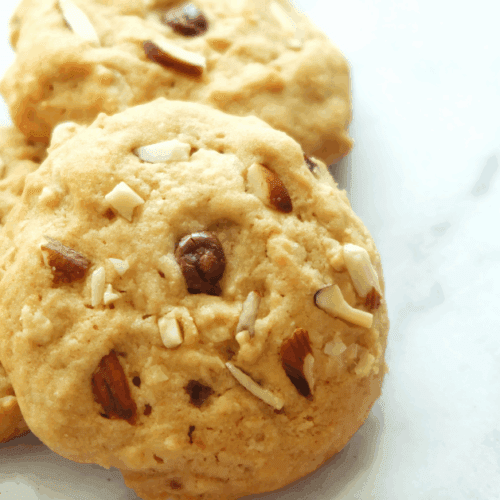
Almond Joy Cookies
Ingredients
- 1 cup coconut
- 1 cup chocolate chips
- 1 cup almonds
- 1/2 cup condensed milk.
Instructions
- Mix,
- drop onto a baking sheet,
- and bake at 350°F (175°C) for 10-12 minutes.
FAQ: The History of Amazing Almond Joy Cookies
Q: Where did Almond Joy cookies originate?
A: Almond Joy cookies were inspired by the Almond Joy candy bar, introduced in 1946 by the Peter Paul Candy Manufacturing Company. Home bakers later adapted the candy’s flavors — coconut, almonds, and chocolate — into a cookie form.
Q: What’s the difference between Almond Joy and Mounds?
A: Almond Joy is made with milk chocolate and almonds, while Mounds uses dark chocolate and no almonds. The cookie versions often combine elements of both.
Q: When did Almond Joy cookies become popular?
A: They rose to popularity in the 1970s and 1980s, during the boom of quick and easy dessert recipes that reimagined popular candy flavors.
Q: Why are they called “Amazing Almond Joy Cookies”?
A: The “Amazing” label often refers to their incredible flavor combination and ease of preparation. These cookies deliver the nostalgic taste of the candy bar in a chewy, homemade form.
Q: Are Almond Joy cookies traditional or modern?
A: They are a modern reinterpretation of a traditional candy, blending classic ingredients with contemporary baking convenience.
Q: Can Almond Joy cookies be made in different ways?
A: Yes, they can be baked traditionally or made as no-bake cookies, and there are variations like gluten-free, flourless, or keto-friendly versions.
Q: What flavors define Almond Joy cookies?
A: The signature trio: coconut, chocolate, and almonds. These three elements work together to create the distinctive taste reminiscent of the famous candy bar.
Q: Why do people love Almond Joy cookies?
A: They’re easy to make, nostalgic, and offer a perfect balance of chewiness, crunch, and sweetness — making them universally appealing.
Q: Are Almond Joy cookies a holiday treat?
A: While they can be enjoyed year-round, they are especially popular during Christmas and Easter, when coconut desserts are in high demand.
Q: How do Almond Joy cookies fit into modern baking trends?
A: They align perfectly with today’s preference for easy, no-fuss desserts that still deliver homemade charm and bold flavor.

The Sweet Legacy of Almond Joy Cookies
From a simple candy bar to a beloved homemade dessert, Almond Joy cookies represent the perfect blend of tradition and innovation. They connect us to the past — to the golden age of American candy making and mid-century home baking — while remaining as relevant and delicious as ever.
Their combination of coconut, almonds, and chocolate has stood the test of time, appealing to every generation of bakers. What began as a factory-made confection in the 1940s evolved into a homemade masterpiece, proving that great flavor never goes out of style.
Whether you grew up loving Almond Joy bars or are discovering the magic for the first time through cookies, one thing is certain: every bite carries the joy of nostalgia, the warmth of home baking, and the timeless satisfaction of something “amazing.”
If you enjoyed exploring this topic and want to dive even deeper, be sure to check out some of our other articles here on Infinite Flavors. From rich culinary histories to creative twists on classic recipes, there’s always something new to discover. Whether you’re curious about the origins of a dish, looking for fresh inspiration in the kitchen, or simply love learning about food culture, our collection of posts is the perfect next step on your flavor journey.
The History And Origin Of Easy Shortbread Cookies
The History Of Easy Snickerdoodles A Family Favorite
The History And Origin Of Easy Oatmeal Cookies