Golden Sea Salt Rosemary Focaccia with Pressed Olives: The Rustic Italian Bread Everyone Is Baking Right Now
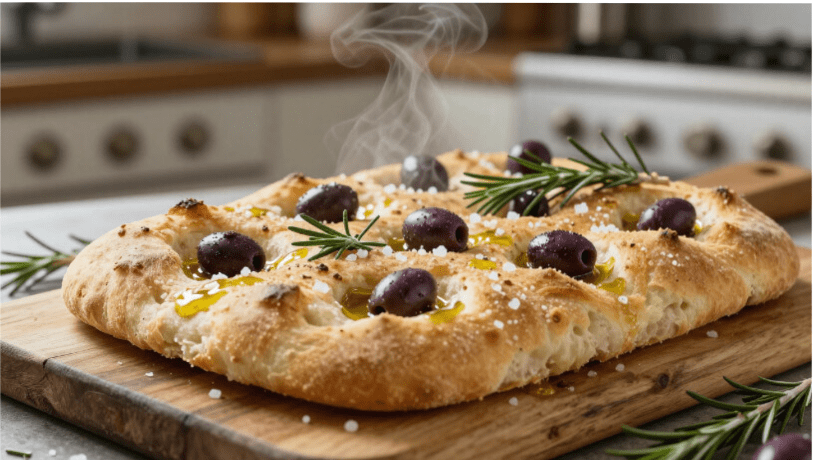
Sea Salt Rosemary Focaccia with Pressed Olives; There’s something unforgettable about the aroma of freshly baked focaccia drifting through the kitchen. The scent of olive oil warming into pillowy dough, rosemary crisping gently at the edges, and flaky sea salt melting into golden dimples creates a sensory experience that feels both comforting and luxurious. Add pressed olives baked directly into the surface, and suddenly this rustic Italian bread transforms into a bakery-worthy centerpiece that’s impossible to resist.
Golden Sea Salt & Rosemary Focaccia with Pressed Olives represents everything modern home bakers love about artisan bread: crisp edges, airy texture, bold Mediterranean flavor, and an effortlessly rustic appearance that feels elegant without being intimidating. It’s simple enough for casual baking weekends yet impressive enough to anchor dinner parties, charcuterie boards, holiday gatherings, and elevated everyday meals.
As artisan bread culture continues growing worldwide, focaccia has become one of the most beloved breads among both beginner bakers and seasoned culinary enthusiasts. Its approachable preparation, forgiving nature, and endlessly customizable flavor combinations make it one of the most satisfying breads to bake and share.
This guide explores what makes Golden Sea Salt & Rosemary Focaccia with Pressed Olives such a timeless favorite—from its Italian heritage and ingredient-driven flavor profile to texture secrets, serving ideas, entertaining appeal, and why rustic focaccia continues dominating bakery trends and social media feeds alike.
We’ve Got Everything You Need to Make Your Masterpiece.
Why Focaccia Has Become One of the Most Popular Artisan Breads
Over the past several years, focaccia has experienced a major resurgence in popularity. While sourdough once dominated artisan baking conversations, focaccia has emerged as the bread many home bakers actually feel confident making.
Part of the appeal lies in accessibility.
Unlike highly technical breads that require advanced shaping techniques or strict fermentation precision, focaccia embraces rustic imperfection. Its signature dimples, uneven air pockets, and golden crust are meant to look organic and artisanal rather than perfectly uniform.
This relaxed style makes focaccia especially inviting for modern bakers.
At the same time, focaccia delivers all the qualities people crave in fresh artisan bread:
- Crispy golden edges
- Soft airy interior
- Rich olive oil flavor
- Endless topping possibilities
- Beautiful rustic presentation
- Incredible versatility
Golden Sea Salt & Rosemary Focaccia with Pressed Olives captures all these qualities while adding savory Mediterranean depth that feels timeless and sophisticated.
The Rich Italian Heritage Behind Focaccia
Focaccia traces its roots back thousands of years to ancient Mediterranean civilizations. Historians believe early versions existed long before modern pizza, with flat oven-baked breads appearing throughout regions influenced by Roman and Etruscan cooking traditions.
The name “focaccia” derives from the Latin word focus, meaning hearth or fireplace, referencing the traditional method of baking bread over hot coals.
Over time, focaccia evolved into a beloved staple throughout Italy, especially in Liguria, where olive oil-rich versions became iconic. Ligurian focaccia is particularly famous for its crisp exterior, airy crumb, generous olive oil use, and signature salty finish.
Modern focaccia variations now appear worldwide, but the core principles remain rooted in simplicity:
- High-quality olive oil
- Well-developed dough
- Salt-forward flavor
- Rustic texture
- Seasonal or regional toppings
Golden Sea Salt & Rosemary Focaccia with Pressed Olives honors this heritage beautifully while embracing contemporary artisan baking trends.
Why Rosemary and Sea Salt Are a Perfect Pairing
Few flavor combinations feel as classic and comforting as rosemary and sea salt.
Rosemary’s piney, earthy aroma naturally complements olive oil-based breads. During baking, the herb crisps slightly and releases fragrant oils into the dough, creating incredible depth and warmth.
Sea salt performs an equally important role.
In focaccia, salt isn’t merely seasoning—it’s part of the bread’s identity. Flaky sea salt scattered across the surface provides bursts of savory intensity that contrast beautifully with the soft interior crumb.
Together, rosemary and sea salt create a balance that feels rustic, Mediterranean, and deeply satisfying.
This pairing also contributes significantly to focaccia’s sensory appeal. The aroma alone instantly evokes artisan bakeries, Italian kitchens, and fresh bread pulled warm from the oven.
The Beauty of Pressed Olives in Rustic Bread
Pressed olives elevate focaccia from simple bread to gourmet centerpiece.
Unlike sliced olives mixed into dough, pressed olives become partially embedded in the bread’s surface, where they roast slightly during baking. This caramelization intensifies their savory flavor while creating striking visual texture.
Olives contribute:
- Salty depth
- Rich umami flavor
- Mediterranean authenticity
- Moisture contrast
- Rustic visual appeal
Their briny complexity balances the richness of olive oil and the herbal brightness of rosemary perfectly.
From a presentation standpoint, pressed olives also create dramatic visual contrast against golden dough. Their dark glossy surfaces make the bread look artisanal and bakery-quality with minimal effort.
This combination of beauty and flavor explains why olive focaccia continues appearing on upscale café menus, charcuterie boards, and social media food photography.
Why Olive Oil Is the Soul of Great Focaccia
No ingredient defines focaccia more than olive oil.
Unlike many breads where fat plays a supporting role, olive oil is central to focaccia’s texture, flavor, and structure. It coats the dough, crisps the crust, enriches the crumb, and creates the signature golden finish that makes focaccia so irresistible.
Good olive oil contributes:
- Fruity richness
- Crisp texture
- Moist crumb
- Mediterranean flavor
- Aromatic depth
The generous use of olive oil also helps distinguish focaccia from standard sandwich breads. It feels indulgent, flavorful, and satisfying even when served simply.
For Golden Sea Salt & Rosemary Focaccia with Pressed Olives, olive oil acts as the connective element tying together the herbs, salt, and olives into one cohesive flavor experience.
We’ve Got Everything You Need to Make Your Masterpiece.
Why Rustic Baking Continues to Dominate Food Culture
Modern food culture increasingly celebrates rusticity over perfection.
Consumers today often prefer handmade-looking breads and pastries that feel authentic, artisanal, and approachable rather than overly polished or mass-produced.
Focaccia fits this movement perfectly.
Its intentionally uneven dimples, bubbly texture, and rustic toppings create a sense of craftsmanship and warmth that highly structured breads sometimes lack.
This emotional appeal matters enormously.
Rustic baking evokes comfort, tradition, and slower living—qualities many people increasingly seek in fast-paced modern life. Baking focaccia feels tactile and grounding, while eating it feels communal and nourishing.
Golden Sea Salt & Rosemary Focaccia with Pressed Olives embodies this rustic charm effortlessly.
What Makes Great Focaccia Texture So Irresistible
Exceptional focaccia succeeds because of its texture contrast.
A great focaccia should deliver:
Crispy Golden Edges
The outer crust develops rich caramelization from olive oil and high heat.
Airy Interior Crumb
Well-fermented dough creates soft, irregular air pockets throughout the bread.
Moist Rich Texture
Olive oil keeps the interior tender without becoming greasy.
Slight Surface Crunch
Sea salt and toasted toppings add contrast to the pillowy crumb.
This interplay between crispness and softness is what makes focaccia uniquely satisfying.
Unlike dense sandwich breads, focaccia feels simultaneously hearty and light.
Why Mediterranean Flavors Continue Influencing Modern Baking
Mediterranean ingredients remain dominant across contemporary food trends because they balance flavor, freshness, and simplicity beautifully.
This focaccia incorporates several cornerstone Mediterranean ingredients:
- Olive oil
- Rosemary
- Olives
- Sea salt
- Rustic artisan bread
These ingredients naturally complement one another while aligning with broader wellness and lifestyle trends focused on minimally processed foods and ingredient-driven cooking.
Mediterranean-inspired foods also carry emotional associations with relaxed dining, communal meals, and seasonal eating—all concepts that resonate strongly with modern audiences.
We’ve Got Everything You Need to Make Your Masterpiece.
How Focaccia Became a Social Media Favorite
Focaccia’s rise has been amplified dramatically by Instagram, Pinterest, TikTok, and artisan baking communities online.
Few breads photograph as beautifully as focaccia.
Its golden crust, dramatic dimples, glistening olive oil, scattered herbs, and textured toppings create highly engaging visuals associated with elevated home baking.
Pressed olive focaccia especially performs well visually because the olives create natural contrast and organic patterns across the bread’s surface.
Food creators often showcase:
- Stretchy airy crumb shots
- Olive oil drizzles
- Fresh rosemary close-ups
- Rustic slicing moments
- Golden crust textures
This visual appeal has helped transform focaccia from traditional Italian bread into a global artisan baking phenomenon.
Why Focaccia Is Ideal for Beginner Bakers
One major reason focaccia continues gaining popularity is accessibility.
Many artisan breads intimidate beginners because they require advanced shaping, scoring, or fermentation knowledge. Focaccia, by contrast, is forgiving and approachable.
Its rustic nature means imperfections actually enhance its appeal.
Beginners appreciate that focaccia:
- Requires minimal shaping
- Benefits from rustic texture
- Adapts well to different toppings
- Produces impressive results relatively easily
- Looks artisanal naturally
At the same time, experienced bakers enjoy refining hydration levels, fermentation timing, and flavor combinations.
This broad appeal helps explain focaccia’s enduring popularity across skill levels.
The Culinary Magic of Bread and Salt
Bread and salt form one of the oldest and most universally beloved culinary pairings in human history.
Flaky sea salt on focaccia performs multiple roles simultaneously:
- Enhances flavor
- Adds crunch
- Balances richness
- Highlights olive oil
- Creates visual texture
Salt also amplifies rosemary’s aromatic intensity and balances the slight bitterness of olives beautifully.
The result feels deeply savory and satisfying without requiring excessive ingredients or complicated seasoning blends.
Why Focaccia Works for Every Occasion
Another reason Golden Sea Salt & Rosemary Focaccia with Pressed Olives remains so beloved is versatility.
It works beautifully across countless dining situations:
Dinner Parties
Served warm with olive oil and balsamic vinegar, focaccia instantly elevates gatherings.
Charcuterie Boards
Its savory flavor pairs naturally with cured meats, cheeses, roasted vegetables, and spreads.
Sandwich Bread
Focaccia makes exceptional gourmet sandwiches due to its structure and flavor.
Soup and Salad Pairings
Its rich texture complements lighter dishes beautifully.
Holiday Tables
Fresh focaccia adds warmth and rustic elegance to festive meals.
Few breads adapt as effortlessly across casual and upscale settings.
We’ve Got Everything You Need to Make Your Masterpiece.
The Role of Fermentation in Flavor Development
Great focaccia relies heavily on fermentation for both texture and flavor.
As dough ferments, yeast develops subtle complexity while creating the airy structure associated with artisan bread. Longer fermentation often produces:
- Better flavor depth
- Improved texture
- More open crumb structure
- Enhanced digestibility
This slow flavor development contributes significantly to focaccia’s bakery-style quality.
Modern artisan baking trends increasingly emphasize fermentation because consumers appreciate breads with character, aroma, and natural complexity rather than bland mass-produced textures.
Expert Tips for Bakery-Quality Focaccia
Achieving exceptional focaccia requires attention to a few important details.
Use Generous Olive Oil
Proper olive oil use creates signature crispness and richness.
Don’t Fear Sticky Dough
Higher hydration helps create airy texture.
Allow Proper Rising Time
Fermentation builds flavor and crumb structure.
Dimple the Dough Deeply
The iconic dimples help trap olive oil and toppings.
Finish with Flaky Salt
Texture contrast dramatically improves the final bread.
These refinements transform homemade focaccia into artisan-level baking.
Why Olives Add Sophisticated Depth
Olives contribute more than saltiness alone.
Different olive varieties bring nuanced flavors ranging from fruity and buttery to intensely briny and earthy. Their complexity adds sophistication that balances focaccia’s simplicity beautifully.
Pressed olives also create concentrated pockets of flavor throughout the bread, making every bite slightly different.
This variation enhances the eating experience while reinforcing focaccia’s rustic artisanal character.
The Emotional Comfort of Fresh Bread
Few foods carry emotional resonance quite like fresh bread.
The process of baking bread often feels grounding and therapeutic. The aroma filling the kitchen, the tactile experience of dough, and the anticipation of warm slices fresh from the oven all contribute to a sense of comfort and connection.
Golden Sea Salt & Rosemary Focaccia with Pressed Olives embodies this emotional warmth perfectly.
Its rustic appearance suggests generosity and hospitality. Sharing fresh focaccia around a table feels communal and deeply satisfying in a way few foods can replicate.
Pairing Ideas That Elevate the Experience
This focaccia pairs beautifully with a wide range of Mediterranean-inspired foods.
Soups
Tomato basil soup, roasted red pepper soup, or Tuscan bean soup create comforting combinations.
Salads
Arugula salads, burrata platters, or citrus salads balance the bread’s richness.
Cheese Boards
Aged cheeses, marinated vegetables, and cured meats complement focaccia naturally.
Wine Pairings
Crisp white wines, rosé, Chianti, or sparkling wines pair especially well.
Its versatility makes it an ideal entertaining staple.
Why Artisan Bread Culture Continues Growing
The rise of artisan bread reflects broader cultural shifts toward craftsmanship, authenticity, and slower living.
Consumers increasingly value foods that feel:
- Handmade
- Ingredient-focused
- Traditional
- Locally inspired
- Less processed
- Visually rustic
Focaccia aligns perfectly with these values.
Unlike industrial breads designed primarily for convenience, artisan focaccia emphasizes flavor, texture, and sensory experience.
This distinction helps explain why home baking and artisan bakery culture continue thriving worldwide.
Common Mistakes to Avoid When Baking Focaccia
Although focaccia is forgiving, a few common errors can affect results.
Insufficient Olive Oil
Dry focaccia lacks richness and proper crust development.
Underproofing
Insufficient rising reduces airiness and flavor complexity.
Overloading Toppings
Too many toppings can weigh down the dough.
Skipping Salt Finishing
Flaky sea salt is essential for balanced flavor and texture.
Baking at Too Low a Temperature
High heat encourages crispness and caramelization.
Attention to these details dramatically improves texture and flavor.
We’ve Got Everything You Need to Make Your Masterpiece.
Why Golden Sea Salt & Rosemary Focaccia with Pressed Olives Feels Timeless
Trendy foods often fade quickly, but focaccia endures because it satisfies something deeper than novelty.
It combines ancient culinary traditions with modern sensory appeal. It feels rustic yet refined, simple yet luxurious, comforting yet sophisticated.
The combination of golden olive oil crust, fragrant rosemary, flaky sea salt, and savory olives creates an experience that transcends trends.
That timelessness is part of what makes focaccia so universally beloved.
Conclusion: Why Golden Sea Salt & Rosemary Focaccia with Pressed Olives Deserves a Place in Every Baker’s Kitchen
Golden Sea Salt & Rosemary Focaccia with Pressed Olives represents everything people love about artisan baking: simplicity, flavor, texture, and rustic beauty.
Its crisp olive oil-kissed crust, airy interior, aromatic rosemary, briny olives, and delicate sea salt finish create a bread that feels comforting enough for everyday meals while elegant enough for entertaining and special occasions.
More importantly, this focaccia reflects the values shaping modern food culture—ingredient-driven cooking, Mediterranean inspiration, handmade authenticity, and meaningful communal dining experiences.
Whether served alongside soups, transformed into gourmet sandwiches, paired with wine and cheese, or enjoyed warm straight from the oven, this rustic Italian bread delivers unforgettable flavor and timeless appeal.
As artisan bread culture continues thriving, Golden Sea Salt & Rosemary Focaccia with Pressed Olives remains one of the most satisfying, visually stunning, and deeply comforting breads home bakers can create.
For anyone seeking a bakery-style bread that combines approachable technique with extraordinary flavor, this Mediterranean-inspired focaccia stands as a perfect example of why rustic baking continues captivating kitchens around the world.Golden Sea Salt & Rosemary Focaccia with Pressed Olives: The Rustic Italian Bread Everyone Is Baking Right Now
There’s something unforgettable about the aroma of freshly baked focaccia drifting through the kitchen. The scent of olive oil warming into pillowy dough, rosemary crisping gently at the edges, and flaky sea salt melting into golden dimples creates a sensory experience that feels both comforting and luxurious. Add pressed olives baked directly into the surface, and suddenly this rustic Italian bread transforms into a bakery-worthy centerpiece that’s impossible to resist.
Golden Sea Salt & Rosemary Focaccia with Pressed Olives represents everything modern home bakers love about artisan bread: crisp edges, airy texture, bold Mediterranean flavor, and an effortlessly rustic appearance that feels elegant without being intimidating. It’s simple enough for casual baking weekends yet impressive enough to anchor dinner parties, charcuterie boards, holiday gatherings, and elevated everyday meals.
As artisan bread culture continues growing worldwide, focaccia has become one of the most beloved breads among both beginner bakers and seasoned culinary enthusiasts. Its approachable preparation, forgiving nature, and endlessly customizable flavor combinations make it one of the most satisfying breads to bake and share.
This guide explores what makes Golden Sea Salt & Rosemary Focaccia with Pressed Olives such a timeless favorite—from its Italian heritage and ingredient-driven flavor profile to texture secrets, serving ideas, entertaining appeal, and why rustic focaccia continues dominating bakery trends and social media feeds alike.
Why Focaccia Has Become One of the Most Popular Artisan Breads
Over the past several years, focaccia has experienced a major resurgence in popularity. While sourdough once dominated artisan baking conversations, focaccia has emerged as the bread many home bakers actually feel confident making.
Part of the appeal lies in accessibility.
Unlike highly technical breads that require advanced shaping techniques or strict fermentation precision, focaccia embraces rustic imperfection. Its signature dimples, uneven air pockets, and golden crust are meant to look organic and artisanal rather than perfectly uniform.
This relaxed style makes focaccia especially inviting for modern bakers.
At the same time, focaccia delivers all the qualities people crave in fresh artisan bread:
- Crispy golden edges
- Soft airy interior
- Rich olive oil flavor
- Endless topping possibilities
- Beautiful rustic presentation
- Incredible versatility
Golden Sea Salt & Rosemary Focaccia with Pressed Olives captures all these qualities while adding savory Mediterranean depth that feels timeless and sophisticated.
The Rich Italian Heritage Behind Focaccia
Focaccia traces its roots back thousands of years to ancient Mediterranean civilizations. Historians believe early versions existed long before modern pizza, with flat oven-baked breads appearing throughout regions influenced by Roman and Etruscan cooking traditions.
The name “focaccia” derives from the Latin word focus, meaning hearth or fireplace, referencing the traditional method of baking bread over hot coals.
Over time, focaccia evolved into a beloved staple throughout Italy, especially in Liguria, where olive oil-rich versions became iconic. Ligurian focaccia is particularly famous for its crisp exterior, airy crumb, generous olive oil use, and signature salty finish.
Modern focaccia variations now appear worldwide, but the core principles remain rooted in simplicity:
- High-quality olive oil
- Well-developed dough
- Salt-forward flavor
- Rustic texture
- Seasonal or regional toppings
Golden Sea Salt & Rosemary Focaccia with Pressed Olives honors this heritage beautifully while embracing contemporary artisan baking trends.
Why Rosemary and Sea Salt Are a Perfect Pairing
Few flavor combinations feel as classic and comforting as rosemary and sea salt.
Rosemary’s piney, earthy aroma naturally complements olive oil-based breads. During baking, the herb crisps slightly and releases fragrant oils into the dough, creating incredible depth and warmth.
Sea salt performs an equally important role.
In focaccia, salt isn’t merely seasoning—it’s part of the bread’s identity. Flaky sea salt scattered across the surface provides bursts of savory intensity that contrast beautifully with the soft interior crumb.
Together, rosemary and sea salt create a balance that feels rustic, Mediterranean, and deeply satisfying.
This pairing also contributes significantly to focaccia’s sensory appeal. The aroma alone instantly evokes artisan bakeries, Italian kitchens, and fresh bread pulled warm from the oven.
The Beauty of Pressed Olives in Rustic Bread
Pressed olives elevate focaccia from simple bread to gourmet centerpiece.
Unlike sliced olives mixed into dough, pressed olives become partially embedded in the bread’s surface, where they roast slightly during baking. This caramelization intensifies their savory flavor while creating striking visual texture.
Olives contribute:
- Salty depth
- Rich umami flavor
- Mediterranean authenticity
- Moisture contrast
- Rustic visual appeal
Their briny complexity balances the richness of olive oil and the herbal brightness of rosemary perfectly.
From a presentation standpoint, pressed olives also create dramatic visual contrast against golden dough. Their dark glossy surfaces make the bread look artisanal and bakery-quality with minimal effort.
This combination of beauty and flavor explains why olive focaccia continues appearing on upscale café menus, charcuterie boards, and social media food photography.
Why Olive Oil Is the Soul of Great Focaccia
No ingredient defines focaccia more than olive oil.
Unlike many breads where fat plays a supporting role, olive oil is central to focaccia’s texture, flavor, and structure. It coats the dough, crisps the crust, enriches the crumb, and creates the signature golden finish that makes focaccia so irresistible.
Good olive oil contributes:
- Fruity richness
- Crisp texture
- Moist crumb
- Mediterranean flavor
- Aromatic depth
The generous use of olive oil also helps distinguish focaccia from standard sandwich breads. It feels indulgent, flavorful, and satisfying even when served simply.
For Golden Sea Salt & Rosemary Focaccia with Pressed Olives, olive oil acts as the connective element tying together the herbs, salt, and olives into one cohesive flavor experience.
Why Rustic Baking Continues to Dominate Food Culture
Modern food culture increasingly celebrates rusticity over perfection.
Consumers today often prefer handmade-looking breads and pastries that feel authentic, artisanal, and approachable rather than overly polished or mass-produced.
Focaccia fits this movement perfectly.
Its intentionally uneven dimples, bubbly texture, and rustic toppings create a sense of craftsmanship and warmth that highly structured breads sometimes lack.
This emotional appeal matters enormously.
Rustic baking evokes comfort, tradition, and slower living—qualities many people increasingly seek in fast-paced modern life. Baking focaccia feels tactile and grounding, while eating it feels communal and nourishing.
Golden Sea Salt & Rosemary Focaccia with Pressed Olives embodies this rustic charm effortlessly.
What Makes Great Focaccia Texture So Irresistible
Exceptional focaccia succeeds because of its texture contrast.
A great focaccia should deliver:
Crispy Golden Edges
The outer crust develops rich caramelization from olive oil and high heat.
Airy Interior Crumb
Well-fermented dough creates soft, irregular air pockets throughout the bread.
Moist Rich Texture
Olive oil keeps the interior tender without becoming greasy.
Slight Surface Crunch
Sea salt and toasted toppings add contrast to the pillowy crumb.
This interplay between crispness and softness is what makes focaccia uniquely satisfying.
Unlike dense sandwich breads, focaccia feels simultaneously hearty and light.
Why Mediterranean Flavors Continue Influencing Modern Baking
Mediterranean ingredients remain dominant across contemporary food trends because they balance flavor, freshness, and simplicity beautifully.
This focaccia incorporates several cornerstone Mediterranean ingredients:
- Olive oil
- Rosemary
- Olives
- Sea salt
- Rustic artisan bread
These ingredients naturally complement one another while aligning with broader wellness and lifestyle trends focused on minimally processed foods and ingredient-driven cooking.
Mediterranean-inspired foods also carry emotional associations with relaxed dining, communal meals, and seasonal eating—all concepts that resonate strongly with modern audiences.
How Focaccia Became a Social Media Favorite
Focaccia’s rise has been amplified dramatically by Instagram, Pinterest, TikTok, and artisan baking communities online.
Few breads photograph as beautifully as focaccia.
Its golden crust, dramatic dimples, glistening olive oil, scattered herbs, and textured toppings create highly engaging visuals associated with elevated home baking.
Pressed olive focaccia especially performs well visually because the olives create natural contrast and organic patterns across the bread’s surface.
Food creators often showcase:
- Stretchy airy crumb shots
- Olive oil drizzles
- Fresh rosemary close-ups
- Rustic slicing moments
- Golden crust textures
This visual appeal has helped transform focaccia from traditional Italian bread into a global artisan baking phenomenon.
We’ve Got Everything You Need to Make Your Masterpiece.
Why Focaccia Is Ideal for Beginner Bakers
One major reason focaccia continues gaining popularity is accessibility.
Many artisan breads intimidate beginners because they require advanced shaping, scoring, or fermentation knowledge. Focaccia, by contrast, is forgiving and approachable.
Its rustic nature means imperfections actually enhance its appeal.
Beginners appreciate that focaccia:
- Requires minimal shaping
- Benefits from rustic texture
- Adapts well to different toppings
- Produces impressive results relatively easily
- Looks artisanal naturally
At the same time, experienced bakers enjoy refining hydration levels, fermentation timing, and flavor combinations.
This broad appeal helps explain focaccia’s enduring popularity across skill levels.
The Culinary Magic of Bread and Salt
Bread and salt form one of the oldest and most universally beloved culinary pairings in human history.
Flaky sea salt on focaccia performs multiple roles simultaneously:
- Enhances flavor
- Adds crunch
- Balances richness
- Highlights olive oil
- Creates visual texture
Salt also amplifies rosemary’s aromatic intensity and balances the slight bitterness of olives beautifully.
The result feels deeply savory and satisfying without requiring excessive ingredients or complicated seasoning blends.
We’ve Got Everything You Need to Make Your Masterpiece.
Golden Sea Salt & Rosemary Focaccia with Pressed Olives
Ingredients
- 3 ½ cups 500g all‑purpose or bread flour
- 1 ¾ cups 400ml warm water (105°F / 40°C)
- 2 ¼ tsp 7g active dry yeast
- 2 tsp 10g honey or sugar
- 2 tsp 10g fine sea salt (for dough)
- ½ cup 120ml extra virgin olive oil, divided
- 1 cup 150g pitted Kalamata or Castelvetrano olives, halved
- 2 tbsp 4g fresh rosemary, chopped
- 1 tbsp 15g flaky sea salt (for finishing)
Instructions
- 1️⃣ Activate Yeast
- Whisk warm water, honey, and yeast. Let sit 5–10 min until foamy. Add 2 tbsp olive oil + fine sea salt. Stir in flour until a sticky dough forms.
- 2️⃣ First Rise
- Cover and let rise 1.5–2 hours until doubled, bubbly, and jiggly.
- 3️⃣ Prep Pan
- Pour 2 tbsp olive oil into a 9×13 pan. Transfer dough, flip once to coat, and rest 30 min so it spreads.
- 4️⃣ Dimple & Top
- Preheat oven to 425°F (220°C). Oil your fingers and press deep dimples into the dough. Press olives into dimples. Sprinkle rosemary + flaky sea salt.
- 5️⃣ Bake
- Drizzle remaining olive oil. Bake 20–25 min until edges are deep golden and top is crisp.
- 6️⃣ Cool & Serve
- Cool 10 min in pan, then move to a rack. Slice and serve warm with extra olive oil.
Why Focaccia Works for Every Occasion
Another reason Golden Sea Salt & Rosemary Focaccia with Pressed Olives remains so beloved is versatility.
It works beautifully across countless dining situations:
Dinner Parties
Served warm with olive oil and balsamic vinegar, focaccia instantly elevates gatherings.
Charcuterie Boards
Its savory flavor pairs naturally with cured meats, cheeses, roasted vegetables, and spreads.
Sandwich Bread
Focaccia makes exceptional gourmet sandwiches due to its structure and flavor.
Soup and Salad Pairings
Its rich texture complements lighter dishes beautifully.
Holiday Tables
Fresh focaccia adds warmth and rustic elegance to festive meals.
Few breads adapt as effortlessly across casual and upscale settings.
The Role of Fermentation in Flavor Development
Great focaccia relies heavily on fermentation for both texture and flavor.
As dough ferments, yeast develops subtle complexity while creating the airy structure associated with artisan bread. Longer fermentation often produces:
- Better flavor depth
- Improved texture
- More open crumb structure
- Enhanced digestibility
This slow flavor development contributes significantly to focaccia’s bakery-style quality.
Modern artisan baking trends increasingly emphasize fermentation because consumers appreciate breads with character, aroma, and natural complexity rather than bland mass-produced textures.
Expert Tips for Bakery-Quality Focaccia
Achieving exceptional focaccia requires attention to a few important details.
Use Generous Olive Oil
Proper olive oil use creates signature crispness and richness.
Don’t Fear Sticky Dough
Higher hydration helps create airy texture.
Allow Proper Rising Time
Fermentation builds flavor and crumb structure.
Dimple the Dough Deeply
The iconic dimples help trap olive oil and toppings.
Finish with Flaky Salt
Texture contrast dramatically improves the final bread.
These refinements transform homemade focaccia into artisan-level baking.
Why Olives Add Sophisticated Depth
Olives contribute more than saltiness alone.
Different olive varieties bring nuanced flavors ranging from fruity and buttery to intensely briny and earthy. Their complexity adds sophistication that balances focaccia’s simplicity beautifully.
Pressed olives also create concentrated pockets of flavor throughout the bread, making every bite slightly different.
This variation enhances the eating experience while reinforcing focaccia’s rustic artisanal character.
The Emotional Comfort of Fresh Bread
Few foods carry emotional resonance quite like fresh bread.
The process of baking bread often feels grounding and therapeutic. The aroma filling the kitchen, the tactile experience of dough, and the anticipation of warm slices fresh from the oven all contribute to a sense of comfort and connection.
Golden Sea Salt & Rosemary Focaccia with Pressed Olives embodies this emotional warmth perfectly.
Its rustic appearance suggests generosity and hospitality. Sharing fresh focaccia around a table feels communal and deeply satisfying in a way few foods can replicate.
Pairing Ideas For Sea Salt Rosemary Focaccia with Pressed Olives That Elevate the Experience
This focaccia pairs beautifully with a wide range of Mediterranean-inspired foods.
Soups
Tomato basil soup, roasted red pepper soup, or Tuscan bean soup create comforting combinations.
Salads
Arugula salads, burrata platters, or citrus salads balance the bread’s richness.
Cheese Boards
Aged cheeses, marinated vegetables, and cured meats complement focaccia naturally.
Wine Pairings
Crisp white wines, rosé, Chianti, or sparkling wines pair especially well.
Its versatility makes it an ideal entertaining staple.
Why Artisan Bread Culture Continues Growing
The rise of artisan bread reflects broader cultural shifts toward craftsmanship, authenticity, and slower living.
Consumers increasingly value foods that feel:
- Handmade
- Ingredient-focused
- Traditional
- Locally inspired
- Less processed
- Visually rustic
Focaccia aligns perfectly with these values.
Unlike industrial breads designed primarily for convenience, artisan focaccia emphasizes flavor, texture, and sensory experience.
This distinction helps explain why home baking and artisan bakery culture continue thriving worldwide.
Common Mistakes to Avoid When Baking Focaccia
Although focaccia is forgiving, a few common errors can affect results.
Insufficient Olive Oil
Dry focaccia lacks richness and proper crust development.
Underproofing
Insufficient rising reduces airiness and flavor complexity.
Overloading Toppings
Too many toppings can weigh down the dough.
Skipping Salt Finishing
Flaky sea salt is essential for balanced flavor and texture.
Baking at Too Low a Temperature
High heat encourages crispness and caramelization.
Attention to these details dramatically improves texture and flavor.

Why Golden Sea Salt & Rosemary Focaccia with Pressed Olives Feels Timeless
Trendy foods often fade quickly, but focaccia endures because it satisfies something deeper than novelty.
It combines ancient culinary traditions with modern sensory appeal. It feels rustic yet refined, simple yet luxurious, comforting yet sophisticated.
The combination of golden olive oil crust, fragrant rosemary, flaky sea salt, and savory olives creates an experience that transcends trends.
That timelessness is part of what makes focaccia so universally beloved.
Conclusion: Why Golden Sea Salt & Rosemary Focaccia with Pressed Olives Deserves a Place in Every Baker’s Kitchen
Golden Sea Salt & Rosemary Focaccia with Pressed Olives represents everything people love about artisan baking: simplicity, flavor, texture, and rustic beauty.
Its crisp olive oil-kissed crust, airy interior, aromatic rosemary, briny olives, and delicate sea salt finish create a bread that feels comforting enough for everyday meals while elegant enough for entertaining and special occasions.
More importantly, this focaccia reflects the values shaping modern food culture—ingredient-driven cooking, Mediterranean inspiration, handmade authenticity, and meaningful communal dining experiences.
Whether served alongside soups, transformed into gourmet sandwiches, paired with wine and cheese, or enjoyed warm straight from the oven, this rustic Italian bread delivers unforgettable flavor and timeless appeal.
As artisan bread culture continues thriving, Golden Sea Salt & Rosemary Focaccia with Pressed Olives remains one of the most satisfying, visually stunning, and deeply comforting breads home bakers can create.
For anyone seeking a bakery-style bread that combines approachable technique with extraordinary flavor, this Mediterranean-inspired focaccia stands as a perfect example of why rustic baking continues captivating kitchens around the world.